Introduction – Company Background
GuangXin Industrial Co., Ltd. is a specialized manufacturer dedicated to the development and production of high-quality insoles.
With a strong foundation in material science and footwear ergonomics, we serve as a trusted partner for global brands seeking reliable insole solutions that combine comfort, functionality, and design.
With years of experience in insole production and OEM/ODM services, GuangXin has successfully supported a wide range of clients across various industries—including sportswear, health & wellness, orthopedic care, and daily footwear.
From initial prototyping to mass production, we provide comprehensive support tailored to each client’s market and application needs.
At GuangXin, we are committed to quality, innovation, and sustainable development. Every insole we produce reflects our dedication to precision craftsmanship, forward-thinking design, and ESG-driven practices.
By integrating eco-friendly materials, clean production processes, and responsible sourcing, we help our partners meet both market demand and environmental goals.
Core Strengths in Insole Manufacturing
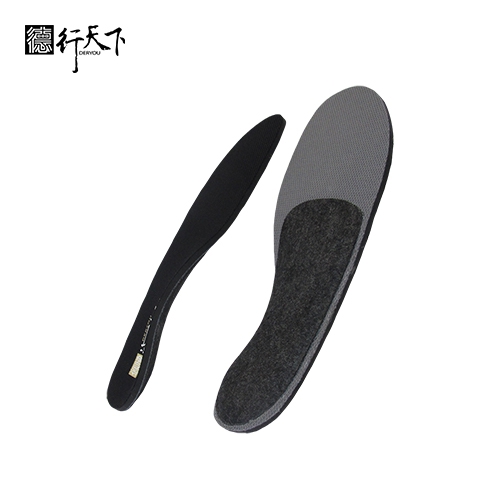
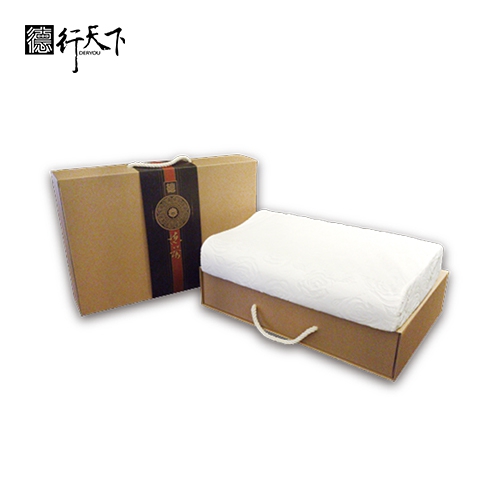
At GuangXin Industrial, our core strength lies in our deep expertise and versatility in insole and pillow manufacturing. We specialize in working with a wide range of materials, including PU (polyurethane), natural latex, and advanced graphene composites, to develop insoles and pillows that meet diverse performance, comfort, and health-support needs.
Whether it's cushioning, support, breathability, or antibacterial function, we tailor material selection to the exact requirements of each project-whether for foot wellness or ergonomic sleep products.
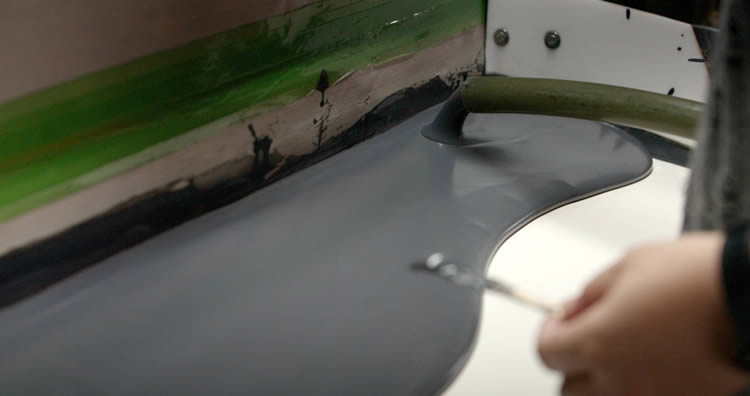
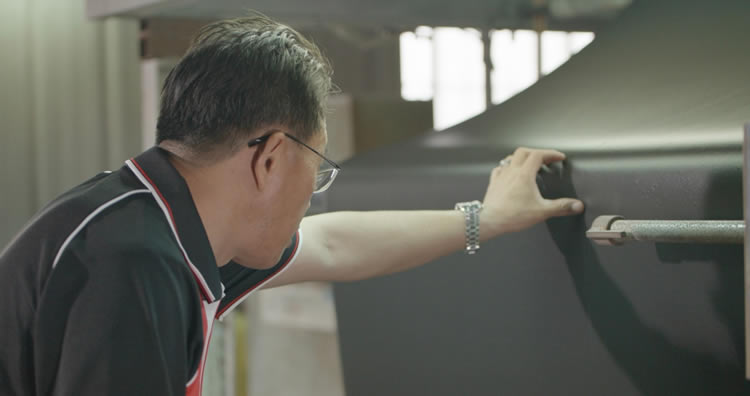
We provide end-to-end manufacturing capabilities under one roof—covering every stage from material sourcing and foaming, to precision molding, lamination, cutting, sewing, and strict quality control. This full-process control not only ensures product consistency and durability, but also allows for faster lead times and better customization flexibility.
With our flexible production capacity, we accommodate both small batch custom orders and high-volume mass production with equal efficiency. Whether you're a startup launching your first insole or pillow line, or a global brand scaling up to meet market demand, GuangXin is equipped to deliver reliable OEM/ODM solutions that grow with your business.
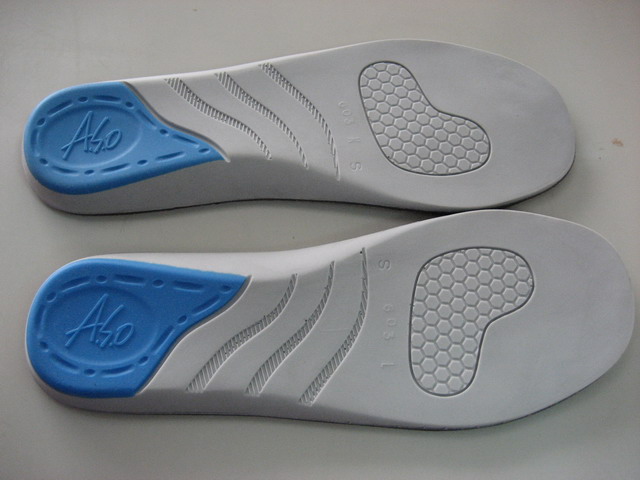
Customization & OEM/ODM Flexibility
GuangXin offers exceptional flexibility in customization and OEM/ODM services, empowering our partners to create insole products that truly align with their brand identity and target market. We develop insoles tailored to specific foot shapes, end-user needs, and regional market preferences, ensuring optimal fit and functionality.
Our team supports comprehensive branding solutions, including logo printing, custom packaging, and product integration support for marketing campaigns. Whether you're launching a new product line or upgrading an existing one, we help your vision come to life with attention to detail and consistent brand presentation.
With fast prototyping services and efficient lead times, GuangXin helps reduce your time-to-market and respond quickly to evolving trends or seasonal demands. From concept to final production, we offer agile support that keeps you ahead of the competition.
Quality Assurance & Certifications
Quality is at the heart of everything we do. GuangXin implements a rigorous quality control system at every stage of production—ensuring that each insole meets the highest standards of consistency, comfort, and durability.
We provide a variety of in-house and third-party testing options, including antibacterial performance, odor control, durability testing, and eco-safety verification, to meet the specific needs of our clients and markets.
Our products are fully compliant with international safety and environmental standards, such as REACH, RoHS, and other applicable export regulations. This ensures seamless entry into global markets while supporting your ESG and product safety commitments.
ESG-Oriented Sustainable Production
At GuangXin Industrial, we are committed to integrating ESG (Environmental, Social, and Governance) values into every step of our manufacturing process. We actively pursue eco-conscious practices by utilizing eco-friendly materials and adopting low-carbon production methods to reduce environmental impact.
To support circular economy goals, we offer recycled and upcycled material options, including innovative applications such as recycled glass and repurposed LCD panel glass. These materials are processed using advanced techniques to retain performance while reducing waste—contributing to a more sustainable supply chain.
We also work closely with our partners to support their ESG compliance and sustainability reporting needs, providing documentation, traceability, and material data upon request. Whether you're aiming to meet corporate sustainability targets or align with global green regulations, GuangXin is your trusted manufacturing ally in building a better, greener future.
Let’s Build Your Next Insole Success Together
Looking for a reliable insole manufacturing partner that understands customization, quality, and flexibility? GuangXin Industrial Co., Ltd. specializes in high-performance insole production, offering tailored solutions for brands across the globe. Whether you're launching a new insole collection or expanding your existing product line, we provide OEM/ODM services built around your unique design and performance goals.
From small-batch custom orders to full-scale mass production, our flexible insole manufacturing capabilities adapt to your business needs. With expertise in PU, latex, and graphene insole materials, we turn ideas into functional, comfortable, and market-ready insoles that deliver value.
Contact us today to discuss your next insole project. Let GuangXin help you create custom insoles that stand out, perform better, and reflect your brand’s commitment to comfort, quality, and sustainability.
🔗 Learn more or get in touch:
🌐 Website: https://www.deryou-tw.com/
📧 Email: shela.a9119@msa.hinet.net
📘 Facebook: facebook.com/deryou.tw
📷 Instagram: instagram.com/deryou.tw
Thailand insole ODM design and production
Are you looking for a trusted and experienced manufacturing partner that can bring your comfort-focused product ideas to life? GuangXin Industrial Co., Ltd. is your ideal OEM/ODM supplier, specializing in insole production, pillow manufacturing, and advanced graphene product design.
With decades of experience in insole OEM/ODM, we provide full-service manufacturing—from PU and latex to cutting-edge graphene-infused insoles—customized to meet your performance, support, and breathability requirements. Our production process is vertically integrated, covering everything from material sourcing and foaming to molding, cutting, and strict quality control.Taiwan ergonomic pillow OEM factory supplier
Beyond insoles, GuangXin also offers pillow OEM/ODM services with a focus on ergonomic comfort and functional innovation. Whether you need memory foam, latex, or smart material integration for neck and sleep support, we deliver tailor-made solutions that reflect your brand’s values.
We are especially proud to lead the way in ESG-driven insole development. Through the use of recycled materials—such as repurposed LCD glass—and low-carbon production processes, we help our partners meet sustainability goals without compromising product quality. Our ESG insole solutions are designed not only for comfort but also for compliance with global environmental standards.Indonesia graphene material ODM solution
At GuangXin, we don’t just manufacture products—we create long-term value for your brand. Whether you're developing your first product line or scaling up globally, our flexible production capabilities and collaborative approach will help you go further, faster.Vietnam high-end foam product OEM/ODM
📩 Contact us today to learn how our insole OEM, pillow ODM, and graphene product design services can elevate your product offering—while aligning with the sustainability expectations of modern consumers.Thailand insole ODM for global brands
A groundbreaking study analyzing ancient DNA has revealed instances of Down and Edwards syndrome in prehistoric human remains, dating back as far as 4,500 years. This research indicates that individuals with these conditions were valued and integrated members of their ancient societies, offering new insights into the treatment and recognition of chromosomal disorders in history. Above are the remains of individual “CRU001”, who the researchers discovered had Down syndrome. The remains were found at a site in Spain dating to the Iron Age. Credit: Photograph from the Government of Navarre and J.L. Larrion. By analyzing ancient DNA, an international team of researchers has uncovered cases of chromosomal disorders, including what could be the first case of Edwards syndrome ever identified from prehistoric remains. The team identified six cases of Down syndrome and one case of Edwards syndrome in human populations that were living in Spain, Bulgaria, Finland, and Greece from as long ago as 4,500 years before today. Discovery of Chromosomal Disorders The research indicated that these individuals were buried with care, and often with special grave goods, showing that they were appreciated as members of their ancient societies. The global collaborative study, led by first author Dr Adam “Ben” Rohrlach of the University of Adelaide, and senior author Dr Kay Prüfer of the Max Planck Institute for Evolutionary Anthropology, involved screening DNA from approximately 10,000 ancient and pre-modern humans for evidence of autosomal trisomies, a condition where people carry an extra (third) copy of one of the first 22 chromosomes. Methodology and Findings “Using a new statistical model, we screened the DNA extracted from human remains from the Mesolithic, Neolithic, Bronze, and Iron Ages all the way up to the mid-1800s. We identified six cases of Down syndrome,” says Dr Rohrlach, a statistician from the University of Adelaide’s School of Mathematical Sciences. “While we expected that people with Down syndrome certainly existed in the past, this is the first time we’ve been able to reliably detect cases in ancient remains, as they can’t be confidently diagnosed by looking at the skeletal remains alone.” Down syndrome occurs when an individual carries an extra copy of chromosome 21. The researchers were able to find these six cases using a novel Bayesian approach to accurately and efficiently screen tens of thousands of ancient DNA samples. “The statistical model identifies when an individual has approximately 50 percent too much DNA that comes from one specific chromosome,” says Dr Patxuka de-Miguel-Ibáñez of the University of Alicante, and lead osteologist for the Spanish sites. “We then compared the remains of the individuals with Down syndrome for common skeletal abnormalities such as irregular bone growth, or porosity of the skull bones, which may help to identify future cases of Down syndrome when ancient DNA can’t be recovered.” Additional Discoveries and Cultural Insights The study also uncovered one case of Edwards syndrome, a rare condition caused by three copies of chromosome 18, that comes with far more severe symptoms than Down syndrome. The remains indicated severe abnormalities in bone growth and an age of death of approximately 40 weeks gestation. All of the cases were detected in perinatal or infant burials, but from different cultures and time periods. “These individuals were buried according to either the standard practices of their time or were in some way treated specially. This indicates that they were acknowledged as members of their community and were not treated differently in death,” says Dr Rohrlach. “Interestingly, we discovered the only case of Edwards syndrome, and a noticeable increase in cases of Down syndrome, in individuals from the Early Iron Age in Spain. The remains could not confirm that these babies survived to birth, but they were among the infants buried within homes at the settlement, or within other important buildings,” says Professor Roberto Risch, co-author and archaeologist from The Autonomous University of Barcelona. “We don’t know why this happened, as most people were cremated during this time, but it appears as if they were purposefully choosing these infants for special burials.” Reference: “Cases of trisomy 21 and trisomy 18 among historic and prehistoric individuals discovered from ancient DNA” by Adam Benjamin Rohrlach, Maïté Rivollat, Patxuka de-Miguel-Ibáñez, Ulla Moilanen, Anne-Mari Liira, João C. Teixeira, Xavier Roca-Rada, Javier Armendáriz-Martija, Kamen Boyadzhiev, Yavor Boyadzhiev, Bastien Llamas, Anthi Tiliakou, Angela Mötsch, Jonathan Tuke, Eleni-Anna Prevedorou, Naya Polychronakou-Sgouritsa, Jane Buikstra, Päivi Onkamo, Philipp W. Stockhammer, Henrike O. Heyne, Johannes R. Lemke, Roberto Risch, Stephan Schiffels, Johannes Krause, Wolfgang Haak and Kay Prüfer, 20 February 2024, Nature Communications. DOI: 10.1038/s41467-024-45438-1 The research was part of a large collaborative project involving researchers from the University of Adelaide, including Dr. Adam “Ben” Rohrlach, Dr. Jonathan Tuke, and Associate Professor Bastien Llamas, as well as researchers from across the world, including at the Max Planck Institute for Evolutionary Anthropology in Germany where the data was generated.
Graphical abstract of the research method. Credit: Maaike Goudriaan, NIOZ Laboratory Experiment Shows That Bacteria Really Eat and Digest Plastic The bacterium Rhodococcus ruber eats and actually digests plastic. This has been shown in laboratory experiments by PhD student Maaike Goudriaan at Royal Netherlands Institute for Sea Research (NIOZ). Based on a model study with plastic in artificial seawater in the lab, Goudriaan calculated that bacteria can break down about one percent of the fed plastic per year into CO2 and other harmless substances. “But,” Goudriaan emphasizes, “this is certainly not a solution to the problem of the plastic soup in our oceans. It is, however, another part of the answer to the question of where all the ‘missing plastic’ in the oceans has gone.” Special Plastic Goudriaan had a special plastic manufactured especially for these experiments with a distinct form of carbon (13C) in it. When she fed that plastic to bacteria after pretreatment with “sunlight” — a UV lamp — in a bottle of simulated seawater, she saw that special version of carbon appear as CO2 above the water. “The treatment with UV light was necessary because we already know that sunlight partially breaks down plastic into bite-sized chunks for bacteria,” the researcher explains. Microplastic particles of about 2 mm big. Credit: Royal Netherlands Institute for Sea Research (NIOZ) Proof of Principle “This is the first time we have proven in this way that bacteria actually digest plastic into CO2 and other molecules,” Goudriaan states. It was already known that the bacterium Rhodococcus ruber can form a so-called biofilm on plastic in nature. It had also been measured that plastic disappears under that biofilm. “But now we have really demonstrated that the bacteria actually digest the plastic.” Underestimate When Goudriaan calculates the total breakdown of plastic into CO2, she estimates that the bacteria can break down about one percent of the available plastic per year. “That’s probably an underestimate,” she adds. “We only measured the amount of carbon-13 in CO2, so not in the other breakdown products of the plastic. There will certainly be 13C in several other molecules, but it’s hard to say what part of that was broken down by the UV light and what part was digested by the bacteria.” Maaike Goudriaan and research leader Helge Niemann in the lab. Credit: Maaike Goudriaan, NIOZ No Solution Even though marine microbiologist Goudriaan is very excited about the plastic-eating bacteria, she stresses that microbial digestion is not a solution to the huge problem of all the plastic floating on and in our oceans. “These experiments are mainly a proof of principle. I see it as one piece of the jigsaw, in the issue of where all the plastic that disappears into the oceans stays. If you try to trace all our waste, a lot of plastic is lost. Digestion by bacteria could possibly provide part of the explanation.” From Lab to Mudflats To discover whether ‘wild’ bacteria also eat plastic ‘in the wild’, follow-up research needs to be done. Goudriaan already did some pilot experiments with real sea water and some sediment that she had collected from the Wadden Sea floor. “The first results of these experiments hints at plastic being degraded, even in nature,” she says. “A new PhD student will have to continue that work. Ultimately, of course, you hope to calculate how much plastic in the oceans really is degraded by bacteria. But much better than cleaning up, is prevention. And only we humans can do that,” Goudriaan says. Sunlight Pulps the Plastic Soup Recently Goudriaan’s colleague Annalisa Delre published a paper about sunlight which breaks down plastics on the ocean’s surfaces. Floating microplastic is broken down into ever smaller, invisible nanoplastic particles that spread across the entire water column, but also to compounds that can then be completely broken down by bacteria. This is shown by experiments in the laboratory of NIOZ, on Texel. In the latest issue of the Marine Pollution Bulletin, PhD student Annalisa Delre and colleagues calculate that about two percent of visibly floating plastic may disappear from the ocean surface in this way each year. “This may seem small, but year after year, this adds up. Our data show that sunlight could thus have degraded a substantial amount of all the floating plastic that has been littered into the oceans since the 1950s,” says Delre. Reference: “A stable isotope assay with 13C-labeled polyethylene to investigate plastic mineralization mediated by Rhodococcus ruber” by Maaike Goudriaan, Victor Hernando Morales, Marcel T. J. van der Meer, Anchelique Mets, Rachel T. Ndhlovu, Johan van Heerwaarden, Sina Simon, Verena B. Heuer, Kai-Uwe Hinrichs and Helge Niemann, 30 November 2022, Marine Pollution Bulletin. DOI: 10.1016/j.marpolbul.2022.114369
Researchers have mapped the pregnant brain, discovering dynamic changes in gray and white matter that highlight significant neuroplasticity and offer new insights into maternal brain health. Credit: SciTechDaily.com Researchers at UC Santa Barbara have pioneered the first detailed map of the human brain during pregnancy, tracking both the decrease in gray matter and increase in white matter across the gestational period. This groundbreaking study reveals the brain’s remarkable neuroplasticity during pregnancy, offering new insights into women’s health and potentially aiding in the early detection and treatment of postpartum depression. Pregnancy is a transformative time in a person’s life where the body undergoes rapid physiological adaptations to prepare for motherhood — that we all know. What has remained something of a mystery is what the sweeping hormonal shifts brought on by pregnancy are doing to the brain. Researchers in Professor Emily Jacobs’ lab at UC Santa Barbara have shed light on this understudied area with the first-ever map of a human brain over the course of pregnancy. Dynamic Brain Changes During Pregnancy “We wanted to look at the trajectory of brain changes specifically within the gestational window,” said Laura Pritschet, lead author of a paper just published in Nature Neuroscience. Previous studies had taken snapshots of the brain before and after pregnancy, she said, but never have we witnessed the pregnant brain in the midst of this metamorphosis. Following one first-time mother, the researchers scanned her brain every few weeks, starting before pregnancy and continuing through two years postpartum. The data, collected in collaboration with Elizabeth Chrastil’s team at UC Irvine, reveal changes in the brain’s gray and white matter across gestation, suggesting that the brain is capable of astonishing neuroplasticity well into adulthood. Their precision imaging approach allowed them to capture dynamic brain reorganization in the participant in exquisite detail. This approach complements early studies that compared women’s brains pre- and post-pregnancy. The authors noted, “our goal was to fill the gap and understand the neurobiological changes that happen during pregnancy itself.” Neurological Adjustments: Gray and White Matter The most pronounced changes the scientists found as they imaged the subject’s brain over time was a decrease in cortical gray matter volume, the wrinkly outer part of the brain. Gray matter volume decreased as hormone production ramped up during pregnancy. However, a decrease in gray matter volume is not necessarily a bad thing, the scientists emphasized. This change could indicate a “fine-tuning” of brain circuits, not unlike what happens to all young adults as they transition through puberty and their brains become more specialized. Pregnancy likely reflects another period of cortical refinement. “Laura Pritschet and the study team were a tour de force, conducting a rigorous suite of analyses that generated new insights into the human brain and its incredible capacity for plasticity in adulthood,” Jacobs said. Less obvious but just as significant, the researchers found prominent increases in white matter, located deeper in the brain and generally responsible for facilitating communication between brain regions. While the decrease in gray matter persisted long after giving birth, the increase in white matter was transient, peaking in the second trimester and returning to pre-pregnancy levels around the time of birth. This type of effect had never been captured previously with before-and-after scans, according to the researchers, allowing for better estimation of just how dynamic the brain can be in a relatively short period of time. “The maternal brain undergoes a choreographed change across gestation, and we are finally able to see it unfold,” Jacobs said. These changes suggest that the adult brain is capable of undergoing an extended period of neuroplasticity, brain changes that may support behavioral adaptations tied to parenting. Broader Implications of Pregnancy Neuroscience “Eighty-five percent of women experience pregnancy one or more times over their lifetime, and around 140 million women are pregnant every year,” said Pritschet, who hopes to “dispel the dogma” around the fragility of women during pregnancy. She argued that the neuroscience of pregnancy should not be viewed as a niche research topic, as the findings generated through this line of work will “deepen our overall understanding of the human brain, including its aging process.” The open-access dataset, available online, serves as a jumping-off point for future studies to understand whether the magnitude or pace of these brain changes hold clues about a woman’s risk for postpartum depression, a neurological condition that affects roughly one in five women. “There are now FDA-approved treatments for postpartum depression,” Pritschet said, “but early detection remains elusive. The more we learn about the maternal brain, the better chance we’ll have to provide relief.” The Future of Maternal Brain Research And that is just what the authors have set out to do. With support from the Ann S. Bowers Women’s Brain Health Initiative, directed by Jacobs, their team is building on these early discoveries through the Maternal Brain Project. More women and their partners are being enrolled at UC Santa Barbara, UC Irvine, and through an international collaboration with researchers in Spain. “Experts in neuroscience, reproductive immunology, proteomics, and AI are joining forces to learn more than ever about the maternal brain,” Jacobs said. “Together, we have an opportunity to tackle some of the most pressing and least understood problems in women’s health.” Reference: “Neuroanatomical changes observed over the course of a human pregnancy” by Laura Pritschet, Caitlin M. Taylor, Daniela Cossio, Joshua Faskowitz, Tyler Santander, Daniel A. Handwerker, Hannah Grotzinger, Evan Layher, Elizabeth R. Chrastil and Emily G. Jacobs, 16 September 2024, Nature Neuroscience. DOI: 10.1038/s41593-024-01741-0
DVDV1551RTWW78V
Taiwan anti-bacterial pillow ODM design 》a trusted OEM/ODM partner across comfort-driven industriesGraphene sheet OEM supplier factory Taiwan 》seamless coordination from idea to finished productIndonesia eco-friendly graphene material processing 》recommended by industry experts for sustainability and performance
下一則: Taiwan ODM expert for comfort products 》your trust
限會員,要發表迴響,請先登入


