Introduction – Company Background
GuangXin Industrial Co., Ltd. is a specialized manufacturer dedicated to the development and production of high-quality insoles.
With a strong foundation in material science and footwear ergonomics, we serve as a trusted partner for global brands seeking reliable insole solutions that combine comfort, functionality, and design.
With years of experience in insole production and OEM/ODM services, GuangXin has successfully supported a wide range of clients across various industries—including sportswear, health & wellness, orthopedic care, and daily footwear.
From initial prototyping to mass production, we provide comprehensive support tailored to each client’s market and application needs.
At GuangXin, we are committed to quality, innovation, and sustainable development. Every insole we produce reflects our dedication to precision craftsmanship, forward-thinking design, and ESG-driven practices.
By integrating eco-friendly materials, clean production processes, and responsible sourcing, we help our partners meet both market demand and environmental goals.
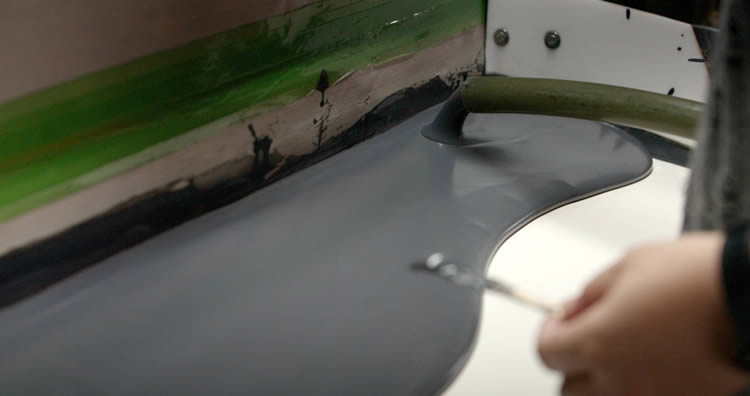

Core Strengths in Insole Manufacturing
At GuangXin Industrial, our core strength lies in our deep expertise and versatility in insole and pillow manufacturing. We specialize in working with a wide range of materials, including PU (polyurethane), natural latex, and advanced graphene composites, to develop insoles and pillows that meet diverse performance, comfort, and health-support needs.
Whether it's cushioning, support, breathability, or antibacterial function, we tailor material selection to the exact requirements of each project-whether for foot wellness or ergonomic sleep products.
We provide end-to-end manufacturing capabilities under one roof—covering every stage from material sourcing and foaming, to precision molding, lamination, cutting, sewing, and strict quality control. This full-process control not only ensures product consistency and durability, but also allows for faster lead times and better customization flexibility.
With our flexible production capacity, we accommodate both small batch custom orders and high-volume mass production with equal efficiency. Whether you're a startup launching your first insole or pillow line, or a global brand scaling up to meet market demand, GuangXin is equipped to deliver reliable OEM/ODM solutions that grow with your business.
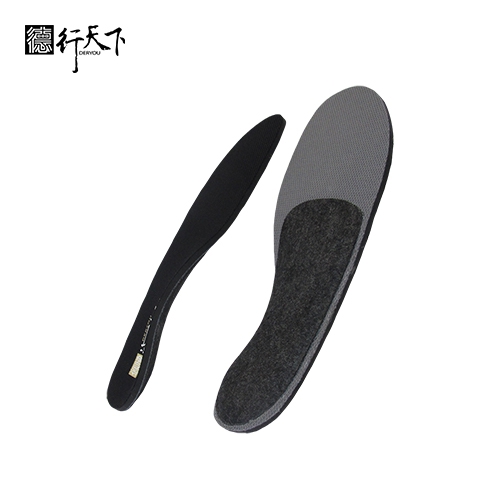

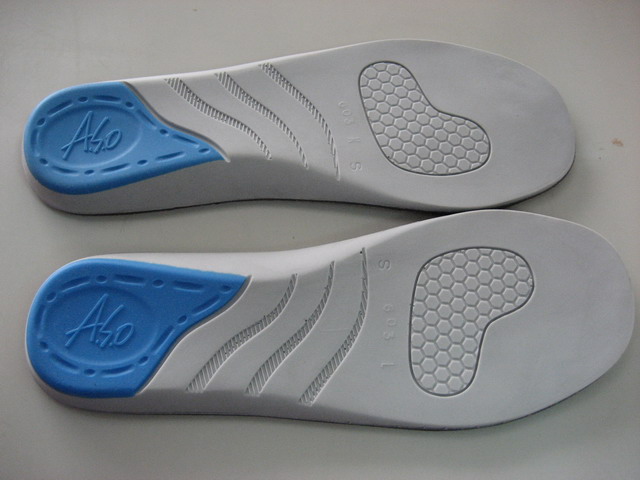
Customization & OEM/ODM Flexibility
GuangXin offers exceptional flexibility in customization and OEM/ODM services, empowering our partners to create insole products that truly align with their brand identity and target market. We develop insoles tailored to specific foot shapes, end-user needs, and regional market preferences, ensuring optimal fit and functionality.
Our team supports comprehensive branding solutions, including logo printing, custom packaging, and product integration support for marketing campaigns. Whether you're launching a new product line or upgrading an existing one, we help your vision come to life with attention to detail and consistent brand presentation.
With fast prototyping services and efficient lead times, GuangXin helps reduce your time-to-market and respond quickly to evolving trends or seasonal demands. From concept to final production, we offer agile support that keeps you ahead of the competition.
Quality Assurance & Certifications
Quality is at the heart of everything we do. GuangXin implements a rigorous quality control system at every stage of production—ensuring that each insole meets the highest standards of consistency, comfort, and durability.
We provide a variety of in-house and third-party testing options, including antibacterial performance, odor control, durability testing, and eco-safety verification, to meet the specific needs of our clients and markets.
Our products are fully compliant with international safety and environmental standards, such as REACH, RoHS, and other applicable export regulations. This ensures seamless entry into global markets while supporting your ESG and product safety commitments.
ESG-Oriented Sustainable Production
At GuangXin Industrial, we are committed to integrating ESG (Environmental, Social, and Governance) values into every step of our manufacturing process. We actively pursue eco-conscious practices by utilizing eco-friendly materials and adopting low-carbon production methods to reduce environmental impact.
To support circular economy goals, we offer recycled and upcycled material options, including innovative applications such as recycled glass and repurposed LCD panel glass. These materials are processed using advanced techniques to retain performance while reducing waste—contributing to a more sustainable supply chain.
We also work closely with our partners to support their ESG compliance and sustainability reporting needs, providing documentation, traceability, and material data upon request. Whether you're aiming to meet corporate sustainability targets or align with global green regulations, GuangXin is your trusted manufacturing ally in building a better, greener future.
Let’s Build Your Next Insole Success Together
Looking for a reliable insole manufacturing partner that understands customization, quality, and flexibility? GuangXin Industrial Co., Ltd. specializes in high-performance insole production, offering tailored solutions for brands across the globe. Whether you're launching a new insole collection or expanding your existing product line, we provide OEM/ODM services built around your unique design and performance goals.
From small-batch custom orders to full-scale mass production, our flexible insole manufacturing capabilities adapt to your business needs. With expertise in PU, latex, and graphene insole materials, we turn ideas into functional, comfortable, and market-ready insoles that deliver value.
Contact us today to discuss your next insole project. Let GuangXin help you create custom insoles that stand out, perform better, and reflect your brand’s commitment to comfort, quality, and sustainability.
🔗 Learn more or get in touch:
🌐 Website: https://www.deryou-tw.com/
📧 Email: shela.a9119@msa.hinet.net
📘 Facebook: facebook.com/deryou.tw
📷 Instagram: instagram.com/deryou.tw
Smart pillow ODM manufacturer China
Are you looking for a trusted and experienced manufacturing partner that can bring your comfort-focused product ideas to life? GuangXin Industrial Co., Ltd. is your ideal OEM/ODM supplier, specializing in insole production, pillow manufacturing, and advanced graphene product design.
With decades of experience in insole OEM/ODM, we provide full-service manufacturing—from PU and latex to cutting-edge graphene-infused insoles—customized to meet your performance, support, and breathability requirements. Our production process is vertically integrated, covering everything from material sourcing and foaming to molding, cutting, and strict quality control.ESG-compliant OEM manufacturer in China
Beyond insoles, GuangXin also offers pillow OEM/ODM services with a focus on ergonomic comfort and functional innovation. Whether you need memory foam, latex, or smart material integration for neck and sleep support, we deliver tailor-made solutions that reflect your brand’s values.
We are especially proud to lead the way in ESG-driven insole development. Through the use of recycled materials—such as repurposed LCD glass—and low-carbon production processes, we help our partners meet sustainability goals without compromising product quality. Our ESG insole solutions are designed not only for comfort but also for compliance with global environmental standards.Graphene cushion OEM factory in Thailand
At GuangXin, we don’t just manufacture products—we create long-term value for your brand. Whether you're developing your first product line or scaling up globally, our flexible production capabilities and collaborative approach will help you go further, faster.Vietnam pillow ODM development service
📩 Contact us today to learn how our insole OEM, pillow ODM, and graphene product design services can elevate your product offering—while aligning with the sustainability expectations of modern consumers.Taiwan insole ODM full-service provider factory
Researchers discovered the “Octopus Garden,” a deep-sea nursery off the Central California coast where octopuses mate and nest, benefiting from hydrothermal springs’ warmth. Although protected, further conservation efforts are needed to shield these unique deep-sea habitats from human threats. Credit: © 2022 MBARI MBARI’s advanced technology offers new insight into the “Octopus Garden” off Central California, the largest aggregation of octopus on Earth. In 2018, researchers from NOAA’s Monterey Bay National Marine Sanctuary and Nautilus Live observed thousands of octopus nesting on the deep seafloor off the Central California coast. The discovery of the “Octopus Garden” captured the curiosity of millions of people around the world, including MBARI scientists. For three years, MBARI and collaborators used high-tech tools to monitor the Octopus Garden and learn exactly why this site is so attractive for deep-sea octopus. Purpose of the Garden and Its Unique Properties In a new study published today (August 23) in the journal Science Advances, a team of researchers from MBARI, NOAA’s Monterey Bay National Marine Sanctuary, Moss Landing Marine Laboratories, the University of Alaska Fairbanks, the University of New Hampshire, and the Field Museum confirmed that deep-sea octopus migrate to the Octopus Garden to mate and nest. The Octopus Garden is one of a handful of known deep-sea octopus nurseries. At this nursery, warmth from deep-sea thermal springs accelerates the development of octopus eggs. Scientists believe the shorter brooding period increases a hatchling octopus’ odds for survival. The Octopus Garden is the largest known aggregation of octopus on the planet—researchers counted more than 6,000 octopus in a portion of the site and expect there may be 20,000 or more at this nursery. “Thanks to MBARI’s advanced marine technology and our partnership with other local researchers, we were able to observe the Octopus Garden in tremendous detail, which helped us discover why so many deep-sea octopus gather there. These findings can help us understand and protect other unique deep-sea habitats from climate impacts and other threats,” said MBARI Senior Scientist Jim Barry, lead author of the new study. An aggregation of female pearl octopus (Muusoctopus robustus) nesting at the Octopus Garden, located near Davidson Seamount off the Central California at a depth of approximately 3,200 meters. Researchers used MBARI’s advanced technology to confirm pearl octopus gather at the Octopus Garden to mate and nest. Warm water from hydrothermal springs accelerates development of octopus embryos, giving young octopus a better chance of survival. Credit: © 2022 MBARI Location and Behavior of the Octopuses The Octopus Garden is located 3,200 meters (10,500 feet, or about two miles) below the ocean’s surface on a small hill near the base of Davidson Seamount, an extinct underwater volcano 130 kilometers (80 miles) southwest of Monterey, California. The site is full of Muusoctopus robustus—a species MBARI researchers nicknamed the pearl octopus because from a distance, nesting individuals look like opalescent pearls on the seafloor. Over the course of 14 dives with MBARI’s remotely operated vehicle (ROV) Doc Ricketts, the research team learned why such large numbers of pearl octopus are attracted to this location. The presence of adult male and female octopus, developing eggs, and octopus hatchlings indicated that the site is used exclusively for reproduction. The team did not observe any intermediate-sized individuals or any evidence of feeding. Pearl octopus gather at this site solely to mate and nest. When researchers from NOAA and Nautilus Live first discovered the Octopus Garden, they observed “shimmering” waters. This phenomenon occurs when warm and cool waters mix, suggesting the region had previously unknown thermal springs. Further investigation by MBARI researchers and their collaborators confirmed octopus nests are clustered in crevices bathed by hydrothermal springs where warmer waters flow from the seafloor. Impact of Temperature on Octopus Development The ambient water temperature at 3,200 meters (10,500 feet) deep is 1.6 degrees Celsius (about 35 degrees Fahrenheit). However, the water temperature within the cracks and crevices at the Octopus Garden reaches nearly 11 degrees Celsius (about 51 degrees Fahrenheit). Octopuses are ectotherms, or cold-blooded animals. The frigid temperatures of the deep sea slow their metabolism as well as their rate of embryonic development. Most deep-sea octopuses have very long incubation periods compared to their relatives inhabiting warmer shallow seas. Past experiments have measured egg incubation time for a number of octopus species in habitats and locations around the world. Comparing those egg incubation times clearly demonstrates how temperature affects the rate of embryo development—the colder the water, the slower the embryos grow. At the near-freezing temperatures of the abyss, researchers expected pearl octopus eggs to take five to eight years, if not longer, to hatch. A 4K camera on MBARI’s ROV Doc Ricketts provided a close-up look at nesting mothers. MBARI researchers and their collaborators used the scars and other distinguishing features of individual octopus moms to monitor the development of their broods. Surprisingly, the eggs hatched in less than two years. Warmth from thermal springs increased the metabolism of female octopus and their broods, reducing the time required for incubation. Researchers believe the shorter brood period in warmer waters greatly reduces the risk that developing octopus embryos will be injured or eaten by predators. Nesting in warmer water boosts the reproductive success of the pearl octopus, better ensuring the offspring’s survival. “The deep sea is one of the most challenging environments on Earth, yet animals have evolved clever ways to cope with frigid temperatures, perpetual darkness, and extreme pressure. Very long brooding periods increase the likelihood that a mother’s eggs won’t survive. By nesting at hydrothermal springs, octopus moms give their offspring a leg up,” said Barry. Ecology and Significance of the Garden The massive number of octopus in one area attracts both predators and scavengers. Like most other cephalopods, pearl octopus die after they reproduce. Dead octopus at the Octopus Garden provide a feast for scavengers. A rich community of invertebrates lives alongside the nesting females, undoubtedly benefiting from unhatched eggs, vulnerable hatchlings, or adult octopus that have died. Davidson Seamount and its Octopus Garden are protected as part of Monterey Bay National Marine Sanctuary. Previous MBARI expeditions to Davidson Seamount in 2002 and 2006 revealed the stunning community of life on its rocky slopes. MBARI’s images and video of beautiful deep-sea corals, vibrant sponges, and curious fishes engaged and inspired audiences worldwide. Ocean champions spoke up to protect this unique, and still untouched, ocean wilderness. In 2008, resource managers expanded the Monterey Bay National Marine Sanctuary to include Davidson Seamount. “Essential biological hotspots like this deep-sea nursery need to be protected,” said Barry. “Climate change, fishing, and mining threaten the deep sea. Protecting the unique environments where deep-sea animals gather to feed or reproduce is critical, and MBARI’s research is providing the information that resource managers need for decision-making.” This work is funded as part of the David and Lucile Packard Foundation’s long-term support of MBARI’s ocean research and technology. Deep-Sea Exploration and Monitoring For more than two decades, researchers from MBARI and NOAA have collaborated to study Davidson Seamount. Since the first expedition to the seamount in 2002, NOAA has leveraged MBARI expertise in marine geology and benthic biology and ecology to develop a comprehensive research program that aims to understand the unique community of life on and around Davidson Seamount. Now, Davidson Seamount is considered one of the best-studied and well-protected seamounts in the world. In October 2018, a team of researchers from NOAA, the Ocean Exploration Trust, and collaborators made an expedition to Davidson Seamount aboard the E/V Nautilus. At the suggestion of MBARI geologists and NOAA researchers, the Nautilus Live team decided to expand their exploration from the top of the seamount to its surrounding foothills. The researchers discovered thousands of octopus aggregated around a rocky ridge adjacent to the towering seamount. Most of the octopus were oriented upside down, inverting their arms and folding them around their bodies. This posture was an indication of pearl octopus (Muusoctopus robustus) mothers protecting, or brooding, their eggs. The pearl octopus is a pale purple species about the size of a grapefruit that occurs in the northeastern Pacific Ocean from Oregon to Baja California. MBARI has observed this species at depths of 2,300 to 3,600 meters (7,500 to 11,800 feet). MBARI researchers and their collaborators deployed a suite of advanced scientific instruments developed by MBARI engineers to better understand the Octopus Garden. “The expertise of the MBARI team—the engineers, pilots of our submersible vehicles, and crew of our research vessels—was integral to studying this hotspot of life two miles below the surface. We leveraged decades of experience in deep-sea exploration to develop and deploy instruments to study the Octopus Garden without disturbing the nesting mothers,” said Barry. MBARI’s ROV Doc Ricketts recorded high-definition and 4K video of the brooding pearl octopus and their neighbors. MBARI’s skilled submersible pilots maneuvered the ROV close to brooding pearl octopus to deploy instruments to measure the environmental conditions within their nests, including temperature and oxygen levels, and to film mothers and their eggs up close in ultra-high definition resolution. A stereoscopic camera allowed MBARI engineers to visualize sites within the Octopus Garden in 3D. The team also launched one of MBARI’s autonomous underwater vehicles to map the Octopus Garden at meter-scale resolution. MBARI engineers outfitted the ROV Doc Ricketts with an innovative, custom-built sensor suite, the Low-Altitude Survey System (LASS), to see the Octopus Garden in even greater detail. The LASS gathered detailed bathymetry information to help researchers characterize the seafloor habitat at centimeter-scale resolution. The LASS also took high-resolution photographs of the Octopus Garden. Researchers assembled these photographs into a photomosaic to count the number of nests within this deep-sea nursery. They documented 5,718 octopus within a 2.5-hectare (6.2-acre) area at the center of the Octopus Garden. The team estimated the total population of the 333-hectare (823-acre) hillock could easily exceed 20,000 individuals. A time-lapse camera collected long-term observations of the octopus’ behavior and changes in the community over a period of more than six months, allowing researchers to keep watch on the octopus nursery between research expeditions. The camera recorded an image every 20 minutes and amassed a trove of more than 12,200 images from March 2022 to August 2022. These photographs revealed various activities and behaviors of octopus, their predators, and local scavengers. Both male and female pearl octopus migrate to the Octopus Garden. Females search for a warm nesting spot to deposit a clutch of approximately 60 elongate, sausage-shaped eggs. When brooding, mothers cover their eggs with their body and protect them from predators that creep too close. She lives off food reserves from her own tissues while tending to her developing eggs. The transformation from egg to hatchling is not easy. In addition to going through development successfully, embryos must avoid injury, predation, infection, and other external sources of mortality. Maternal care protects them from most external risks, but a shorter brooding period generally allows more eggs to survive. As is typical of cephalopods, male and female pearl octopus die after reproducing—the Octopus Garden will be their final resting spot. Most females live until their eggs have hatched. Sometimes, however, a mother octopus runs out of energy and dies before her eggs complete their development, exposing the developing eggs to greater risk. The time-lapse camera revealed that nesting mothers push aside the carcasses of dead octopus. Food is scarce in the deep sea and nothing goes to waste. Larger scavengers like rattail fishes (family Macrouridae), cusk eels (family Ophidiidae), whelks, and sea anemones feast on octopus remains. Near Davidson Seamount, life on the deep seafloor depends on the rain of organic matter from above. Researchers estimated the turnover of male octopus and nesting females to calculate how much nutrition this massive aggregation provides. Biomass from dying octopus represents a substantial carbon subsidy to the local seafloor community, providing 72 percent more food than is available outside the Octopus Garden. Challenges and Need for Protection Many questions still remain about the Octopus Garden, including where pearl octopus go after hatching, how this octopus species became adapted to breeding in thermal springs, how adult octopus find the thermal springs, what advantage individuals breeding in these hydrothermal springs have over those that breed elsewhere, and how common hydrothermal springs are in the deep sea. The deep sea is not immune to threats like fishing, pollution, and climate change. By documenting deep-sea biodiversity and identifying hotspots of life on the ocean floor, scientists are gathering important information that resource managers can use to guide protections for this unique environment and its inhabitants. “Technological advances in our ability to study the ocean have helped us discover and document incredible biodiversity across an array of deep-sea environments. As the imprint of human activities reaches deeper into ocean ecosystems, we need to protect not only the octopus nurseries found off California and Costa Rica, but also the many other biological treasures that remain undiscovered,” emphasized Barry. Deep-sea octopus nurseries: A new field of exploration Researchers have documented four deep-sea octopus nurseries to date—two off the coast of Central California and two off the coast of Costa Rica—and are continuing to study these sites to learn more about octopus behavior. December 2013: Discovery of first octopus nursery at Dorado Outcrop (Costa Rica) Researchers from the University of Akron, the Field Museum, and the University of Alaska Fairbanks observed an aggregation of more than 100 octopus at the Dorado Outcrop, a hydrothermal spring located approximately 160 kilometers (100 miles) off the Pacific coast of Costa Rica at a depth of 3,000 meters (9,800 feet). The team identified the octopus as a potentially undescribed species of Muusoctopus. Nearly all of the individuals were in a brooding position, however, none of the eggs that researchers observed were viable. April 2018: Researchers publish findings from the Dorado Outcrop (Costa Rica) The team of researchers from the University of Akron, the Field Museum, and the University of Alaska Fairbanks published their observations of deep-sea octopus brooding unviable eggs at the Dorado Outcrop in Deep Sea Research Part I. October 2018: Discovery of second octopus nursery at the Octopus Garden (Davidson Seamount, United States) During a Nautilus Live expedition with the E/V Nautilus, researchers from NOAA’s Monterey Bay National Marine Sanctuary, the Ocean Exploration Trust, and collaborators observed a large aggregation of brooding octopus on a hillock approximately 12 kilometers (7.5 miles) southeast of Davidson Seamount at a depth of 3,200 meters (10,500 feet). Researchers identified the octopus as Muusoctopus robustus. A second visit by researchers from NOAA and the Woods Hole Oceanographic Institution (WHOI) in March 2019 confirmed the presence of warm hydrothermal springs at this site. The expedition team also confirmed that the octopus were brooding viable eggs and observed baby octopus hatching from the eggs. April 2019: First MBARI expedition to Octopus Garden (Davidson Seamount, United States) MBARI researchers made their first visit to the Octopus Garden as part of the 2019 Seafloor Ecology expedition. Along with collaborators, they visited the site 14 times with the R/V Western Flyer between April 2019 and August 2022. Additionally, MBARI researchers visited the Octopus Garden with the R/V Rachel Carson in February 2022 to launch a mapping autonomous underwater vehicle and create meter-scale maps of the site. October 2019: Discovery of third octopus nursery at Octocone (Davidson Seamount, United States) During a Nautilus Live expedition with the E/V Nautilus, researchers from NOAA, the Ocean Exploration Trust, and collaborators observed a second aggregation of brooding octopus on a volcanic cone to the east of Davidson Seamount. This site is approximately 17 kilometers (10.5 miles) northeast of the Octopus Garden. Researchers identified the octopus as Muusoctopus robustus. The octopus were confirmed to be brooding viable eggs. June 2023: Discovery of fourth octopus nursery (Costa Rica) During a Schmidt Ocean Institute expedition with the R/V Falkor (too), researchers from the Bigelow Laboratory for Ocean Sciences and the University of Costa Rica observed a previously unknown octopus nursery near an unexplored and still-unnamed seamount off the Pacific coast of Costa Rica. Upon returning to the nearby Dorado Outcrop, the team also observed octopus brooding viable eggs, confirming this location is indeed an active octopus nursery. Both Costa Rican nurseries host a potentially undescribed species of Muusoctopus. August 2023: MBARI researchers publish findings from the Octopus Garden (Davidson Seamount, United States) MBARI researchers and their collaborators from NOAA, Moss Landing Marine Laboratories, the University of Alaska Fairbanks, the University of New Hampshire, and the Field Museum published their research on brooding pearl octopus in Science Advances, confirming that deep-sea octopus migrate to the Octopus Garden to mate and nest. Reference: “Abyssal hydrothermal springs—Cryptic incubators for brooding octopus” by James P. Barry, Steven Y. Litvin, Andrew DeVogelaere, David W. Caress, Chris F. Lovera, Amanda S. Kahn, Erica J. Burton, Chad King, Jennifer B. Paduan, C. Geoffrey Wheat, Fanny Girard, Sebastian Sudek, Anne M. Hartwell, Alana D. Sherman, Paul R. McGill, Aaron Schnittger, Janet R. Voight and Eric J. Martin, 23 August 2023, Science Advances. DOI: 10.1126/sciadv.adg3247
New research using electronic tags and sonar data shows that large marine predators like sharks and tunas often dive into the deep mesopelagic zone, interacting with its dense layer of organisms for feeding and possibly other purposes. This zone is crucial for both ecological balance and commercial fishing, requiring careful study and conservation to prevent irreversible damage. Data from over 300 tags on large marine predators, along with shipboard sonar, point to the ecological importance of the ocean’s twilight zone. If you’ve ever witnessed a shark breach the water—whether in person or somewhere on the Internet—that fleeting but awe-inspiring moment is just a small fraction of the time it spends at the surface of the ocean. Most of the time sharks and other large marine predators are out of sight, begging the question—where do they go? New Insights From a Comprehensive Study A new study demonstrates that large predatory fishes like sharks, tunas, and billfish make a surprising number of visits to the deep ocean—particularly the mesopelagic zone, which is found between 200 to 1,000 meters below the surface. This area, also called the ocean’s twilight zone, has been overlooked as critical habitat for large predator species, according to the study. The paper was published on November 6 in the journal Proceedings of the National Academy of Sciences. A new study demonstrates that large predatory fishes like sharks, tunas, and billfish make a surprising number of visits to the deep ocean—particularly the ocean’s twilight zone, which has been overlooked as critical habitat for large predator species. Credit: Tiger Shark /©Tom Burns Collaborative Research Efforts Led by Camrin Braun, an assistant scientist at the Woods Hole Oceanographic Institution (WHOI), the study incorporated an astonishing amount of data from multiple scientific partners. He and the co-authors synthesized data from electronic tags, shipboard sonar, Earth-observing satellites, and data-assimilating ocean models to quantify the ecological significance of deep diving for large pelagic predators. They emphasize that a healthy mesopelagic zone provides numerous benefits and ecosystem services to humans as well. Deep Ocean Habits of Predators “No matter what top predator you look at, or where you look at them in the global ocean, they all spend time in the deep ocean,” Braun said. “All of these animals that we think of as being residents of the surface ocean, use the deep ocean way more than we previously thought.” The scientists leveraged data from 344 electronic tags over the course of 46,659 tracking days for 12 species in the North Atlantic Ocean, including white sharks, tiger sharks, whale sharks, Yellowfin tuna, swordfish, and more. A new study demonstrates that large predatory fishes like sharks, tunas, and billfish make a surprising number of visits to the deep ocean—particularly the ocean’s twilight zone, which has been overlooked as critical habitat for large predator species. Credit: Blue Shark offshore, Cape Cod/© Eric Savetsky Understanding Deep Scattering Layer Movements The diving patterns of these fish recorded by the tags were then matched with sonar data that showed the daily movements of the deep scattering layer (DSL)—a zone where a huge number of small fish and marine organisms are packed so densely that scientists first using sonar mistook the layer for the ocean floor. During the day, animals in the DSL inhabit the mesopelagic zone. But when the sun sets, many of these individuals—like fish, mollusks, crustaceans, and others—swim to surface waters to feed. When the sun reemerges over the horizon, scattering light over the surface, they descend back to the twilight zone where they will remain until nightfall. This daily rhythm is called Diel Vertical Migration and is a pattern that scientists at WHOI have been studying for decades. Converging Data and Surprising Findings Alice Della Penna, co-author and collaborator at the University of Auckland, New Zealand, who specializes in acoustics, said that it was surprising to see the data sets match so well. “When we looked at this specific process from different perspectives, from the diving and the acoustics together, seeing that everything was falling into place was very exciting.” Feeding Patterns and Anomalous Behaviors After years of collecting and analyzing data, the new paper helps shed light on the predators who are attuned to the DSL, presumably to hunt smaller prey, and the animals who often diverge from the daily vertical migration patterns, leading to further questions about why they are diving so deep, if not to feed. “Several species aligned perfectly with the expectations that they’re diving to feed, but there are behaviors that aren’t just for feeding,” Braun said. Swordfish for example, follow the Diel Vertical Migration pattern like clockwork. But there are some “really surprising deviations from that behavior,” he explains—”like instead of diving down to 1,500 feet, a swordfish goes to 3,000 or 6,000 feet, much deeper than we would expect for that to be feeding behavior.” Exploring Other Motivations for Deep Diving That means they could be diving for other reasons that are not fully understood. Previous work has pointed to these vertical movements may be serving to avoid predators or aid in navigation, according to the study. Despite the anomalies, all of the large species included in the study interreacted with the mesopelagic organisms in one way or another, finding that it’s worth it for these predators to dive deep into a seemingly inhospitable part of the ocean where there is little light, the pressure is high and temperatures are near freezing. Ecosystem Services of the Mesopelagic Zone “Sharks and tunas are evolutionarily a long way apart with very different sensory systems. And yet still both of those groups find that it’s worthwhile to do that type of behavior,” said Simon Thorrold, fish ecologist at WHOI and co-author on the study. With the large number of fish and organisms making this trek, Thorrold said that these species are potentially moving a hefty amount of carbon dioxide from the surface into the deep ocean where it will stay for centuries—a potentially significant ecosystem service of the mesopelagic that is not yet quantified. Implications for Conservation and Commercial Fishing Since the twilight zone is clearly important to many large species that are fished commercially, “this deep-sea biomass contributes ecosystem services that are worth a considerable amount of money,” Thorrold, said. The paper stresses that it is in everyone’s interest to keep the mesopelagic intact, and that it is important to study these deep ocean food webs further before fishing or extracting activities occur. The paper states that “the overlap in ongoing fishing effort and pelagic predator distributions, expected climate-induced changes in pelagic ecosystems and the potential extraction of mesopelagic biomass,” can put this critical ecosystem in jeopardy. The Risks of Premature Exploitation “We’re finding that the mesopelagic is providing an important support for other parts of the ocean,” Della Penna said. “If we start to exploit these mesopelagic ecosystems before we know how they work, there’s a really big risk of causing damage that is not easily reversible.” Key Takeaways Data from electronic tags, shipboard acoustic data, Earth-observing satellites, and data-assimilating ocean models, find that the ocean’s mesopelagic zone, also called the twilight zone, is ecologically significant to many large marine fish that are thought of as surface dwellers. These large marine predators, like sharks and tunas, dive deep into the twilight zone, often to follow the movements of a dense layer of prey organisms, called the deep scattering layer. “Several species aligned perfectly with the expectations that they’re diving to feed, but there are behaviors that aren’t just for feeding,” lead author Camrin Braun said. Swordfish, for example, follow the Diel Vertical Migration pattern like clockwork. But there are some “really crazy deviations from that behavior,” meaning they could be diving for other reasons that are not fully understood. The paper stresses that it is in everyone’s interest to keep the mesopelagic zone intact, and it’s important to study these deep ocean food webs further before fishing or extracting activities occur. Reference: “Linking vertical movements of large pelagic predators with distribution patterns of biomass in the open ocean” by Camrin D. Braun, Alice Della Penna, Martin C. Arostegui, Pedro Afonso, Michael L. Berumen, Barbara A. Block, Craig A. Brown, Jorge Fontes, Miguel Furtado, Austin J. Gallagher, Peter Gaube, Walter J. Golet, Jeff Kneebone, Bruno C. L. Macena, Gonzalo Mucientes, Eric S. Orbesen, Nuno Queiroz, Brendan D. Shea, Jason Schratwieser, David W. Sims, Gregory B. Skomal, Derke Snodgrass and Simon R. Thorrold, 6 November 2023, Proceedings of the National Academy of Sciences. DOI: 10.1073/pnas.2306357120 Funding for this research was provided by The Coastal Research Fund in Support of Scientific Staff and the Investment in Science Fund at the Woods Hole Oceanographic Institution (to CDB), the WHOI President’s Innovation Fund and Postdoctoral Scholar Program at Woods Hole Oceanographic Institution with funding provided by the Dr. George D. Grice Postdoctoral Scholarship Fund (to MCA), UK Natural Environment Research Council (to DWS), the European Research Council (to DWS), a Marine Biological Association Senior Research Fellowship (to DWS) and the King Abdullah University of Science and Technology (baseline research funds to MLB). BCLM was supported by the projects IslandShark (PTDC/BIA-BMA/32204/2017), AEROS-Az (ACORES-01-0145-FEDER-000131), MEESO (EU H2020-LC-BG-03-2018), and Mission Atlantic (H2020-LC-BG-08-2018-862428). This work was part of the Woods Hole Oceanographic Institution’s Ocean Twilight Zone Project, funded as part of the Audacious Project housed at TED.
Gene variations linked to lipid metabolism and brain function may influence vegetarian diet choices, reveals a Northwestern University study published in PLOS ONE. A study of more than 330,000 genomes indicates 34 genes potentially involved in vegetarianism. Certain variations in genes involved in lipid metabolism and brain function may be associated with choosing a vegetarian diet, according to a new study led by Nabeel Yaseen of Northwestern University, published on October 4 in the open-access journal PLOS ONE. “Our data indicate that adherence to a strict vegetarian diet is influenced by genetics.” Diverse Factors Influencing Dietary Preferences A small percentage of the population chooses to eat a vegetarian diet for a variety of religious, ethical, environmental, and health-related reasons. A person’s dietary choices may also involve a combination of personal taste, their metabolism, and the effects of different foods on the body. All of these factors are strongly influenced by genetics, but the role of a person’s genes in choosing a vegetarian diet is not well understood. Insights from the Genome-Wide Study In the new study, researchers performed a genome-wide association study where they screened thousands of genomes to identify genetic variations linked to being vegetarian. The researchers compared genomes from 5,324 strict vegetarians to 329,455 non-vegetarians who are participants in the UK Biobank, a large-scale biomedical database. They identified variants associated with 34 genes that may contribute to choosing a vegetarian diet. Several of these genes have important functions in lipid metabolism and brain function, which raises the possibility that differences in how the body processes lipids and the resulting effects on the brain may underlie the ability and choice to subsist on a vegetarian diet. A Deeper Dive into Genetics and Diet These results add to existing research pointing to a role for genetics in dietary choices. However, the researchers note that more research is needed into potential differences between lipid synthesis and metabolism in vegetarians and non-vegetarians, as well as other physiologic pathways that might underlie vegetarianism. A better understanding of these pathways may help nutritionists design more effective dietary recommendations based on a person’s individual genetics. The authors add: “Our data indicate that adherence to a strict vegetarian diet is influenced by genetics. Using a genome-wide association study, we identified 34 genes with possible roles in vegetarianism.” For more on this research, see The Genetic Roots of Vegetarianism. Reference: “Genetics of vegetarianism: A genome-wide association study” by Nabeel R. Yaseen, Catriona L. K. Barnes, Lingwei Sun, Akiko Takeda and John P. Rice, 4 October 2023, PLOS ONE. DOI: 10.1371/journal.pone.0291305
DVDV1551RTWW78V
Pillow ODM design company in Indonesia 》committed to ESG, comfort, and your brand is successThailand neck support pillow OEM 》committed to ESG, comfort, and your brand is successOrthopedic pillow OEM solutions China 》flexible, experienced, and ready to support your growth
限會員,要發表迴響,請先登入


