Introduction – Company Background
GuangXin Industrial Co., Ltd. is a specialized manufacturer dedicated to the development and production of high-quality insoles.
With a strong foundation in material science and footwear ergonomics, we serve as a trusted partner for global brands seeking reliable insole solutions that combine comfort, functionality, and design.
With years of experience in insole production and OEM/ODM services, GuangXin has successfully supported a wide range of clients across various industries—including sportswear, health & wellness, orthopedic care, and daily footwear.
From initial prototyping to mass production, we provide comprehensive support tailored to each client’s market and application needs.
At GuangXin, we are committed to quality, innovation, and sustainable development. Every insole we produce reflects our dedication to precision craftsmanship, forward-thinking design, and ESG-driven practices.
By integrating eco-friendly materials, clean production processes, and responsible sourcing, we help our partners meet both market demand and environmental goals.
Core Strengths in Insole Manufacturing
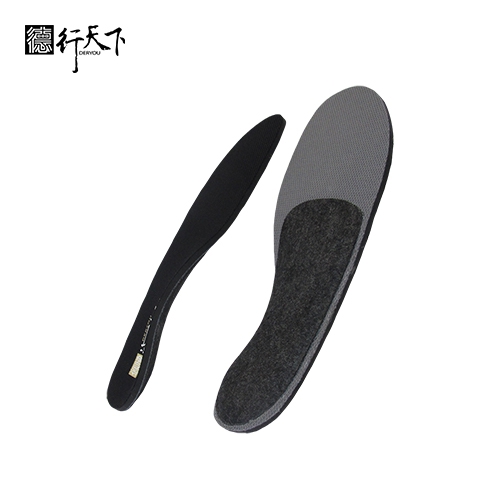
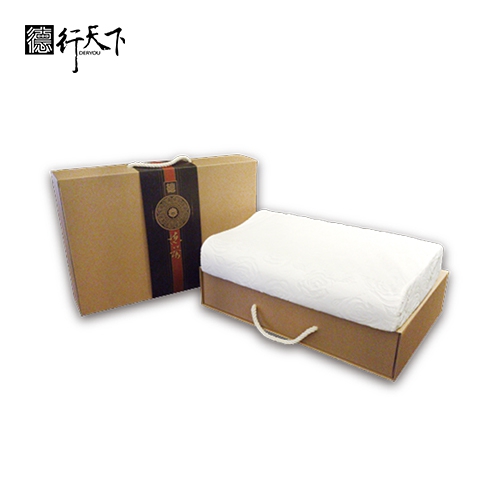
At GuangXin Industrial, our core strength lies in our deep expertise and versatility in insole and pillow manufacturing. We specialize in working with a wide range of materials, including PU (polyurethane), natural latex, and advanced graphene composites, to develop insoles and pillows that meet diverse performance, comfort, and health-support needs.
Whether it's cushioning, support, breathability, or antibacterial function, we tailor material selection to the exact requirements of each project-whether for foot wellness or ergonomic sleep products.
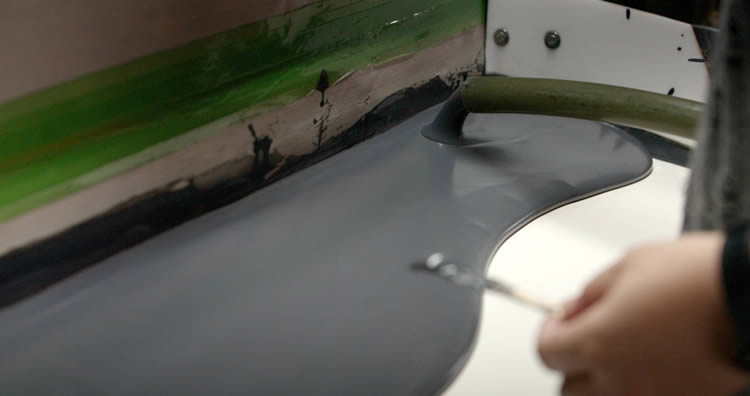
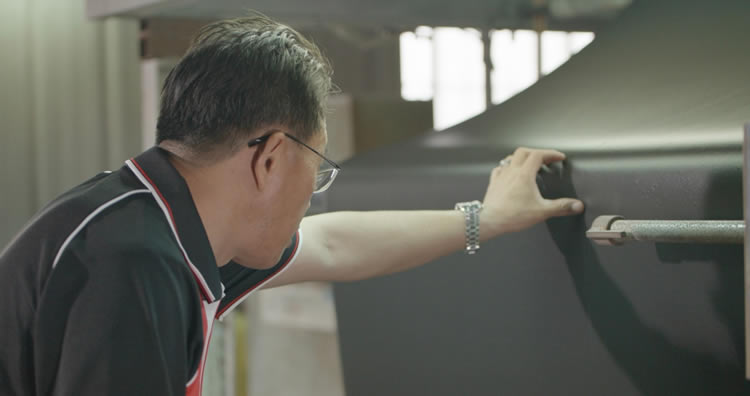
We provide end-to-end manufacturing capabilities under one roof—covering every stage from material sourcing and foaming, to precision molding, lamination, cutting, sewing, and strict quality control. This full-process control not only ensures product consistency and durability, but also allows for faster lead times and better customization flexibility.
With our flexible production capacity, we accommodate both small batch custom orders and high-volume mass production with equal efficiency. Whether you're a startup launching your first insole or pillow line, or a global brand scaling up to meet market demand, GuangXin is equipped to deliver reliable OEM/ODM solutions that grow with your business.
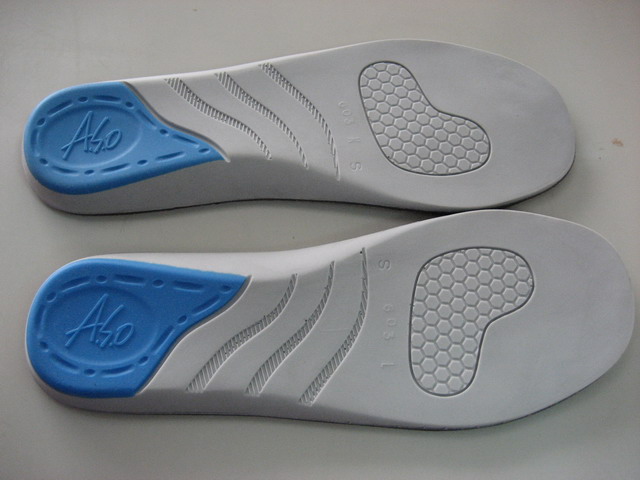
Customization & OEM/ODM Flexibility
GuangXin offers exceptional flexibility in customization and OEM/ODM services, empowering our partners to create insole products that truly align with their brand identity and target market. We develop insoles tailored to specific foot shapes, end-user needs, and regional market preferences, ensuring optimal fit and functionality.
Our team supports comprehensive branding solutions, including logo printing, custom packaging, and product integration support for marketing campaigns. Whether you're launching a new product line or upgrading an existing one, we help your vision come to life with attention to detail and consistent brand presentation.
With fast prototyping services and efficient lead times, GuangXin helps reduce your time-to-market and respond quickly to evolving trends or seasonal demands. From concept to final production, we offer agile support that keeps you ahead of the competition.
Quality Assurance & Certifications
Quality is at the heart of everything we do. GuangXin implements a rigorous quality control system at every stage of production—ensuring that each insole meets the highest standards of consistency, comfort, and durability.
We provide a variety of in-house and third-party testing options, including antibacterial performance, odor control, durability testing, and eco-safety verification, to meet the specific needs of our clients and markets.
Our products are fully compliant with international safety and environmental standards, such as REACH, RoHS, and other applicable export regulations. This ensures seamless entry into global markets while supporting your ESG and product safety commitments.
ESG-Oriented Sustainable Production
At GuangXin Industrial, we are committed to integrating ESG (Environmental, Social, and Governance) values into every step of our manufacturing process. We actively pursue eco-conscious practices by utilizing eco-friendly materials and adopting low-carbon production methods to reduce environmental impact.
To support circular economy goals, we offer recycled and upcycled material options, including innovative applications such as recycled glass and repurposed LCD panel glass. These materials are processed using advanced techniques to retain performance while reducing waste—contributing to a more sustainable supply chain.
We also work closely with our partners to support their ESG compliance and sustainability reporting needs, providing documentation, traceability, and material data upon request. Whether you're aiming to meet corporate sustainability targets or align with global green regulations, GuangXin is your trusted manufacturing ally in building a better, greener future.
Let’s Build Your Next Insole Success Together
Looking for a reliable insole manufacturing partner that understands customization, quality, and flexibility? GuangXin Industrial Co., Ltd. specializes in high-performance insole production, offering tailored solutions for brands across the globe. Whether you're launching a new insole collection or expanding your existing product line, we provide OEM/ODM services built around your unique design and performance goals.
From small-batch custom orders to full-scale mass production, our flexible insole manufacturing capabilities adapt to your business needs. With expertise in PU, latex, and graphene insole materials, we turn ideas into functional, comfortable, and market-ready insoles that deliver value.
Contact us today to discuss your next insole project. Let GuangXin help you create custom insoles that stand out, perform better, and reflect your brand’s commitment to comfort, quality, and sustainability.
🔗 Learn more or get in touch:
🌐 Website: https://www.deryou-tw.com/
📧 Email: shela.a9119@msa.hinet.net
📘 Facebook: facebook.com/deryou.tw
📷 Instagram: instagram.com/deryou.tw
Soft-touch pillow OEM service in Taiwan
Are you looking for a trusted and experienced manufacturing partner that can bring your comfort-focused product ideas to life? GuangXin Industrial Co., Ltd. is your ideal OEM/ODM supplier, specializing in insole production, pillow manufacturing, and advanced graphene product design.
With decades of experience in insole OEM/ODM, we provide full-service manufacturing—from PU and latex to cutting-edge graphene-infused insoles—customized to meet your performance, support, and breathability requirements. Our production process is vertically integrated, covering everything from material sourcing and foaming to molding, cutting, and strict quality control.Vietnam pillow ODM development service
Beyond insoles, GuangXin also offers pillow OEM/ODM services with a focus on ergonomic comfort and functional innovation. Whether you need memory foam, latex, or smart material integration for neck and sleep support, we deliver tailor-made solutions that reflect your brand’s values.
We are especially proud to lead the way in ESG-driven insole development. Through the use of recycled materials—such as repurposed LCD glass—and low-carbon production processes, we help our partners meet sustainability goals without compromising product quality. Our ESG insole solutions are designed not only for comfort but also for compliance with global environmental standards.Graphene cushion OEM factory in Thailand
At GuangXin, we don’t just manufacture products—we create long-term value for your brand. Whether you're developing your first product line or scaling up globally, our flexible production capabilities and collaborative approach will help you go further, faster.Taiwan OEM insole and pillow supplier
📩 Contact us today to learn how our insole OEM, pillow ODM, and graphene product design services can elevate your product offering—while aligning with the sustainability expectations of modern consumers.One-stop OEM/ODM solution provider Vietnam
Recent research has revealed that preterm infants do not habituate, or get used to, repeated pain in the same way as full-term infants, children, and adults. This lack of pain habituation could potentially impact their development, as the ability to become accustomed to moderate, non-life-threatening pain is believed to develop during the third trimester of pregnancy, and preterm babies might not have developed this ability at birth. Preterm Infants’ Inability to Habituate to Pain Poses Developmental Risks According to a study led by researchers from University College London (UCL), preterm infants do not habituate to repeated pain in the same way as full-term infants, children, and adults. The authors of the new study published in the journal Current Biology suggest that if preterm infants have not yet developed the ability to habituate to moderate pain, medical procedures performed in their early weeks of life could potentially affect their development. Lead author Dr. Lorenzo Fabrizi (UCL Neuroscience, Physiology & Pharmacology) said: “The way that we can get used to things can be seen as the simplest example of behavioral and brain plasticity, and it is a basic part of memory and learning. Pain habituation is important because it enables us to preserve physical, emotional, and cognitive resources by not overreacting to pain that is unavoidable or not life-threatening. “Our findings suggest that the ability to get used to repeated pain might develop during the third trimester of pregnancy so that babies born prematurely have not yet developed this ability that full-term babies have right from birth.” The study involved 20 infants at University College London Hospitals (UCLH). Half of them were preterm (and tested while still younger than 35 weeks gestational age), while the other half were either born at full term (seven infants) or preterm but tested at term age (three infants). The two groups were comparable in terms of their actual postnatal age, as the preterm babies had a median age of 14 days, compared to 10 days among the full-term (or term age) group. The researchers were measuring the infants’ responses to a painful but clinically required heel lance (blood test), which was conducted twice (three to 18 minutes apart) for each infant (two lances are sometimes required to collect enough blood; this is not needed for most infants so only those that needed a second lance were included in the study). Heel lances can elicit substantial pain responses in infants, but it was not previously known whether this decreases on repeated lances. To understand this, the researchers recorded the infants’ brain activity with EEG (electroencephalography) electrodes placed on the scalp, and their heart rates using ECG (electrocardiography), while also monitoring their facial expressions and reflexes in withdrawing the leg. Pain Responses in Preterm vs. Full-Term Infants The researchers found that the brain activity was not as strong immediately after the second heel lance, compared to the first, suggesting a habituation response, but this was only the case for full-term infants. They found a similar pattern for heart rate and facial expressions, as preterm infants reacted just as strongly to both heel lances, while the full-term infants appeared to habituate to the pain. The team says this habituation response might be due to the full-term infants anticipating the imminent pain when they receive a second heel lance, so their reaction is less pronounced, or it may instead or additionally be due to their brains modulating their reflexive survival responses. They add that habituation to pain might protect full-term infants, but not those who were pre-term, from potential consequences to their development. First author Dr. Mohammed Rupawala (UCL Neuroscience, Physiology & Pharmacology) said: “While unpleasant and painful clinical procedures are necessary for many young infants, there is the potential to impact their development, such as by altered pain perception, or potentially reduced grey matter or disrupted white matter in the brain.” Co-author Dr. Judith Meek, consultant neonatologist at UCLH, said: “This work raises awareness of the extra vulnerability of premature babies to pain. Clinicians need to do their best to protect them from repeated painful experiences. This should be regarded as an essential component of brain-oriented newborn care.” Reference: “A developmental shift in habituation to pain in human neonates” by Mohammed Rupawala, Oana Bucsea, Maria Pureza Laudiano-Dray, Kimberley Whitehead, Judith Meek, Maria Fitzgerald, Sofia Olhede,Laura Jones and Lorenzo Fabrizi, 16 March 2023, Current Biology. DOI: 10.1016/j.cub.2023.02.071 The study, funded by the Medical Research Council and the European Research Council, involved researchers at UCL, UCLH and York University (Canada).
Under stress, the amygdala in mice brains releases the body’s own cannabinoid molecules, reducing stress signals from the hippocampus, according to a Northwestern Medicine study. This study suggests a possible link between impaired cannabinoid signaling in the brain and an increased risk of stress-related psychiatric disorders, like depression and PTSD. Researchers Uncover How Stress Triggers the Same Receptors As THC During stressful situations, your brain might produce its own cannabinoid substances, functioning to soothe you by stimulating the same receptors in the brain that THC from cannabis plants does. However, the neural networks and patterns of brain activity regulated by these endogenous cannabinoids were not well known. A new Northwestern Medicine study in mice has discovered that a key emotional brain center, the amygdala, releases endogenous (the body’s own) cannabinoid molecules under stress, and these molecules dampen the incoming stress alarm from the hippocampus, a memory and emotion center in the brain. These results provide more support for the hypothesis that these endogenous cannabinoid molecules are a body’s natural coping response to stress. The Link Between Stress and Psychiatric Disorders Stress exposure heightens the risk for the development or worsening of psychiatric disorders from generalized anxiety and major depression to post-traumatic stress disorder (PTSD). “Understanding how the brain adapts to stress at the molecular, cellular, and circuit level could provide critical insight into how stress is translated into mood disorders and may reveal novel therapeutic targets for the treatment of stress-related disorders,” said corresponding study author Dr. Sachi Patel, chair of psychiatry and behavioral sciences at Northwestern University Feinberg School of Medicine and a Northwestern Medicine psychiatrist. The study could indicate that impairments in this endogenous cannabinoid signaling system in the brain could lead to a greater susceptibility to developing stress-related psychiatric disorders including depression and PTSD, although this remains to be determined in humans, Patel said. The study will be published Sept. 12 in Cell Reports. For the study, Northwestern scientists used a new protein sensor that can detect the presence of these cannabinoid molecules at specific brain synapses in real time to show that specific high-frequency patterns of amygdala activity can generate these molecules. The sensor also showed that these molecules were released as a result of several different types of stress in mice. The Effects of Blocking Cannabinoid Receptors When scientists removed the target of these cannabinoids, the cannabinoid receptor type 1, it resulted in a poorer ability to cope with stress and motivational deficits in the mice. Specifically, when the receptor target of these endogenous cannabinoids was removed at hippocampal-amygdala synapses, mice adopted more passive and immobile responses to stress and had a lower preference to drink sweetened sucrose water after stress exposure. The latter finding may relate to anhedonia, or the decrease in pleasure, often experienced by patients with stress-related disorders such as depression and PTSD. One of the leading signaling systems that has been identified as a prominent drug-development candidate for stress-related psychiatric disorders is the endocannabinoid system, Patel said. “Determining whether increasing levels of endogenous cannabinoids can be used as potential therapeutics for stress-related disorders is the next logical step from this study and our previous work,” said Patel, also the Lizzie Gilman Professor of Psychiatry and Behavioral Sciences. “There are ongoing clinical trials in this area that may be able to answer this question in the near future.” Reference: “Endocannabinoid release at ventral hippocampal-amygdala synapses regulates stress-induced behavioral adaptation” by Veronika Kondev, Mustafa Najeed, Farhana Yasmin, Amanda Morgan, Niharika Loomba, Keenan Johnson, Danielle N. Adank, Ao Dong, Eric Delpire, Yulong Li, Danny Winder, Brad A. Grueter and Sachin Patel, 12 September 2023, Cell Reports. DOI: 10.1016/j.celrep.2023.113027 The study was funded by the National Institutes of Health.
British Antarctic Survey camera traveling down the 900-meter-long borehole in the Filchner-Ronne Ice Shelf. (The marine creature pictured is unrelated to the discovery). Credit: Dr. Huw Griffiths/British Antarctic Survey Far underneath the ice shelves of the Antarctic, there’s more life than expected, finds a recent study in the journal Frontiers in Marine Science. During an exploratory survey, researchers drilled through 900 meters (3,000 feet) of ice in the Filchner-Ronne Ice Shelf, situated on the south eastern Weddell Sea. At a distance of 260 km (160 mi) away from the open ocean, under complete darkness and with temperatures of -2.2°C (28°F), very few animals have ever been observed in these conditions. But this study is the first to discover the existence of stationary animals — similar to sponges and potentially several previously unknown species — attached to a boulder on the seafloor. “This discovery is one of those fortunate accidents that pushes ideas in a different direction and shows us that Antarctic marine life is incredibly special and amazingly adapted to a frozen world,” says biogeographer and lead author, Dr. Huw Griffiths of British Antarctic Survey. More Questions Than Answers “Our discovery raises so many more questions than it answers, such as how did they get there? What are they eating? How long have they been there? How common are these boulders covered in life? Are these the same species as we see outside the ice shelf or are they new species? And what would happen to these communities if the ice shelf collapsed?” Floating ice shelves represent the greatest unexplored habitat in the Southern Ocean. They cover more than 1.5m km² of the Antarctic continental shelf, but only a total area similar in size to a tennis court has been studied through eight prior boreholes. Stationary animals — similar to sponges and potentially several previously unknown species — attached to a boulder on the seafloor. Credit: Dr. Huw Griffiths/British Antarctic Survey Current theories on what life could survive under ice shelves suggest that all life becomes less abundant as you move further away from open water and sunlight. Past studies have found some small mobile scavengers and predators, such as fish, worms, jellyfish, or krill, in these habitats. But filter-feeding organisms — which depend on a supply of food from above — were expected to be amongst the first to disappear further under the ice. So, it came as a surprise when the team of geologists, drilling through the ice to collect sediment samples, hit a rock instead of mud at the bottom of the ocean below. They were even more surprised by the video footage, which showed a large boulder covered in strange creatures. New Antarctic Expedition Needed This is the first-ever record of a hard substrate (ie a boulder) community deep beneath an ice shelf and it appears to go against all previous theories of what types of life could survive there. Given the water currents in the region, the researchers calculate that this community may be as much as 1,500 km (900 mi) upstream from the closest source of photosynthesis. Other organisms are also known to collect nutrients from glacial melts or chemicals from methane seeps, but the researchers won’t know more about these organisms until they have the tools to collect samples of these organisms–a significant challenge in itself. “To answer our questions we will have to find a way of getting up close with these animals and their environment — and that’s under 900 meters of ice, 260km away from the ships where our labs are,” continues Griffiths. “This means that as polar scientists, we are going to have to find new and innovative ways to study them and answer all the new questions we have.” Griffiths and the team also note that with the climate crisis and the collapse of these ice shelves, time is running out to study and protect these ecosystems. Reference: “Breaking All the Rules: The First Recorded Hard Substrate Sessile Benthic Community Far Beneath an Antarctic Ice Shelf” by Huw J. Griffiths, Paul Anker, Katrin Linse, Jamie Maxwell, Alexandra L. Post, Craig Stevens, Slawek Tulaczyk and James A. Smith, 15 February 2021, Frontiers in Marine Science. DOI: 10.3389/fmars.2021.642040
DVDV1551RTWW78V
Indonesia high-end foam product OEM/ODM 》ready to support your next launch with full-process expertisePU insole OEM production in Taiwan 》reducing complexity, increasing product valueCustom foam pillow OEM in Indonesia 》trusted by global brands for reliable quality and flexibility
下一則: Graphene cushion OEM factory in China 》where every
限會員,要發表迴響,請先登入


