Introduction – Company Background
GuangXin Industrial Co., Ltd. is a specialized manufacturer dedicated to the development and production of high-quality insoles.
With a strong foundation in material science and footwear ergonomics, we serve as a trusted partner for global brands seeking reliable insole solutions that combine comfort, functionality, and design.
With years of experience in insole production and OEM/ODM services, GuangXin has successfully supported a wide range of clients across various industries—including sportswear, health & wellness, orthopedic care, and daily footwear.
From initial prototyping to mass production, we provide comprehensive support tailored to each client’s market and application needs.
At GuangXin, we are committed to quality, innovation, and sustainable development. Every insole we produce reflects our dedication to precision craftsmanship, forward-thinking design, and ESG-driven practices.
By integrating eco-friendly materials, clean production processes, and responsible sourcing, we help our partners meet both market demand and environmental goals.
Core Strengths in Insole Manufacturing
At GuangXin Industrial, our core strength lies in our deep expertise and versatility in insole and pillow manufacturing. We specialize in working with a wide range of materials, including PU (polyurethane), natural latex, and advanced graphene composites, to develop insoles and pillows that meet diverse performance, comfort, and health-support needs.
Whether it's cushioning, support, breathability, or antibacterial function, we tailor material selection to the exact requirements of each project-whether for foot wellness or ergonomic sleep products.
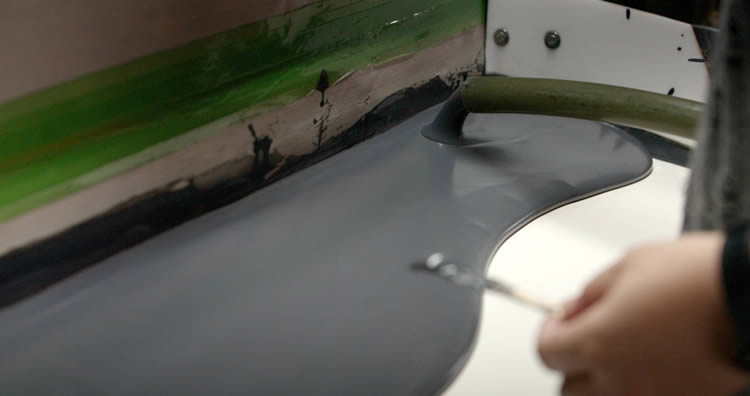
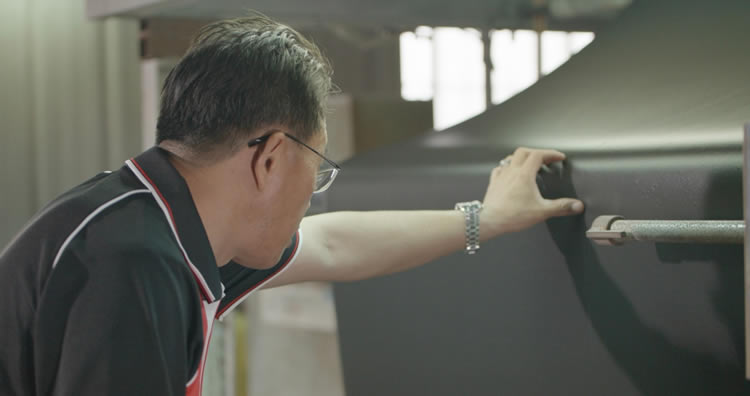
We provide end-to-end manufacturing capabilities under one roof—covering every stage from material sourcing and foaming, to precision molding, lamination, cutting, sewing, and strict quality control. This full-process control not only ensures product consistency and durability, but also allows for faster lead times and better customization flexibility.
With our flexible production capacity, we accommodate both small batch custom orders and high-volume mass production with equal efficiency. Whether you're a startup launching your first insole or pillow line, or a global brand scaling up to meet market demand, GuangXin is equipped to deliver reliable OEM/ODM solutions that grow with your business.
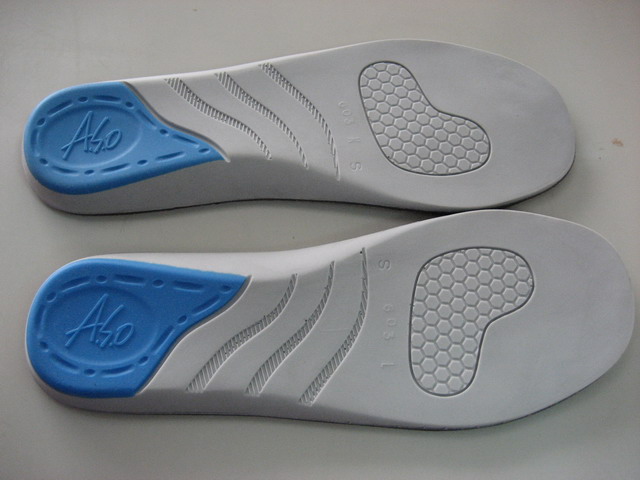
Customization & OEM/ODM Flexibility
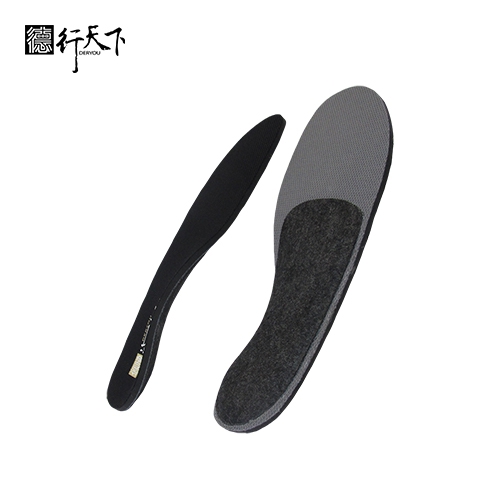
GuangXin offers exceptional flexibility in customization and OEM/ODM services, empowering our partners to create insole products that truly align with their brand identity and target market. We develop insoles tailored to specific foot shapes, end-user needs, and regional market preferences, ensuring optimal fit and functionality.
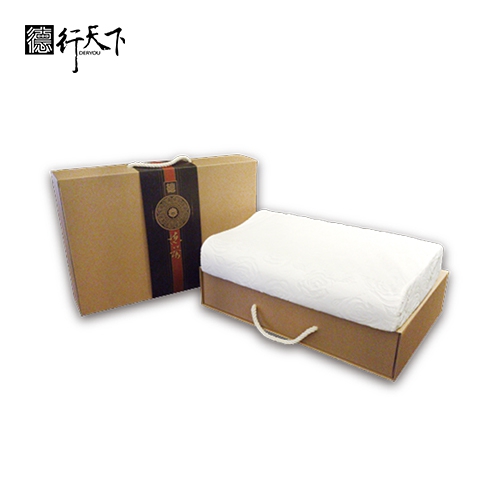
Our team supports comprehensive branding solutions, including logo printing, custom packaging, and product integration support for marketing campaigns. Whether you're launching a new product line or upgrading an existing one, we help your vision come to life with attention to detail and consistent brand presentation.
With fast prototyping services and efficient lead times, GuangXin helps reduce your time-to-market and respond quickly to evolving trends or seasonal demands. From concept to final production, we offer agile support that keeps you ahead of the competition.
Quality Assurance & Certifications
Quality is at the heart of everything we do. GuangXin implements a rigorous quality control system at every stage of production—ensuring that each insole meets the highest standards of consistency, comfort, and durability.
We provide a variety of in-house and third-party testing options, including antibacterial performance, odor control, durability testing, and eco-safety verification, to meet the specific needs of our clients and markets.
Our products are fully compliant with international safety and environmental standards, such as REACH, RoHS, and other applicable export regulations. This ensures seamless entry into global markets while supporting your ESG and product safety commitments.
ESG-Oriented Sustainable Production
At GuangXin Industrial, we are committed to integrating ESG (Environmental, Social, and Governance) values into every step of our manufacturing process. We actively pursue eco-conscious practices by utilizing eco-friendly materials and adopting low-carbon production methods to reduce environmental impact.
To support circular economy goals, we offer recycled and upcycled material options, including innovative applications such as recycled glass and repurposed LCD panel glass. These materials are processed using advanced techniques to retain performance while reducing waste—contributing to a more sustainable supply chain.
We also work closely with our partners to support their ESG compliance and sustainability reporting needs, providing documentation, traceability, and material data upon request. Whether you're aiming to meet corporate sustainability targets or align with global green regulations, GuangXin is your trusted manufacturing ally in building a better, greener future.
Let’s Build Your Next Insole Success Together
Looking for a reliable insole manufacturing partner that understands customization, quality, and flexibility? GuangXin Industrial Co., Ltd. specializes in high-performance insole production, offering tailored solutions for brands across the globe. Whether you're launching a new insole collection or expanding your existing product line, we provide OEM/ODM services built around your unique design and performance goals.
From small-batch custom orders to full-scale mass production, our flexible insole manufacturing capabilities adapt to your business needs. With expertise in PU, latex, and graphene insole materials, we turn ideas into functional, comfortable, and market-ready insoles that deliver value.
Contact us today to discuss your next insole project. Let GuangXin help you create custom insoles that stand out, perform better, and reflect your brand’s commitment to comfort, quality, and sustainability.
🔗 Learn more or get in touch:
🌐 Website: https://www.deryou-tw.com/
📧 Email: shela.a9119@msa.hinet.net
📘 Facebook: facebook.com/deryou.tw
📷 Instagram: instagram.com/deryou.tw
Indonesia insole ODM for global brands
Are you looking for a trusted and experienced manufacturing partner that can bring your comfort-focused product ideas to life? GuangXin Industrial Co., Ltd. is your ideal OEM/ODM supplier, specializing in insole production, pillow manufacturing, and advanced graphene product design.
With decades of experience in insole OEM/ODM, we provide full-service manufacturing—from PU and latex to cutting-edge graphene-infused insoles—customized to meet your performance, support, and breathability requirements. Our production process is vertically integrated, covering everything from material sourcing and foaming to molding, cutting, and strict quality control.Private label insole and pillow OEM China
Beyond insoles, GuangXin also offers pillow OEM/ODM services with a focus on ergonomic comfort and functional innovation. Whether you need memory foam, latex, or smart material integration for neck and sleep support, we deliver tailor-made solutions that reflect your brand’s values.
We are especially proud to lead the way in ESG-driven insole development. Through the use of recycled materials—such as repurposed LCD glass—and low-carbon production processes, we help our partners meet sustainability goals without compromising product quality. Our ESG insole solutions are designed not only for comfort but also for compliance with global environmental standards.ODM pillow factory in Indonesia
At GuangXin, we don’t just manufacture products—we create long-term value for your brand. Whether you're developing your first product line or scaling up globally, our flexible production capabilities and collaborative approach will help you go further, faster.Custom graphene foam processing Taiwan
📩 Contact us today to learn how our insole OEM, pillow ODM, and graphene product design services can elevate your product offering—while aligning with the sustainability expectations of modern consumers.Thailand graphene sports insole ODM
A study by the University of California San Diego reveals how fruit flies efficiently process complex odors through a pre-processing stage, which could inspire new compact sensory technologies. UC San Diego’s study shows fruit flies use a pre-processing mechanism in their sensory system to efficiently decode complex odors, offering insights into sensory system functions and potential technological applications. The human sense of smell is complex, using billions of neurons to identify diverse odors. In contrast, insects like fruit flies have only 100,000 neurons but still effectively process complex scents for survival tasks like finding food, mating, and avoiding predators. In a new study, researchers from the University of California, San Diego reveal the simple, yet efficient systems flies have that allow them to overcome their limited sensory capabilities. “Our work sheds light on the sensory processing algorithms insects use to respond to complex olfactory stimuli,” said Palka Puri, lead author of the study and physics Ph.D. student. “We showed that the specialized organization of insect sensory neurons holds the key to the puzzle — implementing an essential processing step that facilitates computations in the central brain.” Puri and his co-authors, Postdoctoral Scholar Shiuan-Tze Wu, Associate Professor Chih-Ying Su, and Assistant Professor Johnatan Aljadeff, have published these findings in the journal Proceedings of the National Academy of Sciences (PNAS). New Insights Into Insect Sensory Processing This new study challenges previous assumptions that the central brain is the primary site for odor processing in flies. Instead, it shows that the effectiveness of the insect’s sensory capabilities relies on a “pre-processing” stage in the periphery of their sensory system, which prepares the odor signals for computations that occur later in the central brain region. UC San Diego scientists have proposed a solution for how fruit flies use a simple but efficient system to recognize odors. Credit: Aljadeff Lab, UC San Diego Mechanisms of Odor Detection in Flies Flies smell through their antennae, which are replete with sensory hairs that detect elements of the environment around them. Each sensory hair usually features two olfactory receptor neurons, or ORNs, that are activated by different odor molecules in the environment. Intriguingly, ORNs in the same sensory hair are strongly coupled by electrical interactions. “This scenario is akin to two current-carrying wires placed close together,” explained Puri. “The signals carried by the wires interfere with each other through electromagnetic interactions.” In the case of the fly olfactory system, however, this interference is beneficial. The researchers showed that as flies encounter an odor signal, the specific pattern of interference between the receptors helps flies quickly compute the “gist” of the odor’s meaning: “Is it good or bad for me?” The result of this preliminary evaluation in the periphery is then relayed to a specific region in the fly’s central brain, where the information about odors present in the outside world is translated into a behavioral response. Researchers have shown that as flies encounter an odor signal, the specific pattern of interference between olfactory receptors helps flies quickly compute the “gist” of the odor’s meaning. Credit: Palka Puri, UC San Diego Study Details and Results The researchers constructed a mathematical model of how odor signals are processed by electrical coupling between ORNs. They then analyzed the wiring diagram (“connectome”) of the fly brain, a large-scale dataset generated by scientists and engineers at Howard Hughes Medical Institute’s research campus. This allowed the researchers to trace how odor signals from the sensory periphery are integrated into the central brain. “Remarkably, our work shows that the optimal odor blend — the precise ratio to which each sensory hair is most sensitive — is defined by the genetically predetermined size difference between the coupled olfactory neurons,” said Aljadeff, a faculty member in the School of Biological Sciences. “Our work highlights the far-reaching algorithmic role of the sensory periphery for the processing of both innately meaningful and learned odors in the central brain.” Aljadeff describes the system with a visual analogy. Like a specialized camera that can detect specific types of images, the fly has developed a genetically driven method to distinguish between images, or in this case, mixtures of odors. “We discovered that the fly brain has the wiring to read the images from this very special camera to then initiate behavior,” he said. To arrive at these results, the research was integrated with previous findings from Su’s lab that described the conserved organization of ORNs in the fly olfactory system into sensory hairs. The fact that signals carried by the same odor molecules always interfere with each other, in every fly, suggested to the researchers that this organization has meaning. “This analysis shows how neurons in higher brain centers can take advantage of balanced computation in the periphery,” said Su. “What really brings this work to another level is how much this peripheral pre-processing can influence higher brain function and circuit operations.” Future Research and Applications This work may inspire research into the role of processing in peripheral organs in other senses, such as sight or hearing, and help form a foundation for designing compact detection devices with the ability to interpret complex data. “These findings yield insight into the fundamental principles of complex sensory computations in biology, and open doors for future research on using these principles to design powerful engineered systems,” said Puri. Reference: “Peripheral preprocessing in Drosophila facilitates odor classification” by Palka Puri, Shiuan-Tze Wu, Chih-Ying Su and Johnatan Aljadeff, 16 May 2024, Proceedings of the National Academy of Sciences. DOI: 10.1073/pnas.2316799121
A whole worm from the muscle transgenic line where the muscle cells are glowing green. Credit: Lorenzo Ricci Harvard scientists take the study of regeneration to the next level by making three-banded panther worms transgenic. Cut off the head of a three-banded panther worm and another will take its place — mouth, brain, and all. Cut off its tail and it will grow another. Cut the worm into three separate pieces and within eight weeks there’ll be three fully formed worms. Cut it in … well, you get a picture… Put simply: Three-banded panther worms are one of the greatest of all time when it comes to whole-body regeneration. It’s why scientists started studying this Tic Tac-sized worm in order to learn how it pulls off this amazing feat. Now, a team of researchers is taking the study of these worms to the next level by making them glow in the dark. The work is described in a new paper in Developmental Cell and is led by Mansi Srivastava, a professor of organismic and evolutionary biology at Harvard who first collected these worms in 2010 to use as a model organism. Now, worms that glow in the dark with UV light may sound gimmicky, but the researchers of the study explain it’s far from it. The scientific way to say this is that the worms are now transgenic. Transgenesis is when scientists introduce something into the genome of an organism that is not normally part of that genome. “It’s a tool that biologists use to study how cells or tissues work within the body of an animal,” Srivastava said. The glow-in-the-dark factor comes from the introduction of a gene that, when it becomes a protein, gives off certain fluorescent glows. These fluorescent proteins either glow green or red and can lead to glowing muscle cells or glowing skin cells, for example. What this glow-up then allows is an ability to visualize with much better detail what the cells look like, where they are in the animal, and how they interact with each other. Researchers are also able to add or takeaway specific information to the genome of the worm. This level of precision — when it comes to both visual resolution of the cells and ability to add to the genome or even tweak it how they want — is what makes transgenesis particularly powerful. It allows the researchers to study the specific mechanism of any process in an organism. In the case of three-banded panther worms, a marine animal scientifically known as an acoel worm named Hofstenia miamia, researchers can do very precise manipulations, such as switching off certain genes. This could likely force the worm into some mistakes when it comes to regeneration, like growing a tail instead of a head or two heads instead of one and in the wrong place. This can ultimately help scientists truly narrow down what genes are required for the worm to carry out its usually perfect whole-body regeneration. Now, with the ability to make transgenic worms, the researchers say they are most excited to study a population of stem cells critical to regeneration. The cells are called neoblasts and are believed to be pluripotent, meaning they can produce any other cell type in the animal, such as neurons, skin cells, muscle cells, or gut cells. “We don’t know how any one of these cells actually behave in the animal during regeneration,” Srivastava said. “Having the transgenic worms will allow us to watch the cells in the context of the animal as it regenerates.” Already, transgenesis in these worms has allowed the scientists to gain some novel biological insights into how the muscle fibers in the worm connect to each other and to other cells, such as those in the skin and the gut. The researchers saw muscle cells have extensions that interlock in tight columns and keep a closely-knit grid that gives the worm structure and support, almost like a skeleton. The researchers are interested in knowing next whether the muscles are doing more than just holding things together, but are also storing and communicating information on what needs to be regenerated. Making a transgenic worm line takes about eight weeks and the Srivastava lab has the steps down packed. They inject modified DNA into embryos that have just been fertilized. That DNA and its modifications then get incorporated into the genome of the cells as they divide. When that worm grows it will be glowing and that glow will be passed along to its children and their children. Srivastava has been studying these worms for a decade since she collected 120 of them in Bermuda when she was a postdoctoral researcher at the Whitehead Institute. In 2015, she joined the Harvard Department of Organismic and Evolutionary Biology, and launched a research program focused on studying regeneration and stem cells in panther worms. In a 2019 study, Srivastava and her colleagues uncovered a number of DNA switches that appear to control genes for whole-body regeneration in the worms. Studying the worms for so long Srivastava and her team have grown quite attached to them, their striped patterns, and their intriguing behavior – from how they mate to being quite voracious predators, even cannibals on occasion. For instance, if they haven’t been fed in a while and there’s a few in a tank together they will take bites out of each other. Regeneration really comes in handy then, but if there’s a much bigger worm in there, some have been known to swallow smaller worms whole. All that considered: “They’re absolutely charming,” Srivastava said. “They’re beautiful organisms.” Reference: “Transgenesis in the acoel worm Hofstenia miamia” by Lorenzo Ricci and Mansi Srivastava, 8 November 2021, Developmental Cell. DOI: 10.1016/j.devcel.2021.10.012
A Gombe chimpanzee using a termite fishing tool to fish termites. Credit: Alejandra Pascual-Garrido Chimpanzees select materials for tools based on flexibility, revealing early engineering instincts linked to human tool evolution. A multidisciplinary team of researchers from the School of Anthropology and Museum Ethnography at the University of Oxford, the Max Planck Institute for Evolutionary Anthropology, the Jane Goodall Institute in Tanzania, the University of Algarve, and the University of Porto in Portugal, and the University of Leipzig has discovered that chimpanzees in Gombe Stream National Park, Tanzania, use a form of engineering in their tool-making. Specifically, they deliberately select plants that yield more flexible materials when crafting tools for termite fishing. The findings, published in the journal iScience, provide important insights into the technical skills involved in making perishable tools, an area that remains largely unknown in the study of human technological evolution. A female chimpanzee eating termites using a tool alongside her infant at Gombe Stream National Park, Tanzania. Credit: Alejandra Pascual-Garrido Termites are a valuable food source for chimpanzees, offering energy, fat, vitamins, minerals, and protein. To access them, chimpanzees use thin probes to extract termites from their nests. Since the interior of termite mounds consists of narrow, winding tunnels, researchers proposed that flexible tools would be more effective than rigid ones for navigating these spaces and retrieving the insects. Testing chimpanzee tool materials for flexibility To test this, first author Alejandra Pascual-Garrido took a portable mechanical tester to Gombe and measured how much force it took to bend plant materials used by the apes compared to plant materials that were available but never used. Findings showed that plant species never used by chimpanzees were 175 percent more rigid than their preferred materials. Furthermore, even among plants growing near termite mounds, those that showed obvious signs of regular use by the apes produced more flexible tools than nearby plants that showed no signs of use. Dr Alejandra Pascual-Garrido at a termite mound recently fished by chimpanzees at Gombe Stream National Park, Tanzania. Credit: Alejandra Pascual-Garrido “This is the first comprehensive evidence that wild chimpanzees select tool materials for termite fishing based on specific mechanical properties,” says Alejandra Pascual-Garrido, who has been studying the raw materials used in chimpanzee tools in Gombe for more than a decade. Notably, certain plant species, such as Grewia spp., also constitute tool material for termite fishing chimpanzee communities living up to 5,000 kilometers away from Gombe, implying that the mechanics of these plant materials could be a foundation for such ubiquitous preferences and that rudimentary engineering may be deeply rooted in chimpanzee tool-making culture. Chimpanzees show an intuitive understanding of material function Wild chimpanzees may therefore possess a kind of “folk physics” – an intuitive comprehension of material properties that helps them choose the best tools for the job. Their natural engineering ability is not just about using any stick or plant that is available; chimpanzees specifically select materials with mechanical properties that can make their foraging tools more effective. Dr Alejandra Pascual-Garrido, Research Affiliate at the School of Anthropology and Museum Ethnography, University of Oxford, said: “This novel approach, which combines biomechanics with animal behavior, helps us better understand the cognitive processes behind chimpanzee tool construction and how they evaluate and select materials based on functional properties.” A Gombe chimpanzee using a termite fishing tool to fish termites. Credit: Alejandra Pascual-Garrido The findings raise important questions about how this knowledge is learned, maintained, and transmitted across generations, for example, by young chimpanzees observing and using their mothers’ tools, and whether similar mechanical principles determine chimpanzees’ selection of materials for making other foraging tools, such as those used for eating ants or harvesting honey. Linking chimpanzee tool use to human evolution “This finding has important implications for understanding how humans might have evolved their remarkable tool-using abilities,” explains Adam van Casteren, Department of Human Origins, Max Planck Institute for Evolutionary Anthropology, a specialist in biomechanics and evolutionary biology. “While perishable materials like wood rarely survive in the archaeological record, the mechanical principles behind effective tool construction and use remain constant across species and time.” By studying how chimpanzees select materials based on specific structural and/or mechanical properties, we can better understand the physical constraints and requirements that would have applied to early human tool use. Using such a comparative functional framework provides new insights into aspects of early technology that are not preserved in the archaeological record. Reference: “Engineering skills in the manufacture of tools by wild chimpanzees” by Alejandra Pascual-Garrido, Susana Carvalho, Deus Mjungu, Ellen Schulz-Kornas, and Adam van Casteren, 24 March 2025, iScience. DOI: 10.1016/j.isci.2025.112158
DVDV1551RTWW78V
Taiwan insole ODM for global brands 》perfect for brands looking to scale with low-MOQ flexibilityTaiwan custom product OEM/ODM manufacturing factory 》simplifying complex ideas into market-ready productsEco-friendly pillow OEM manufacturer Thailand 》crafted to meet the needs of todayis conscious consumers
下一則: Smart pillow ODM manufacturer Thailand 》minimizing
限會員,要發表迴響,請先登入


