Introduction – Company Background
GuangXin Industrial Co., Ltd. is a specialized manufacturer dedicated to the development and production of high-quality insoles.
With a strong foundation in material science and footwear ergonomics, we serve as a trusted partner for global brands seeking reliable insole solutions that combine comfort, functionality, and design.
With years of experience in insole production and OEM/ODM services, GuangXin has successfully supported a wide range of clients across various industries—including sportswear, health & wellness, orthopedic care, and daily footwear.
From initial prototyping to mass production, we provide comprehensive support tailored to each client’s market and application needs.
At GuangXin, we are committed to quality, innovation, and sustainable development. Every insole we produce reflects our dedication to precision craftsmanship, forward-thinking design, and ESG-driven practices.
By integrating eco-friendly materials, clean production processes, and responsible sourcing, we help our partners meet both market demand and environmental goals.
Core Strengths in Insole Manufacturing
At GuangXin Industrial, our core strength lies in our deep expertise and versatility in insole and pillow manufacturing. We specialize in working with a wide range of materials, including PU (polyurethane), natural latex, and advanced graphene composites, to develop insoles and pillows that meet diverse performance, comfort, and health-support needs.
Whether it's cushioning, support, breathability, or antibacterial function, we tailor material selection to the exact requirements of each project-whether for foot wellness or ergonomic sleep products.
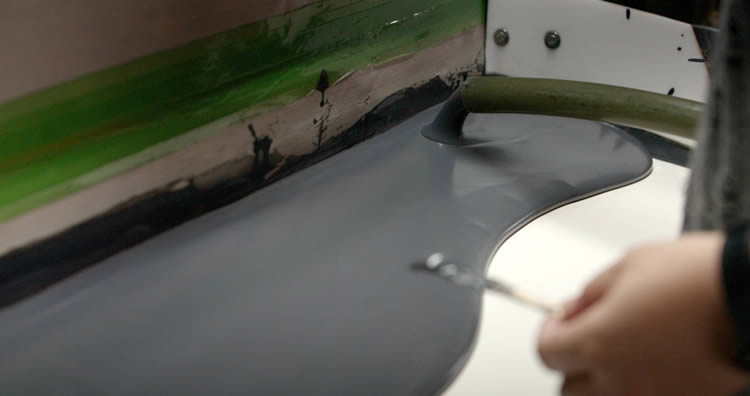
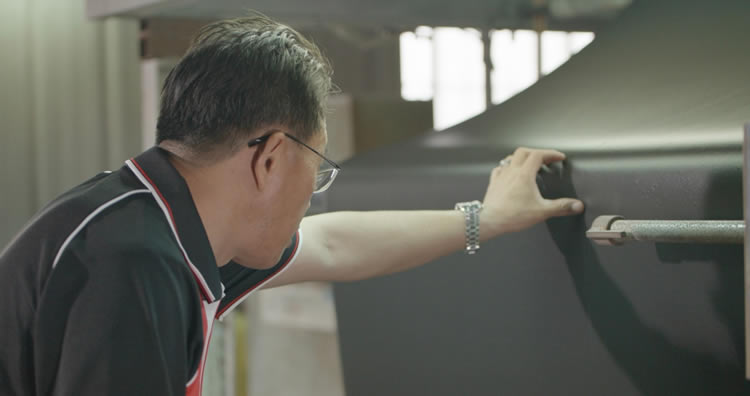
We provide end-to-end manufacturing capabilities under one roof—covering every stage from material sourcing and foaming, to precision molding, lamination, cutting, sewing, and strict quality control. This full-process control not only ensures product consistency and durability, but also allows for faster lead times and better customization flexibility.
With our flexible production capacity, we accommodate both small batch custom orders and high-volume mass production with equal efficiency. Whether you're a startup launching your first insole or pillow line, or a global brand scaling up to meet market demand, GuangXin is equipped to deliver reliable OEM/ODM solutions that grow with your business.
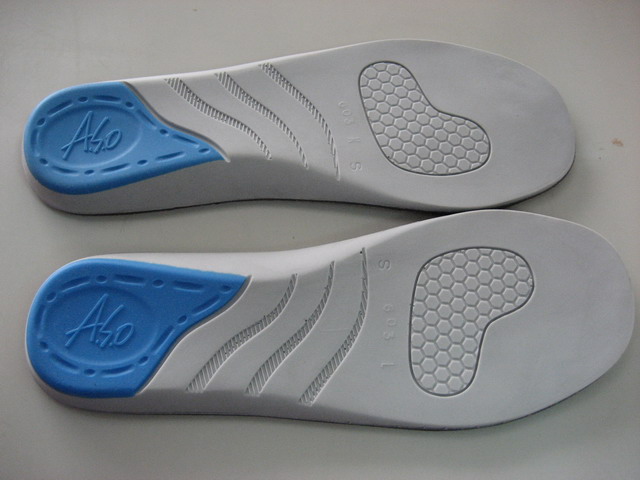
Customization & OEM/ODM Flexibility
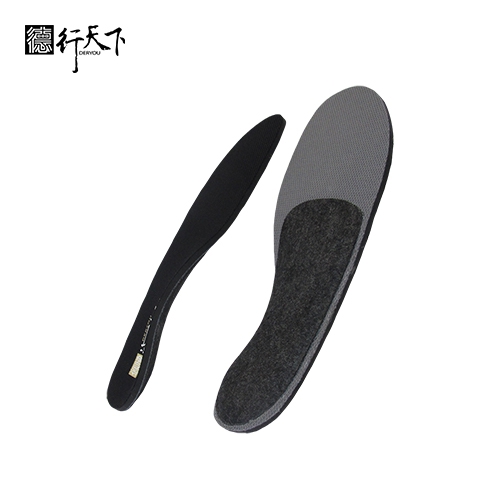
GuangXin offers exceptional flexibility in customization and OEM/ODM services, empowering our partners to create insole products that truly align with their brand identity and target market. We develop insoles tailored to specific foot shapes, end-user needs, and regional market preferences, ensuring optimal fit and functionality.
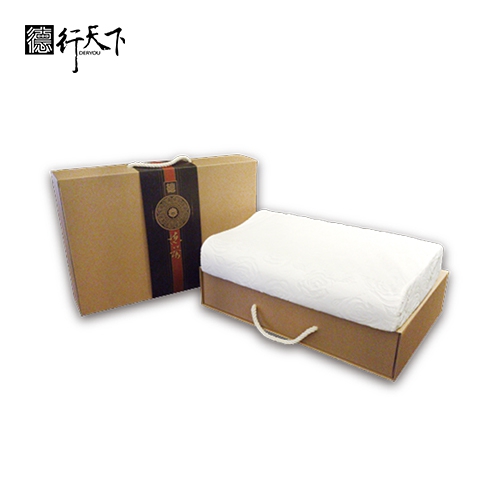
Our team supports comprehensive branding solutions, including logo printing, custom packaging, and product integration support for marketing campaigns. Whether you're launching a new product line or upgrading an existing one, we help your vision come to life with attention to detail and consistent brand presentation.
With fast prototyping services and efficient lead times, GuangXin helps reduce your time-to-market and respond quickly to evolving trends or seasonal demands. From concept to final production, we offer agile support that keeps you ahead of the competition.
Quality Assurance & Certifications
Quality is at the heart of everything we do. GuangXin implements a rigorous quality control system at every stage of production—ensuring that each insole meets the highest standards of consistency, comfort, and durability.
We provide a variety of in-house and third-party testing options, including antibacterial performance, odor control, durability testing, and eco-safety verification, to meet the specific needs of our clients and markets.
Our products are fully compliant with international safety and environmental standards, such as REACH, RoHS, and other applicable export regulations. This ensures seamless entry into global markets while supporting your ESG and product safety commitments.
ESG-Oriented Sustainable Production
At GuangXin Industrial, we are committed to integrating ESG (Environmental, Social, and Governance) values into every step of our manufacturing process. We actively pursue eco-conscious practices by utilizing eco-friendly materials and adopting low-carbon production methods to reduce environmental impact.
To support circular economy goals, we offer recycled and upcycled material options, including innovative applications such as recycled glass and repurposed LCD panel glass. These materials are processed using advanced techniques to retain performance while reducing waste—contributing to a more sustainable supply chain.
We also work closely with our partners to support their ESG compliance and sustainability reporting needs, providing documentation, traceability, and material data upon request. Whether you're aiming to meet corporate sustainability targets or align with global green regulations, GuangXin is your trusted manufacturing ally in building a better, greener future.
Let’s Build Your Next Insole Success Together
Looking for a reliable insole manufacturing partner that understands customization, quality, and flexibility? GuangXin Industrial Co., Ltd. specializes in high-performance insole production, offering tailored solutions for brands across the globe. Whether you're launching a new insole collection or expanding your existing product line, we provide OEM/ODM services built around your unique design and performance goals.
From small-batch custom orders to full-scale mass production, our flexible insole manufacturing capabilities adapt to your business needs. With expertise in PU, latex, and graphene insole materials, we turn ideas into functional, comfortable, and market-ready insoles that deliver value.
Contact us today to discuss your next insole project. Let GuangXin help you create custom insoles that stand out, perform better, and reflect your brand’s commitment to comfort, quality, and sustainability.
🔗 Learn more or get in touch:
🌐 Website: https://www.deryou-tw.com/
📧 Email: shela.a9119@msa.hinet.net
📘 Facebook: facebook.com/deryou.tw
📷 Instagram: instagram.com/deryou.tw
Custom graphene foam processing Indonesia
Are you looking for a trusted and experienced manufacturing partner that can bring your comfort-focused product ideas to life? GuangXin Industrial Co., Ltd. is your ideal OEM/ODM supplier, specializing in insole production, pillow manufacturing, and advanced graphene product design.
With decades of experience in insole OEM/ODM, we provide full-service manufacturing—from PU and latex to cutting-edge graphene-infused insoles—customized to meet your performance, support, and breathability requirements. Our production process is vertically integrated, covering everything from material sourcing and foaming to molding, cutting, and strict quality control.Indonesia neck support pillow OEM
Beyond insoles, GuangXin also offers pillow OEM/ODM services with a focus on ergonomic comfort and functional innovation. Whether you need memory foam, latex, or smart material integration for neck and sleep support, we deliver tailor-made solutions that reflect your brand’s values.
We are especially proud to lead the way in ESG-driven insole development. Through the use of recycled materials—such as repurposed LCD glass—and low-carbon production processes, we help our partners meet sustainability goals without compromising product quality. Our ESG insole solutions are designed not only for comfort but also for compliance with global environmental standards.China eco-friendly graphene material processing
At GuangXin, we don’t just manufacture products—we create long-term value for your brand. Whether you're developing your first product line or scaling up globally, our flexible production capabilities and collaborative approach will help you go further, faster.Flexible manufacturing OEM & ODM Vietnam
📩 Contact us today to learn how our insole OEM, pillow ODM, and graphene product design services can elevate your product offering—while aligning with the sustainability expectations of modern consumers.Indonesia orthopedic insole OEM manufacturer
Scientists have created a potato super pangenome to identify traits for more resilient and nutritious potatoes. This extensive genetic database could aid in developing disease-resistant and climate-adaptive potatoes, benefiting global food security. Researchers have compiled the genome sequences of almost 300 types of potatoes and their wild cousins to create crops that are more nutritious, resistant to diseases, and resilient to weather conditions. As global warming increasingly threatens the stability of food sources worldwide, researchers from McGill University are exploring methods to enhance both the resilience and nutritional value of potatoes. Led by Professor Martina Strömvik, the team has developed a potato super pangenome to identify genetic characteristics that could pave the way for the next generation of super potatoes. “Our super pangenome sheds light on the potato’s genetic diversity and what kinds of genetic traits could potentially be bred into our modern-day crop to make it better,” says Professor Strömvik, who collaborated with researchers across Canada, the United States, and Peru. “It represents 60 species and is the most extensive collection of genome sequence data for the potato and its relatives to date,” she adds. A genome is an organism’s complete set of genetic instructions known as the DNA sequence, while a pangenome aims to capture the complete genetic diversity within a species, and a super pangenome also includes multiple species. Imagining a Disease-Free and Drought or Frost-Proof Potato The potato is a staple food source for many people around the world – and it’s one of the most important food crops globally, after rice and wheat in terms of human consumption. “Wild potato species can teach us a lot about what genetic traits are critical in adapting to climate change and extreme weather, enhancing nutritional quality, and improving food security,” says Professor Strömvik. To build the potato pangenome, the researchers used supercomputers to crunch data from public databanks, including gene banks in Canada, the United States, and Peru. According to the researchers, the pangenome can be used to answer many questions about the evolution of this important crop that was domesticated by Indigenous peoples in the mountains of southern Peru nearly 10,000 years ago. It could also be used to help identify specific genes to create a super spud using traditional breeding or gene editing technology. “Scientists hope to develop something that can defend against various forms of diseases and better withstand extreme weather like lots of rain, frost, or a drought,” says Professor Strömvik. Reference: “Pangenome analyses reveal impact of transposable elements and ploidy on the evolution of potato species” by Ilayda Bozan, Sai Reddy Achakkagari, Noelle L. Anglin, David Ellis, Helen H. Tai and Martina V. Strömvik, 24 July 2023, Proceedings of the National Academy of Sciences. DOI: 10.1073/pnas.2211117120
Visualization of the bridge recombinase mechanism. Credit: Visual Science Arc Institute scientists have discovered the bridge recombinase mechanism, a revolutionary tool that enables fully programmable DNA rearrangements. Their finding, detailed in a recent Nature publication, is the first DNA recombinase that uses a non-coding RNA for sequence-specific selection of target and donor DNA molecules. This bridge RNA is programmable, allowing the user to specify any desired genomic target sequence and any donor DNA molecule to be inserted. The research was developed in collaboration with the labs of Silvana Konermann, Arc Institute Core Investigator and Stanford University Assistant Professor of Biochemistry, and Hiroshi Nishimasu, Professor of Structural Biology at the University of Tokyo. Visualization of the bridge recombinase mechanism highlighting the donor and target binding loops. Credit: Visual Science A New Era of Genetic Programming “The bridge RNA system is a fundamentally new mechanism for biological programming,” said Dr. Patrick Hsu, senior author of the study and an Arc Institute Core Investigator and University of California, Berkeley Assistant Professor of Bioengineering. “Bridge recombination can universally modify genetic material through sequence-specific insertion, excision, inversion, and more, enabling a word processor for the living genome beyond CRISPR.” The bridge recombination system hails from insertion sequence 110 (IS110) elements, one of countless types of transposable elements – or “jumping genes” – that cut and paste themselves to move within and between microbial genomes. Transposable elements are found across all life forms and have evolved into professional DNA manipulation machines to survive. The IS110 elements are very minimal, consisting only of a gene encoding the recombinase enzyme, plus flanking DNA segments that have, until now, remained a mystery. Visualization of the bridge recombinase mechanism highlighting the transposon DNA and Genomic Target site. Credit: Visual Science Advanced Mechanism of Bridge RNA The Hsu lab found that when IS110 excises itself from a genome, the non-coding DNA ends are joined together to produce an RNA molecule – the bridge RNA – that folds into two loops. One loop binds to the IS110 element itself, while the other loop binds to the target DNA where the element will be inserted. The bridge RNA is the first example of a bispecific guide molecule, specifying the sequence of both target and donor DNA through base-pairing interactions. A team of researchers from the Arc Institute have discovered the bridge recombinase mechanism, a precise and powerful tool to recombine and rearrange DNA in a programmable way. Going far beyond programmable genetic scissors like CRISPR, the bridge recombinase mechanism enables scientists to specify not only the target DNA to be modified, but also the donor material to be recognized, so they can insert new, functional genetic material, cut out faulty DNA, or invert any two sequences of interest. Discover more in this short video visualizing the key aspects of the bridge recombination mechanism. Credit: Visual Science Each loop of the bridge RNA is independently programmable, allowing researchers to mix and match any target and donor DNA sequences of interest. This means the system can go far beyond its natural role that inserts the IS110 element itself, instead enabling insertion of any desirable genetic cargo—like a functional copy of a faulty, disease-causing gene—into any genomic location. In this work, the team demonstrated over 60% insertion efficiency of a desired gene in E. coli with over 94% specificity for the correct genomic location. “These programmable bridge RNAs distinguish IS110 from other known recombinases, which lack an RNA component and cannot be programmed,” said co-lead author Nick Perry, a UC Berkeley bioengineering graduate student. “It’s as if the bridge RNA were a universal power adapter that makes IS110 compatible with any outlet.” Patrick Hsu, Nick Perry and Matt Durrant discuss the newly discovered bridge recombinase mechanism. Credit: Ray Rudolph Collaborative Research and Future Implications The Hsu lab’s discovery is complemented by their collaboration with the lab of Dr. Hiroshi Nishimasu at the University of Tokyo, also published on June 26 in Nature. The Nishimasu lab used cryo-electron microscopy to determine the molecular structures of the recombinase-bridge RNA complex bound to target and donor DNA, sequentially progressing through the key steps of the recombination process. Januka Athukoralage, Nicholas Perry, Silvana Konermann, Matthew Durrant, Patrick Hsu, James Pai and Aditya Jangid. Credit: Ray Rudolph With further exploration and development, the bridge mechanism promises to usher in a third generation of RNA-guided systems, expanding beyond the DNA and RNA cutting mechanisms of CRISPR and RNA interference (RNAi) to offer a unified mechanism for programmable DNA rearrangements. Critical for the further development of the bridge recombination system for mammalian genome design, the bridge recombinase joins both DNA strands without releasing cut DNA fragments – sidestepping a key limitation of current state-of-the-art genome editing technologies. “The bridge recombination mechanism solves some of the most fundamental challenges facing other methods of genome editing,” said research co-lead Matthew Durrant, a senior scientist at Arc. “The ability to programmably rearrange any two DNA molecules opens the door to breakthroughs in genome design.” References: “Bridge RNAs direct programmable recombination of target and donor DNA” by Matthew G. Durrant, Nicholas T. Perry, James J. Pai, Aditya R. Jangid, Januka S. Athukoralage, Masahiro Hiraizumi, John P. McSpedon, April Pawluk, Hiroshi Nishimasu, Silvana Konermann and Patrick D. Hsu, 26 June 2024, Nature. DOI: 10.1038/s41586-024-07552-4 “Structural mechanism of bridge RNA-guided recombination” by Masahiro Hiraizumi, Nicholas T. Perry, Matthew G. Durrant, Teppei Soma, Naoto Nagahata, Sae Okazaki, Januka S. Athukoralage, Yukari Isayama, James J. Pai, April Pawluk, Silvana Konermann, Keitaro Yamashita, Patrick D. Hsu and Hiroshi Nishimasu, 26 June 2024, Nature. DOI: 10.1038/s41586-024-07570-2
Researchers at the University of Basel have developed a groundbreaking method to study bacterial communities, revealing how bacteria share resources and cooperate across generations. Using Bacillus subtilis as a model, the study highlights the benefits of communal living for bacteria and the complex dynamics within these communities. When bacteria build communities, they cooperate and share nutrients across generations. Researchers at the University of Basel have now successfully demonstrated this for the first time using a newly developed method. This innovative technique enables the tracking of gene expression during the development of bacterial communities over space and time. In nature, bacteria typically live in communities. They collectively colonize our gut, also known as the gut microbiome, or form biofilms such as dental plaque. Living communally offers numerous benefits to individual bacteria, such as increased resilience against harsh environmental conditions, expansion into new territories, and mutual advantages derived from shared resources. Bacterial Life in Communities The development of bacterial communities is a highly complex process where bacteria form intricate three-dimensional structures. In their latest study published on November 16 in the journal Nature Microbiology, the team led by Professor Knut Drescher from the Biozentrum of the University of Basel has investigated the development of bacterial swarm communities in detail. They achieved a methodological breakthrough enabling them to simultaneously measure gene expression and image the behavior of individual cells in microbial communities in space and time. Swarm of Bacillus subtilis bacteria on an agar plate. (Colorized image). Credit: University of Basel, Biozentrum Generational Resource Sharing “We used Bacillus subtilis as a model organism. This ubiquitous bacterium is also found in our intestinal flora. We have revealed that these bacteria, which live in communities, cooperate and interact with each other across generations,” explains Prof Knut Drescher, head of the study. “Earlier generations deposit metabolites for later generations.” They also identified different subpopulations within a bacterial swarm, which produce and consume different metabolites. Some of the metabolites secreted by one subpopulation become the food for other subpopulations that emerge later during swarm development. Task Distribution Within Bacterial Communities The researchers combined state-of-the-art adaptive microscopy, gene expression analyses, metabolite analyses, and robotic sampling. Using this innovative approach, the researchers have been able to simultaneously examine gene expression and bacterial behavior at precisely defined locations and specific times as well as to identify the metabolites secreted by the bacteria. The bacterial swarm could thus be divided into three major regions: the swarm front, the intermediate region, and the swarm center. However, the three regions display gradual transitions. “Depending on the region, the bacteria differ in appearance, characteristics, and behavior. While they are mostly motile at the edges, the bacteria in the center form long non-motile threads, resulting in a 3D biofilm. One reason is the varying availability of space and resources,” explains first author Hannah Jeckel. “The spatial distribution of bacteria with distinct behavior enables the community to expand but also to hide in a protective biofilm.” This process appears to be a widespread strategy in bacterial communities and is crucial for their survival. Dynamics and Survival Strategies in Bacterial Communities This study illustrates the complexity and dynamics within bacterial communities and reveals cooperative interactions among individual bacteria — in favor of the community. The spatial and temporal effects thus play a central role in the development and establishment of microbial communities. A milestone of this work is the development of a pioneering technique that enabled the researchers to acquire comprehensive spatiotemporal data of a multicellular process at a resolution never before achieved in any other biological system. Reference: “Simultaneous spatiotemporal transcriptomics and microscopy of Bacillus subtilis swarm development reveal cooperation across generations” by Hannah Jeckel, Kazuki Nosho, Konstantin Neuhaus, Alasdair D. Hastewell, Dominic J. Skinner, Dibya Saha, Niklas Netter, Nicole Paczia, Jörn Dunkel and Knut Drescher, 16 November 2023, Nature Microbiology. DOI: 10.1038/s41564-023-01518-4
DVDV1551RTWW78V
China high-end foam product OEM/ODM 》functional, flexible, and built for scaleMemory foam pillow OEM factory Taiwan 》tailored support for growing product linesMemory foam pillow OEM factory Thailand 》built to serve both niche and mass production needs
下一則: Vietnam custom product OEM/ODM services 》the smart
限會員,要發表迴響,請先登入


