Introduction – Company Background
GuangXin Industrial Co., Ltd. is a specialized manufacturer dedicated to the development and production of high-quality insoles.
With a strong foundation in material science and footwear ergonomics, we serve as a trusted partner for global brands seeking reliable insole solutions that combine comfort, functionality, and design.
With years of experience in insole production and OEM/ODM services, GuangXin has successfully supported a wide range of clients across various industries—including sportswear, health & wellness, orthopedic care, and daily footwear.
From initial prototyping to mass production, we provide comprehensive support tailored to each client’s market and application needs.
At GuangXin, we are committed to quality, innovation, and sustainable development. Every insole we produce reflects our dedication to precision craftsmanship, forward-thinking design, and ESG-driven practices.
By integrating eco-friendly materials, clean production processes, and responsible sourcing, we help our partners meet both market demand and environmental goals.
Core Strengths in Insole Manufacturing
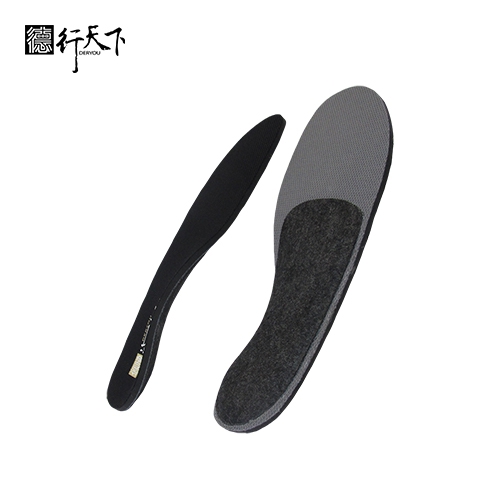
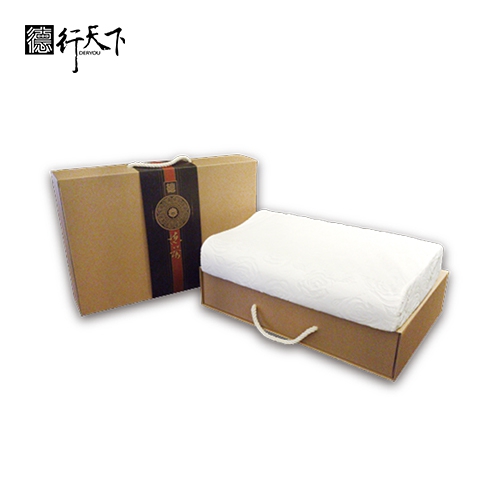
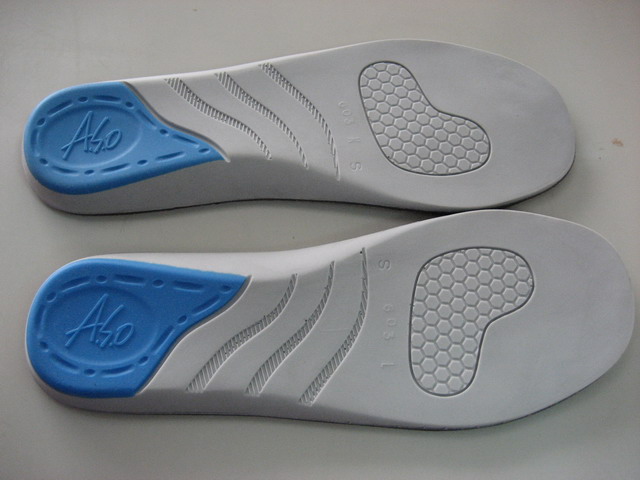
At GuangXin Industrial, our core strength lies in our deep expertise and versatility in insole and pillow manufacturing. We specialize in working with a wide range of materials, including PU (polyurethane), natural latex, and advanced graphene composites, to develop insoles and pillows that meet diverse performance, comfort, and health-support needs.
Whether it's cushioning, support, breathability, or antibacterial function, we tailor material selection to the exact requirements of each project-whether for foot wellness or ergonomic sleep products.
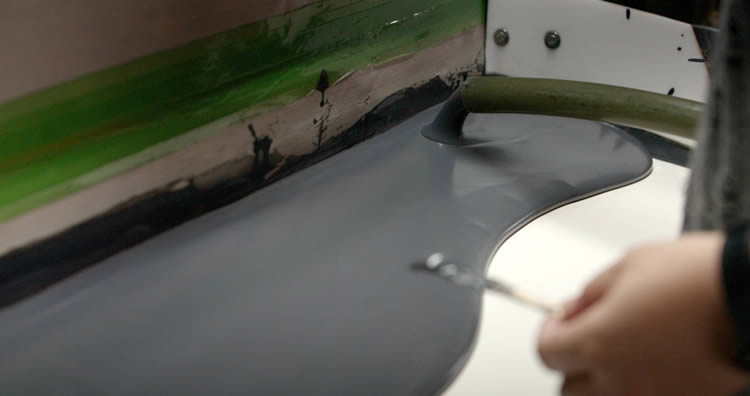
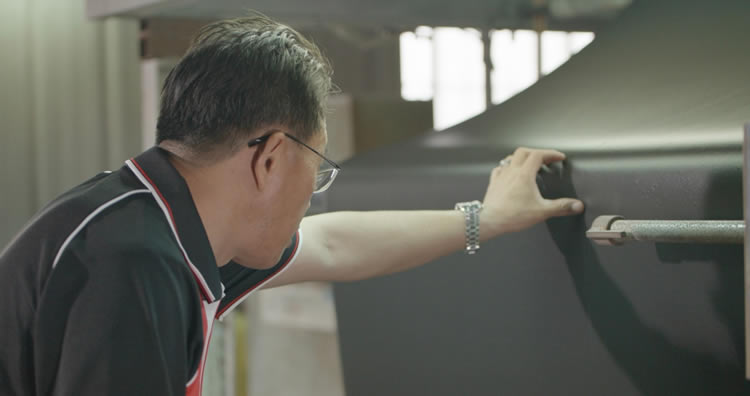
We provide end-to-end manufacturing capabilities under one roof—covering every stage from material sourcing and foaming, to precision molding, lamination, cutting, sewing, and strict quality control. This full-process control not only ensures product consistency and durability, but also allows for faster lead times and better customization flexibility.
With our flexible production capacity, we accommodate both small batch custom orders and high-volume mass production with equal efficiency. Whether you're a startup launching your first insole or pillow line, or a global brand scaling up to meet market demand, GuangXin is equipped to deliver reliable OEM/ODM solutions that grow with your business.
Customization & OEM/ODM Flexibility
GuangXin offers exceptional flexibility in customization and OEM/ODM services, empowering our partners to create insole products that truly align with their brand identity and target market. We develop insoles tailored to specific foot shapes, end-user needs, and regional market preferences, ensuring optimal fit and functionality.
Our team supports comprehensive branding solutions, including logo printing, custom packaging, and product integration support for marketing campaigns. Whether you're launching a new product line or upgrading an existing one, we help your vision come to life with attention to detail and consistent brand presentation.
With fast prototyping services and efficient lead times, GuangXin helps reduce your time-to-market and respond quickly to evolving trends or seasonal demands. From concept to final production, we offer agile support that keeps you ahead of the competition.
Quality Assurance & Certifications
Quality is at the heart of everything we do. GuangXin implements a rigorous quality control system at every stage of production—ensuring that each insole meets the highest standards of consistency, comfort, and durability.
We provide a variety of in-house and third-party testing options, including antibacterial performance, odor control, durability testing, and eco-safety verification, to meet the specific needs of our clients and markets.
Our products are fully compliant with international safety and environmental standards, such as REACH, RoHS, and other applicable export regulations. This ensures seamless entry into global markets while supporting your ESG and product safety commitments.
ESG-Oriented Sustainable Production
At GuangXin Industrial, we are committed to integrating ESG (Environmental, Social, and Governance) values into every step of our manufacturing process. We actively pursue eco-conscious practices by utilizing eco-friendly materials and adopting low-carbon production methods to reduce environmental impact.
To support circular economy goals, we offer recycled and upcycled material options, including innovative applications such as recycled glass and repurposed LCD panel glass. These materials are processed using advanced techniques to retain performance while reducing waste—contributing to a more sustainable supply chain.
We also work closely with our partners to support their ESG compliance and sustainability reporting needs, providing documentation, traceability, and material data upon request. Whether you're aiming to meet corporate sustainability targets or align with global green regulations, GuangXin is your trusted manufacturing ally in building a better, greener future.
Let’s Build Your Next Insole Success Together
Looking for a reliable insole manufacturing partner that understands customization, quality, and flexibility? GuangXin Industrial Co., Ltd. specializes in high-performance insole production, offering tailored solutions for brands across the globe. Whether you're launching a new insole collection or expanding your existing product line, we provide OEM/ODM services built around your unique design and performance goals.
From small-batch custom orders to full-scale mass production, our flexible insole manufacturing capabilities adapt to your business needs. With expertise in PU, latex, and graphene insole materials, we turn ideas into functional, comfortable, and market-ready insoles that deliver value.
Contact us today to discuss your next insole project. Let GuangXin help you create custom insoles that stand out, perform better, and reflect your brand’s commitment to comfort, quality, and sustainability.
🔗 Learn more or get in touch:
🌐 Website: https://www.deryou-tw.com/
📧 Email: shela.a9119@msa.hinet.net
📘 Facebook: facebook.com/deryou.tw
📷 Instagram: instagram.com/deryou.tw
ODM pillow factory for sleep product brands
Are you looking for a trusted and experienced manufacturing partner that can bring your comfort-focused product ideas to life? GuangXin Industrial Co., Ltd. is your ideal OEM/ODM supplier, specializing in insole production, pillow manufacturing, and advanced graphene product design.
With decades of experience in insole OEM/ODM, we provide full-service manufacturing—from PU and latex to cutting-edge graphene-infused insoles—customized to meet your performance, support, and breathability requirements. Our production process is vertically integrated, covering everything from material sourcing and foaming to molding, cutting, and strict quality control.Graphene-infused pillow ODM factory Taiwan
Beyond insoles, GuangXin also offers pillow OEM/ODM services with a focus on ergonomic comfort and functional innovation. Whether you need memory foam, latex, or smart material integration for neck and sleep support, we deliver tailor-made solutions that reflect your brand’s values.
We are especially proud to lead the way in ESG-driven insole development. Through the use of recycled materials—such as repurposed LCD glass—and low-carbon production processes, we help our partners meet sustainability goals without compromising product quality. Our ESG insole solutions are designed not only for comfort but also for compliance with global environmental standards.Vietnam anti-odor insole OEM service
At GuangXin, we don’t just manufacture products—we create long-term value for your brand. Whether you're developing your first product line or scaling up globally, our flexible production capabilities and collaborative approach will help you go further, faster.Taiwan insole ODM for global brands
📩 Contact us today to learn how our insole OEM, pillow ODM, and graphene product design services can elevate your product offering—while aligning with the sustainability expectations of modern consumers.Vietnam graphene product OEM service
DETI mapping results from the brain of a person viewing one of the stimuli used in the experiment (far left). The central column shows a flattened topographical map of the electrodes over the back of the head, illustrating the variation of DETI maps at each electrode across that scalp region. On the right-hand side, each column shows a close up of the spatiotemporal evolution of the visual code for different electrodes (each row corresponds to a different point in time in milliseconds). Each color represents one of seven different neural population responses that were mapped to each image location, thereby revealing which neural population best-coded image regions at different points in time. Credit: Bruce Hansen Researchers have developed the Dynamic Electrode-to-Image (DETI) mapping technique to better understand how the brain processes visual information. This method utilizes EEG data to map time-varying brain responses to images, offering insights into how different neural populations contribute to visual coding at various moments. The study reveals that the brain scans images in a way that prioritizes different regions over time, potentially supporting task-based decision-making. The DETI Mapping Technique and Its Innovations Humans are stepping ever closer to understanding how the brain codes visual information, as researchers have now developed a method that maps time-varying brain responses to images to reveal how the brain processes visual information. Colgate University Neuroscience Professor Bruce C. Hansen collaborated with Michelle R. Greene (Bates College), and David J. Field (Cornell University) to introduce dynamic electrode-to-image (DETI) mapping — an analytical technique that capitalizes on the high temporal resolution of electroencephalography (EEG) to render maps of visual features that are associated with different neural signals over time. View a real-time example of neural responses mapped to an image in the video below. This video shows the neural code (at different scalp locations) for an example image. The different colors represent responses from different types of neurons. Credit: Bruce Hansen The study “Dynamic Electrode-to-Image (DETI) mapping reveals the human brain’s spatiotemporal code of visual information” has been published in the journal PLOS Computational Biology. “When viewing any environment, our brains code visual information across a large population of neurons in a way that enables a variety of intelligent behaviors. However, the visual code that is used to guide behavior is not steady like a picture but instead evolves over time with different populations of neurons contributing to the code at different points in time. Our DETI mapping technique offers a first glimpse into that time-varying code at every location in images,” said Hansen. Recent advances in voxel-wise encoding analyses based on functional magnetic resonance imaging (fMRI) have enabled compelling reconstructions of images based on brain data, but are only able to render a single snapshot in time due to fMRI’s limited temporal resolution. The DETI mapping procedure introduced by Hansen and colleagues is based on EEG signals, which afford an opportunity to map the neural code of images with millisecond precision. Overcoming Methodological Challenges in EEG-Based Mapping To successfully map the visual code to images with EEG data, Hansen and colleagues had to overcome a number of methodological challenges. “The brain signals that are recorded by EEG suffer from interference by the skull as well as different amounts of cancellation due to the folding patterns of the brain.” Using a biologically plausible encoding model of the brain, Hansen and his team were able to circumvent those problems by measuring the correspondence between encoded pixels across a large number of images and the resulting changes in the neural response. “One way to think about how the DETI mapping procedure works is by passing an image into the brain and projecting the resulting neural code back onto the image.” Because EEG can measure neural signals at different scalp locations, DETI mapping produces a multiplexed view of how different populations of neurons code image features at different locations in images over time — something that was once thought impossible to do with EEG data. Implications of DETI Mapping for Understanding Neural Dynamics The mapping data produced by the DETI procedure offers new and important insights into how the neural code of images evolves over time. One of the most striking results reported by Hansen and colleagues is that the brain appears to scan images in a way that emphasizes different image regions with different neural populations at different points in time. “Such a scanning procedure likely aids in an early prioritization of the ground plane to support judgments for navigation, with a later emphasis focused on landmark organization.” These findings lead to new and interesting questions related to how the evolving neural code informs higher-level cognitive processes when people are engaged in different tasks. “We know that the code for visual information is distributed across a large population of neurons, but how that code is distributed depends on the goals of a given task. What this means is that the brain does not simply create a mental picture based exclusively on the environment, but instead creates a representation that best matches the behavioral goals of the person.” Fortunately, DETI mapping enables opportunities to explore the neural dynamics of task-based visual codes and how those codes ultimately support task-based decision-making. Reference: “Dynamic Electrode-to-Image (DETI) mapping reveals the human brain’s spatiotemporal code of visual information” by Bruce C. Hansen, Michelle R. Greene and David J. Field, 27 September 2021, PLoS Computational Biology. DOI: 10.1371/journal.pcbi.1009456 Funding: James S. McDonnell Foundation grant, National Science Foundation grant.
Researchers have advanced cancer research by identifying hidden regions in the K-Ras protein that contribute to its role in cancer cell proliferation. This discovery, facilitated by advanced NMR techniques, offers new insights for potential drug development, marking a promising step forward in the fight against cancer. The Study Identifies Areas Impacted by Hazardous Genetic Alterations Scientists at Ohio State University have breathed new life into the study of a protein with an outsized link to human cancers because of its dangerous mutations, using advanced research techniques to detect its hidden regions. The Ras family of proteins are enzymes that set in motion the growth, division, and differentiation of many types of cells, and their genes have been identified as the most frequently mutated cancer-related genes in humans. The subject of this study, the K-Ras protein, is linked to 75% of all Ras-associated cancers. Breakthrough in Cancer Protein Research The researchers are the first to detect a section of this protein’s structure that had previously been unobservable by standard lab tools, revealing features and interactions related to the protein’s mutations that put cells into a state of perpetual division – a classic cancer characteristic. “We know these mutations are a significant problem: They cause deaths,” said senior study author Rafael Brüschweiler, Ohio Research Scholar and professor of chemistry and biochemistry at Ohio State. “We know that structural biology can provide unique insights into the mechanisms of those mutations and can stimulate the search for potential cures. “We now have a more complete picture of what this protein does, which means we can start thinking about how to neutralize it once it’s in its mutated form. Information in this sense is power, and this information is out there now so that we and other researchers can use it and start to hypothesize.” The study was published recently in the journal Nature Structural & Molecular Biology. Methodology and Findings Despite existing knowledge about K-Ras and its key functional relationships with molecules related to cell health, the protein has been deemed “undruggable” because its configuration – both in normal and mutated forms – hides sites in its structure that would be most promising as therapeutic targets. Precision is required when designing such drugs – interfering with a protein in the wrong way could do more harm than the disease caused by a mutation. “K-Ras is the holy grail of cancer research – probably one of the most studied biological molecules worldwide because it plays such a key role in many cancers,” Brüschweiler said. “But it has also been a huge challenge.” Brüschweiler and colleagues reported in 2019 on a technique that enabled observation of proteins that move too slowly to be detected by standard nuclear magnetic resonance (NMR) spectroscopy. The team decided a year later to begin applying those findings to the hunt for K-Ras’s secret hiding places. Standard NMR can follow a fast-acting protein but has trouble with a longer time scale of movement and interactions, and X-ray crystallography used to define protein structures does better with less movement and more time. Brüschweiler and colleagues could take into account both the dynamic nature of K-Ras as well as its interaction with the reactive ligand (GTP), first detecting faint signals from the hidden regions and then optimizing NMR experiments to strengthen those signals. The study revealed two “switch” regions – tellingly, both located near a protein loop where the most dangerous mutations occur – in the K-Ras structure that had not been visible before. The team also established the complex structural dynamics behavior of the protein “backbone” that amplified additional features close to the switches. The backbone is essential to understanding a protein’s structural properties – from there, characterizing amino acid side chains “is relatively straightforward,” Brüschweiler said. The experiments also added clarity to how the normal protein and its mutated forms differ: Under normal circumstances, K-Ras is more active when it is bound to the first of two partner molecules and maintains proper control of multiple cellular functions, including the return to an inactive state. When mutated, K-Ras gets stuck in the active phase and never takes a rest. “We need active cells, but at some point, they have to stop. Otherwise, it’s like never taking the foot off the accelerator in a car – at some point, you need to take your foot off because it’s going too fast,” he said. “That’s the basic problem, that these mutations induce nonstop activity of the cell.” Implications and Future Directions With the mutation-related switch regions now characterized, researchers have new drug targets to consider that could stifle the mutations without hampering K-Ras’s essential cell functions. “The switches and related areas where the switches interact are new candidates, which we now can monitor at unprecedented detail,” Brüschweiler said. “This may not change the world overnight, but this is fundamentally new knowledge that has the potential to impact the health of human beings.” Brüschweiler has his own thoughts on what might come next, such as describing how existing drugs interact with the protein. Future work by his team and others will be supported by a new NMR instrument with a magnetic field of 1.2 gigahertz – which will be the most powerful NMR instrument in the United States – that has just arrived at Ohio State, where Brüschweiler is the principal investigator of the National Gateway Ultrahigh Field NMR Center. The center was funded in 2019 by a $17.6 million grant from the National Science Foundation, which also supported this new study. Reference: “Excited-state observation of active K-Ras reveals differential structural dynamics of wild-type versus oncogenic G12D and G12C mutants” by Alexandar L. Hansen, Xinyao Xiang, Chunhua Yuan, Lei Bruschweiler-Li and Rafael Brüschweiler, 28 August 2023, Nature Structural & Molecular Biology. DOI: 10.1038/s41594-023-01070-z
Researchers are studying the ways biomaterials can be used both to strengthen vaccines to fight viruses in the body and to build surfaces that would fight virus cells that landed on them. Credit: Sushma Kumari Nanotechnology Meets Virology Scientists are working toward advances that, using nanotechnology, could lead to a hospital bed or doorknob that naturally destroys viruses. Advances in the fields of biomaterials and nanotechnology could lead to big breakthroughs in the fight against dangerous viruses like the novel coronavirus that causes COVID-19. In APL Bioengineering, by AIP Publishing, researchers from the Indian Institute of Science describe two possibilities being explored by scientists in the field to make vaccines more effective and build surfaces that could fight and kill viruses on their own. “It is important not just in terms of COVID,” said author Kaushik Chatterjee. “We’ve seen SARS, and MERS, and Ebola, and a lot of other viral infections that have come and gone. COVID has, of course, taken a different turn altogether. Here, we wanted to see how biomaterials could be useful.” Biomaterials are materials engineered to interact with other biological systems in some way. Examples include joint replacements, dental implants, surgical mesh, and drug delivery systems. Nanotechnology, meanwhile, focuses on building tiny structures and devices at the microscopic level. It has been used in the medical field to target specific cells or tissues. Designing Smarter, Stronger Vaccines It is the combination of the two that could lead to more effective vaccines against viruses. While some current vaccines are already effective, the authors said biomaterials-based nanoparticles could one day be used to make them even stronger. “It is a means of stimulating the immune cells which produce antibodies during the vaccination,” said author Sushma Kumari. “It is like a helper, like priming the cells. Now, the moment they see the protein, the cells are more responsive to it and would be secreting more antibodies.” Self-Disinfecting Surfaces Through Nanodesign At the same time, researchers are studying ways the technology could be used to curb the spread of viruses in the world around us. Currently, the techniques used to disinfect surfaces in public places, from conventional cleaning to aerosols to ultraviolet light, can require lots of time and effort. Emerging bioengineering technologies would create antiviral surfaces that could disinfect themselves. “As viruses end up as droplets on various surfaces, the next person touching that could be picking up the disease,” Chatterjee said. By putting a natural charge on the surface or designing it at the nano-level in an unfriendly pattern for the virus, masks, PPE suits, hospital beds, doorknobs, and other items could be created that automatically damage or destroy a virus. The authors note this research is in its infancy. Much work remains to be done to learn which of many biomaterials may be most effective at fighting viruses, and an answer for one disease likely will not be the same for others. “Hopefully, this review and this kind of discussion will get researchers to think about how to use the knowledge that’s out there,” said Chatterjee. Reference: “Biomaterials-based formulations and surfaces to combat viral infectious diseases” by Sushma Kumari and Kaushik Chatterjee, 9 February 2021, APL Bioengineering. DOI: 10.1063/5.0029486
DVDV1551RTWW78V
Thailand pillow ODM development service 》trusted by global brands for reliable quality and flexibilityPU insole OEM production in China 》helping brands deliver comfort and performanceVietnam high-end foam product OEM/ODM 》your reliable OEM/ODM partner for long-term collaboration
下一則: Vietnam OEM insole and pillow supplier 》flexible,
限會員,要發表迴響,請先登入


