Introduction – Company Background
GuangXin Industrial Co., Ltd. is a specialized manufacturer dedicated to the development and production of high-quality insoles.
With a strong foundation in material science and footwear ergonomics, we serve as a trusted partner for global brands seeking reliable insole solutions that combine comfort, functionality, and design.
With years of experience in insole production and OEM/ODM services, GuangXin has successfully supported a wide range of clients across various industries—including sportswear, health & wellness, orthopedic care, and daily footwear.
From initial prototyping to mass production, we provide comprehensive support tailored to each client’s market and application needs.
At GuangXin, we are committed to quality, innovation, and sustainable development. Every insole we produce reflects our dedication to precision craftsmanship, forward-thinking design, and ESG-driven practices.
By integrating eco-friendly materials, clean production processes, and responsible sourcing, we help our partners meet both market demand and environmental goals.
Core Strengths in Insole Manufacturing
At GuangXin Industrial, our core strength lies in our deep expertise and versatility in insole and pillow manufacturing. We specialize in working with a wide range of materials, including PU (polyurethane), natural latex, and advanced graphene composites, to develop insoles and pillows that meet diverse performance, comfort, and health-support needs.
Whether it's cushioning, support, breathability, or antibacterial function, we tailor material selection to the exact requirements of each project-whether for foot wellness or ergonomic sleep products.
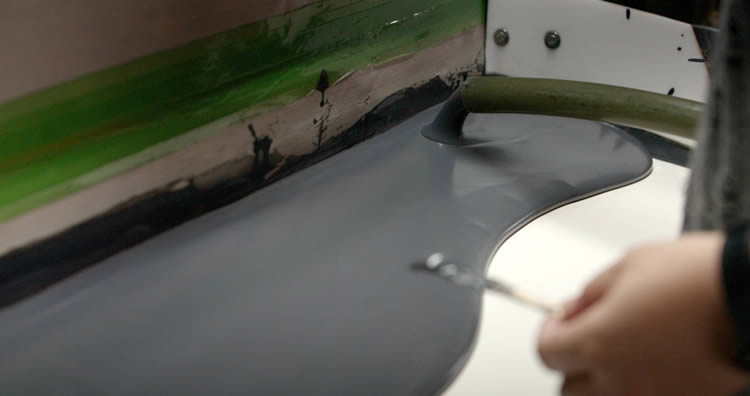
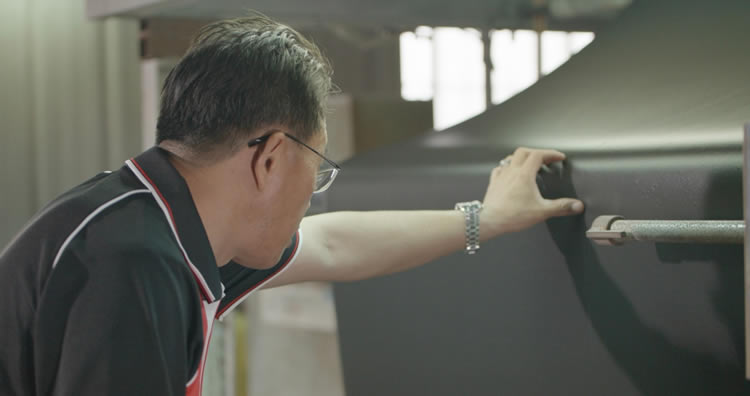
We provide end-to-end manufacturing capabilities under one roof—covering every stage from material sourcing and foaming, to precision molding, lamination, cutting, sewing, and strict quality control. This full-process control not only ensures product consistency and durability, but also allows for faster lead times and better customization flexibility.
With our flexible production capacity, we accommodate both small batch custom orders and high-volume mass production with equal efficiency. Whether you're a startup launching your first insole or pillow line, or a global brand scaling up to meet market demand, GuangXin is equipped to deliver reliable OEM/ODM solutions that grow with your business.
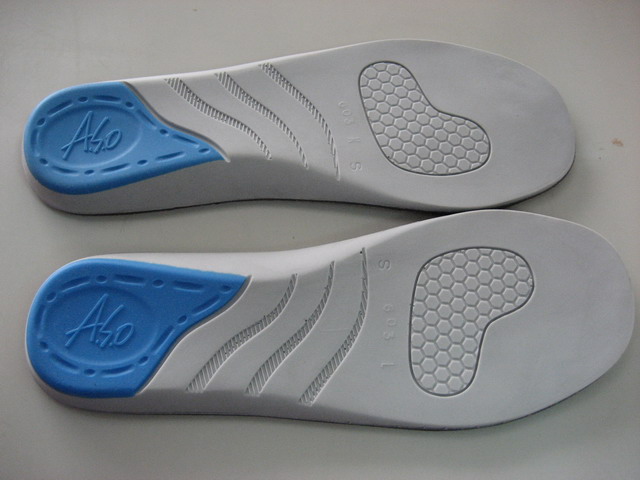
Customization & OEM/ODM Flexibility
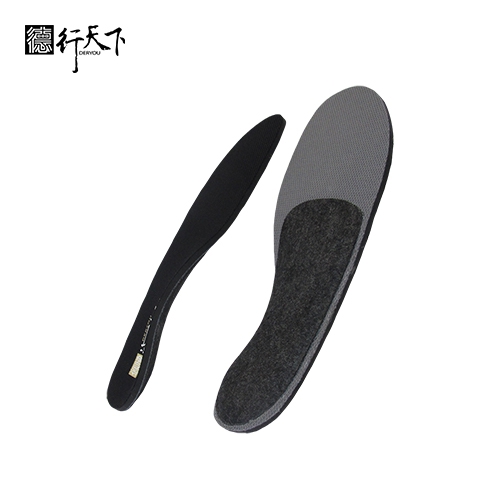
GuangXin offers exceptional flexibility in customization and OEM/ODM services, empowering our partners to create insole products that truly align with their brand identity and target market. We develop insoles tailored to specific foot shapes, end-user needs, and regional market preferences, ensuring optimal fit and functionality.
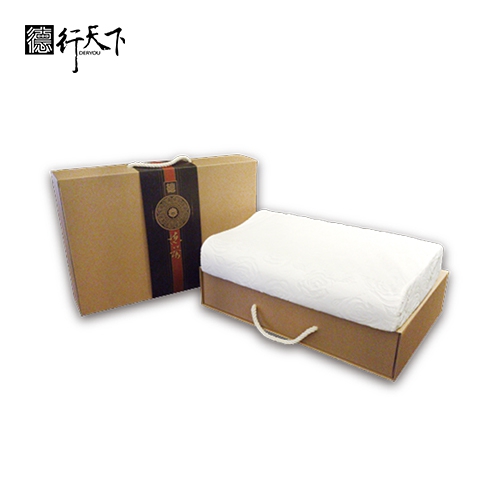
Our team supports comprehensive branding solutions, including logo printing, custom packaging, and product integration support for marketing campaigns. Whether you're launching a new product line or upgrading an existing one, we help your vision come to life with attention to detail and consistent brand presentation.
With fast prototyping services and efficient lead times, GuangXin helps reduce your time-to-market and respond quickly to evolving trends or seasonal demands. From concept to final production, we offer agile support that keeps you ahead of the competition.
Quality Assurance & Certifications
Quality is at the heart of everything we do. GuangXin implements a rigorous quality control system at every stage of production—ensuring that each insole meets the highest standards of consistency, comfort, and durability.
We provide a variety of in-house and third-party testing options, including antibacterial performance, odor control, durability testing, and eco-safety verification, to meet the specific needs of our clients and markets.
Our products are fully compliant with international safety and environmental standards, such as REACH, RoHS, and other applicable export regulations. This ensures seamless entry into global markets while supporting your ESG and product safety commitments.
ESG-Oriented Sustainable Production
At GuangXin Industrial, we are committed to integrating ESG (Environmental, Social, and Governance) values into every step of our manufacturing process. We actively pursue eco-conscious practices by utilizing eco-friendly materials and adopting low-carbon production methods to reduce environmental impact.
To support circular economy goals, we offer recycled and upcycled material options, including innovative applications such as recycled glass and repurposed LCD panel glass. These materials are processed using advanced techniques to retain performance while reducing waste—contributing to a more sustainable supply chain.
We also work closely with our partners to support their ESG compliance and sustainability reporting needs, providing documentation, traceability, and material data upon request. Whether you're aiming to meet corporate sustainability targets or align with global green regulations, GuangXin is your trusted manufacturing ally in building a better, greener future.
Let’s Build Your Next Insole Success Together
Looking for a reliable insole manufacturing partner that understands customization, quality, and flexibility? GuangXin Industrial Co., Ltd. specializes in high-performance insole production, offering tailored solutions for brands across the globe. Whether you're launching a new insole collection or expanding your existing product line, we provide OEM/ODM services built around your unique design and performance goals.
From small-batch custom orders to full-scale mass production, our flexible insole manufacturing capabilities adapt to your business needs. With expertise in PU, latex, and graphene insole materials, we turn ideas into functional, comfortable, and market-ready insoles that deliver value.
Contact us today to discuss your next insole project. Let GuangXin help you create custom insoles that stand out, perform better, and reflect your brand’s commitment to comfort, quality, and sustainability.
🔗 Learn more or get in touch:
🌐 Website: https://www.deryou-tw.com/
📧 Email: shela.a9119@msa.hinet.net
📘 Facebook: facebook.com/deryou.tw
📷 Instagram: instagram.com/deryou.tw
Thailand orthopedic insole OEM manufacturer
Are you looking for a trusted and experienced manufacturing partner that can bring your comfort-focused product ideas to life? GuangXin Industrial Co., Ltd. is your ideal OEM/ODM supplier, specializing in insole production, pillow manufacturing, and advanced graphene product design.
With decades of experience in insole OEM/ODM, we provide full-service manufacturing—from PU and latex to cutting-edge graphene-infused insoles—customized to meet your performance, support, and breathability requirements. Our production process is vertically integrated, covering everything from material sourcing and foaming to molding, cutting, and strict quality control.Taiwan insole ODM service provider
Beyond insoles, GuangXin also offers pillow OEM/ODM services with a focus on ergonomic comfort and functional innovation. Whether you need memory foam, latex, or smart material integration for neck and sleep support, we deliver tailor-made solutions that reflect your brand’s values.
We are especially proud to lead the way in ESG-driven insole development. Through the use of recycled materials—such as repurposed LCD glass—and low-carbon production processes, we help our partners meet sustainability goals without compromising product quality. Our ESG insole solutions are designed not only for comfort but also for compliance with global environmental standards.Eco-friendly pillow OEM manufacturer Taiwan
At GuangXin, we don’t just manufacture products—we create long-term value for your brand. Whether you're developing your first product line or scaling up globally, our flexible production capabilities and collaborative approach will help you go further, faster.Cushion insole OEM solution Taiwan
📩 Contact us today to learn how our insole OEM, pillow ODM, and graphene product design services can elevate your product offering—while aligning with the sustainability expectations of modern consumers.Breathable insole ODM development Vietnam
A Hesperapis regularis bee visits a flower of Clarkia cylindrica at Pinnacles National Park. Credit: Tania Jogesh Study of Flowers With Two Types of Anthers Solves Mystery That Baffled Darwin Some flowers use a clever strategy to ensure effective pollination by bees, doling out pollen gradually from two different sets of anthers. Most flowering plants depend on pollinators such as bees to transfer pollen from the male anthers of one flower to the female stigma of another flower, enabling fertilization and the production of fruits and seeds. Bee pollination, however, involves an inherent conflict of interest, because bees are only interested in pollen as a food source. “The bee and the plant have different goals, so plants have evolved ways to optimize the behavior of bees to maximize the transfer of pollen between flowers,” explained Kathleen Kay, associate professor of ecology and evolutionary biology at UC Santa Cruz. Close-up photos of Clarkia unguiculata and Clarkia cylindrica flowers show the two types of anthers, a conspicuous inner whorl and an outer whorl that blends in with the petals. Credit: Kay et al., PRSB 2020 In a study published December 23 in Proceedings of the Royal Society B, Kay’s team described a pollination strategy involving flowers with two distinct sets of anthers that differ in color, size, and position. Darwin was mystified by such flowers, lamenting in a letter that he had “wasted enormous effort over them, and cannot yet get a glimpse of the meaning of the parts.” For years, the only explanation put forth for this phenomenon, called heteranthery, was that one set of anthers is specialized for attracting and feeding bees, while a less conspicuous set of anthers surreptitiously dusts them with pollen for transfer to another flower. This “division of labor” hypothesis has been tested in various species, and although it does seem to apply in a few cases, many studies have failed to confirm it. A New Theory: Pollen Dosing Over Time The new study proposes a different explanation and shows how it works in species of wildflowers in the genus Clarkia. Through a variety of greenhouse and field experiments, Kay’s team showed that heteranthery in Clarkia is a way for flowers to gradually present their pollen to bees over multiple visits. “What’s happening is the anthers open at different times, so the plant is doling out pollen to the bees gradually,” Kay said. This “pollen dosing” strategy is a way of getting the bees to move on to another flower without stopping to groom the pollen off their bodies and pack it away for delivery to their nest. Bees are highly specialized for pollen feeding, with hairs on their bodies that attract pollen electrostatically, stiff hairs on their legs for grooming, and structures for storing pollen on their legs or bodies. Bee Behavior and Floral Strategy “If a flower doses a bee with a ton of pollen, the bee is in pollen heaven and it will start grooming and then go off to feed its offspring without visiting another flower,” Kay said. “So plants have different mechanisms for doling out pollen gradually. In this case, the flower is hiding some anthers and gradually revealing them to pollinators, and that limits how much pollen a bee can remove in each visit.” There are about 41 species of Clarkia in California, and about half of them have two types of anthers. These tend to be pollinated by specialized species of native solitary bees. Kay’s team focused on bee pollination in two species of Clarkia, C. unguiculata (elegant clarkia) and C. cylindrica (speckled clarkia). A Step-by-Step Bloom: Inner and Outer Anthers In these and other heterantherous clarkias, an inner whorl of anthers stands erect in the center of the flower, is visually conspicuous, and matures early, releasing its pollen first. An inconspicuous outer whorl lies back against the petals until after the inner anthers have opened. The outer anthers then move toward the center of the flower and begin to release their pollen gradually. A few days later, the stigma becomes erect and sticky, ready to receive pollen from another flower. “In the field, you can see flowers in different stages, and using time-lapse photography we could see the whole sequence of events in individual flowers,” Kay said. The division of labor hypothesis requires both sets of anthers to be producing pollen at the same time. Kay said she decided to investigate heteranthery after observing clarkia flowers at a field site and realizing that explanation didn’t fit. “I could see some flowers where one set was active, and some where the other set was active, but no flowers where both were active at the same time,” she said. In C. cylindrica, the two sets of anthers produce pollen with different colors, which enabled the researchers to track where it was going. Their experiments showed that pollen from both sets of anthers was collected for food and was also being transferred between flowers, contradicting the division of labor hypothesis. “The color difference was convenient, because otherwise it’s very hard to track pollen,” Kay said. “We showed that bees are collecting and transporting pollen from both kinds of anthers, so they are not specialized for different functions.” Kay said she didn’t realize how much time Darwin had spent puzzling over heteranthery until she started studying it herself. “He figured out so many things, it’s hard to find a case where he didn’t figure it out,” she said. Darwin might have been on the right track, though. Shortly before his death, he requested seeds of C. unguiculata to use in experiments. Reference: “Darwin’s vexing contrivance: a new hypothesis for why some flowers have two kinds of anther” by Kathleen M. Kay, Tania Jogesh, Diana Tataru and Sami Akiba, 23 December 2020, Proceedings of the Royal Society B. DOI: 10.1098/rspb.2020.2593 In addition to Kay, the coauthors of the paper include postdoctoral scholar Tania Jogesh and two UCSC undergraduates, Diana Tataru and Sami Akiba. Both students completed senior theses on their work and were supported by UCSC’s Norris Center for Natural History.
A groundbreaking study has identified common feather characteristics among flying birds, revealing that all possess 9 to 11 primary feathers, a trait that provides insights into the evolution of flight from dinosaur ancestors. By combining analysis of museum specimens and fossil data, researchers suggest that flight evolved only once among dinosaurs, highlighting the significance of feathers and flight in the evolutionary success of these species. Above is a fossil showing the wing and feathers of the prehistoric bird Confuciusornis. Credit: Yosef Kiat Birds can fly— at least, most of them can. Flightless birds, such as penguins and ostriches, have adapted to life without the need for flight. Despite this, there remains a significant gap in scientific understanding regarding the differences in wings and feathers between flightless birds and those that can fly. In a new study in the journal PNAS, scientists examined hundreds of birds in museum collections and discovered a suite of feather characteristics that all flying birds have in common. These “rules” provide clues as to how the dinosaur ancestors of modern birds first evolved the ability to fly, and which dinosaurs were capable of flight. Evolutionary Origins of Bird Flight Not all dinosaurs evolved into birds, but all living birds are dinosaurs. Birds are members of the group of dinosaurs that survived when an asteroid hit the Earth 66 million years ago. Long before the asteroid hit, some of the members of a group of dinosaurs called Penneraptorans began to evolve feathers and the ability to fly. The wing, highlighting the flight feathers, of Temminck’s Lark. Credit: Yosef Kiat Members of the Penneraptoran group began to develop feathers before they were able to fly; the original purpose of feathers might have been for insulation or to attract mates. For instance, Velocirpator had feathers, but it couldn’t fly. Of course, scientists can’t hop in a time machine to the Cretaceous Period to see whether Velociraptors could fly. Instead, paleontologists rely on clues in the animals’ fossilized skeletons, like the size and shape of arm/wing bones and wishbones, along with the shape of any preserved feathers, to determine which species were capable of true, powered flight. For instance, the long primary feathers along the tips of birds’ wings are asymmetrical in birds that can fly, but symmetrical in birds that can’t. Discoveries in Feather Evolution The quest for clues about dinosaur flight led to a collaboration between Jingmai O’Connor, a paleontologist at the Field Museum in Chicago, and Yosef Kiat, a postdoctoral researcher at the Field. “Yosef, an ornithologist, was investigating traits like the number of different types of wing feathers in relation to the length of arm bone they attach to, and the degree of asymmetry in birds’ flight feathers,” said O’Connor, the museum’s associate curator of fossil reptiles, who specializes in early birds. “Through our collaboration, Yosef is able to track these traits in fossils that are 160-120 million years old, and therefore study the early evolutionary history of feathers.” The primary feathers of a penguin. Credit: Yosef Kiat Kiat undertook a study of the feathers of every order of living birds, examining specimens from 346 different species preserved in museums around the world. As he looked at the wings and feathers from hummingbirds and hawks, penguins, and pelicans, he noticed a number of consistent traits among species that can fly. For instance, in addition to asymmetrical feathers, all the flighted birds had between 9 and 11 primary feathers. In flightless birds, the number varies widely— penguins have more than 40, while emus have none. It’s a deceptively simple rule that’s seemingly gone unnoticed by scientists. Implications for Understanding Dinosaur Flight “It’s really surprising, that with so many styles of flight we can find in modern birds, they all share this trait of having between 9 and 11 primary feathers,” says Kiat. “And I was surprised that no one seems to have found this before.” By applying the information about the number of primary feathers to the overall bird family tree, Kiat and O’Connor also found that it takes a long time for birds to evolve a different number of primary feathers. “This trait only changes after really long periods of geologic time,” says O’Connor. “It takes a very long time for evolution to act on this trait and change it.” Blackburnian Warblers in the collections of the Field Museum used in this study. Credit: Yosef Kiat In addition to modern birds, the researchers also examined 65 fossil specimens representing 35 different species of feathered dinosaurs and extinct birds. By applying the findings from modern birds, the researchers were able to extrapolate information about the fossils. “You can basically look at the overlap of the number of primary feathers and the shape of those feathers to determine if a fossil bird could fly, and whether its ancestors could,” says O’Connor. For instance, the researchers looked at the feathered dinosaur Caudipteryx. Caudipteryx had 9 primary feathers, but those feathers are almost symmetrical, and the proportions of its wings would have made flight impossible. The researchers said it’s possible that Caudipteryx had an ancestor that was capable of flight, but that trait was lost by the time Caudipteryx arrived on the scene. Since it takes a long time for the number of primary feathers to change, the flightless Caudipteryx retained its 9 primaries. Meanwhile, other feathered fossils’ wings seemed flight-ready— including those of the earliest known bird, Archaeopteryx, and Microraptor, a tiny, four-winged dinosaur that isn’t a direct ancestor of modern birds. Fossil showing the wings and feathers of the dinosaur Microraptor. Credit: Yosef Kiat Integrating Knowledge of Evolution Taken a step further, these data may inform the conversation among scientists about the origins of dinosaurian flight. “It was only recently that scientists realized that birds are not the only flying dinosaurs,” says O’Connor. “And there have been debates about whether flight evolved in dinosaurs just once, or multiple separate times. Our results here seem to suggest that flight only evolved once in dinosaurs, but we have to really recognize that our understanding of flight in dinosaurs is just beginning, and we’re likely still missing some of the earliest stages of feathered wing evolution.” “Our study, which combines paleontological data based on fossils of extinct species with information from birds that live today, provides interesting insights into feathers and plumage—one of the most interesting evolutionary novelties among vertebrates. Thus, it helps us learn about the evolution of these dinosaurs and highlights the importance of integrating knowledge from different sources for an improved understanding of evolutionary processes,” says Kiat. “Theropod dinosaurs, including birds, are one of the most successful vertebrate lineages on our planet,” says O’Connor. “One of the reasons that they’re so successful is their flight. One of the other reasons is probably their feathers, because there’s such versatile structures. So any information that can help us understand how these two important features co-evolved that led to this enormous success is really important.” Reference: “Functional constraints on the number and shape of flight feathers” by Yosef Kiat and Jingmai K. O’Connor, 12 February 2024, Proceedings of the National Academy of Sciences. DOI: 10.1073/pnas.2306639121
Mechanical stimuli initiate the concentric propagation of intercellular calcium waves away from trichomes. Credit: Yasuomi Tada Trichomes on plant leaves sense rain as a pathogen risk, triggering immune responses via calcium waves, offering potential for enhancing crop disease resistance. While rain is essential for the survival of plants, it also contains bacteria and other pathogens which can cause them harm. So how do plants protect themselves from this threat? A recent study by Nagoya University researchers and colleagues revealed that when plants are exposed to rain, hair-like structures on the leaf surface called trichomes recognize this rain as a risk factor for causing disease and activate their immune system to prevent infections. These findings, published in the journal Nature Communications, could contribute to the development of methods to protect plants from infectious diseases caused by rain. Plants have their own immune system, just like humans and other multicellular organisms. When plants detect pathogens, they express immune-related genes to prevent themselves from being infected. Raindrops contain pathogens, such as bacteria, filamentous fungi, and viruses, and thus can cause disease in plants. With this in mind, the researchers hypothesized that plants could recognize rain as a risk factor for disease and react to protect themselves from this risk in some way. To find out how plants respond to rain, a research team led by Professor Yasuomi Tada and Assistant Professor Mika Nomoto of Nagoya University conducted a study using Arabidopsis thaliana seedlings. The team began by conducting RNA sequencing analyses to examine which genes are expressed in the leaves when they are exposed to rain. They found that several major immune-related genes are expressed in response to rain, and that these genes are regulated by immunosuppressive genes called CAMTAs (calmodulin-binding transcription activators). Since CAMTAs are controlled by calcium ions (Ca2+), the team hypothesized that rain serves to increase Ca2+ concentrations in cells. Thus, they investigated how Ca2+ levels in Arabidopsis leaves change in response to rain by introducing GCaMP3 — a gene that fluoresces green when bound to Ca2+ — into the leaves. They found that when the leaves were exposed to rain, Ca2+ levels around trichomes on leaf surfaces increased. Trichomes: Key Players in Plant Defense Mechanisms The result suggested that trichomes sense rain as a risk factor and induce calcium waves (transmission of localized increases in Ca2+ to the surrounding areas) across the leaf to inactivate the immunosuppressor CAMTA and thereby activate immune-related genes. To confirm this, they next conducted experiments in the same way using mutants of Arabidopsis which lacked trichomes, and the results showed that the propagation of calcium waves was compromised in the mutants. “From these results, we confirmed that trichomes play a role in sensing rain as a risk factor and activating immune responses,” says Professor Tada. “Our findings suggest that we may be able to artificially improve plants’ defensive capabilities against diseases at any time and for any length of time. Using this technology, we could make it possible to activate crops’ immune responses when environmental conditions are harsh enough to possibly cause disease in plants, which could result in stable crop yields.” Reference: “Mechanosensory trichome cells evoke a mechanical stimuli–induced immune response in Arabidopsis thaliana” by Mamoru Matsumura, Mika Nomoto, Tomotaka Itaya, Yuri Aratani, Mizuki Iwamoto, Takakazu Matsuura, Yuki Hayashi, Tsuyoshi Mori, Michael J. Skelly, Yoshiharu Y. Yamamoto, Toshinori Kinoshita, Izumi C. Mori, Takamasa Suzuki, Shigeyuki Betsuyaku, Steven H. Spoel, Masatsugu Toyota and Yasuomi Tada, 8 March 2022, Nature Communications. DOI: 10.1038/s41467-022-28813-8
DVDV1551RTWW78V
Taiwan custom neck pillow ODM factory 》minimizing lead time, maximizing product valueChina custom product OEM/ODM services 》reducing complexity, increasing product valueSoft-touch pillow OEM service in Thailand 》small batch friendly, big on consistency
限會員,要發表迴響,請先登入


