week 14
A. syllabus
Aristotle
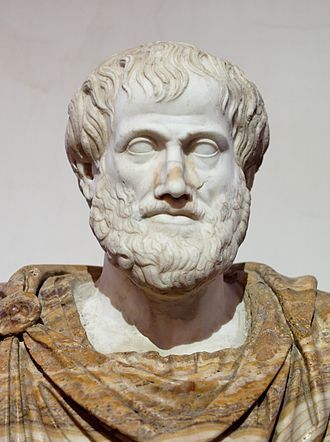
Aristotle was a Greek philosopher and scientist born in the city of Stagira, Chalkidice, on the northern periphery of Classical Greece. His father, Nicomachus, died when Aristotle was a child, whereafter Proxenus of Atarneus became his guardian. At seventeen or eighteen years of age, he joined Plato's Academy in Athens and remained there until the age of thirty-seven (c. 347 BC). His writings cover many subjects – including physics, biology, zoology, metaphysics, logic, ethics, aesthetics, poetry, theater, music, rhetoric, linguistics, politics and government – and constitute the first comprehensive system of Western philosophy. Shortly after Plato died, Aristotle left Athens and, at the request of Philip of Macedon, tutored Alexander the Great beginning in 343 BC.
Poetics
Aristotle's Poetics is the earliest surviving work of dramatic theory and the first extant philosophical treatise to focus on literary theory. This has been the traditional view for centuries. However, recent work is now challenging whether Aristotle focuses on literary theory per se (given that not one poem exists in the treatise) or whether he focuses instead on dramatic musical theory that only has language as one of the elements.
B. Quiz on Gradesaver
1. Which is not something Aristotle says he will address in the Poetics?
A. the method in which a poem is divided into parts
B. the different kinds of poetry
C. the structure necessary for a good poem
D. the revision process for poetry
2. What does Aristotle mean by imitation?
A. mimicry of sound
B. representation of death
C. mimicry of language
D. representation of life
3. Which is not included in the definition of poetry?
A. essay
B. comedy
C. tragedy
D. music
4. Which is not included in poetry's imitation?
A. instinct
B. language
C. harmony
D. rhythm
5. What does 'dramitas' mean?
A. drama of language
B. drama of action
C. drama of music
D. drama of dancing
6. Tragedy presents men...
A. as they ought to be
B. as they are
C. better than they are
D. worse than they are
7. Comedy presents men...
A. as they are
B. better then they are
C. as they ought to be
D. worse than they are
8. Epic presents men...
A. better than they are
B. worse than they are
C. as they ought to be
D. as they are
9. According to Aristotle, Homer tends to present men...
A. better then they are
B. as they are
C. as they ought to be
D. worse then they are
10. Which is not a form of imitative narration?
A. first-person 'I'
B. third-person narrator
C. first-person omniscient 'I'
D. second-person narrator ('You')
11. What is one of the reasons poetry emerged?
A. the necessity for public entertainment
B. the rise of court music
C. man's instinct for imitation
D. the instinct for dance
12. What does poetry tend to imitate, according to Aristotle?
A. dance and music
B. epic grief
C. 'nature' in all forms
D. noble men and 'bad' men
13. What genre began with the imitation of 'meaner men'?
A. tragedy
B. epic
C. comedy
D. drama
14. Which genre was at first not taken seriously?
A. drama
B. comedy
C. tragedy
D. epic
15. Fill in the blank: All the elements of [x] are found in tragedy, but not all the elements of [x] are found in [x]
A. comedy
B. drama
C. music
D. epic
16. Which is not a component of tragedy?
A. narrative form
B. thought
C. plot
D. character
17. What by definition is serious, complete, and of a significant magnitude?
A. tragedy
B. drama
C. epic
D. comedy
18. What comprises the arrangement of incidents that result from character and thought giving way to action?
A. diction
B. character
C. thought
D. plot
19. Complication and denouement are two elements of...
A. speech
B. thought
C. plot
D. character
20. What does Aristotle mean by dictoin?
A. grief
B. rhythmic language
C. diction
D. song
21. According to Aristotle, what is the most important element of tragedy?
A. character
B. thought
C. comedy
D. plot
22. What is the least important element of a tragedy?
A. diction
B. plot
C. spectacle
D. song
23. Tragedy relies on...
A. pity
B. action
C. narrative
D. character
24. What is the term for a purgation of pity and fear in the audience?
A. Spectacle
B. Catharsis
C. Drama
D. Imitation
25. What is the term for the qualities ascribed to a certain men?
A. spectacle
B. song
C. character
D. diction
C. Quiz on SparkNotes
1. Which of the following is NOT a distinctive feature of poetry?
It uses language
It uses rhythm
It is written in verse
It uses harmony
2. Which of the following contains a mix of direct and indirect narrative?
Tragedy
Comedy
Homeric epic
Dithyrambic poetry
3. Which of the following is not "art" in the Greek sense of the word?
Tragedy
A spear
A table
A peacock's feather
4. Which of the following is NOT a reason for why we like imitations?
We learn from imitations
Imitations exercise our reason
We are not repelled by imitations of things we would normally find repellent
There is a sense of safety in not having to deal with reality
5. Which of the following was the last to evolve?
Tragedy
Dithyramb
Epic poetry
Invective
6. Which of the following is not one of the "three unities"?
Unity of action
Unity of character
Unity of place
Unity of time
7. Which is the only unity that Aristotle insists upon?
Unity of action
Unity of character
Unity of place
Unity of time
8. Which of the following is the most important?
Character
Diction
Plot
Harmony
9. Which of the following is the least important?
Character
Plot
Thought
Spectacle
10. Which of the following is NOT a part of Aristotle's definition of tragedy?
It arouses pity and fear
It has an unhappy ending
It involves mimesis
It is performed rather than narrated
11. Which of the following genres has the same plot structure as tragedy?
Epic poetry
History
Biography
Episodic storytelling
12. Which of the following has an episodic structure?
Biography
History
Both
Neither
13. A complex plot must contain:
Peripeteia
Anagnorisis
Both
Either
14. Which of the following is NOT necessary to all tragedies?
Exode
Commos
Parode
Episode
15. Which is the best kind of tragic plot?
A harmful deed is done knowingly
A harmful deed is done in ignorance
A harmful deed is avoided knowingly
A harmful deed is premeditated in ignorance, but a discovery helps prevent it
16. Which is the worst kind of tragic plot?
A harmful deed is done knowingly
A harmful deed is done in ignorance
A harmful deed is avoided knowingly
A harmful deed is premeditated in ignorance, but a discovery helps prevent it
17. Which of the following is NOT a requirement for a tragic hero?
The hero must be good
The hero must be male
The hero's character must be consistent
The hero must be of high social status
18. Which is the worst kind of anagnorisis?
Recognition by means of signs or marks
Recognition prompted by memory
Recognition through deductive reasoning
Recognition that arises through the structure of the plot
19. Which is the best kind of anagnorisis?
Recognition by means of signs or marks
Recognition prompted by memory
Recognition through deductive reasoning
Recognition that arises through the structure of the plot
20. Which of the following is not within the domain of thought?
Exciting emotion with a powerful speech
Exhibiting shyness through hunched posture
Persuading someone by means of logic
Blowing a problem out of proportion by means of exaggeration
21. Which of the following is not a metaphor?
"That's as likely as a cold day in July"
"Juliet is the sun"
"I'm a race car in the red"
"My love is a red, red rose."
22. Which of the following is not a feature of epic poetry?
Unity of plot
A noble hero
Iambic meter
It is narrated
23. Which of the following is NOT true of epic poetry?
It's longer than tragedy
It can portray more isolated incidents than tragedy
It can get away with presenting less probable events than those presented in tragedy
It is a more impressive spectacle than watching tragedy
24. Which of the following is not an acceptable reason for including impossible or improbable events in a poem?
The poet is portraying things as the ought to be, not as they are
The poet is portraying things according to public opinion
They are necessary to make the plot work
They add to the astonishment and excitement of the story
25. Which of the following is NOT a reason given by Aristotle to prefer tragedy over epic poetry?
Exaggerated gestures can add something in performance
Tragedy contains music and spectacle
There is more unity in tragedy
Tragedy is shorter and more compact


