week 15
A. syllabus
Bible
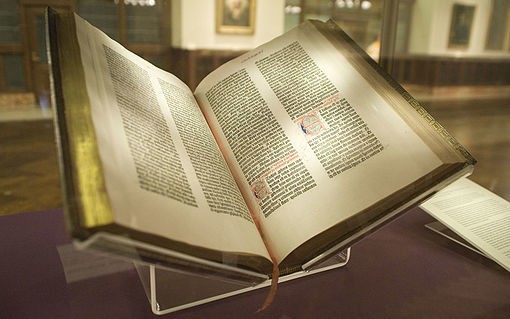
The Bible is a collection of sacred texts or scriptures that Jews and Christians consider to be a product of divine inspiration and a record of the relationship between God and humans.
Christian Bibles
A Christian Bible is a set of books that a Christian denomination regards as divinely inspired and thus constituting scripture. Although the Early Church primarily used the Septuagint or the Targums among Aramaic speakers, the apostles did not leave a defined set of new scriptures; instead the canon of the New Testament developed over time. Groups within Christianity include differing books as part of their sacred writings, most prominent among which are the biblical apocrypha or deuterocanonical books.
Old Testament
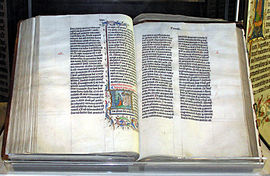
The Old Testament is the first section of the Christian Bible, based primarily upon the Hebrew Bible (or Tanakh), a collection of religious writings by ancient Israelites believed by most Christians and religious Jews to be the sacred Word of God.
Christmas
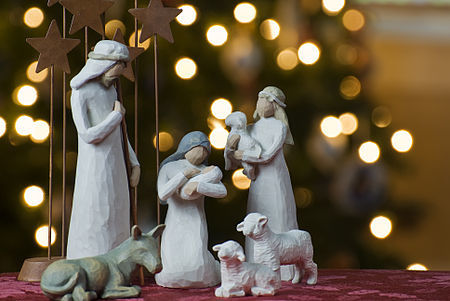
Christmas or Christmas Day is an annual festival commemorating the birth of Jesus Christ, observed most commonly on December 25 as a religious and cultural celebration among billions of people around the world.
Marshmallow vs. cotton candy
|
Marshmallow |
cotton candy |
|
|
|
|
A marshmallow is a sugar-based confection that typically consists of sugar, water and gelatin which is whipped to a spongy consistency, molded into small cylindrical pieces, and coated with corn starch. |
Cotton candy (also known as candy floss, tooth floss, sugar clouds or fairy floss) is a form of spun sugar. |


B. Quiz
1. In anticipation of the Lord appearing on Mt. Sinai, the people of Moses are asked to:
a) wash their cloaks and abstain from sex
b) ready themselves to hear the word of the Lord
c) pray for forgiveness
d) destroy their false idols
2. The Song of Songs tells of:
a) how two men love each other
b) the love between a man and a woman
c) the appreciation a man and a woman have for each other’s body
d) the beauty of the human spirit
3. Joseph refused the advances of his master’s wife because:
a) it was immoral
b) he was afraid he would be punished
c) the master trusted Joseph
d) he could not lie with a gentile woman
4. Job asks God:
a) to explain what he has done wrong so he can answer the accusation
b) to relieve him of his suffering and send it to someone else
c) to leave him alone
d) to reward his quiet suffering
5. Job is tested because:
a) he is representative of all men
b) of a quarrel between Yahweh and the Accuser
c) he has more than anyone else and they are jealous
d) he has sons who are not doing the right thing
6. As punishment for his murder of Able, Cain:
a) is cast out
b) condemned to death
c) will not reap anything worthwhile from the soil
d) is marked for slaughter by God
7. The forbidden fruit is from:
a) an apple tree
b) the tree of knowledge
c) the tree in the midst of the garden
d) the tree of good and evil
8. Noah knew that all would be well when:
a) God told him
b) the dove returned with an olive leaf
c) the water receded and the earth was dry
d) the ark landed
C. In-class Notes
Diaspora
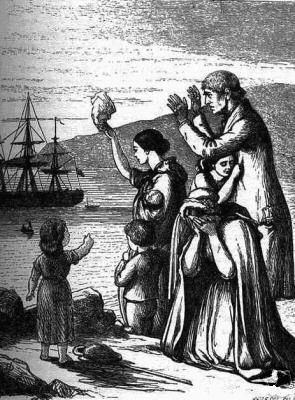
A diaspora is a scattered population whose origin lies within a smaller geographic locale. Diaspora can also refer to the movement of the population from its original homeland.
Diaspora has come to refer particularly to historical mass dispersions of an involuntary nature, such as the expulsion of Jews from Judea, the fleeing of Greeks after the fall of Constantinople, the African Trans-Atlantic slave trade, the southern Chinese or Hindus of South Asia during the coolie trade, the Irish during and after the Irish Famine, the displacement of Palestinians in the 20th century, the exile and deportation of Circassians, and the emigration of Anglo-Saxon warriors and their families after the Norman Conquest of England.
Chosen People

Throughout history, various groups of people have considered themselves to be chosen people by a deity for a purpose, such as to act as the deity's agent on earth. In monotheistic faiths references to God are used in constructs such as "God's Chosen People".
Jews as the chosen people
In Judaism, "chosenness" is the belief that the Jews, via descent from the ancient Israelites, are the chosen people, i.e. chosen to be in a covenant with God. The idea of the Israelites being chosen by God is found most directly in the Book of Deuteronomy as the verb bahar, and is alluded to elsewhere in the Hebrew Bible using other terms such as "holy people".
The Vulgate Bible
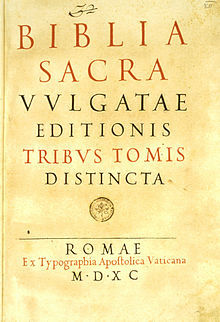
The Vulgate is a late fourth-century Latin translation of the Bible that became, during the 16th century, the Catholic Church's officially promulgated Latin version of the Bible.
The translation was largely the work of St. Jerome, who, in 382 AD, was commissioned by Pope Damasus I to revise the Vetus Latina ("Old Latin") collection of biblical texts in Latin then in use by the Church.
Parable of Jesus
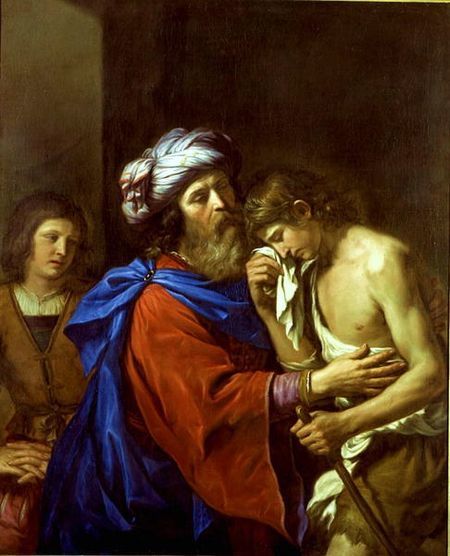
The Parables of Jesus can be found in all the canonical gospels, and in some of the non-canonical gospels, but are located mainly within the three synoptic gospels. They represent a key part of the teachings of Jesus, forming approximately one third of his recorded teachings. Christians place high emphasis on these parables; since they are the purported words of Jesus, they are believed to be what the Father has taught, indicated by John 8:28 and 14:10.


