week 15
A. In-class Notes
Beowulf
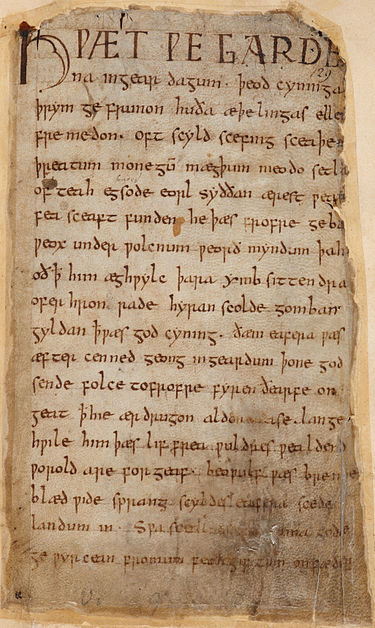
Beowulf is an Old English epic poem consisting of 3182 alliterative lines. It may be the oldest surviving long poem in Old English and is commonly cited as one of the most important works of Old English literature.
The Canterbury Tales
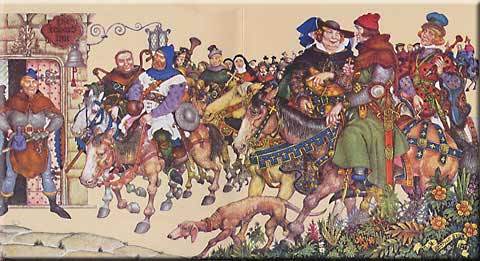
The Canterbury Tales is a collection of 24 stories that runs to over 17,000 lines written in Middle English by Geoffrey Chaucer. In 1386, Chaucer became Controller of Customs and Justice of Peace and, three years later, Clerk of the King's work in 1389.
Machiavelli
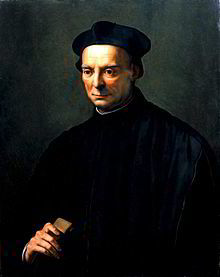
Niccolò Machiavelli, or more formally Niccolò di Bernardo dei Machiavelli, was an Italian Renaissance historian, politician, diplomat, philosopher, humanist, and writer. He has often been called the founder of modern political science.
The Prince by Niccolò Machiavelli
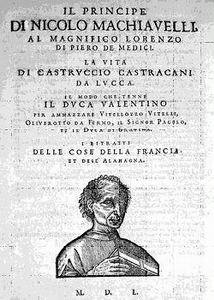
The Prince is a 16th-century political treatise. From correspondence a version appears to have been distributed in 1513, using a Latin title, De Principatibus (About Principalities). However, the printed version was not published until 1532, five years after Machiavelli's death. This was done with the permission of the Medici pope Clement VII, but "long before then, in fact since the first appearance of The Prince in manuscript, controversy had swirled about his writings".
The Republic
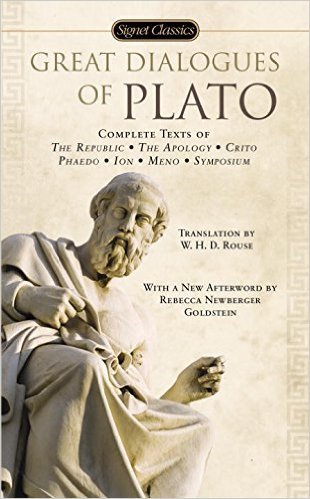
The Republic is a Socratic dialogue, written by Plato around 380 BCE, concerning justice, the order and character of the just city-state and the just man. It is Plato's best-known work, and has proven to be one of the world's most influential works of philosophy and political theory, both intellectually and historically.
Thomas More
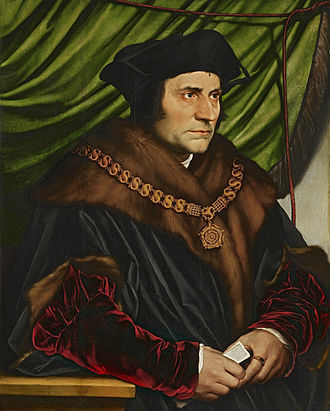
Sir Thomas More, venerated by Roman Catholics as Saint Thomas More, was an English lawyer, social philosopher, author, statesman and noted Renaissance humanist. He was also a councillor to Henry VIII, and Lord High Chancellor of England from October 1529 to 16 May 1532. He also wrote Utopia, published in 1516, about the political system of an imaginary ideal island nation.
Utopia
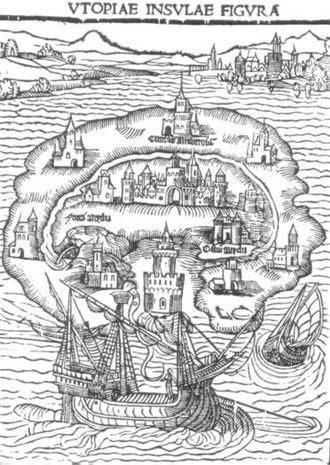
Utopia is a work of fiction and political philosophy by Thomas More published in 1516 in Latin. The book is a frame narrative primarily depicting a fictional island society and its religious, social and political customs. Many aspects of More's description of Utopia are reminiscent of life in monasteries.
B. 1100 Words You Need to Know
 nascent (a.)- arising young, immature
felicitous (a.)- suitable or right
halcyon (a.)- calm, quiet, peaceful
superfluous (a.)- more than is needed or wanted
super- over
homogeneous (a.)- of the same kind
homo- same, the same, equal, like
 reticent (a.)- unwilling to speak
 tantalize (v.)- to make someone feel excited or attracted by an offer
facet (n.)- one part of a subject, situation, etc. that has many parts
 infraction (n.)- an occasion when someone breaks a rule or law
 heinous (a.)- very bad and shocking
opprobrium (n.)- disgrace, infamy, scandal, dishonor
 imperturbable (a.)- cannot be disturbed
staunch (a.)- loyal


