week 11 25-27
A. In-class Notes
 When I Was One-and-Twenty BY A. E. HOUSMAN
When I was one-and-twenty
I heard a wise man say,
“Give crowns and pounds and guineas
But not your heart away;
Give pearls away and rubies
But keep your fancy free.”
But I was one-and-twenty,
No use to talk to me.
When I was one-and-twenty
I heard him say again,
“The heart out of the bosom
Was never given in vain;
’Tis paid with sighs a plenty
And sold for endless rue.”
And I am two-and-twenty,
And oh, ’tis true, ’tis true.
 About the writer: A. E. HOUSMAN
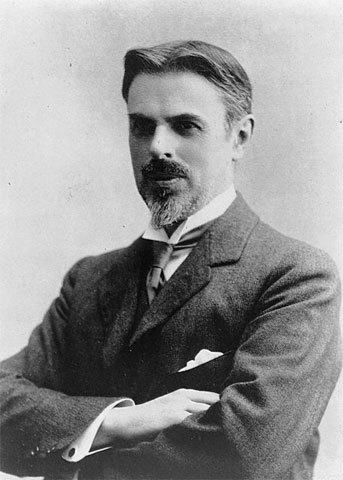
Alfred Edward Housman (26 March 1859 – 30 April 1936), usually known as A. E. Housman, was an English classical scholar and poet, best known to the general public for his cycle of poems A Shropshire Lad.
Do not go gentle into that good night BY Dylan Thomas
Do not go gentle into that good night,
Old age should burn and rave at close of day;
Rage, rage against the dying of the light.
Though wise men at their end know dark is right,
Because their words had forked no lightning they
Do not go gentle into that good night.
Good men, the last wave by, crying how bright
Their frail deeds might have danced in a green bay,
Rage, rage against the dying of the light.
Wild men who caught and sang the sun in flight,
And learn, too late, they grieved it on its way,
Do not go gentle into that good night.
Grave men, near death, who see with blinding sight
Blind eyes could blaze like meteors and be gay,
Rage, rage against the dying of the light.
And you, my father, there on the sad height,
Curse, bless, me now with your fierce tears, I pray.
Do not go gentle into that good night.
Rage, rage against the dying of the light.
About the writer: Dylan Thomas

Dylan Marlais Thomas (27 October 1914 – 9 November 1953) was a Welsh poet and writer whose works include the poems "Do not go gentle into that good night" and "And death shall have no dominion"; the 'play for voices' Under Milk Wood; and stories and radio broadcasts such as A Child's Christmas in Wales and Portrait of the Artist as a Young Dog.
Journey of the Magi BY T S Eliot
A cold coming we had of it,
Just the worst time of the year
For a journey, and such a long journey:
The ways deep and the weather sharp,
The very dead of winter.'
And the camels galled, sorefooted, refractory,
Lying down in the melting snow.
There were times we regretted
The summer palaces on slopes, the terraces,
And the silken girls bringing sherbet.
Then the camel men cursing and grumbling
and running away, and wanting their liquor and women,
And the night-fires going out, and the lack of shelters,
And the cities hostile and the towns unfriendly
And the villages dirty and charging high prices:
A hard time we had of it.
At the end we preferred to travel all night,
Sleeping in snatches,
With the voices singing in our ears, saying
That this was all folly.
Then at dawn we came down to a temperate valley,
Wet, below the snow line, smelling of vegetation;
With a running stream and a water-mill beating the darkness,
And three trees on the low sky,
And an old white horse galloped away in the meadow.
Then we came to a tavern with vine-leaves over the lintel,
Six hands at an open door dicing for pieces of silver,
And feet kicking the empty wine-skins.
But there was no information, and so we continued
And arriving at evening, not a moment too soon
Finding the place; it was (you might say) satisfactory.
All this was a long time ago, I remember,
And I would do it again, but set down
This set down
This: were we led all that way for
Birth or Death? There was a Birth, certainly
We had evidence and no doubt. I had seen birth and death,
But had thought they were different; this Birth was
Hard and bitter agony for us, like Death, our death.
We returned to our places, these Kingdoms,
But no longer at ease here, in the old dispensation,
With an alien people clutching their gods.
I should be glad of another death.
About the writer: T S Eliot
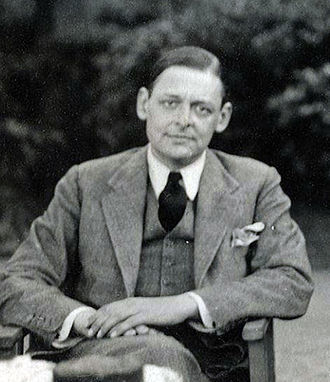
Thomas Stearns Eliot OM (26 September 1888 – 4 January 1965) was a British essayist, publisher, playwright, literary and social critic, and "one of the twentieth century's major poets".
B. 1100 Words You Need to Know
deplorable (a.)- very bad
de- down, down from, from, off
obliterate (v.)- erase, efface
ob- against
 rue (v.)- to feel sorry about an event and wish it had not happened
 detriment (a.)- harm or damage
aegis (n.)- protection
prevalent (a.)- having great power or force
inevitable (a.)- certain to happen and unable to be avoided or prevented
cogent (a.)- persuasive
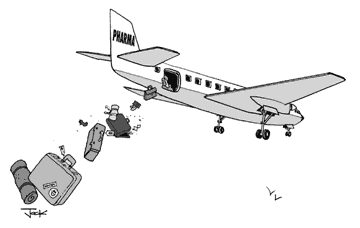 jettison (v.)- to throw overboard
jet(v.)- to sprout or spurt forth, shoot out
retrospect (n.)- a regard or reference
 ardent (a.)- showing strong feelings
obscure (a.)- not known to many people
culminate(v.)- to top, to crown
falter (v.)- to lose strength or purpose and stop, or almost stop


