week 8
A.
omni- "all, every, the whole, of every kind,"
example: omnipotent, omniscient, omnivore
| omnipotent |
having unlimited power and able to do anything |
| omniscient |
having or seeming to have unlimited knowledge |
| omnivore |
an animal that is naturally able to eat both plants and meat |
unconsicios : in the state of not being awake, especially as the result of a head injury
incompetent : not having the ability to do something as it should be done
impotent : not having the power or ability to change or improve a situation
B. The Aeneid (continued last week)
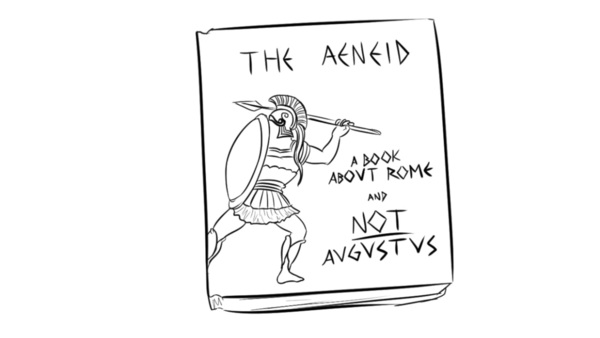
(https://www.youtube.com/watch?v=QRruBVFXjnY)
C.Tiresias
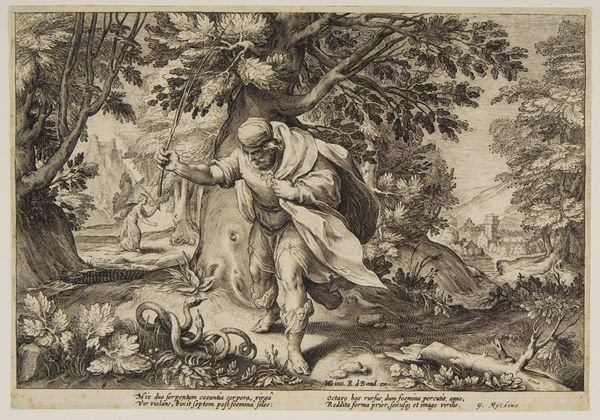
In Greek mythology, Tiresias was a blind prophet of Apollo in Thebes, famous for clairvoyance and for being transformed into a woman for seven years. He was the son of the shepherd Everes and the nymph Chariclo. Tiresias participated fully in seven generations at Thebes, beginning as advisor to Cadmus himself.
(https://www.youtube.com/watch?v=BFfkNocwYTQ)
D. Charon the Ferryman
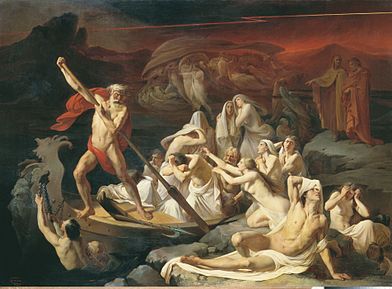
In Greek mythology, Charon or Kharon is the ferryman of Hades who carries souls of the newly deceased across the rivers Styx and Acheron that divided the world of the living from the world of the dead. A coin to pay Charon for passage, usually an obolus or danake, was sometimes placed in or on the mouth of a dead person. Some authors say that those who could not pay the fee, or those whose bodies were left unburied, had to wander the shores for one hundred years. In the catabasis mytheme, heroes – such as Aeneas, Dionysus, Heracles, Hermes, Odysseus, Orpheus, Pirithous, Psyche, Theseus and Sisyphus – journey to the underworld and return, still alive, conveyed by the boat of Charon.
限會員,要發表迴響,請先登入


