"The Lady with the Dog" is a short story by Anton Chekhov first published in 1899. It tells the story of an adulterous affair between a Russian banker and a young lady he meets while vacationing in Yalta.
ð It is full of rhyme.
․ Adventures of Huckleberry Finn
Adventures of Huckleberry Finn is a novel by Mark Twain. It is told in the first person by Huckleberry "Huck" Finn, a friend of Tom Sawyer and narrator of two other Twain novels. The book is noted for its colorful description of people and places along the Mississippi River. Adventures of Huckleberry Finn is an often scathing satire on entrenched attitudes, particularly racism.
James Madison, Jr. (March 16 [O.S. March 5] 1751 – June 28, 1836) was a political theorist, American statesman, and served as the fourth President of the United States (1809–17). He is hailed as the "Father of the Constitution" for his pivotal role in drafting and promoting the U.S. Constitution and the Bill of Rights
“Knowledge will forever govern ignorance; and a people who mean to be their own governors must arm themselves with the power which knowledge gives.”
– James Madison
ð White Anglo Saxon Protestant (WASP): WASP is an informal, sometimes disparaging term for a group of high-status and influential White Americans of English Protestant ancestry. The term applies to a group who control disproportionate financial, political and social power in the United States.
ð Control knowledge = Control power
The angle of vision from which a story is narrated. A work's point of view can be: first person, in which the narrator is a character or an observer, respectively; objective, in which the narrator knows or appears to know no more than the reader; omniscient, in which the narrator knows everything about the characters; and limited omniscient, which allows the narrator to know some things about the characters but not everything.
ð Third person: Third-person narration provides the greatest flexibility to the author and thus is the most commonly used narrative mode in literature. In the third-person narrative mode, each and every character is referred to by the narrator as "he", "she", "it", or "they", but never as "I" or "we" (first-person), or "you" (second-person).
Narration is the use of a written or spoken commentary to convey a story to an audience. Narration encompasses a set of techniques through which the creator of the story presents their story
ð Epistolary voice: The epistolary narrative voice uses a (usually fictional) series of letters and other documents to convey the plot of the story.
“A Rose for Emily” is a short story by American author William Faulkner.
ð The story opens with a brief first-person account of the funeral of Emily Grierson, an elderly Southern spinster.
Bleak House was first published as a serial between March 1852 and September 1853, and it is one of Charles Dickens's major novels. The novel has many characters and several sub-plots, and the story is told partly by the novel's heroine, Esther Summerson, and partly by an omniscient narrator. At the center of Bleak House is the long-running legal case, Jarndyce and Jarndyce, which came about because someone wrote several conflicting wills. This legal case is used by Dickens to satirize the English judicial system, and he makes use of his earlier experiences as a law clerk, and as a litigant seeking to enforce copyright on his earlier books
In genre studies, a coming-of-age story is a genre of literature and film that focuses on the growth of a protagonistfrom youth to adulthood.
․ Vocabulary
- lilac (n.)
It is a species of flowering plant in the olive family Oleaceae, native to the Balkan Peninsula, where it grows on rocky hills


|
|
to be someone |
|
|
|
-ant/-ent |
|||
the person in a trial who is accused of committing a crime, or who is being sued by another person
a person whose job is to serve or help people in a public place; a person who takes care of and lives or travels with an important person or a sick or disabled person
belonging to or connected with the part of the Western Christian Church that separated from the Roman Catholic Church in the 16th century
a person whose job is to keep or check financial accounts. |
a person who makes a formal request for something (= applies for it), especially for a job, a place at a college or university, etc.
a person who works in another person’s house, and cooks, cleans, etc. for them; a person who works for a company or an organization; a person or thing that is controlled by something
a person who helps or supports somebody, usually in their job
a person who lives in a particular place or who has their home there; a person who is staying in a hotel |
||
|
|
to look |
|
|
spect- |
||
a person who is watching an event, especially a sports event
to look closely at something/somebody, especially to check that everything is as it should be
very impressive |
||
|
|
all |
|
|
omni- |
||
present everywhere
having total power; able to do anything |
||

It tells the story of Michael Berg, a German lawyer who as a mid-teenager in 1958 had an affair with an older woman, Hanna Schmitz, who then disappeared only to resurface years later as one of the defendants in a war crimes trial stemming from her actions as a guard at a Nazi concentration camp. Michael realizes that Hanna is keeping a personal secret she believes is worse than her Nazi past – a secret which, if revealed, could help her at the trial.

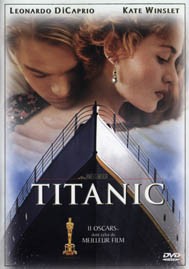
A seventeen-year-old aristocrat falls in love with a kind, but poor artist aboard the luxurious, ill-fated R.M.S. Titanic.
The story follows the Dashwood sisters, members of a wealthy English family of landed gentry, as they must deal with circumstances of sudden destitution. They are forced to seek financial security through marriage.

The film depicts the tragedy of Russian aristocrat and socialite Anna Karenina, wife of senior statesman Alexei Karenin, and her affair with the affluent officer Count Vronsky which leads to her ultimate demise.


