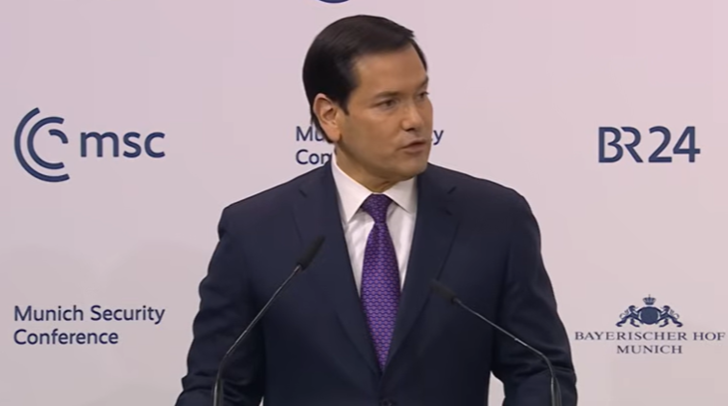
盧比歐(Marco Rubio)這次演講,可能是川普當選總統一年以來,其團隊(包括他自己)最成功的一次:有一定的歷史縱深並提出對全球化問題的合理質疑,表達出其對盟國一起強化國防的殷切期待。這比川普過往那種總是威脅利誘盟國,狂妄羞辱他不喜歡的領導人,卻又對中俄極權政府過度遷就,好得太多。其中又以下面這句話令人動容:
「因此,我們不希望盟友軟弱,因為那會讓我們更弱。我們希望盟友能自我防衛,使任何對手都不敢試探我們的集體力量。因此,我們也不希望盟友被罪咎與羞恥所束縛。我們希望盟友以自身文化與傳承為榮,理解我們同為一個偉大而高貴文明的繼承者,並願意、也有能力與我們一道捍衛它。」
事實上,這可能是美國右派保守主義政客,對於自己想要如何調整過去過度左傾做法的最好一次說明,成功讓人覺得安心而有說服力。雖然一次演講並不足以代表甚麼,但希望這會是2026年國際局勢好的開始。
我將全文翻譯(包含QA)放在此處,並附上美國國務院公布演講影片與逐字稿。
-----------------------
魯比歐國務卿:非常感謝。今天我們聚集於此,身為一個歷史性同盟的成員——這個同盟曾拯救並改變世界。當本次會議於 1963 年開始時,它是在一個——其實是在一個——自我分裂的國家、乃至一個自我分裂的大陸上舉行。共產主義與自由之間的分界線,穿過德國的心臟地帶。柏林圍牆最早的鐵絲網圍欄,才在兩年前豎起。
而在那第一次會議之前的短短幾個月——在我們的前輩首次於此、在慕尼黑相聚之前——古巴飛彈危機曾把世界推向核毀滅的邊緣。即使第二次世界大戰對美國人與歐洲人而言仍歷歷在目,我們卻發現自己正直視一場新的全球性浩劫——其破壞潛力,帶來一種前所未見、更加末日般且終局性的毀滅,超越人類歷史以往任何災難。
在第一次聚會之時,蘇維埃共產主義正一路擴張。數千年的西方文明岌岌可危。當時,勝利遠非定局。但我們被共同的使命所驅使。我們之所以團結,不僅因為我們在對抗什麼;更因為我們在捍衛什麼。於是,歐洲與美國攜手取勝,一個大陸得以重建。我們的人民繁榮興盛。最終,東西方集團重新統一,文明再次完整。
那道將這個國家劈為兩半的惡名昭彰之牆倒下了;隨之而倒的還有一個邪惡帝國;東西方再度合而為一。然而,這場勝利的欣喜,卻使我們陷入一個危險的幻覺:以為我們已進入所謂「歷史的終結」;以為每個國家都將成為自由民主;以為僅靠貿易與商業形成的連結就能取代民族國家;以為所謂「以規則為基礎的全球秩序」——一個被過度濫用的詞——將取代國家利益;以為我們將生活在一個沒有邊界的世界,每個人都成為世界公民。
這是個愚蠢的想法,它既無視人性,也無視逾五千年有文字記載的人類歷史所給予的教訓。而它讓我們付出了沉重代價。在這種幻覺中,我們擁抱一種教條式、完全自由且不受限制的貿易願景;同時,某些國家卻保護本國經濟、補貼本國企業,以系統性方式削弱我們——迫使我們的工廠關閉,使我們社會的大片區域去工業化,把數以百萬計的工人階級與中產階級工作機會外移,並把關鍵供應鏈的控制權交到對手與競爭者手中。
我們愈來愈把主權外包給國際機構,同時許多國家以維持龐大福利國家為代價,犧牲了自我防衛的能力。這一切發生之際,其他國家卻投入了人類史上最快速的軍事擴張,且毫不猶豫地動用硬實力追求自身利益。為了討好一個氣候邪教,我們對自己施加使人民陷入貧困的能源政策;而我們的競爭者則開採石油、煤炭、天然氣以及任何其他資源——不僅為了驅動其經濟,更為了把它們當成槓桿來制衡我們。
而在追求一個沒有邊界的世界之名下,我們敞開大門迎來前所未有的大規模移民浪潮,威脅到社會凝聚力、文化延續,以及人民的未來。我們共同犯下這些錯誤;而如今,我們也共同欠人民一個交代:正視事實,向前邁進,重建。
在川普總統領導下,美利堅合眾國將再次肩負更新與復興的任務,以一個對未來的願景為驅動——那願景將如同我們文明的過去一般自豪、主權獨立且充滿活力。必要時,我們準備單獨完成這項任務;但我們更希望、也更盼望能與你們——歐洲的朋友——一同完成。
對美國與歐洲而言,我們本就應該在一起。美國雖在 250 年前建國,但其根源早在更久之前就始於這片大陸。我出生之國得以定居並建立的那個人,抵達我們海岸時,帶著祖先的記憶、傳統與基督信仰,視之為神聖的遺產——一條連結舊世界與新世界、不可斷裂的紐帶。
我們同屬一個文明——西方文明。我們以國與國之間最深厚的連結彼此相繫:那是由數百年共享的歷史、基督信仰、文化、傳承、語言、血緣,以及我們先人為共同文明所作的犧牲所鍛造;而我們正是這份共同文明的繼承者。
因此,這也是為什麼我們美國人在提出建議時,有時顯得較為直接、甚至急切。這也是為什麼川普總統要求我們在歐洲的朋友展現嚴肅與對等。原因在於——朋友們——我們深切在乎。我們深切在乎你們與我們的未來。即使有時我們意見不合,分歧也源自我們對一個與我們相連的歐洲所抱持的深切關懷——不只是經濟上的、不只是軍事上的;我們在精神上相連,在文化上相連。我們希望歐洲強大。我們相信歐洲必須存續,因為上世紀的兩次大戰不斷提醒我們:最終,我們的命運永遠與你們交織在一起——因為我們知道——(掌聲)——因為我們知道,歐洲的命運從來不可能與我們無關。
國家安全——本會議主要討論的議題——並不僅僅是一系列技術問題:我們在國防上花多少、花在哪裡、如何部署,這些都是重要問題,確實如此。但它們不是最根本的問題。我們一開始必須回答的根本問題是:我們究竟在捍衛什麼?因為軍隊不為抽象概念而戰。軍隊為人民而戰;軍隊為國家而戰;軍隊為一種生活方式而戰。而我們所捍衛的正是如此:一個偉大的文明,它有充分理由為自己的歷史自豪、對未來自信,並以永遠掌握自身經濟與政治命運為志。
正是在歐洲,孕育了播下自由種子、並改變世界的思想。正是在歐洲——這個將法治、大学與科學革命帶給世界的地方。這片大陸孕育了莫札特與貝多芬的天才,孕育了但丁與莎士比亞,孕育了米開朗基羅與達文西,孕育了披頭四與滾石樂隊。而西斯汀禮拜堂的穹頂天花、科隆大教堂高聳的尖塔,不僅見證我們過去的偉大、也見證啟發這些奇蹟的對上帝的信仰;它們也預示著未來等待我們的奇觀。但唯有當我們對自身傳承毫不道歉、並為這份共同遺產感到自豪時,我們才能一起開始構想並塑造我們的經濟與政治未來。
去工業化並非不可避免。它是有意識的政策選擇,是一項持續數十年的經濟工程,剝奪了我們國家的財富、生產能力與獨立性。而供應鏈主權的喪失,也不是一個繁榮健康的全球貿易體系所必然帶來的結果。那是愚蠢——是一場愚蠢卻出於自願的經濟轉型,使我們在需求上依賴他人,並在危機面前危險地脆弱。
大規模移民不是、也從來不是什麼無關緊要的邊緣議題。它曾是、至今仍是一場危機,正在重塑並動搖整個西方的社會。我們可以一起讓經濟再工業化,重建保護人民的防衛能力。但這個新同盟的工作不應只著眼於軍事合作、或奪回過去的產業;它也應著眼於:我們共同推進彼此的利益與新前沿,解除對我們巧思、創造力與動態精神的束縛,以建構一個新的西方世紀——商業太空旅行與尖端人工智慧、工業自動化與彈性製造、打造不受他國勒索的關鍵礦物西方供應鏈,以及一致努力在全球南方經濟體中競逐市場份額。攜手之下,我們不僅能重掌產業與供應鏈的主導權——更能在定義二十一世紀的領域繁榮發展。
但我們也必須重新掌控國界。控制哪些人、以及多少人進入我們的國家,並非排外的表現。這不是仇恨。這是國家主權的基本行為。而未能做到這一點,不僅是對人民最基本義務的失職,更是對社會紋理與文明存續本身的迫切威脅。
最後,我們不能再把所謂的全球秩序置於人民與國家至關重要的利益之上。我們不必拋棄由我們所撰寫的國際合作體系,也不必拆除我們共同建立的舊秩序全球機構;但它們必須改革,必須重建。
例如,聯合國仍具有巨大潛力成為世界向善的工具。但我們不能忽視的是:今天,在我們面前最迫切的議題上,它沒有答案,幾乎未扮演任何角色。它無法解決加薩戰爭;反而是美國的領導力,從野蠻人手中解救了人質,促成了一項脆弱的停火。它也未能解決烏克蘭戰爭;只是要讓雙方坐上談判桌尋求仍難以企及的和平,就已需要美國的領導與與今日在座多國的夥伴合作。
它無力遏制德黑蘭激進什葉派教士的核計畫。那需要由美國 B-2 轟炸機精準投下 14 枚炸彈。它也無法應對委內瑞拉一名涉毒恐怖主義獨裁者對我們安全的威脅;相反地,是美國特種部隊將這名逃犯繩之以法。
在一個完美世界裡,這些問題與更多問題都會由外交官與措辭強烈的決議來解決。但我們並不生活在完美世界;我們也不能再容許那些公然、公開威脅我們公民、危及全球穩定的人,躲在他們自己也一再違反的國際法抽象概念背後,藉此自保。
這就是川普總統與美國已經踏上的道路,也是我們請求你們歐洲夥伴加入的道路。這是一條我們曾一起走過、也希望再度一起走的路。五個世紀以來,在第二次世界大戰結束之前,西方一直在擴張——傳教士、朝聖者、士兵與探險家從海岸湧出,跨越海洋、定居新大陸、建立橫跨全球的龐大帝國。
但在 1945 年,自哥倫布時代以來首次,西方開始收縮。歐洲滿目瘡痍;半數在鐵幕之後生活,其餘看來也將很快步其後塵。偉大的西方帝國步入末期衰亡,並被無神的共產革命與反殖民起義加速——它們將重塑世界,並在往後多年把紅色鎚子與鐮刀披掛在地圖的廣大區域。
在那樣的背景下——如同今日——許多人相信西方主宰的時代已然終結,而我們的未來注定只是昔日榮光的微弱回音。然而,我們的前輩們共同認知:衰退是一種選擇,而那是他們拒絕做出的選擇。這正是我們曾共同完成的一次事;也是川普總統與美國如今希望再次與你們共同完成的事。
因此,我們不希望盟友軟弱,因為那會讓我們更弱。我們希望盟友能自我防衛,使任何對手都不敢試探我們的集體力量。因此,我們也不希望盟友被罪咎與羞恥所束縛。我們希望盟友以自身文化與傳承為榮,理解我們同為一個偉大而高貴文明的繼承者,並願意、也有能力與我們一道捍衛它。
也因此,我們不希望盟友為破碎的現狀找理由,而不是正視修復它所必需之事;因為美國不想成為西方被管理式衰退的禮貌而井然有序的看守者。我們不求分離,而是要重振老朋友情誼,更新人類歷史上最偉大的文明。我們想要的是一個重新注入活力的同盟:它認知困擾我們社會的,不僅是一套錯誤政策,更是一種絕望與自滿的沉痾。我們想要的同盟,不會因恐懼而癱瘓——對氣候變遷的恐懼、對戰爭的恐懼、對科技的恐懼;相反地,我們要一個勇敢奔向未來的同盟。而我們唯一的恐懼,是羞於未能把我們的國家留得更自豪、更強大、更富裕給我們的孩子。
一個準備捍衛人民、維護利益、並保存行動自由以塑造自身命運的同盟——而不是一個為運作全球福利國家、為所謂過往世代之罪贖罪而存在的同盟。它不允許自身權力被外包、被限制或被置於超出其控制的體系之下;不依賴他人供給國家生命至關重要的必需品;也不維持那種禮貌的假裝——彷彿我們的生活方式只是眾多之一,行動之前還要先徵求許可。最重要的是,這個同盟建立在一個認知之上:我們——西方——共同繼承的,是獨一無二、別具特色、不可替代的事物;而這正是跨大西洋紐帶的根基。
以此方式攜手行動,我們不僅能協助恢復理性的外交政策,也將讓我們更清楚自己是誰;它將恢復我們在世界中的位置,並藉此駁斥與嚇阻那些今日同時威脅美國與歐洲的「文明抹除」力量。
因此,在媒體頭條宣告跨大西洋時代終結之際,讓所有人清楚明白:這既非我們的目標,也非我們的心願——因為對我們美國人而言,我們的家或許在西半球,但我們永遠是歐洲的孩子。(掌聲)
我們的故事始於一位義大利探險家——他闖入偉大未知、發現新世界的冒險,把基督信仰帶到美洲,並成為定義我們這個拓荒民族想像力的傳奇。
我們最早的殖民地由英國移民建立;我們不僅欠他們我們所使用的語言,也欠他們整套政治與法律制度。我們的邊疆由蘇格蘭—愛爾蘭人塑造——那支來自阿爾斯特丘陵、堅韌而自豪的族群,帶給我們戴維・克羅克特、馬克・吐溫、西奧多・羅斯福與尼爾・阿姆斯壯。
我們偉大的中西部腹地由德國農民與工匠建立,他們把空曠的平原改造成全球農業強權——順帶一提,也大幅提升了美國啤酒的品質。(笑聲)
我們向內陸的擴張,追隨法國毛皮商與探險家的足跡;他們的名字,至今仍裝點著密西西比河谷各地的路牌與城鎮名稱。我們的馬匹、牧場、牛仔競技——整個與美國西部同義的牛仔原型浪漫——源自西班牙。而我們最大、最具代表性的城市,在被稱為紐約之前,名為「新阿姆斯特丹」。
你們知道嗎?就在我國建國的那一年,洛倫佐與卡塔麗娜・傑羅爾迪住在皮埃蒙特—薩丁尼亞王國的卡薩萊・蒙費拉托;而何塞與曼努埃拉・雷納住在西班牙塞維亞。我不知道他們是否、又知道多少關於從英國帝國取得獨立的十三州殖民地,但我確定的是:他們絕不可能想像,250 年後,他們的一位直系後裔會回到這片大陸,成為那個初生國家的首席外交官。然而,我今日就在此——也從我的故事再次被提醒:我們的歷史與命運將永遠相連。
我們曾在兩場毀滅性的世界大戰後,共同重建一個支離破碎的大陸。當我們再次被鐵幕分裂,自由的西方與東方勇敢的異議人士攜手,戰勝蘇維埃共產主義。我們曾彼此交戰,繼而和解;再交戰,再和解。我們也曾在從加平到坎大哈的戰場上並肩流血、並肩牺牲。
我今天在此要清楚表明:美國正為一個新的繁榮世紀擘畫道路,而我們再一次希望與你們——我們珍視的盟友、我們最 오래 的朋友——一起完成。(掌聲)
我們希望與你們一起完成——與一個為其傳承與歷史自豪的歐洲一起;與一個懷抱創造自由之精神、曾把船隻駛向未知海域並孕育我們文明的歐洲一起;與一個有能力自我防衛、也有意志存續的歐洲一起。我們應為上個世紀共同達成的成就感到自豪,但現在我們必須正視並擁抱新世紀的機遇——因為昨天已經結束,未來勢不可擋,而我們共同的命運正在前方等待。謝謝。(掌聲)
提問:國務卿先生,我不確定您是否聽到整個會場剛才那一聲如釋重負的嘆息——我們所聽到的,我會解讀為一個令人安心的訊息:夥伴關係。您談到美國與歐洲之間交織的關係——這讓我想起數十年前您前任們的表述,當時的討論是:美國實際上是不是一個歐洲強權?美國是不是一個在歐洲的強權?感謝您傳達這個關於夥伴關係、令人安心的訊息。
其實這也不是馬可・魯比歐第一次出席慕尼黑安全會議——他過去已來過幾次——但這是他第一次以國務卿身分在此發言。所以再次感謝。接下來我們只剩幾分鐘,可以問幾個問題;若可以的話,我們也從觀眾席收集了一些問題。
昨天、今天這裡的關鍵議題之一——當然也仍然是——如何應對烏克蘭戰爭。過去一天、過去 24 小時的討論中,我們許多人都表達了一種印象:俄羅斯人——我用口語說——俄羅斯人在拖時間,他們並不真心想達成有意義的和解。沒有跡象顯示他們願意在任何極大化目標上妥協。請您談談您的評估:我們目前在哪裡?您認為我們能走向哪裡?
魯比歐國務卿:我想我們目前所處的位置是:眼前這些必須面對、才能結束戰爭的議題——有個好消息。好消息是,需要正面處理以終結戰爭的議題已被收斂、縮小了範圍。這是好消息。壞消息是,它們收斂到了最難回答的問題,而這方面仍有大量工作要做。我明白你提到的重點——答案是:我們不知道。我們不知道俄羅斯是否認真想結束戰爭;他們說他們是——但他們願意在什麼條件下結束?以及我們能否找到一組烏克蘭可接受、而俄羅斯也會同意的條件?但我們會繼續測試。
同時,其他一切仍在進行。美國已對俄羅斯石油加徵制裁。在我們與印度的對話中,我們取得他們承諾,停止購買額外的俄羅斯石油。歐洲也已採取一系列持續推進的措施。所謂「珍珠計畫」(Pearl Program)仍在繼續,美國武器正以出售方式用於烏克蘭的戰爭努力。因此,這些事情都在持續;中間沒有任何事停下來。所以在這個層面上,並不存在所謂「拖時間」。
我們無法回答的——但我們會繼續測試——是:是否存在一個烏克蘭能接受、而俄羅斯也會接受的結果?我會說,到目前為止,這仍難以捉摸。我們確實取得一些進展:我認為多年來首次,至少在技術層級上,雙方軍方官員上週有會面;而週二還會再有會議,雖然參與者可能不完全相同。
你看,我們會持續竭盡所能扮演促成戰爭結束的角色。我想在這個房間裡沒有人會反對透過談判達成和解,只要條件公正且可持續。這就是我們希望達成的目標;我們也會繼續努力,同時包括制裁等其他方面的措施也會持續推動。
提問:非常感謝。我相信如果時間更多,關於烏克蘭還會有很多問題。但最後讓我問一個完全不同的問題。接下來幾分鐘後的下一位講者將是中國外長。您在參議院任職時,外界常把您視為某種「對中鷹派」。
魯比歐國務卿:他們確實這麼看。
提問:他們確實這麼看?
魯比歐國務卿:對。
提問:我們知道,大約兩個月後,川普總統與習近平主席將舉行峰會。請談談您的期待。您樂觀嗎?能否和中國達成某種「交易」?您預期會如何?
魯比歐國務卿:我會這麼說:世界上最大的兩個經濟體、地球上兩個主要強權,我們有義務彼此溝通與對話,你們許多人也會在雙邊層面與中國對話。坦白說,不與中國對話在地緣政治上是失職。我會說:因為我們是兩個擁有巨大全球利益的大國,我們的國家利益常常不會一致。他們的國家利益與我們的國家利益不會一致;而我們也有責任盡可能妥善管理這種差異,顯然要避免衝突——不論是經濟上的,或更糟的那種。因此,在這方面保持溝通非常重要。
在我們利益一致的領域,我認為我們可以合作,對世界產生正面影響;我們也會尋找與他們合作的機會。因此——但我們必須與中國維持一段關係。今天在座各國也都必須與中國維持關係,同時始終理解:我們同意的任何事情,都不能以犧牲自身國家利益為代價。坦白說,我們也預期中國會依其國家利益行事,就如同我們預期每個民族國家都會依其國家利益行事。外交的目標,就是在我們國家利益彼此衝突的時刻,設法航行其間,並始終希望能以和平方式處理。
我也認為我們有一項特殊義務,因為美中之間在貿易上的任何發展,都具有全球性影響。因此,我們面對一些長期挑戰,必須正面處理,而它們會成為我們與中國關係中的摩擦點。這不僅對美國如此,對更廣泛的西方也是如此。但我確實認為,如果可能,我們需要盡力管理它們,以避免不必要的摩擦。不過,沒有人抱持任何幻想:由於多種原因,我們兩國之間、以及西方與中國之間,存在一些根本性挑戰,未來可預見的期間仍將持續;而這也是我們希望能與你們合作面對的一些事情。
提問:非常感謝,國務卿先生。我們時間到了。很抱歉無法讓所有想提問的人都提問。國務卿先生,感謝您帶來這個令人安心的訊息。我想在場各位都非常感激。讓我們以掌聲致意。(掌聲)
-----------------------
美國國務院官網「超連結」(有完整演講逐字稿)
SECRETARY RUBIO: Thank you very much. We gather here today as members of a historic alliance, an alliance that saved and changed the world. When this conference began in 1963, it was in a nation – actually, it was on a continent – that was divided against itself. The line between communism and freedom ran through the heart of Germany. The first barbed fences of the Berlin Wall had gone up just two years prior.
And just months before that first conference, before our predecessors first met here, here in Munich, the Cuban Missile Crisis had brought the world to the brink of nuclear destruction. Even as World War II still burned fresh in the memory of Americans and Europeans alike, we found ourselves staring down the barrel of a new global catastrophe – one with the potential for a new kind of destruction, more apocalyptic and final than anything before in the history of mankind.
At the time of that first gathering, Soviet communism was on the march. Thousands of years of Western civilization hung in the balance. At that time, victory was far from certain. But we were driven by a common purpose. We were unified not just by what we were fighting against; we were unified by what we were fighting for. And together, Europe and America prevailed and a continent was rebuilt. Our people prospered. In time, the East and West blocs were reunited. A civilization was once again made whole.
That infamous wall that had cleaved this nation into two came down, and with it an evil empire, and the East and West became one again. But the euphoria of this triumph led us to a dangerous delusion: that we had entered, quote, “the end of history;” that every nation would now be a liberal democracy; that the ties formed by trade and by commerce alone would now replace nationhood; that the rules-based global order – an overused term – would now replace the national interest; and that we would now live in a world without borders where everyone became a citizen of the world.
This was a foolish idea that ignored both human nature and it ignored the lessons of over 5,000 years of recorded human history. And it has cost us dearly. In this delusion, we embraced a dogmatic vision of free and unfettered trade, even as some nations protected their economies and subsidized their companies to systematically undercut ours – shuttering our plants, resulting in large parts of our societies being deindustrialized, shipping millions of working and middle-class jobs overseas, and handing control of our critical supply chains to both adversaries and rivals.
We increasingly outsourced our sovereignty to international institutions while many nations invested in massive welfare states at the cost of maintaining the ability to defend themselves. This, even as other countries have invested in the most rapid military buildup in all of human history and have not hesitated to use hard power to pursue their own interests. To appease a climate cult, we have imposed energy policies on ourselves that are impoverishing our people, even as our competitors exploit oil and coal and natural gas and anything else – not just to power their economies, but to use as leverage against our own.
And in a pursuit of a world without borders, we opened our doors to an unprecedented wave of mass migration that threatens the cohesion of our societies, the continuity of our culture, and the future of our people. We made these mistakes together, and now, together, we owe it to our people to face those facts and to move forward, to rebuild.
Under President Trump, the United States of America will once again take on the task of renewal and restoration, driven by a vision of a future as proud, as sovereign, and as vital as our civilization’s past. And while we are prepared, if necessary, to do this alone, it is our preference and it is our hope to do this together with you, our friends here in Europe.
For the United States and Europe, we belong together. America was founded 250 years ago, but the roots began here on this continent long before. The man who settled and built the nation of my birth arrived on our shores carrying the memories and the traditions and the Christian faith of their ancestors as a sacred inheritance, an unbreakable link between the old world and the new.
We are part of one civilization – Western civilization. We are bound to one another by the deepest bonds that nations could share, forged by centuries of shared history, Christian faith, culture, heritage, language, ancestry, and the sacrifices our forefathers made together for the common civilization to which we have fallen heir.
And so this is why we Americans may sometimes come off as a little direct and urgent in our counsel. This is why President Trump demands seriousness and reciprocity from our friends here in Europe. The reason why, my friends, is because we care deeply. We care deeply about your future and ours. And if at times we disagree, our disagreements come from our profound sense of concern about a Europe with which we are connected – not just economically, not just militarily. We are connected spiritually and we are connected culturally. We want Europe to be strong. We believe that Europe must survive, because the two great wars of the last century serve for us as history’s constant reminder that ultimately, our destiny is and will always be intertwined with yours, because we know – (applause) – because we know that the fate of Europe will never be irrelevant to our own.
National security, which this conference is largely about, is not merely series of technical questions – how much we spend on defense or where, how we deploy it, these are important questions. They are. But they are not the fundamental one. The fundamental question we must answer at the outset is what exactly are we defending, because armies do not fight for abstractions. Armies fight for a people; armies fight for a nation. Armies fight for a way of life. And that is what we are defending: a great civilization that has every reason to be proud of its history, confident of its future, and aims to always be the master of its own economic and political destiny.
It was here in Europe where the ideas that planted the seeds of liberty that changed the world were born. It was here in Europe where the world – which gave the world the rule of law, the universities, and the scientific revolution. It was this continent that produced the genius of Mozart and Beethoven, of Dante and Shakespeare, of Michelangelo and Da Vinci, of the Beatles and the Rolling Stones. And this is the place where the vaulted ceilings of the Sistine Chapel and the towering spires of the great cathedral in Cologne, they testify not just to the greatness of our past or to a faith in God that inspired these marvels. They foreshadow the wonders that await us in our future. But only if we are unapologetic in our heritage and proud of this common inheritance can we together begin the work of envisioning and shaping our economic and our political future.
Deindustrialization was not inevitable. It was a conscious policy choice, a decades-long economic undertaking that stripped our nations of their wealth, of their productive capacity, and of their independence. And the loss of our supply chain sovereignty was not a function of a prosperous and healthy system of global trade. It was foolish. It was a foolish but voluntary transformation of our economy that left us dependent on others for our needs and dangerously vulnerable to crisis.
Mass migration is not, was not, isn’t some fringe concern of little consequence. It was and continues to be a crisis which is transforming and destabilizing societies all across the West. Together we can reindustrialize our economies and rebuild our capacity to defend our people. But the work of this new alliance should not be focused just on military cooperation and reclaiming the industries of the past. It should also be focused on, together, advancing our mutual interests and new frontiers, unshackling our ingenuity, our creativity, and the dynamic spirit to build a new Western century. Commercial space travel and cutting-edge artificial intelligence; industrial automation and flex manufacturing; creating a Western supply chain for critical minerals not vulnerable to extortion from other powers; and a unified effort to compete for market share in the economies of the Global South. Together we can not only take back control of our own industries and supply chains – we can prosper in the areas that will define the 21st century.
But we must also gain control of our national borders. Controlling who and how many people enter our countries, this is not an expression of xenophobia. It is not hate. It is a fundamental act of national sovereignty. And the failure to do so is not just an abdication of one of our most basic duties owed to our people. It is an urgent threat to the fabric of our societies and the survival of our civilization itself.
And finally, we can no longer place the so-called global order above the vital interests of our people and our nations. We do not need to abandon the system of international cooperation we authored, and we don’t need to dismantle the global institutions of the old order that together we built. But these must be reformed. These must be rebuilt.
For example, the United Nations still has tremendous potential to be a tool for good in the world. But we cannot ignore that today, on the most pressing matters before us, it has no answers and has played virtually no role. It could not solve the war in Gaza. Instead, it was American leadership that freed captives from barbarians and brought about a fragile truce. It had not solved the war in Ukraine. It took American leadership and partnership with many of the countries here today just to bring the two sides to the table in search of a still-elusive peace.
It was powerless to constrain the nuclear program of radical Shia clerics in Tehran. That required 14 bombs dropped with precision from American B-2 bombers. And it was unable to address the threat to our security from a narcoterrorist dictator in Venezuela. Instead, it took American Special Forces to bring this fugitive to justice.
In a perfect world, all of these problems and more would be solved by diplomats and strongly worded resolutions. But we do not live in a perfect world, and we cannot continue to allow those who blatantly and openly threaten our citizens and endanger our global stability to shield themselves behind abstractions of international law which they themselves routinely violate.
This is the path that President Trump and the United States has embarked upon. It is the path we ask you here in Europe to join us on. It is a path we have walked together before and hope to walk together again. For five centuries, before the end of the Second World War, the West had been expanding – its missionaries, its pilgrims, its soldiers, its explorers pouring out from its shores to cross oceans, settle new continents, build vast empires extending out across the globe.
But in 1945, for the first time since the age of Columbus, it was contracting. Europe was in ruins. Half of it lived behind an Iron Curtain and the rest looked like it would soon follow. The great Western empires had entered into terminal decline, accelerated by godless communist revolutions and by anti-colonial uprisings that would transform the world and drape the red hammer and sickle across vast swaths of the map in the years to come.
Against that backdrop, then, as now, many came to believe that the West’s age of dominance had come to an end and that our future was destined to be a faint and feeble echo of our past. But together, our predecessors recognized that decline was a choice, and it was a choice they refused to make. This is what we did together once before, and this is what President Trump and the United States want to do again now, together with you.
And this is why we do not want our allies to be weak, because that makes us weaker. We want allies who can defend themselves so that no adversary will ever be tempted to test our collective strength. This is why we do not want our allies to be shackled by guilt and shame. We want allies who are proud of their culture and of their heritage, who understand that we are heirs to the same great and noble civilization, and who, together with us, are willing and able to defend it.
And this is why we do not want allies to rationalize the broken status quo rather than reckon with what is necessary to fix it, for we in America have no interest in being polite and orderly caretakers of the West’s managed decline. We do not seek to separate, but to revitalize an old friendship and renew the greatest civilization in human history. What we want is a reinvigorated alliance that recognizes that what has ailed our societies is not just a set of bad policies but a malaise of hopelessness and complacency. An alliance – the alliance that we want is one that is not paralyzed into inaction by fear – fear of climate change, fear of war, fear of technology. Instead, we want an alliance that boldly races into the future. And the only fear we have is the fear of the shame of not leaving our nations prouder, stronger, and wealthier for our children.
An alliance ready to defend our people, to safeguard our interests, and to preserve the freedom of action that allows us to shape our own destiny – not one that exists to operate a global welfare state and atone for the purported sins of past generations. An alliance that does not allow its power to be outsourced, constrained, or subordinated to systems beyond its control; one that does not depend on others for the critical necessities of its national life; and one that does not maintain the polite pretense that our way of life is just one among many and that asks for permission before it acts. And above all, an alliance based on the recognition that we, the West, have inherited together – what we have inherited together is something that is unique and distinctive and irreplaceable, because this, after all, is the very foundation of the transatlantic bond.
Acting together in this way, we will not just help recover a sane foreign policy. It will restore to us a clearer sense of ourselves. It will restore a place in the world, and in so doing, it will rebuke and deter the forces of civilizational erasure that today menace both America and Europe alike.
So in a time of headlines heralding the end of the transatlantic era, let it be known and clear to all that this is neither our goal nor our wish – because for us Americans, our home may be in the Western Hemisphere, but we will always be a child of Europe. (Applause.)
Our story began with an Italian explorer whose adventure into the great unknown to discover a new world brought Christianity to the Americas – and became the legend that defined the imagination of a our pioneer nation.
Our first colonies were built by English settlers, to whom we owe not just the language we speak but the whole of our political and legal system. Our frontiers were shaped by Scots-Irish – that proud, hearty clan from the hills of Ulster that gave us Davy Crockett and Mark Twain and Teddy Roosevelt and Neil Armstrong.
Our great midwestern heartland was built by German farmers and craftsmen who transformed empty plains into a global agricultural powerhouse – and by the way, dramatically upgraded the quality of American beer. (Laughter.)
Our expansion into the interior followed the footsteps of French fur traders and explorers whose names, by the way, still adorn the street signs and towns’ names all across the Mississippi Valley. Our horses, our ranches, our rodeos – the entire romance of the cowboy archetype that became synonymous with the American West – these were born in Spain. And our largest and most iconic city was named New Amsterdam before it was named New York.
And do you know that in the year that my country was founded, Lorenzo and Catalina Geroldi lived in Casale Monferrato in the Kingdom of Piedmont-Sardinia. And Jose and Manuela Reina lived in Sevilla, Spain. I don’t know what, if anything, they knew about the 13 colonies which had gained their independence from the British empire, but here’s what I am certain of: They could have never imagined that 250 years later, one of their direct descendants would be back here today on this continent as the chief diplomat of that infant nation. And yet here I am, reminded by my own story that both our histories and our fates will always be linked.
Together we rebuilt a shattered continent in the wake of two devastating world wars. When we found ourselves divided once again by the Iron Curtain, the free West linked arms with the courageous dissidents struggling against tyranny in the East to defeat Soviet communism. We have fought against each other, then reconciled, then fought, then reconciled again. And we have bled and died side by side on battlefields from Kapyong to Kandahar.
And I am here today to leave it clear that America is charting the path for a new century of prosperity, and that once again we want to do it together with you, our cherished allies and our oldest friends. (Applause.)
We want to do it together with you, with a Europe that is proud of its heritage and of its history; with a Europe that has the spirit of creation of liberty that sent ships out into uncharted seas and birthed our civilization; with a Europe that has the means to defend itself and the will to survive. We should be proud of what we achieved together in the last century, but now we must confront and embrace the opportunities of a new one – because yesterday is over, the future is inevitable, and our destiny together awaits. Thank you. (Applause.)
QUESTION: Mr. Secretary, I’m not sure you heard the sigh of relief through this hall when we were just listening to what I would interpret as a message of reassurance, of partnership. You spoke of intertwined relations between the United States and Europe – reminds me of statements made decades ago by your predecessors when the discussion was: is actually America a European power? Is America a power in Europe? Thank you for offering this message of reassurance about our partnership.
This is actually not the first time that Marco Rubio is here at the Munich Security Conference – been here before a couple of times, but it’s the first time he has been and he is the speaker as Secretary of State. So thank you again. We have only a couple of minutes now for just a few questions, and if I may, we collected questions from the audience.
One of the key issues here yesterday, today, is, of course – continues to be the question of how to deal with the war in Ukraine. Many of us in the discussions over the last day, the last 24 hours, have voiced their impression that the Russians – let me put it colloquially – the Russians are playing for time, they’re not really interested in a meaningful settlement. There is no indication that they’re willing to compromise on any of their maximalist objectives. Offer to us, if you could, your assessment of where we are and where you think we can go.
SECRETARY RUBIO: Well, I think where we are at this point is that the issues at play that have to be – here’s the good news. The good news is that the issues that need to be confronted to end this war have been narrowed. That’s the good news. The bad news is they’ve been narrowed to the hardest questions to answer, and work remains to be done in that front. I hear your point about – the answer is we don’t know. We don’t know the Russians are serious about ending the war; they say they are – and under what terms they were willing to do it and whether we can find terms that are acceptable to Ukraine that Russia will always agree to. But we’re going to continue to test it.
In the meantime, everything else continues to happen. The United States has imposed additional sanctions on Russia’s oil. In our conversations with India, we’ve gotten their commitment to stop buying additional Russian oil. Europe has taken its set of steps moving forward. The Pearl Program continues in which American weaponry is being sold for the Ukrainian war effort. So all these things continue. Nothing has stopped in the interim. So there’s no buying of time here in that regard.
What we can’t answer – but we’re going to continue to test – is whether there is an outcome that Ukraine can live with and that Russia will accept. And I would say it’s been elusive up to this point. We’ve made progress in the sense that for the first time, I think in years, at least at the technical level, there were military officials from both sides that met together last week, and there’ll be – and there’ll be meetings again on Tuesday, although it may not be the same group of people.
Look, we’re going to continue to do everything we can to play this role of bringing this war to an end. I don’t think anybody in this room would be against a negotiated settlement to this war so long as the conditions are just and sustainable. And that’s what we aim to achieve, and we’re going to continue to try to achieve it, even as all these other things continue to happen on the sanctions front and so forth.
QUESTION: Thank you very much. I’m sure if we had more time there were many questions on Ukraine. But let me conclude by asking a question about something entirely different. The next speaker here in just a couple of minutes will be the foreign minister of China. When you served in the Senate, sir, people considered you a kind of a China hawk.
SECRETARY RUBIO: So did they.
QUESTION: So did they?
SECRETARY RUBIO: Yeah.
QUESTION: The – we know that there will be, in about two months’ time, a summit meeting between President Trump and President Xi Jinping. Give us your expectation. Are you optimistic? Can there be a, quote/unquote, “deal” with China? What do you expect?
SECRETARY RUBIO: Well, I would say this. The two largest economies in the world, two of the big powers on the planet, we have an obligation to communicate with them and talk, and so do many of you on a bilateral basis as well. I mean, it would be geopolitical malpractice to not be in conversations with China. I would say this: because we’re two large countries with huge global interests, our national interests will often not align. Their national interests and ours will not align, and we owe it to the world to try to manage those as best we can, obviously avoiding conflict, both economic and worse. And that – so it’s important for us to have communications with them in that regard.
On areas in which our interests are aligned, I think we can work together to make positive impact on the world, and we seek opportunities to do that with them. So – but we have to have a relationship with China. And any of the countries represented here today are going to have to have a relationship with China, always understanding that nothing that we agree to could come at the expense of our national interest. And frankly, we expect China to act in their national interest, as we expect every nation-state to act in their national interest. And the goal of diplomacy is to try to navigate those times in which our national interests come into conflict with one another, always hoping to do it peacefully.
I think we also have a special obligation because whatever happens between the U.S. and China on trade has a global implication. So there are long-term challenges that we face that we’re going to have to confront that are going to be irritants in our relationship with China. That’s not just true for the United States; that’s true for the broader West. But I do think we need to try to manage those the best we can to avoid unnecessary friction if it’s possible. But no one is under any illusions. There are some fundamental challenges between our countries and between the West and China that will continue for the foreseeable future for a variety of reasons, and it’s some of the things we hope to work together with you on.
QUESTION: Thank you very much, Mr. Secretary. We’ve run out of time. I’m sorry that I can’t take questions from all those who wanted to ask questions. Mr. Secretary of State, thank you for this message of reassurance. I think this is much appreciated here in the hall. Let’s offer a round of applause. (Applause.)


