Common types of failures of linear stepper motors
2025/02/24 17:07
瀏覽173
迴響0
推薦0
引用0
1.Definition of linear stepper motors
Linear stepper motors, also known as linear stepper motors, are electric motors that can convert electrical pulse signals into linear displacements. Its working principle is based on the principle of electromagnets, and the pulsed electromagnetic field generated by the stator interacts with the magnetic rotor core to convert rotary motion into linear motion.
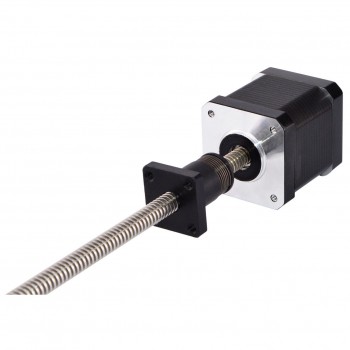
2.Detailed explanation of the working principle of linear stepper motors
1.Electromagnetic action: Linear stepper motors achieve movement through the interaction of the pulsed electromagnetic field generated by the stator with the rotor. When the coil on the stator is energized, a magnetic field is generated, which interacts with the magnetic material in the rotor, causing the rotor to rotate. By controlling the order and timing of the coils being energized, linear movement of the rotor can be achieved.
2.Stepping motion: Similar to rotary stepper motors, linear stepper motors also achieve stepping motion by controlling electrical pulse signals. Whenever a coil is energized, the rotor moves a certain distance (usually one-quarter of the stator tooth pitch), and the rotor can move continuously by switching the current in sequence.
3.Maintenance methods of linear stepper motors
1.Keep clean: Clean the motor housing and interior regularly to prevent dust, oil, moisture, etc. from entering the motor and affecting heat dissipation and normal operation. When cleaning, use organic solvents that do not cause corrosion and turn off the power supply of the equipment.
2.Check the fixings: Make sure that the motor base and terminal bolts are firmly fixed and there is no looseness. At the same time, check the rotation of the motor blades to ensure that they are working properly.
3.Monitor temperature and vibration: Pay attention to whether the motor has abnormal noise, vibration and special smell during operation. Check the wear of the bearings regularly and replace the bearings with severe wear in time. Monitor the temperature of the motor to avoid the impact of high temperature environment on the motor.
4.Control the power supply voltage and current: Reasonably control the power supply voltage and current to avoid damage to the motor caused by overload operation. Ensure that the motor runs in a suitable application environment to avoid pollution such as high temperature, oil, dust, etc.
5.Regular lubrication: Lubricate the motor regularly, especially before reinstalling after cleaning or when replacing components regularly. For high-temperature parts, high-temperature lubricating oil should be used.
6.Storage environment: Stepper motors should be stored in a clean, well-ventilated environment with an ambient temperature of -40 to 50°C and a relative humidity of no more than 95%. Avoid mixing with corrosive substances. When stored for a long time, apply protective oil and rotate the motor regularly to ensure its flexibility.
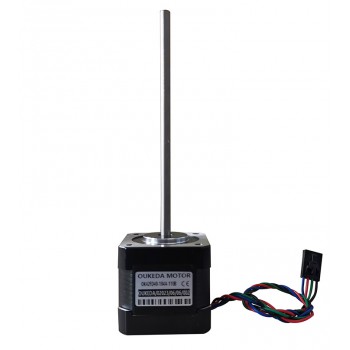
4.Main types of failures of linear stepper motors
1.Startup failure: The linear stepper motor cannot operate normally after startup, which may be manifested as sound without rotation or no response at all. The main reason may be problems with the power line or circuit, such as poor contact or damage. The treatment method includes checking the power line and circuit, and repairing the poor contact or damaged parts.
2.Operation failure: Abnormal noise or vibration occurs during operation, which may be due to problems with the transmission part or excessive wear of the bearing. The treatment method includes disassembling and repairing the transmission part and the bearing part, finding the problem and replacing it in time.
3.Position deviation failure: Abnormal position deviation occurs during operation, which may be due to problems with the sensor or controller program. The treatment method includes checking the sensor and controller program and replacing it in time.
4.Overtemperature fault: Excessive heating during operation, beyond the normal temperature range, may be due to excessive workload or poor heat dissipation. Treatment methods include adding heat dissipation equipment or reducing workload.
5.Unable to rotate after power on but no abnormal sound, odor or smoke: Possible reasons are that the power supply is not connected, the fuse is blown, the overcurrent relay is adjusted too small, or the control equipment is wired incorrectly. Treatment methods include checking the power circuit switch, fuse, junction box, etc., repairing the breakpoint or replacing the fuse.
6.No rotation after power on but humming sound: Possible reasons are that the rotor winding is broken, the winding lead wire is connected incorrectly, the power circuit contact is loose, etc. Treatment methods include identifying the breakpoint and repairing it, checking the winding polarity, tightening the loose wiring screws, etc.
7.Unbalanced no-load current: The three-phase current has a large difference, which may be due to the wrong connection of the winding head and tail, unbalanced power supply voltage, or short circuit between turns of the winding. The treatment methods include checking and correcting the wiring, measuring the power supply voltage, and eliminating the winding fault.
8.Abnormal sound during operation: Abnormal sound may be caused by bearing wear, excessive or unbalanced power supply voltage, etc. The treatment methods include replacing bearings, refueling, and inspecting the rotor core, etc.
自訂分類:不分類
上一則: Structural features and selection principles of planetary gearboxes下一則: Main advantages and selection requirements of helical planetary gearboxes
你可能會有興趣的文章:
限會員,要發表迴響,請先登入


