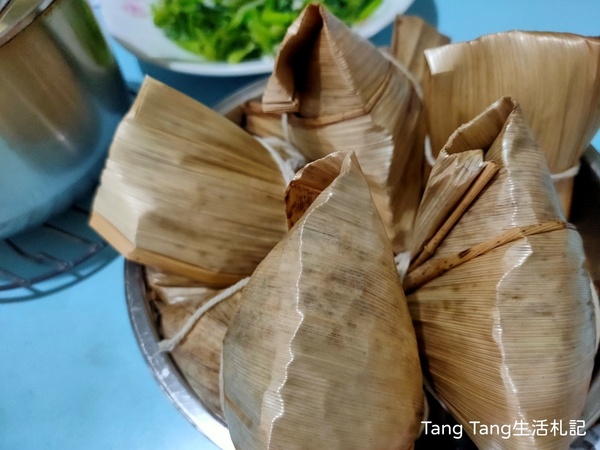
端午節剛過,
接著進入粽子會生粽子的時節。
小時候,
在端午節慶之前,
祖母就會備著包粽食材,
然後就是一串串粽子的誕生,
水煮之後的口感是濕潤軟綿。
不知不覺,
廚房角落掛滿一串串粽子的熱鬧場景,
已是童年回憶。
長大後從外頭購買的粽子,
蒸煮之後的口感是軟彈有嚼勁。
比較之後,
才注意到有南北粽子派別的差異。
一顆顆的粽子連接著一串串的情感。
你偏好哪種口味類型的粽子呢?
💕 💕 💕
After the Dragon Boat Festival,
it’s the season when zongzi seem to multiply on their own.
When I was a child,
before the Dragon Boat Festival,
my grandmother would prepare the ingredients for making zongzi.
Then, strings of zongzi began to appear one after another.
After being boiled, they were soft and moist.
Before long, strings of zongzi were hanging in the corner of the kitchen.
That lively scene has now become a childhood memory.
As an adult,
I usually buy zongzi in stores.
After steaming, they are tender yet chewy.
Only after comparing them
did I notice the difference between Northern-style and Southern-style zongzi.
Each string of zongzi connects strands of emotion.
What kind of zongzi do you prefer?
#TangTang生活札記
#迷路觀察者
#生活碎念
#日常觀察
#小小日常
==========
📖 重點單字
1. multiply (v.)
增加;變多
It’s the season when zongzi multiply.
粽子開始變多的季節。
2. boil (v.)
水煮
The zongzi were boiled until soft.
粽子被水煮到變軟。
3. steam (v.)
蒸
The zongzi are steamed before eating.
粽子在吃之前會被蒸過。
4. moist (adj.)
濕潤的
The texture is soft and moist.
口感軟而濕潤。
5. compare (v.)
比較
I compared the two styles of zongzi.
我比較了兩種粽子。
6. emotion (n.)
情感;情緒
The scene carries emotion.
這個畫面帶有情感。
📖 重點片語
1. strings of zongzi
一串串粽子
Strings of zongzi were hanging in the kitchen.
一串串粽子掛在廚房裡。
2. one after another
一個接一個
Zongzi appeared one after another.
粽子一個接一個出現。
3. soft and moist
軟而濕潤的
The rice dumplings were soft and moist.
粽子軟而濕潤。
4. tender yet chewy
軟但有嚼勁
The texture is tender yet chewy.
口感軟中帶嚼勁。
5. connect emotions
連結情感
Each string of zongzi connects emotions.
每一串粽子連結情感。
❤️


下一則: 端午佳節安康 Happy Dragon Boat Festival!
限會員,要發表迴響,請先登入


