Suitable application fields of CNC motion controller
2026/04/03 17:14
瀏覽4
迴響0
推薦0
引用0
1.Core understanding of CNC motion controller
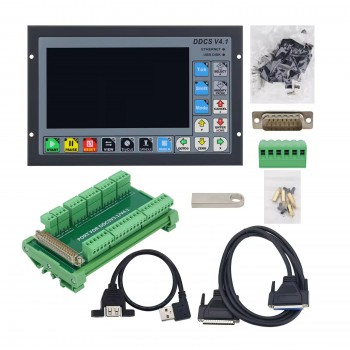
At its essence, a CNC motion controller is a specialized electronic system designed to govern the motion of CNC machines by interpreting digital programming instructions and converting them into precise electrical signals that drive motors, spindles, and other mechanical components. It serves as the central hub between the machine’s hardware and the operator’s programming, ensuring that every cut, drill, or movement is executed with micron-level accuracy.
2.Working steps of CNC motion controller
1.Programming Input: The process begins with the operator inputting a machining program into the controller. This program, typically written in G-code or M-code, defines the toolpath, feed rate, spindle speed, and other critical parameters.
2.Program Interpretation and Decoding: Once the program is loaded, the controller’s software interprets the code line by line, decoding each command into actionable instructions.
3.Data Processing and Interpolation: This is one of the most critical steps in the workflow. The controller processes the decoded instructions to generate smooth, precise toolpaths.
4.Signal Generation and Transmission: After processing the program and calculating the toolpath, the controller generates electrical control signals that are sent to the machine’s servo or stepper motors.
5.Motion Execution and Real-Time Feedback: As the motors receive the control signals, they drive the CNC machine’s axes and tooling to execute the machining operations.
6.Post-Processing and Error Handling: Once the machining program is complete, the controller stops the motors and spindle, and resets the machine to its home position. It also logs key data for quality control and maintenance purposes.
3.Main functions of CNC motion controller
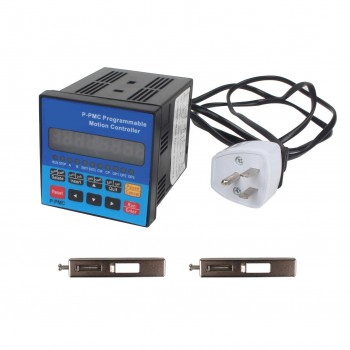
1.Motion Control and Coordination: The primary function of the CNC motion controller is to manage the motion of the machine’s axes, ensuring precise positioning, speed control, and multi-axis synchronization. This includes controlling linear motion and rotary motion, as well as coordinating multiple axes to execute complex toolpaths.
2.Program Management and Editing: CNC motion controllers feature built-in program management tools that allow operators to load, edit, store, and recall machining programs. This includes capabilities like program editing, program simulation, and program storage.
3.Error Detection and Safety Protection: Safety is a top priority in CNC machining, and modern motion controllers are equipped with robust error detection and safety features to protect the machine, operator, and workpiece. These features include overtravel protection, overload protection, tool breakage detection, and collision avoidance.
4.Feed Rate and Spindle Speed Control: The controller precisely adjusts the feed rate and spindle speed to optimize machining performance. It automatically adjusts these parameters based on the material being machined, the tool type, and the desired surface finish.
5.Tool Management and Compensation: CNC motion controllers include tool management systems that track tool parameters and enable tool compensation. Tool length compensation adjusts the tool’s position to account for differences in tool length, ensuring accurate depth cuts.
6.Data Monitoring and Integration: Modern CNC motion controllers are equipped with data monitoring and communication capabilities, allowing them to integrate with factory automation systems and provide real-time data on machining performance. This includes monitoring key metrics like machining time, tool wear, error rates, and production volume, which can be used for quality control, maintenance scheduling, and process optimization.
4.Suitable application fields of CNC motion controller
1.Aerospace and Defense Manufacturing: The aerospace industry demands the highest levels of precision and reliability, and CNC motion controllers are essential for machining critical components like turbine blades, aircraft frames, and engine parts. These components often have complex curved surfaces and tight tolerances, requiring multi-axis motion controllers that can synchronize 5 or more axes with exceptional accuracy.
2.Automotive Manufacturing: In automotive production, CNC motion controllers are used for mass-producing engine components, transmission parts, body panels, and braking systems. They enable high-speed, high-volume machining with consistent precision, ensuring that every part meets the same specifications.
3.Medical Device Manufacturing: Medical devices—such as surgical instruments, orthopedic implants, and dental prosthetics—require extreme precision and biocompatibility. CNC motion controllers are used to machine these components from materials like titanium, stainless steel, and biocompatible plastics, ensuring they meet strict medical standards.
4.Mold and Die Manufacturing: Mold and die making involves machining complex, intricate shapes that require high precision and surface quality. CNC motion controllers enable the machining of these complex toolpaths, including 3D contouring and deep cavity machining.
5.Electronics and Semiconductor Manufacturing: The electronics industry relies on CNC motion controllers for machining components like printed circuit boards (PCBs), semiconductor wafers, and electronic enclosures. These components are small, delicate, and require micron-level precision, making CNC motion controllers ideal for their production.
6.Hobbyist and Educational Settings:Compact, affordable controllers are used in desktop CNC machines, 3D printers, and laser engravers, allowing hobbyists to create custom parts, art, and prototypes. In educational settings, controllers are used to teach students about CNC machining, programming, and automation, preparing them for careers in manufacturing and engineering.
7.Other Key Industries: Beyond the above fields, CNC motion controllers are also used in marine manufacturing, energy production, and jewelry manufacturing.
Source:https://joliet.pixnet.net/blog/posts/880734912055699205
Source:https://joliet.pixnet.net/blog/posts/880734912055699205
自訂分類:不分類
上一則: Common faults of magnetic particle clutch下一則: Main advantages and maintenance tips of variable frequency drive
你可能會有興趣的文章:
限會員,要發表迴響,請先登入


