What are the selection principles of harmonic reducer gearbox?
2025/05/12 17:16
瀏覽15
迴響0
推薦0
引用0
1. Working principle of harmonic reducer gearbox
The working principle of harmonic reducer gearbox is based on the controllable elastic deformation of flexible elements. When the wave generator rotates, it forces the flexible wheel to deform radially, so that the flexible wheel meshes with the teeth of the rigid wheel. As the wave generator rotates continuously, the teeth of the flexible wheel will continuously mesh, mesh, mesh out and disengage, thus achieving a continuous transmission effect.
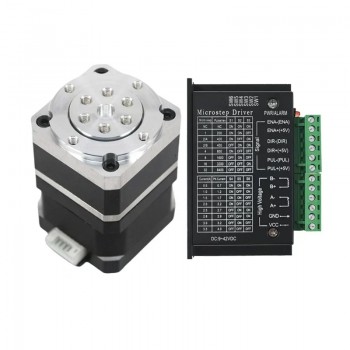
2. Key structure of harmonic reducer gearbox
1. Wave generator: The wave generator is one of the core components of the harmonic reducer gearbox, usually in an elliptical or hyperbolic shape. It consists of an elliptical hub and a specially designed thin-walled bearing. When the wave generator rotates, it will cause the flexible wheel to produce periodic elastic deformation.
2. Flexible wheel: The flexible wheel is a thin-walled cylindrical external gear with high elasticity. Under the action of the wave generator, the flexible wheel will produce significant deformation, so as to mesh with the rigid wheel to transmit power and motion. The design of the flexible wheel enables it to maintain efficient transmission effect during deformation.
3. Rigid wheel: The rigid wheel is an internal gear that is usually fixed. It has more teeth than the flexible wheel (usually two) to ensure efficient meshing and transmission effect during the transmission process.
3. Main advantages of harmonic reducer gearbox
1. High precision: The harmonic reducer gearbox has high precision characteristics and small transmission error. Since multiple teeth are meshed at the same time, the error is averaged, making the transmission more accurate.
2. Large transmission ratio: The transmission ratio range of a single-stage harmonic reducer gearbox is 70-320, which can reach 1000 in some devices, and the multi-stage transmission ratio can reach more than 30000. It can be used not only for deceleration, but also for speed increase.
3. High load capacity: During the transmission process, the harmonic reducer gearbox has a high load capacity due to the large number of teeth meshing at the same time and the low relative sliding speed of the tooth surface. It is suitable for occasions with large loads, such as automation equipment, heavy machinery, etc.
4. Small size and light weight: The harmonic reducer gearbox has a compact structure, small size, light weight, and is easy to install and use. It is suitable for occasions where space is limited or weight reduction is required, such as drones, portable devices, etc.
5. High transmission efficiency: The transmission efficiency of the harmonic reducer gearbox is high, up to 69%-96%, and it still has high efficiency when the transmission ratio is large. It is suitable for occasions that require efficient transmission, such as electric vehicles, wind power generation, etc.
6. Smooth movement and low noise: The harmonic reducer gearbox moves smoothly during the transmission process, without impact, and has low noise. It is suitable for occasions with high noise requirements, such as medical equipment, precision instruments, etc.
7. Can transmit motion to confined spaces: Using the flexible characteristics of the flexible wheel, the harmonic reducer gearbox can transmit motion and power to confined spaces.
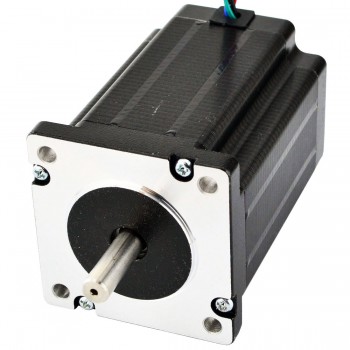
4. Selection principles of harmonic reducer gearbox
1. Load characteristics and application requirements: The selection of harmonic reducer gearbox should comprehensively consider load characteristics and application requirements. Different application scenarios have different performance requirements for reducers. For example, robot joints may require high dynamic response, while precision positioning systems focus more on accuracy and stability.
2. Working environment: The working environment of the harmonic reducer gearbox has an important impact on its performance and life. Environmental factors such as temperature, humidity, dust, and vibration may affect the stability and reliability of the reducer.
3. Installation and maintenance: The installation and maintenance of the harmonic reducer gearbox are also important factors to consider when selecting. Improper installation may cause damage to the reducer, while lack of maintenance will affect its performance and life.
4. Performance parameters: The key parameters of the harmonic reducer gearbox include reduction ratio, output torque, backlash, transmission efficiency, etc. The reduction ratio should be determined according to the speed of the motor and the movement speed of the joint; the output torque needs to be greater than the torque generated by the maximum load borne by the joint, while considering a certain safety factor; the backlash directly affects the movement accuracy; the transmission efficiency affects the energy consumption and heat generation of the system.
5. Brand and quality: There are many brands of harmonic reducer gearbox on the market, and different brands differ in quality, performance and price. Well-known brands usually have more reliable quality and perfect after-sales service, but the price is relatively high.
6. Actual test and verification: After completing the preliminary selection, actual test and verification can be carried out. Purchase a small number of harmonic reducer gearboxes for actual testing, install them on the joints of the mechanical arm for load test, speed test, accuracy measurement, etc., to verify whether it meets the requirements.
自訂分類:不分類
上一則: What are the abnormality judgment methods of hollow shaft stepper motors?下一則: What are the key designs of integrated servo motors?
你可能會有興趣的文章:
限會員,要發表迴響,請先登入


