A Theoretical Analysis of the Fantasy Novel Earthsea Cycle / Chen Qingyang
I. A Classic Work of Fantasy Fiction
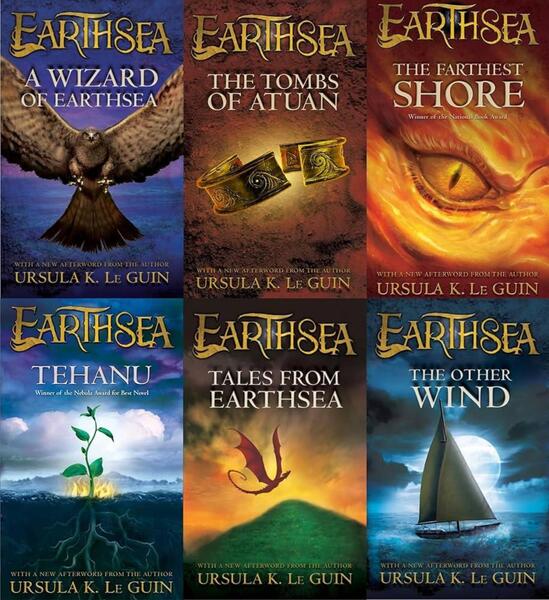
Earthsea Cycle is a classic fantasy novel series created by the American author Ursula K. Le Guin. The series includes six works:
A Wizard of Earthsea (1968)
The Tombs of Atuan (1971)
The Farthest Shore (1972)
Tehanu (1990)
Tales from Earthsea (2001)
The Other Wind (2001)
II. Types of Narrative Structure
Earthsea Cycle is a fantasy novel series created by the American writer Ursula K. Le Guin. Its narrative structure is highly complex, integrating elements of adventure, growth, philosophy, society, and personal exploration. The entire series begins with A Wizard of Earthsea, first published in 1970, and continues through subsequent novels and short stories.
- The Structure of Growth and Self-Exploration
The core structural type of Earthsea Cycle is the “coming-of-age story,” also known as the “hero’s journey.” This structure is manifested throughout multiple works in the series, especially in A Wizard of Earthsea, where the growth trajectory of the protagonist Ged runs throughout the narrative. Ged evolves from a young, impulsive wizard seeking quick success into a mature figure possessing profound wisdom.
(1) Beginning: The story starts from Ged’s childhood, growing up on an island. Gifted with exceptional talent, he possesses great magical potential. However, due to his youthful impulsiveness and arrogance, he makes a mistake in his magical studies and releases a demonic shadow.
(2) Process: Ged undergoes numerous adventures and hardships. Through these experiences, he not only acquires many magical skills but also gradually gains a deeper understanding of the true meaning of magic, responsibility, and personal inner growth.
(3) Turning Point: He confronts his inner “shadow,” which is not merely an external enemy but a struggle with himself. This inner conflict ultimately leads him to realize that true magic lies in harmony and balance rather than mere control of power.
- The Structure of Myth and Cosmology
Earthsea Cycle is not merely a “coming-of-age story”; it also constructs a complex mythological system and cosmological framework. The world of Earthsea consists of countless islands, each with deeply developed systems of magic, language, history, and culture.
(1) Worldview: The Earthsea world is a mysterious realm filled with islands. Each island has its own unique culture, religion, and magical traditions. Le Guin uses this to explore relationships between humans and nature, and between individuals. Magic in Earthsea Cycle carries profound significance, particularly its connection to “true names.” To know the name of a being is to have control over it.
(2) Mythological Structure: The creation myth of Earthsea is closely tied to human destiny. Through multiple narratives, Le Guin explores the theme of “fate and free will.” Magic is not merely control over nature; it represents a way of deeply understanding the world.
- The Ethical Structure of Power and Responsibility
Through the protagonist’s growth, Earthsea Cycle examines the ethical issues of “power” and “responsibility.” Magic is a powerful force, but it is not merely a tool for controlling nature and others; it is also a responsibility. The boundary between the use of magic and its taboos remains a central theme.
(1) The Danger of Power: In the early part of the story, Ged attempts to use magic to pursue personal glory, but he soon realizes that such ambition leads to unpredictable consequences. Through this, Le Guin explores the disastrous effects of abusing power.
(2) Responsibility and Self-Discipline: As the story progresses, Ged learns to take responsibility and realizes that only through inner balance and humility can magic be truly used. He must break free from impulsiveness and the desire for control, learning instead to accept powerlessness.
- The Narrative Structure of Fate and Free Will
The narrative structure of Earthsea Cycle also deeply explores the relationship between fate and free will. Although magic can alter reality, it is not omnipotent. Le Guin suggests that while fate may seem predetermined, individuals can still shape their futures through choices and effort.
(1) The Constraint of Fate: When confronting his shadow, Ged once believes himself to be a slave to fate. Later, he realizes that his pursuit and fear of the shadow only deepen this bondage.
(2) Self-Determination: In later parts of the series, Ged not only accepts his fate but also comes to understand that he can choose how to respond to it through free will.
- Symbolic and Philosophical Structure
Through numerous symbols and metaphors, Earthsea Cycle conveys profound reflections on life, death, love, and responsibility. The islands of Earthsea symbolize different stages of life, choices, and philosophies. The “true names” in magic represent wisdom and understanding of essence, while the “shadow” symbolizes the deepest fears and darkness within the human psyche.
(1) Symbolism: Ged’s confrontation with the shadow and his understanding of myth and the world are rich in symbolic meaning, presenting deep philosophical implications.
(2) Philosophical Inquiry: Through characters’ inner struggles, Le Guin explores the tensions between free will and fate, and between power and responsibility, reflecting on philosophical issues concerning existence, death, and moral choice.
Conclusion
The narrative structure of Earthsea Cycle is multi-layered, integrating elements of coming-of-age storytelling, myth-making, ethical reflection, and philosophical inquiry. It is not merely a fantasy novel; through its unique world-building and profound characterization, it explores complex themes such as power, responsibility, fate, and free will. Le Guin successfully connects the magical world of Earthsea with the inner world of human beings, creating a literary classic that is both fantastical and philosophical.
III. Key Themes
As a deeply philosophical work of fantasy literature, Earthsea Cycle explores many significant themes. Through its imaginative setting and complex characters, Le Guin not only constructs a rich magical world but also delves deeply into themes related to humanity, society, morality, and the cosmos.
- Power and Responsibility
Magic in Earthsea Cycle is an undeniable force, but it also brings immense responsibility. The use of power involves not only control and domination but also acknowledgment and accountability for its consequences.
(1) Magic and Power: Magic represents understanding and control of nature and the world, but such control requires balance and discipline. Ged’s early misuse of magic leads to unintended consequences, teaching him that true power lies in inner mastery rather than external domination.
(2) The Cost of Responsibility: Later in the series, characters learn that true strength comes not from overpowering others but from responsibility and humility toward others and the world.
- Fate and Free Will
A recurring theme in the series is the relationship between fate and free will. Although certain events seem predetermined, characters are constantly faced with choices that may break these constraints.
(1) The Inevitability of Fate: Ged’s shadow symbolizes an unavoidable past and unerasable fear, forcing him to confront and reflect on his actions.
(2) Choice of Free Will: Despite the constraints of fate, characters reshape their futures through choices. Le Guin examines the tension between internal freedom and external limitation.
- Life, Death, and the Meaning of Existence
The worldview and character design in Earthsea Cycle are filled with reflections on life, death, and the meaning of existence.
(1) The Cycle of Life: In Earthsea, death is not an end but another form of existence. True names symbolize the essence of life and understanding of being.
(2) Acceptance of Death: Ged’s growth involves not only mastering external forces but also understanding his inner world, eventually accepting death as part of existence rather than a taboo to avoid.
- Inner Struggle and Self-Recognition
The series explores how individuals confront their inner darkness and discover their true selves.
(1) Shadow and Self-Recognition: Ged’s shadow represents his inner fears and unrest. Only by accepting it can he gain wisdom.
(2) Self and Others: Through interactions and conflicts, Le Guin shows how individuals reflect on themselves through others and achieve maturity through self-awareness.
- Solitude and Community
Although many characters embark on solitary journeys, the series also emphasizes the importance of human connection and cooperation.
(1) The Power and Pain of Solitude: Characters often walk alone, and solitude becomes a path to self-discovery and growth.
(2) Community and Cooperation: Especially in later works, collaboration and shared responsibility become key forces driving the narrative.
- Society and Morality
Le Guin pays close attention to social structures, moral choices, and individual responsibility within society. The islands of Earthsea represent diverse cultures and social systems.
(1) Social Order and Individual Rebellion: Each island has its own political system, customs, and moral codes. Ged gradually understands his role and responsibility within this complex society.
(2) Moral Ambiguity: Through inner characterization, Le Guin explores the relativity of morality. Ged’s confrontation with the shadow is not simply a matter of good versus evil but involves responsibility, consequences, and inner struggle.
- Culture and Gender
Although male characters dominate the narrative, the series also explores gender and cultural issues, especially through female characters and their societal roles.
Status of Female Characters: While male wizards dominate the magical world, female characters such as Tenar and Arren also play significant roles. Through them, Le Guin reveals diverse expressions of gender and highlights the complexity of female power.
- Humanity and Nature
As a philosophical fantasy work, the series also addresses the relationship between humans and nature.
Natural Laws and Balance: The magical system emphasizes harmony with nature, opposing domination and exploitation. The true meaning of magic lies in understanding and maintaining natural balance rather than controlling it.
Conclusion
Through its rich magical world and character construction, Earthsea Cycle explores profound themes such as power and responsibility, fate and free will, life and death, self-awareness, solitude and community, society and morality. It is not merely a fantasy adventure but a philosophically rich and humanistic work that engages with fundamental questions about humanity, morality, existence, and the universe.
IV. Analysis of Narrative Person and Perspective
The narrative person and perspective design in the Earthsea Cycle series of fantasy novels play a crucial role in the development of the story and the expression of themes. Through different narrative techniques, the author Ursula K. Le Guin is able to profoundly reveal the inner conflicts, growth, and transformations of characters, while at the same time shaping a complex and multi-layered magical world.
The following is an analysis of the narrative person and perspective in the Earthsea Cycle:
- Main Narrative Person: Third-Person Omniscient Perspective
The entire Earthsea Cycle series predominantly adopts a third-person omniscient perspective. This narrative viewpoint allows readers to gain deep insight into the inner worlds of characters, as well as the emotional conflicts and psychological changes among different characters. The omniscient perspective not only enables free shifts between different characters but also provides a viewpoint that transcends individual characters, thereby better exploring themes and world-building.
Free shifting of character perspectives: The omniscient perspective allows the narrative to move across the thoughts and actions of multiple characters, presenting a complex inner world of personalities. For example, in A Wizard of Earthsea, the narrator freely shifts between Ged’s perspective and those of other characters (such as Tenar or Arren), making the story more multidimensional and profound.
Depiction of the environment: Due to the use of the omniscient perspective, the narrator can describe in detail the natural landscapes of Earthsea, the architecture of cities, and historical backgrounds, thereby creating an environment rich in layers and spatial depth.
- The Inner Perspective of the Protagonist Ged
In A Wizard of Earthsea, the primary perspective of the story is centered on the character Ged. Although the narrative uses a third-person omniscient perspective, the entire story is still driven by Ged’s spiritual exploration, depicting his psychological journey and growth from a young apprentice mage to a mature wizard.
Depth of psychological depiction: Ged’s inner world occupies an important place throughout the series. His growth and self-awakening are presented through detailed portrayals of his inner struggles, especially when he confronts his “shadow.” The narrator, through the omniscient perspective, deeply reveals Ged’s fear, regret, and pain.
The “shadow” as self-dialogue: Ged’s interaction with the “shadow” is not merely an external event, but also an internal dialogue. This portrayal of inner darkness is fully presented through the omniscient perspective, helping readers understand the character’s psychological transformation.
- Perspective Shifts of Non-Protagonist Characters
In the later works of the Earthsea Cycle, especially in The Farthest Shore and Tehanu, the narrative person and perspective shift, placing emphasis on other characters. This shift in perspective allows the story to present a more diversified appearance.
(1) Tenar’s perspective: In The Tombs of Atuan, the perspective of the female character Tenar gains greater prominence. Through the depiction of her inner world, Le Guin reveals the importance of women in Earthsea society and how they interact with and influence male characters.
(2) Multi-perspective psychological depiction: As perspectives diversify, readers can experience the story from multiple angles. For instance, in The Farthest Shore, Arren becomes one of the primary perspective characters, and the narrator presents the world through Arren’s eyes, offering an understanding of society and fate that differs from Ged’s.
- Alternating Perspective Structure
Although the entire series mainly relies on the omniscient perspective, specific narrative segments and depictions of characters’ inner worlds shift to the unique perspectives of different characters as needed. In certain chapters, the narrator may convey an individual’s inner conflicts, emotions, or thoughts through a first-person perspective (inner monologue or speech). For example, when Ged experiences inner struggle, his personal mode of thinking is sometimes presented directly, revealing his unique psychological state.
Expression of inner conflict and psychological activity: When Ged faces difficulties, the narrative does not remain only at the level of events, but also delves into his psychological responses. This deep portrayal of the inner world gives the story strong emotional tension and psychological depth.
- Construction of Environment and Atmosphere
In the Earthsea Cycle, environmental description is closely linked to characters’ psychological activities. Through the third-person omniscient perspective, the narrator can meticulously depict the islands of Earthsea, ocean landscapes, and changes in the sky, while simultaneously reflecting characters’ inner states through these changes.
Interaction between natural scenery and character psychology: For example, when Ged enters a forest or faces certain decisions, the narrative often uses environmental changes (such as strong winds or storms) to convey his inner fluctuations. This close connection between environment and psychology enhances the emotional depth and symbolic meaning of the story.
- The Opposition Between Self and World
Throughout the series, characters are often caught in conflicts between the self and the world, and the narrative perspective skillfully presents this theme.
Ged’s growth and transformation of worldview: In A Wizard of Earthsea, Ged evolves from initial arrogance and insecurity to eventual self-awareness and responsibility. Through the third-person perspective, the narrator shows Ged’s transformation within personal conflict and how he gradually understands the relationship between the external world and the inner world.
- Use of Symbols and Metaphors
Through the narrator’s perspective, Le Guin employs a large number of symbols and metaphors to enrich the layers of the story. Through characters’ inner responses and interactions with the external world, many symbolic meanings are unfolded.
Symbolism of names: In the world of Earthsea, “names” are not only identifiers of identity but also symbolize a character’s control over and understanding of the self, nature, and the magical world. Through the importance the narrator assigns to “names,” readers can grasp the deeper meaning of this symbol.
Summary
The narrative person and perspective of the Earthsea Cycle are complex and dynamic, primarily unfolding through a third-person omniscient perspective, which allows deep access to characters’ inner worlds while freely moving across different characters’ thoughts and actions. In addition, through alternating perspectives and rich environmental descriptions, the author skillfully expresses psychological changes and philosophical themes. The narrator’s perspective not only gives the plot a multidimensional structure but also enables the Earthsea Cycle, beneath its fantasy adventure surface, to place greater emphasis on profound themes such as human nature, fate, and freedom.
V. Analysis of Plot Structure
(I) A Wizard of Earthsea
A Wizard of Earthsea is the first work in Ursula K. Le Guin’s Earthsea Cycle. The plot structure is tightly constructed and clearly layered, skillfully integrating Ged’s growth and inner exploration into the magical world of Earthsea. The following is an analysis of the plot structure of A Wizard of Earthsea:
- Beginning (Introduction / Beginning)
(1) Background and setting: At the beginning of the story, the setting of the Earthsea world is introduced. It is an archipelagic world composed of numerous islands, where magic is the core force. The protagonist, Ged, is a boy born into poverty, living on an island called Gont. From a young age, he shows a talent for magic, but his personality is stubborn and hot-tempered, often making it difficult for him to control his emotions.
(2) Ged’s initiation: After discovering his magical talent, Ged’s mother and the village wise man decide to send him to study under a wizard named Ogion. Ogion is a reserved and wise mage who does not display his power through force, but rather through careful thought and cautious action. At first, Ged does not understand Ogion’s teachings and is filled with arrogance and unease, believing himself more capable than his master.
- Development
(1) Ged’s growth and dissatisfaction: Although Ogion teaches him, Ged longs for more knowledge and power. Under Ogion’s guidance, Ged’s magical abilities improve, but he is unwilling to learn patiently and instead becomes increasingly eager for quick success, often making rash decisions.
(2) Further study on Roke: In a moment of impulsiveness, Ged leaves Ogion and decides to go to the island of Roke, where there is a more powerful wizard. On Roke, Ged encounters many challenges and other apprentices. Because of his arrogance and overconfidence, his power gradually goes out of control.
(3) Release of dark power: During a confrontation with a fellow student, Ged mistakenly summons a powerful dark being—his Shadow. This shadow is a part of himself, representing his inner fear and darkness. It is extremely dangerous and capable of devouring everything, and its appearance marks the loss of Ged’s control over his magic.
- Turning Point
(1) The pursuit of the shadow: Ged realizes that the shadow he has released is an extremely dangerous existence. It begins to pursue him and becomes a threat to his life. The turning point lies in Ged’s decision to face this dark power from within himself, despite his earlier attempts to escape it.
(2) Facing himself: During the pursuit, Ged ultimately understands that the shadow is not an external enemy, but his own inner fear and arrogance. He recognizes that he has never fully controlled his emotions and magical power, and that his arrogance and lack of reflection have led to this confrontation.
- Conflict
Ged’s inner struggle with the shadow: The central conflict of the story lies in Ged’s inner struggle and growth. Not only does he face external danger (the shadow), risking his life, but more importantly, he struggles internally with his fear, pride, and sense of responsibility. Ged realizes that without confronting his own mistakes, he cannot attain true power.
Self-awareness and balance of power: Ged must grow beyond his previous arrogance and impulsiveness in order to resolve the threat of the shadow. This developmental conflict is reflected in how he learns to control his magic and combine power with humility and responsibility.
- Climax
(1) Final confrontation: The climax occurs in Ged’s final confrontation with the shadow. He follows it into an extremely dangerous realm. In this process, he deeply realizes that the shadow is not an external threat but his own inner fear and unresolved contradictions. Ultimately, Ged chooses to merge with the shadow—this is not merely a physical confrontation, but an act of psychological and spiritual self-acceptance.
(2) Crucial choice: When facing the shadow, Ged makes a decisive choice—he no longer flees but accepts the shadow as part of himself. This decision represents his full acceptance of himself and his growth, enabling him to discover the true power to control magic.
- Resolution
(1) Self-identity and growth: After the final confrontation, Ged successfully absorbs the shadow and integrates it into himself. This not only signifies his success in magic but also symbolizes his inner growth. Ged transforms from an impulsive youth seeking quick success into a mature wizard who understands and applies the true meaning of magic—not merely power, but responsibility, humility, and wisdom.
(2) Return to Ogion’s teaching: At the end of the story, Ged returns to Ogion. Although he once left, he ultimately understands the important truths Ogion taught him. Ged’s growth signifies that he has learned inner balance and self-reflection, and understands the connection between magic and personal responsibility.
- Twist or Foreshadowing
Potential foreshadowing: Although Ged resolves the problem of the shadow, the story does not completely end. The world of Earthsea remains full of unknown dangers and challenges. In his future journey of growth, Ged will continue to face trials from both his inner self and the external world. In addition, the magical rules and social structure of Earthsea provide a rich background and foreshadowing for subsequent stories.
Summary
The plot of A Wizard of Earthsea employs the classic hero’s journey structure in constructing Ged’s growth. From an arrogant and impulsive youth, Ged gradually becomes a wizard capable of self-acceptance and responsibility. Through Ged’s inner confrontation with the shadow, the story presents the close relationship between self-awareness, growth, and power. At the same time, Le Guin skillfully uses this developmental process to explore philosophical themes such as magic, responsibility, fear, and courage.
(II) The Tombs of Atuan
The Tombs of Atuan is the second work in the Earthsea Cycle. In addition to continuing Ged’s growth story, it focuses on another protagonist—Tenar—and her growth and exploration. She is the central figure of the novel, and through her experiences, the story presents profound themes of freedom, fate, identity, and self-discovery within the Earthsea world. The following is an analysis of the plot structure of The Tombs of Atuan:
- Beginning (Introduction / Beginning)
(1) Background setting: At the beginning of the story, Tenar is a priestess in a temple on an island called Atuan in the Earthsea world. The island has a deep history and mysterious culture, with an ancient temple built to worship dark deities. The priestesses guard these secrets, and Tenar is one of them. Chosen from childhood to serve as a priestess, she is bound to the temple’s gods and fate, living a lonely and oppressed life.
(2) Tenar’s life and constraints: Tenar’s growth is marked by strict religious constraints and rules. Her identity is inseparable from the temple’s deities. From her perspective, life in the temple is both mysterious and harsh, leaving her almost no freedom. She has always believed that she belongs solely to the temple and that her fate has already been determined.
- Development
(1) Tenar’s responsibilities and challenges: As a young priestess, Tenar’s duty is to protect the sacred relics within the temple, especially those regarded as divine objects. These relics represent ancient power, and the “Nameless Ones” are among the primary deities worshipped in the temple. Living under these ancient rules, Tenar begins to feel unease and reflection within herself.
(2) Meeting Ged: At a crucial stage in the development of the story, Tenar encounters Ged, marking a turning point in her fate. Ged arrives on Atuan seeking an important magical object—the missing half of a ring—which will have significant implications for the magical order of Earthsea. His arrival brings Tenar into conflict with her original world.
- Turning Point
(1) Conflict between Tenar and Ged: Tenar’s encounter with Ged begins to shake her beliefs and worldview. As a priestess, she has been trained to oppose outsiders, while Ged is an unusual visitor. Though they have completely different goals and motivations, Ged is not merely a treasure-seeker but a character concerned with human destiny and striving for freedom and self-understanding.
(2) Tenar’s inner conflict: Through her interactions with Ged, Tenar begins to question her long-held loyalty to the temple and the power of its gods. She gradually realizes that the temple is not the only path in her life. Her inner struggle stands in stark contrast to the teachings she has received since childhood. She begins to sense the allure and possibilities of the outside world and even starts to doubt whether the temple and its deities are truly worthy of her complete devotion.
- Conflict
(1) Conflict between inner self and external world: The primary conflict Tenar experiences lies in her struggle between her internal beliefs and her desire for freedom, as well as the pressure of responsibility. She wishes to break free from the temple’s constraints and seek selfhood and freedom, yet she is also gripped by fear—if she betrays the temple, will she lose everything? At the same time, her relationship with Ged is filled with tension; although he represents freedom and change, her trust in him is not complete.
(2) External threats: The temple priestesses regard Ged as an enemy and begin to hunt him. Tenar must not only deal with her internal contradictions but also face external conflicts and dangers. Amid her inner transformation and entanglement with Ged, she must decide whether she is willing to risk everything, even abandoning her identity and duties, in order to change herself and pursue freedom.
- Climax
(1) Choice and Sacrifice: The climax focuses on Tenar’s final decision. When the temple priestesses force her to choose, Tenar ultimately makes her own decision. At a critical moment, she decides to help Ged find and destroy the Ring of the Dark King, thereby freeing herself from the control of the temple. This decision signifies that she not only challenges external forces but also breaks through the shackles within her own heart.
(2) Self-Liberation and Courage: Tenar’s choice represents her self-liberation. Although she knows that doing so will cause her to lose the protection of the temple and even put her life at risk, she chooses to fight for freedom and for herself. This act marks a tremendous transformation from a passive, oppressed priestess to an individual who actively takes control of her own destiny. - Resolution
(1) Freedom and Loneliness: After destroying the Ring of the Dark King, Tenar not only helps Ged complete his mission but also causes the power of the temple to begin to decline. Tenar ultimately gains the freedom she has long desired, but she also pays a price: she loses her former identity and status, and even severs all ties with the temple where she had lived since childhood.
(2) A New Beginning: At the end of the story, Tenar embarks on a new journey. Though she is alone, she is no longer bound by the constraints of the temple. Her identity is no longer that of a priestess, but of a free individual beginning her own path of exploration. Although her future is full of uncertainty, she has gained her own strength and the right to choose. - Twist or Cliffhanger
(1) The Cost of Freedom: Although Tenar attains freedom, the story does not provide a simple perfect ending. Her choice leads her to abandon her past and sets her on a solitary path. While she escapes her constraints, she also loses everything she once possessed—this is not only the cost of freedom but also lays the groundwork for new challenges in her future journey.
(2) Future Possibilities: The story leaves suspense regarding how Tenar will face this new world. Her growth has only just begun, and the future is filled with unpredictable turns, just like the complexity and variability of the Earthsea world itself.
Summary
The plot structure of The Tombs of Atuan is filled with tension and complexity as it explores themes of freedom, fate, and self-identity. Tenar grows from a controlled priestess into a free individual; her adventure is not only an external mission but also a profound inner transformation. Through Tenar’s choices and growth, the story examines the relationship between sacrifice and liberation, while also offering deep reflection on the conflict between individual freedom and social constraints.
(3) The Farthest Shore
The Farthest Shore is the third work in the Earthsea Cycle. Through the adventures of the protagonist Sparrowhawk and the young boy Arren, the story continues to explore life, death, the limits of magic, and the meaning of existence. This work possesses greater philosophical depth in both plot and theme, examining how humans confront self-destruction, the inevitability of death, and the self-redemption of the soul. The following is an analysis of the plot structure of The Farthest Shore:
- Beginning (Introduction)
(1) Story Background: At the beginning of the story, the world of Earthsea faces an unstoppable crisis—the magical power of the entire world begins to decline. The disappearance of magic causes uncontrolled changes in the natural world, and the harmonious relationship between humans and nature gradually breaks down. Sparrowhawk (Ged), now an older wizard, discovers that the magical world he once knew in his youth is becoming increasingly unfamiliar.
(2) Sparrowhawk’s Calling: Sparrowhawk receives calls for help from various places and senses disturbances in the land and sea. He realizes that these anomalies conceal a greater disaster. At this time, he is filled with unease and foreboding, and this fear of the future drives him to embark on a journey. - Development
(1) Introduction of Arren: During his travels, Sparrowhawk meets Arren, a young prince who is experiencing deep inner turmoil. Arren’s story becomes a key element of the plot. He is a youth of great potential, yet he is filled with self-doubt and inner conflict. Influenced by his father, he bears the heavy burden of family responsibility while feeling that his life is slipping away in a meaningless struggle.
(2) Enlightenment and Inheritance: Sparrowhawk travels with Arren and teaches him the deeper philosophy of magic. He recognizes that Arren shares a similar fate with himself. Gradually, a mentor-disciple relationship forms between them. Sparrowhawk answers Arren’s questions about life, magic, and death, guiding him toward maturity. - Turning Point
(1) The Decline of Magic and the Rise of Dark Forces:
When Sparrowhawk and Arren reach the farthest reaches of Earthsea, they discover that the decline of magic is not accidental but caused by a dark force. Humans begin to abuse magic in pursuit of immortality and limitless power, leading to the resurrection of a dark entity known as the “King of Death.” The resurrection of the King of Death blurs the boundary between magic and death, symbolizing humanity’s challenge to natural laws.
(2) Arren’s Inner Struggle:
Arren’s personal growth reaches a critical moment as he must confront his inner fears and his terror of death. He gradually realizes that life and death are inseparable, and only by accepting death can he overcome the shadows within himself. - Conflict
(1) Humanity Versus Death: The dark force, the “King of Death,” attempts to alter natural laws by controlling the boundary between life and death, triggering a confrontation between the two. Sparrowhawk and Arren must face this threat together, uncover the truth behind the decline of magic, and stop the rise of the King of Death. They face not only external darkness but also their own internal conflicts.
(2) Arren’s Fate: Arren must confront not only external dark forces but also his relationship with his family destiny. He gradually understands that only by overcoming his inner fear and sense of meaninglessness can he achieve true self-redemption. Meanwhile, Sparrowhawk, as a mentor, must decide whether to allow Arren to face his destiny independently. - Climax
(1) Final Confrontation with the King of Death:
At the climax, Sparrowhawk and Arren confront the King of Death. They must uncover the deeper secrets of death and work together to destroy his evil power. Arren realizes that only by accepting the natural law of death, rather than resisting it, can rebirth occur.
Arren’s Awakening: Arren ultimately lets go of his fear of death, accepts the uncertainty and impermanence of life, and thereby gains true strength. This awakening enables him to face his destiny independently and defeat the power of the King of Death. - Resolution
(1) Symbolism of Death and Rebirth:
At the end of the story, through battle and self-redemption, Sparrowhawk and Arren restore magic and order to Earthsea. Although Arren has matured, he must still follow his own path, while Sparrowhawk gradually realizes that his mission is complete. Arren becomes the new successor, symbolizing hope and rebirth.
(2) Sparrowhawk’s Farewell:
Sparrowhawk completes his legacy to Arren and bids farewell to his role in the world. His departure symbolizes his ultimate understanding and transcendence of life, death, and magic. - Twist or Cliffhanger
(1) The Interweaving of Freedom and Responsibility:
Although the story appears to end with the restoration of magic, it suggests that humanity’s understanding of death, freedom, and responsibility is an endless cycle. The disappearance of the King of Death does not mean the end of death, but rather a deeper recognition of the dialectical relationship between life and death. Arren will continue to shoulder new responsibilities, and the future of Earthsea remains uncertain.
(2) Arren’s New Journey: After Sparrowhawk’s departure, Arren has grown significantly, but his future remains uncertain. The story leaves open the possibilities of his future, implying that he will take on greater responsibilities and face more trials.
Summary
Through the story of Sparrowhawk and Arren, The Farthest Shore explores profound philosophical questions about death, freedom, and fate. The plot unfolds in layers, combining external dark forces with internal personal growth, presenting the dialectical relationship between life and death. Arren ultimately frees himself from inner fear and moves toward self-redemption, while Sparrowhawk completes his mission and lays the foundation for the future of Earthsea.
(4) Tehanu
Tehanu is the fourth work in the Earthsea Cycle. This installment focuses on the growth, trauma, and recovery of a female protagonist, while deeply exploring themes of power, identity, gender, and self-recognition. The story takes place several years after the events of The Farthest Shore, recounting the growth of Tehanu and her complex relationship with Sparrowhawk (Ged). Compared with earlier works, this novel is more introspective and philosophical in both narrative structure and thematic depth. The following is an analysis of the plot structure of Tehanu:
- Beginning (Introduction)
Story Background and Tehanu’s Experience: The beginning of the story depicts Tehanu’s past. She is a young girl who has suffered severe physical and psychological trauma due to a certain disaster. She is regarded as an “orphan,” her family has fallen apart, and she endured terrible violence and oppression in her childhood. Her experiences shape her into a woman who is inwardly profound and resilient, despite not appearing strong outwardly.
Tehanu’s Current Situation: The story takes place in an ordinary corner of Earthsea, where Tehanu lives in a small village, caring for an adopted girl who has also lost her parents. She is no longer young, living in poverty and simplicity, yet her heart remains filled with deep questions about the world and herself. - Development
(1) Encounter Between Tehanu and Sparrowhawk: Sparrowhawk arrives at Tehanu’s village after a storm. As the story develops, his identity as a former mentor and friend gradually emerges. Since The Farthest Shore, he has aged and his understanding of the world has changed. The two begin to build a relationship based on shared experiences and pain. Through her interactions with him, Tehanu begins to re-examine her understanding of magic, power, and the meaning of life.
(2) Tehanu’s Magical Ability and Loss: Although Tehanu once possessed great magical potential, she experienced a sense of loss during her growth, even developing fear and rejection toward magic. During her journey, she reconnects with magic and reconsiders its true meaning, especially in relation to female identity. - Turning Point
(1) Tehanu’s Rebirth and Awakening of Magic: The turning point occurs when Tehanu realizes her true power. Her magic is not only an inner force but also deeply connected to her body, emotions, and past trauma. In a crisis, she suddenly discovers her ability to wield magic, marking a crucial moment in the reconstruction of her identity. She emerges from fear and withdrawal, beginning to accept her relationship with magic.
(2) Realization of Identity and Responsibility: Tehanu realizes that her power and mission do not come from external authority but from her own identity and inner growth. She begins to reflect on her multiple roles as a woman, a mother, and a mage, and decides to take responsibility for helping others. - Conflict
Inner Conflict: Tehanu faces not only external social pressure but also deep self-doubt. Her trauma leads her to question magic, her own abilities, and her relationship with Sparrowhawk. Although they develop trust and reliance, she must still confront her past shadows and the dangers of magic.
External Conflict and Conspiracy: As Tehanu reconnects with magic, certain hidden forces begin to threaten her. Some seek to control her power and use her as a tool to achieve their goals. She must fight for freedom and protection for herself and those she loves. - Climax
(1) Tehanu’s Complete Awakening: At the climax, Tehanu fully embraces her power and mission. She no longer avoids her past or her inner self. She decides to fight not only for her own freedom but also for the rights of those she loves and all who are oppressed. Her magic reaches its peak, overcoming external enemies while unlocking its true essence through inner growth.
(2) True Understanding of Magic: Through dialogue and cooperation with Sparrowhawk, Tehanu realizes that magic is not merely a symbol of power but a manifestation of self-awareness and inner balance. Her magic is deeply connected to her pain, love, and hope. - Resolution
(1) Tehanu’s Rebirth and Transformation: At the end of the story, Tehanu becomes a renewed self after her awakening. She regains her magical abilities and learns to balance identity, power, and responsibility. Her relationship with Sparrowhawk evolves into deep friendship and mutual support rather than dependence or competition.
(2) Relationship with Her Daughter: Tehanu not only becomes her own “savior,” but continues to care for her adopted daughter, passing on her wisdom and love to the next generation.
(3) Sparrowhawk’s Farewell: As a mentor figure, Sparrowhawk completes his role and gradually withdraws from the center of the story as Tehanu grows into a powerful woman, symbolizing his final contribution to Earthsea. - Twist or Cliffhanger
Tehanu’s Future: Although Tehanu achieves self-redemption, her future remains full of challenges. The power of magic, gender constraints, and her evolving identity will continue to shape her path. The story does not provide a definitive ending but leaves implications for her continued growth. Her story does not end—it enters a new stage.
Summary
Through Tehanu’s journey of growth, Tehanu explores profound themes of womanhood, magic, trauma, and self-identity. The plot intertwines inner conflict with external oppression, telling a story of courage, love, and recovery. Tehanu evolves from an “orphan” into a powerful woman; her magic is no longer mere power but an expression of inner acceptance and emotion. This work offers a new understanding of growth, power, and identity, leaving a lasting philosophical impact.
(5) Tales from Earthsea
Tales from Earthsea is the fifth work in the Earthsea Cycle, consisting of several short stories related to the world of Earthsea. It not only continues the background and themes of the Earthsea world but also deeply explores its mythology, history, culture, and the destinies of its characters. Each story focuses on different issues, yet all revolve around core themes such as magic, power, responsibility, life, and death.
The following is an analysis of the plot structure of Tales from Earthsea:
- Beginning (Introduction)
Background Setting and Story Introduction: This book is composed of several short stories set in different corners of the Earthsea world. Each story has its own independent plot and characters, yet all are grounded within the same Earthsea universe, reflecting the complex interweaving of history, magic, and human destiny. The opening establishes the foundation for subsequent stories by recounting the history of Earthsea, the origins of magic, and ancient legends. - Development
(1) Experiences and Growth of Different Characters: Each story introduces new characters or revisits figures from earlier works, with a stronger emphasis on individual inner transformation and growth. For example, one story describes the training of a young wizard who must overcome self-doubt and confront his fears at a great school in Earthsea. Another story focuses on the fate of a hero who, in pursuing glory and self-identity, gradually comes to realize his own mistakes.
(2) Magic and Moral Choices in Earthsea: As each character undergoes adventures or personal growth, they face moral and existential choices. Magic is not merely a tool of power but represents an understanding of the world and a sense of responsibility. These stories often explore the theme of power and responsibility by presenting moral dilemmas and decisions faced by the characters. - Turning Point
Key Revelations and Character Awakening: Many turning points occur when characters face crises and gradually gain deeper insights through external conflicts. For instance, a character may discover an inner strength long neglected, or realize that the path taken in pursuit of a goal is fundamentally flawed. Through these turning points, characters not only change their destinies but also transform their understanding of the world. - Conflict
(1) Interweaving of Internal and External Conflicts: Each story contains strong internal and external conflicts. On one hand, characters face challenges from the outside world, such as enemies, environmental changes, or social injustice; on the other hand, they must confront inner struggles, often involving self-doubt, the desire for power, or hesitation over moral choices. Magic in Earthsea intertwines with moral decision-making in reality, giving each story philosophical depth.
(2) Conflict Between Culture and Self-Identity: Some stories reveal conflicts between different cultures within Earthsea, especially when characters are caught between differing values and traditions. The tension between personal identity and cultural identity is also a recurring theme. - Climax
(1) Crucial Decisions and Turning Points of Fate: The climax usually occurs when characters face significant choices. Many climactic moments center on a character’s decision to change their destiny, involving not only external actions but also an awakening of the inner self. For example, a character may decide whether to use forbidden magic, making a choice that could alter the world. These climaxes are often suspenseful, as choice and fate are tightly intertwined.
(2) Explosion of Symbolic Meaning: The climax is often accompanied by strong symbolic elements, where magic, death, light, and darkness intertwine, intensifying the impact of the plot. Through these climactic moments, the stories reveal the inevitable connection between characters’ fates and their choices. - Resolution
(1) Conclusion and Lessons: Each story ends differently; some summarize the consequences of characters’ choices, while others reflect on history. The resolution typically links the characters’ destinies to the central themes, offering profound philosophical insights. For example, in some stories, characters accept failure and begin a new process of growth, while in others, they pay a heavy price for their mistakes.
(3) Inheritance and Continuation: Many endings carry a sense of inheritance and continuity, reflecting the long historical flow of Earthsea. Through these conclusions, the stories not only suggest the future paths of characters but also provide space for further development of the entire Earthsea world. - Twist or Cliffhanger
(1) Suspense and Hints for the Future: Although each story usually has an independent ending, Tales from Earthsea still leaves certain threads unresolved. Some characters may reappear in future stories, or unresolved mysteries may provide room for further narrative development. Endings often do not fully conclude but instead suggest a larger world and deeper philosophical questions yet to be revealed.
(2) Foreshadowing Future Events: In some stories, the ending hints at the future direction of the Earthsea world, such as taboos regarding the use of magic, revelations of certain myths, or indications of social changes, leaving readers with anticipation and reflection.
Summary:
Tales from Earthsea explores profound themes of magic, power, responsibility, life, and death through multiple short stories. Although each story stands independently, they share a common philosophical core centered on character growth, moral choice, and self-identity. Through internal and external conflicts, character awakenings, and turning points of fate, the narratives offer deep reflection and insight, adding further layers and depth to the Earthsea Cycle.
(6) The Other Wind
The Other Wind is the sixth and final work in the Earthsea Cycle. This novel not only concludes the characters and events of previous works but also deepens the overarching themes of the Earthsea world, especially philosophical reflections on life, death, the soul, and fate. The story involves multiple layers of conflict and transformation, serving both as a conclusion to the Earthsea saga and as a profound reflection on the human spirit and cosmic destiny.
The following is an analysis of the plot structure of The Other Wind:
- Beginning (Introduction)
(1) Background Setting and Plot Introduction: The story opens by presenting the current state of the Earthsea world, depicting a realm filled with turmoil and crisis. The magical system and the boundary related to death begin to blur. The other wind begins to blow, carrying the souls of the dead and an unknown threat. After the death of Ogion, scholars, wizards, and society in Earthsea begin to sense the tension between life and death. At the same time, characters begin to perceive how these changes affect their individual destinies.
(2) Introduction of Characters and Conflict: The central character is Ged, once the most powerful wizard in Earthsea. Now aged, he continues to bear responsibility for maintaining balance and order. Another key character is Tenar, continuing her role from The Tombs of Atuan. New characters include Haru, a king troubled by magic, and his wife Yuriko. Together, they must confront a crisis threatening the entire Earthsea world. - Development
Development of Plot and Character Motivation: With the emergence of the other wind, the Earthsea world becomes disrupted by the power of death. Magic and natural laws are challenged, and the souls of the dead cannot rest, causing instability. Ged and the others attempt to find a solution. Tenar reexamines her beliefs and mission, recognizing the relationship between life and death. Meanwhile, Haru and Yuriko reflect on the fate of their kingdom and the relationship between magic and death. All characters seek a new balance, both individually and globally.
Plot Progression: Through multiple perspectives, the novel shows how characters confront life and death, responsibility, regret, and love. They begin to cooperate, exploring new knowledge about death and the soul in order to save Earthsea. - Turning Point
Revelation of Mysteries and Key Discoveries: The turning point occurs in the latter part of the novel, when characters realize that the power of death is not merely an individual ending but has deeper significance. The source of the other wind is revealed as not just a natural force but a symbol of the collapse of balance between life and death in Earthsea. Through wisdom and courage, the characters begin to understand this force and realize that the solution lies not in eliminating death but in redefining the relationship between life and death. - Conflict
(1) Interweaving of Internal and External Conflicts: Characters must confront personal pain, the spirits of the dead, and societal and cultural crises. Ged undergoes intense inner struggle as he accepts that he cannot control all life and death. Tenar’s understanding of death changes profoundly as she reflects on her past role as a priestess. Meanwhile, societal conflict intensifies as death disrupts order.
(2) Conflict Between Individual and Cosmos: Beyond interpersonal conflict, the fate of the entire Earthsea world is at stake. Reconciling with death and finding balance becomes the philosophical core of the novel. - Climax
(1) Final Confrontation with the Other Wind: At the climax, characters confront the other wind. Through dialogue with the dead and reconciliation with death, they find a solution. Ged and the others restore balance by changing their understanding of death and communicating with the soul. This process is suspenseful, as victory must be achieved both magically and philosophically.
(2) Philosophical Confrontation of Life and Death: The central tension lies in whether characters can accept the true meaning of life and death. Ged must reconcile with his past and find harmony within the cosmic cycle. - Resolution
(1) Resolution of Conflict and Character Destiny: The story concludes with a profound understanding of death and the soul. The other wind subsides, and balance is restored. Characters redefine life and death after growth and awakening. Ged, Tenar, Haru, and Yuriko all find inner peace and contribute to the future of Earthsea.
(2) Philosophical and Emotional Conclusion: The ending resolves the mystery of the other wind while exploring final understandings of death, soul, and fate. All characters undergo self-transcendence, releasing past burdens and facing destiny with greater tolerance and understanding. - Twist or Cliffhanger
Reflection and Implicit Continuation: Although the central conflict is resolved and peace returns, the novel leaves certain philosophical and emotional aspects open. The complex relationship between life and death remains, and characters’ destinies may continue to develop. While there is no explicit cliffhanger, the story allows for further reflection and exploration.
Summary:
As the concluding work of the Earthsea Cycle, The Other Wind not only summarizes the philosophical themes of the series but also provides a profound reflection on life, death, and the soul. It presents both external conflict and inner transformation, ultimately offering a broader and deeper philosophy of existence.
- Film and Television Adaptations
The Earthsea Cycle, created by American author Ursula K. Le Guin, is a classic fantasy series that has been adapted into films and television multiple times since the 1960s. The major adaptations include:
Tales from Earthsea (2006)
A Japanese animated film produced by Studio Ghibli and directed by Goro Miyazaki. It is adapted from A Wizard of Earthsea, The Farthest Shore, and Tehanu, depicting adventures in the Earthsea world. Despite high production quality, differences from the original works sparked controversy among fans.
Legend of Earthsea (2004)
An American fantasy television miniseries produced by the Sci-Fi Channel, adapted from A Wizard of Earthsea and The Tombs of Atuan. Starring Shawn Ashmore and Kristin Kreuk, it follows the story of the young wizard Ged and the priestess Tenar. Although it received multiple Leo Awards and an Emmy nomination for visual effects, it was criticized for significant deviations from the source material.
Earthsea (2004)
A fantasy film written by Ursula K. Le Guin and Gavin Scott, directed by Robert Lieberman, and starring Shawn Ashmore and Kristin Kreuk. It premiered in the United States on December 13, 2004.
Overall, while the adaptations of the Earthsea Cycle demonstrate strengths in visual effects and performances, they have faced criticism regarding fidelity and interpretation. These works offer audiences different perspectives and experiences, while also highlighting the importance of recognizing differences between adaptations and their original sources.
VII. Artistic Achievements of the Novel
The Earthsea Cycle series is one of the representative works of Ursula K. Le Guin. With its profound intellectual depth, rich literary techniques, and innovative contributions to fantasy literature, it has become one of the most important works of fantasy in the 20th century. Its artistic achievements are mainly reflected in the following aspects:
- Innovation in Fantasy Literature
The Earthsea Cycle breaks away from conventional tropes in traditional fantasy, such as the singular narrative structure of a hero saving the world, and instead proposes more complex and philosophical themes. Le Guin no longer merely narrates battles and adventures, but deeply explores philosophical issues such as magic, responsibility, death, gender, and freedom. Through meticulous world-building and character development, she brings intellectual depth to fantasy literature, forming a more mature and layered narrative style. - Profound Philosophical and Moral Exploration
The Earthsea Cycle deeply explores philosophical issues such as power, morality, responsibility, death, and the relationship between humans and nature. Especially in A Wizard of Earthsea, the protagonist Ged’s growth and inner struggle emphasize personal responsibility and harmonious coexistence with the world. Through the concept of magic, Le Guin presents a world in which magic is not only a symbol of power, but also part of natural law and cosmic order. This reflects her worldview and her contemplation of the relationship between humans and nature. - Subtle and Profound Psychological Characterization
Le Guin portrays a large number of complex characters with inner conflicts throughout the Earthsea Cycle. Whether it is Ged’s growth, Tenar’s sense of responsibility, or others’ spirit of sacrifice, the characters are not merely drivers of external action, but reflections of deep internal changes and contradictions. The development of character psychology drives the entire plot, making these characters more three-dimensional and realistic. - Deep Interweaving of Humanity and Culture
The Earthsea Cycle not only depicts a richly imaginative world but also constructs its culture, history, religion, and language in depth. Particularly in The Tombs of Atuan, Le Guin explores gender roles, power structures, and cultural conflicts by constructing a priestess-centered culture. This cultural exploration adds a deeper social dimension to the work. - Masterful Literary Techniques and Symbolism
Le Guin employs extensive symbolism, metaphor, and mythological references in her writing. For example, “magic” in the Earthsea Cycle is not merely a symbol of ability, but represents understanding and control of the self, the world, and order. She transforms magic from a traditional tool of combat into a complex system connected to life, death, and natural law, giving fantasy elements profound symbolic meaning. In addition, her language is concise yet poetic, with a strong sense of atmosphere. - Exploration of Gender and Power
The Earthsea Cycle is not only a story of male hero growth, but also reflects the position of women in society and culture. Particularly in The Tombs of Atuan, female characters are portrayed with independence, intelligence, and strength. Tenar’s character sets a new model for female roles in fantasy literature and provides literary support for gender equality. - A Unique Presentation of Magic
Unlike traditional fantasy novels, magic in the Earthsea Cycle does not rely solely on the caster’s power, but is closely connected to the balance of nature and the power of names. This understanding reflects a profound ecological philosophy: all things, including humans, have their inherent order and place, and violating natural forces brings disaster. In this respect, Le Guin’s work demonstrates the deep connection between nature and magic, offering a unique aesthetic perspective to fantasy literature. - Narrative Structure of Time and Space
The narrative structure of the Earthsea Cycle is complex, and its timeline is not simply linear. Instead, it unfolds through different characters’ memories, reflections, and interwoven temporal and spatial layers. The stories are connected through shared themes and characters, forming a complex network that gives the series epic depth and multidimensional interpretive space.
Summary
The Earthsea Cycle is not only a classic of fantasy literature, but also demonstrates high literary achievement through its profound exploration of philosophy, morality, gender, culture, and magic. With her delicate prose, deep thought, and outstanding artistic techniques, Le Guin opened new paths for fantasy literature and elevated its cultural value and intellectual depth.
VIII. Contributions and Influence on Contemporary Fantasy Fiction
The Earthsea Cycle has had a profound influence on contemporary fantasy fiction, particularly in the following aspects:
- Reshaping the Moral and Philosophical Dimensions of Fantasy
Traditional fantasy often centers on heroic adventures and battles against evil, whereas the Earthsea Cycle focuses on the complexity of magic, responsibility, death, and human nature. Le Guin introduces deep moral reflection into a fantastical framework, transforming fantasy from mere adventure into a reflection on human existence. This complexity elevates the work beyond entertainment, setting a higher literary standard for later fantasy fiction. - Constructing a Deeply Layered Worldview
The worldview of the Earthsea Cycle is a system closely intertwined with nature, magic, and social structure. The “Earthsea” world is not just a physical setting, but a symbol of philosophical and moral order. Magic is closely tied to natural laws, social structures, and gender roles. This depth of world-building has influenced contemporary fantasy to become more detailed and complex, rather than a hollow stage for adventure. For example, the concept of “true names” emphasizes the intrinsic connection between humans and the world. - Innovative Representation of Gender and Social Structure
Le Guin is one of the few writers who deeply integrates gender and power structures into fantasy fiction. Especially in The Tombs of Atuan, through Tenar’s growth and self-identity, she breaks traditional gender boundaries. Discussions of gender and culture extend beyond character roles to critiques of social systems, influencing how gender is portrayed in fantasy literature. Her work challenges traditional roles and encourages greater attention to equality and diversity. - The Complexity of Magic and Its Connection to Natural Law
In traditional fantasy, magic is often a simple tool of power. In contrast, the Earthsea Cycle closely links magic with natural law, personal responsibility, and cosmic order. Magic is not used for personal achievement alone, but carries a responsibility for balance and harmony. This philosophical approach has influenced modern fantasy magic systems, making magic a central element of world-building, character development, and moral decision-making. - Themes of Inner Growth and Self-Development
The Earthsea Cycle emphasizes characters’ inner worlds and growth, especially Ged and Tenar’s psychological journeys. Their achievements come not from external battles, but from struggles with self, responsibility, fear, and desire. This deep psychological portrayal pioneers the “bildungsroman” in fantasy literature, shifting focus from external adventure to internal development. - Innovation in Language and Narrative Style
Le Guin’s language is poetic, concise, and layered, making the Earthsea Cycle one of the few literary works in fantasy. Her narrative techniques go beyond traditional adventure structures, employing multi-layered storytelling, shifting perspectives, and non-linear timelines. This innovation has influenced later writers and promoted the literary evolution of fantasy fiction. - Breaking the Fixed Template of Fantasy
The Earthsea Cycle breaks the conventional “hero versus villain” model, shifting conflict from simple opposition to deeper moral, philosophical, and psychological struggles. By exploring Ged’s inner growth, Le Guin elevates fantasy to a higher artistic level. Her use of symbolism, metaphor, and philosophy expands the audience beyond children and young adults to include adult readers. - Promoting Cross-Cultural Exploration in Fantasy
The Earthsea Cycle incorporates rich cross-cultural elements. Particularly in The Tombs of Atuan, Le Guin explores cultural conflict, religious belief, and social systems through diverse cultural representations. This diversity has influenced contemporary fantasy writers to incorporate different cultures, races, and beliefs, enriching the genre with a more global perspective.
Conclusion
The Earthsea Cycle is not merely a fantasy series; it establishes new standards for the artistic, philosophical, and social dimensions of contemporary fantasy literature. Through meticulous world-building, character development, and moral philosophy, Le Guin transforms fantasy from simple entertainment into a form of literature with greater intellectual depth. Her work has inspired countless writers to explore personal growth, gender roles, cultural differences, and complex magic systems, enriching and advancing the diversity of modern fantasy fiction.