Syllabus
http://140.126.22.95/wbcmsc/cmain1.asp
Course Objectives-
Students would be able to read, understand, and appreciate English Classics for young adults. To employ, apply, and reply these classics to the instructions and cultivation for young adults as well as to access, acquire, and create the web resource of Children’s literature in English are also the objectives of this course.
It is designed for college classroom audience of mature students who expect to work with children. Children, like adults, read to explore the world, to escape the confining present, to discover themselves, to become someone else. Only by reading thoughtfully a variety of stories, poems, biographies, and informational books for children does a student come to be acquainted with children’s literature. And by applying critical criteria to these works, the student comes to evaluate them. Being steeped in the literature, written for children, however, reminds us of their natures and their concerns, and helps us direct them toward pleasurable literary experiences, even to make of them lifetime readers. Setting standards for literature addressed to children and applying these standards to each selection sharpens students’ critical skills at the same time as it familiarizes them with what’s out there.
.
SaSa's Motto
看到事情心中必有的三大疑問:
What is that?
What is that for?
Why should we care?

.
How to Take Notes
Step 1: Don't write down facts. Write down conclusions!
Step 2: Use color!
Step 3: Review!
.
.
.
Literature: What is it?
https://drive.google.com/file/d/0B1wsHtM8Gc8ZQ2lHbUJsZkprbXc/view
We read literature for pleasure.
Literature is not expected to reform but to help us understand. (offers many kinds of understanding)
Literature shows human motive.
.
A Critical Handbook of Children's Literature by Rebecca J. Lukens
Literature for Children: A Short Introduction by David L. Russell


.
Children's literature
Children's literature or juvenile literature includes stories, books, magazines, and poems that are enjoyed by children.
Children's literature can be traced to stories and songs, part of a wider oral tradition, that adults shared with children before publishing existed. The development of early children's literature, before printing was invented, is difficult to trace. Even after printing became widespread, many classic "children's" tales were originally created for adults and later adapted for a younger audience. Since the 15th century, a large quantity of literature, often with a moral or religious message, has been aimed specifically at children. The late nineteenth and early twentieth centuries became known as the "Golden Age of Children's Literature" as this period included the publication of many books acknowledged today as classics.
.
Genre
(a) picture books
(b) fairy tales
(c) fables
(d) nursery rhymes
(f) realistic fiction (Initiation, Quest/Journey and Bildungsroman)
.
List of children's classic books
.
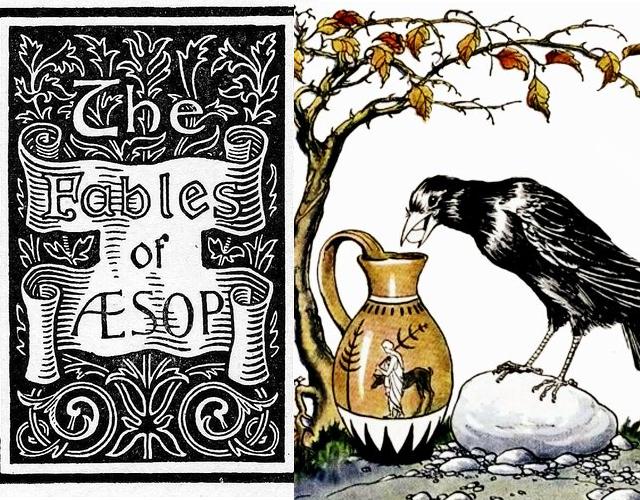
Aesop's Fables
Aesop's Fables or the Aesopica is a collection of fables credited to Aesop, a slave and storyteller believed to have lived in ancient Greece between 620 and 560 BCE.
.
*** HINT ***
What are the differences between “allegories”, “fables” and “parables”?
Allegory: A story in which ideas are symbolized as people.
Allegory: https://en.wikipedia.org/wiki/Allegory
Parable: A short story designed to teach a moral or religious lesson.
Parable: https://en.wikipedia.org/wiki/Parable
Fable: A short story in which animals or objects speaks a story, to teach a moral or religious lesson.
Fable: https://en.wikipedia.org/wiki/Fable
.
Dystopia
A dystopia is a community or society that is undesirable or frightening. It is translated as "not-good place", an antonym of utopia, a term that was coined by Thomas Moore and figures as the title of his most well-known work, "Utopia." "Utopia" is the blueprint for an ideal society with no crime or poverty. By contrast, dystopia is a nightmare world which, in many cases, has resulted from attempts to create an ideal society.
.
Movies
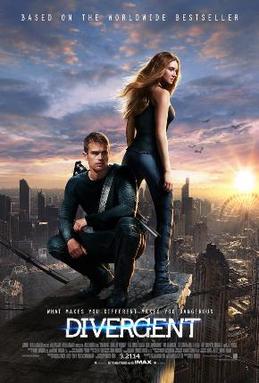
Divergent 分歧者
.
The Hunger Games 飢餓遊戲

.
The Maze Runner 移動迷宮
.
The Princess and the Pea

http://hca.gilead.org.il/princess.html
|
ONCE upon a time there was a prince who wanted to marry a princess; but she would have to be a real princess. He travelled all over the world to find one, but nowhere could he get what he wanted. There were princesses enough, but it was difficult to find out whether they were real ones. There was always something about them that was not as it should be. So he came home again and was sad, for he would have liked very much to have a real princess. One evening a terrible storm came on; there was thunder and lightning, and the rain poured down in torrents. Suddenly a knocking was heard at the city gate, and the old king went to open it. It was a princess standing out there in front of the gate. But, good gracious! what a sight the rain and the wind had made her look. The water ran down from her hair and clothes; it ran down into the toes of her shoes and out again at the heels. And yet she said that she was a real princess. “Well, we’ll soon find that out,” thought the old queen. But she said nothing, went into the bed-room, took all the bedding off the bedstead, and laid a pea on the bottom; then she took twenty mattresses and laid them on the pea, and then twenty eider-down beds on top of the mattresses. On this the princess had to lie all night. In the morning she was asked how she had slept. “Oh, very badly!” said she. “I have scarcely closed my eyes all night. Heaven only knows what was in the bed, but I was lying on something hard, so that I am black and blue all over my body. It’s horrible!” Now they knew that she was a real princess because she had felt the pea right through the twenty mattresses and the twenty eider-down beds. Nobody but a real princess could be as sensitive as that. So the prince took her for his wife, for now he knew that he had a real princess; and the pea was put in the museum, where it may still be seen, if no one has stolen it. There, that is a true story. |
p.s. 不要說oh my god -> Good gracious
.
Etymology
● para-: at or to one side of, beside, side by side
限會員,要發表迴響,請先登入


