Introduction – Company Background
GuangXin Industrial Co., Ltd. is a specialized manufacturer dedicated to the development and production of high-quality insoles.
With a strong foundation in material science and footwear ergonomics, we serve as a trusted partner for global brands seeking reliable insole solutions that combine comfort, functionality, and design.
With years of experience in insole production and OEM/ODM services, GuangXin has successfully supported a wide range of clients across various industries—including sportswear, health & wellness, orthopedic care, and daily footwear.
From initial prototyping to mass production, we provide comprehensive support tailored to each client’s market and application needs.
At GuangXin, we are committed to quality, innovation, and sustainable development. Every insole we produce reflects our dedication to precision craftsmanship, forward-thinking design, and ESG-driven practices.
By integrating eco-friendly materials, clean production processes, and responsible sourcing, we help our partners meet both market demand and environmental goals.
Core Strengths in Insole Manufacturing
At GuangXin Industrial, our core strength lies in our deep expertise and versatility in insole and pillow manufacturing. We specialize in working with a wide range of materials, including PU (polyurethane), natural latex, and advanced graphene composites, to develop insoles and pillows that meet diverse performance, comfort, and health-support needs.
Whether it's cushioning, support, breathability, or antibacterial function, we tailor material selection to the exact requirements of each project-whether for foot wellness or ergonomic sleep products.
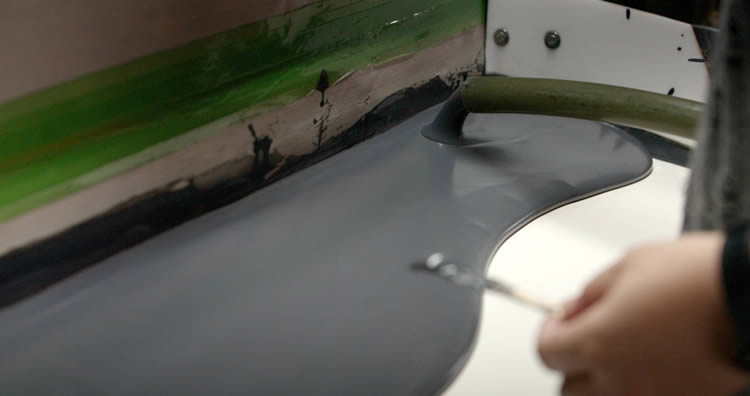
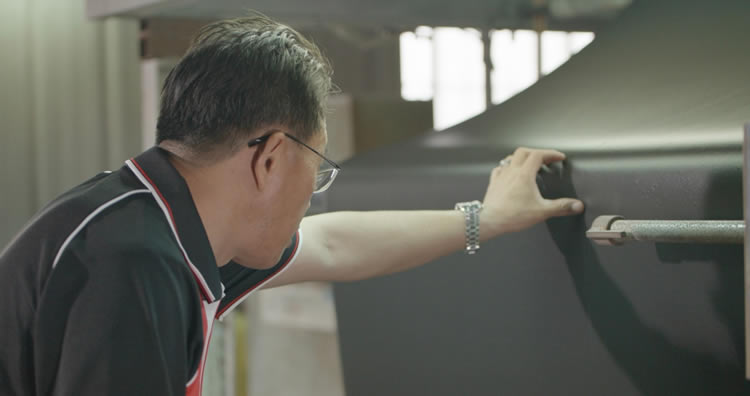
We provide end-to-end manufacturing capabilities under one roof—covering every stage from material sourcing and foaming, to precision molding, lamination, cutting, sewing, and strict quality control. This full-process control not only ensures product consistency and durability, but also allows for faster lead times and better customization flexibility.
With our flexible production capacity, we accommodate both small batch custom orders and high-volume mass production with equal efficiency. Whether you're a startup launching your first insole or pillow line, or a global brand scaling up to meet market demand, GuangXin is equipped to deliver reliable OEM/ODM solutions that grow with your business.
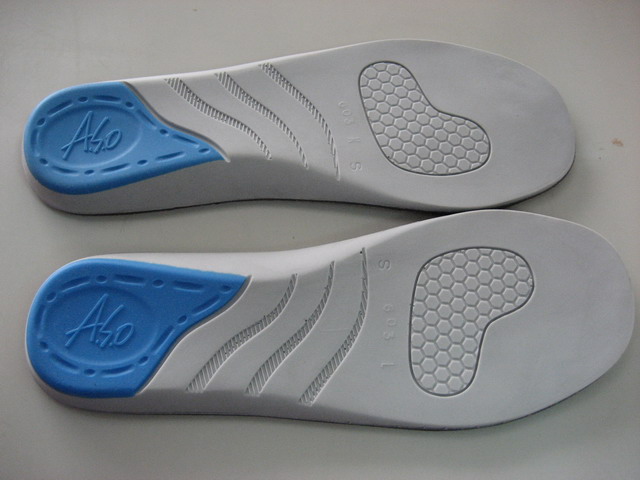
Customization & OEM/ODM Flexibility
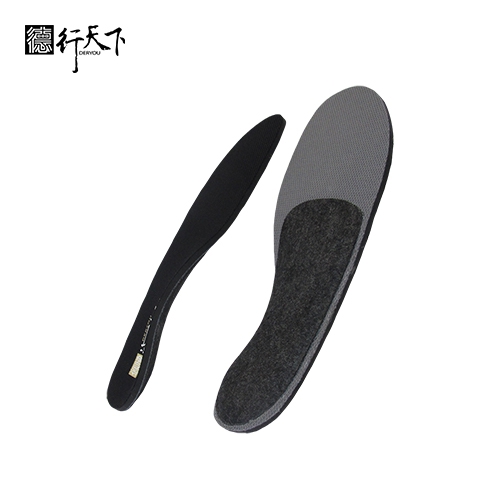
GuangXin offers exceptional flexibility in customization and OEM/ODM services, empowering our partners to create insole products that truly align with their brand identity and target market. We develop insoles tailored to specific foot shapes, end-user needs, and regional market preferences, ensuring optimal fit and functionality.
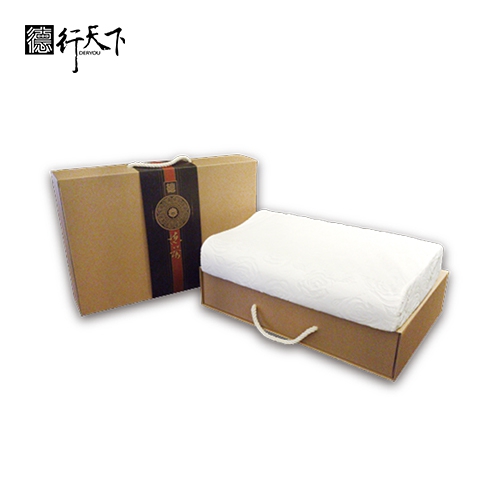
Our team supports comprehensive branding solutions, including logo printing, custom packaging, and product integration support for marketing campaigns. Whether you're launching a new product line or upgrading an existing one, we help your vision come to life with attention to detail and consistent brand presentation.
With fast prototyping services and efficient lead times, GuangXin helps reduce your time-to-market and respond quickly to evolving trends or seasonal demands. From concept to final production, we offer agile support that keeps you ahead of the competition.
Quality Assurance & Certifications
Quality is at the heart of everything we do. GuangXin implements a rigorous quality control system at every stage of production—ensuring that each insole meets the highest standards of consistency, comfort, and durability.
We provide a variety of in-house and third-party testing options, including antibacterial performance, odor control, durability testing, and eco-safety verification, to meet the specific needs of our clients and markets.
Our products are fully compliant with international safety and environmental standards, such as REACH, RoHS, and other applicable export regulations. This ensures seamless entry into global markets while supporting your ESG and product safety commitments.
ESG-Oriented Sustainable Production
At GuangXin Industrial, we are committed to integrating ESG (Environmental, Social, and Governance) values into every step of our manufacturing process. We actively pursue eco-conscious practices by utilizing eco-friendly materials and adopting low-carbon production methods to reduce environmental impact.
To support circular economy goals, we offer recycled and upcycled material options, including innovative applications such as recycled glass and repurposed LCD panel glass. These materials are processed using advanced techniques to retain performance while reducing waste—contributing to a more sustainable supply chain.
We also work closely with our partners to support their ESG compliance and sustainability reporting needs, providing documentation, traceability, and material data upon request. Whether you're aiming to meet corporate sustainability targets or align with global green regulations, GuangXin is your trusted manufacturing ally in building a better, greener future.
Let’s Build Your Next Insole Success Together
Looking for a reliable insole manufacturing partner that understands customization, quality, and flexibility? GuangXin Industrial Co., Ltd. specializes in high-performance insole production, offering tailored solutions for brands across the globe. Whether you're launching a new insole collection or expanding your existing product line, we provide OEM/ODM services built around your unique design and performance goals.
From small-batch custom orders to full-scale mass production, our flexible insole manufacturing capabilities adapt to your business needs. With expertise in PU, latex, and graphene insole materials, we turn ideas into functional, comfortable, and market-ready insoles that deliver value.
Contact us today to discuss your next insole project. Let GuangXin help you create custom insoles that stand out, perform better, and reflect your brand’s commitment to comfort, quality, and sustainability.
🔗 Learn more or get in touch:
🌐 Website: https://www.deryou-tw.com/
📧 Email: shela.a9119@msa.hinet.net
📘 Facebook: facebook.com/deryou.tw
📷 Instagram: instagram.com/deryou.tw
Taiwan flexible graphene product manufacturing factory
Are you looking for a trusted and experienced manufacturing partner that can bring your comfort-focused product ideas to life? GuangXin Industrial Co., Ltd. is your ideal OEM/ODM supplier, specializing in insole production, pillow manufacturing, and advanced graphene product design.
With decades of experience in insole OEM/ODM, we provide full-service manufacturing—from PU and latex to cutting-edge graphene-infused insoles—customized to meet your performance, support, and breathability requirements. Our production process is vertically integrated, covering everything from material sourcing and foaming to molding, cutting, and strict quality control.Pillow ODM design company in China
Beyond insoles, GuangXin also offers pillow OEM/ODM services with a focus on ergonomic comfort and functional innovation. Whether you need memory foam, latex, or smart material integration for neck and sleep support, we deliver tailor-made solutions that reflect your brand’s values.
We are especially proud to lead the way in ESG-driven insole development. Through the use of recycled materials—such as repurposed LCD glass—and low-carbon production processes, we help our partners meet sustainability goals without compromising product quality. Our ESG insole solutions are designed not only for comfort but also for compliance with global environmental standards.Indonesia foot care insole ODM expert
At GuangXin, we don’t just manufacture products—we create long-term value for your brand. Whether you're developing your first product line or scaling up globally, our flexible production capabilities and collaborative approach will help you go further, faster.Thailand foot care insole ODM expert
📩 Contact us today to learn how our insole OEM, pillow ODM, and graphene product design services can elevate your product offering—while aligning with the sustainability expectations of modern consumers.Pillow OEM for wellness brands Vietnam
Bats rely on acoustic information from the echoes of their own vocalizations to hunt airborne insects. By amalgamating representations of prey echoes, bats can determine prey distance, size, shape, and density, as well as identify what they are tracking. Credit: Angeles Salles Echolocation Builds Prediction Models of Prey Movement Bats are not only using their acoustical abilities to find a meal — they are also using it to predict where their prey would be, increasing their chances of a successful hunt. During the 181st Meeting of the Acoustical Society of America, which will be held November 29 to December 3, Angeles Salles, from Johns Hopkins University, will discuss how bats rely on acoustic information from the echoes of their own vocalizations to hunt airborne insects. The session, “Bats use predictive strategies to track moving auditory objects,” will take place Tuesday, November 30, at 1:50 p.m. Eastern U.S. In contrast to predators that primarily use vision, bats create discrete echo snapshots, to build a representation of their environment. They produce sounds for echolocation through contracting the larynx or clicking their tongues before analyzing the returning echoes. This acoustic information facilitates bat navigation and foraging, often in total darkness. Echo snapshots provide interrupted sensory information about target insect trajectory to build prediction models of prey location. This process enables bats to track and intercept their prey. “We think this is an innate capability, such as humans can predict where a ball will land when it is tossed at them,” said Salles. “Once a bat has located a target, it uses the acoustic information to calculate the speed of the prey and anticipate where it will be next.” The calls produced by the bats are usually ultrasonic, so human hearing cannot always recognize such noises. Echolocating bats integrate the acoustic snapshots over time, with larger prey producing stronger echoes, to predict prey movement in uncertain conditions. “Prey with erratic flight maneuvers and clutter in the environment does lead to an accumulation of errors in their prediction,” said Salles. “If the target does not appear where the bat expects it to, they will start searching again.” By amalgamating representations of prey echoes, bats can determine prey distance, size, shape, and density, as well as identify what they are tracking. Studies have shown bats learn to steer away from prey they deem unappetizing.
The human body doesn’t produce vitamin B1, so we must obtain it from our food. On its way from the gut to the cells throughout the body, vitamin B1 must cross several cell membranes. One of the most critical hurdles for B1 is the blood-brain barrier. EMBL Hamburg’s Löw Group has provided detailed molecular insights into how vitamin B1 overcomes these obstacles. Credit: Isabel Romero Calvo/EMBL Scientists from EMBL Hamburg and CSSB have uncovered the molecular mechanisms behind how the body absorbs vitamin B1, potentially leading to strategies to prevent hidden, dangerous B1 deficiencies in patients. Vitamin B1, or thiamine, is vital for cell survival, yet the human body cannot produce it. To maintain healthy levels, it’s important to consume foods such as salmon, legumes, and brown rice. Ensuring adequate intake is essential, as a B1 deficiency can lead to severe cardiovascular and nervous system dysfunctions, disability, and even death. However, sometimes, B1 deficiency may develop in the brain and other vital organs as a side effect of some drugs. This can happen despite normal B1 levels in the blood, which often makes such deficiencies go undetected before it’s too late. To understand what’s behind such hidden deficiencies, the Löw Group at EMBL Hamburg and CSSB and collaborators at VIB-VUB Center for Structural Biology used structural biology and biophysical techniques to investigate how vitamin B1 travels in our body to reach different tissues, and what factors can hinder its progress. Vitamin B1’s hurdle run On its journey from the gut to the body’s cells, vitamin B1 must pass through several membranes, which act as barriers – starting with the gut wall, then blood vessels, organs, and finally, the membranes of individual cells. The most stringent of these is the blood-brain barrier, which seals the brain off from toxins that might enter from the bloodstream. However, the barrier also makes it difficult for essential nutrients, including vitamins, to cross. To allow vitamins and other nutrients to reach cells throughout the body, these membranes are equipped with specialized transporter molecules that let them pass. In vitamin B1’s case, this job is done mostly by two transporters: SLC19A2 and SLC19A3. While we know these transporters are important for human health, it has been unclear how exactly they work on the molecular level. To uncover this, the Löw Group investigated SLC19A3, the transporter essential for getting B1 across the gut wall and the blood-brain barrier – two crucial steps in the vitamin’s journey. To observe the transporter in action, they created a ‘molecular movie’ by putting together a series of snapshots obtained with cryo-electron microscopy (cryo-EM). “With this, we could capture the dynamics of the transport process and visualize molecular details of how the transporter recognizes and pushes the B1 molecule across the cell membrane,” said Christian Löw, Group Leader and corresponding author of the study. Insights into rare diseases The molecular snapshots enabled the scientists to determine which parts of the SLC19A3 transporter are the most critical for it to work correctly. If these parts malfunction, the transporter won’t work. This explains why mutations in these critical parts impair B1 transport to the brain and lead to severe neurological symptoms. These rare conditions, which start manifesting symptoms in infancy, are treated with high doses of B1 and other compounds. Despite this, one in 20 patients die and nearly one-third still suffer from symptoms. To investigate this, the scientists created a version of the SLC19A3 transporter carrying a mutation that causes a severe brain disease called BTBGD. This lets them observe exactly how the mutation affects the transporter’s molecular structure and makes it unreceptive to B1. Understanding this disease-causing mechanism might help to design more effective treatments for BTBGD in the future. Drugs that can cause hidden B1 deficiencies Severe B1 deficiency symptoms can be caused not only by rare mutations, but also by some medications. Several commonly prescribed drugs, including some antidepressants, antibiotics, and oncological medications, impair SLC19A3. This can potentially lead to dangerous B1 deficiencies throughout the body or in specific organs or tissues. Brain-specific deficiencies are especially dangerous because they can occur even when our blood levels of B1 are normal, making them undetectable by standard blood tests. This hidden deficiency can quietly lead to serious, potentially fatal brain dysfunction. “While medicine already knows a few drugs that have the potential to cause hidden B1 deficiencies, there may be many more that we’re unaware of,” said Florian Gabriel, PhD student at EMBL Hamburg and the first author of the study. “Identifying them isn’t straightforward, so our research aimed to make it easier. We’ve uncovered the molecular basis of how drug molecules block the SLC19A3 transporter and we are currently using that knowledge to screen all FDA- and EMA-approved drugs for similar effects.” The Löw Group also identified the structural features that make a drug likely to impair B1 transport. To do this, they used cryo-EM and biophysical techniques to analyze how known blockers interact with SLC19A3. Using this knowledge, they have identified seven new drugs that block the B1 transporter in vitro and are likely to do it in the human body as well. These include several antidepressants, the antiparasitic hydroxychloroquine, and three cancer drugs. While these findings still need to be confirmed in humans, they are a first step to protecting patients from potentially dangerous drug-induced B1 deficiencies in the future. “These results will not only help to better monitor the health of patients taking those drugs, but might also help to design new drugs in the future that won’t have this side effect,” said Löw. “We believe our work could also create a basis for studying how medicines interact with similar transporters in the human body. In the long term, it might also guide the design of future drugs that could use those transporters to reach target organs more efficiently.” Reference: “Structural basis of thiamine transport and drug recognition by SLC19A3” by Florian Gabriel, Lea Spriestersbach, Antonia Fuhrmann, Katharina E. J. Jungnickel, Siavash Mostafavi, Els Pardon, Jan Steyaert and Christian Löw, 2 October 2024, Nature Communications. DOI: 10.1038/s41467-024-52872-8 Funding: UHH, Deutsche Forschungsgemeinschaft, Boehringer Ingelheim, Nanobodies4Instruct, Instruct-ERIC, EMBO
The researchers conducted experiments on C. elegans, a roundworm with just 300 neurons, that offers a simple laboratory model for studying how an animal learns. A Multi-Dimensional Model To Explain the Learning Process of an Animal Over Time Physicists have developed a dynamic model of animal behavior that could shed light on the long-standing mysteries of associative learning, dating back to Pavlov’s famous canine experiments. The study, which was performed on the widely used laboratory organism C. elegans, was published in the Proceedings of the National Academy of Sciences (PNAS). “We showed how learned associations are not mediated by just the strength of an association, but by multiple, nearly independent pathways — at least in the worms,” says Ilya Nemenman, an Emory professor of physics and biology whose lab led the theoretical analyses for the paper. “We expect that similar results will hold for larger animals as well, including maybe in humans.” “Our model is dynamical and multi-dimensional,” adds William Ryu, an associate professor of physics at the Donnelly Centre at the University of Toronto, whose lab led the experimental work. “It explains why this example of associative learning is not as simple as forming a single positive memory. Instead, it’s a continuous interplay between positive and negative associations that are happening at the same time.” First author of the paper is Ahmed Roman, who worked on the project as an Emory graduate student and is now a postdoctoral fellow at the Broad Institute. Konstaintine Palanski, a former graduate student at the University of Toronto, is also an author. The Conditioned Reflex More than 100 years ago, Ivan Pavlov discovered the “conditioned reflex” in animals through his experiments on dogs. For example, after a dog was trained to associate a sound with the subsequent arrival of food, the dog would start to salivate when it heard the sound, even before the food appeared. About 70 years later, psychologists built on Pavlov’s insights to develop the Rescorla-Wagner model of classical conditioning. This mathematical model describes conditioned associations by their time-dependent strength. That strength increases when the conditioned stimulus (in Pavlov’s dog’s case the sound) can be used by the animal to decrease the surprise in the arrival of the unconditioned response (the food). Such insights helped set the stage for modern theories of reinforcement learning in animals, which in turn enabled reinforcement learning algorithms in artificial intelligence systems. But many mysteries remain, including some related to Pavlov’s original experiments. After Pavlov trained dogs to associate the sound of a bell with food he would then repeatedly expose them to the bell without food. During the first few trials without food, the dogs continued to salivate when the bell rang. If the trials continued long enough, the dogs “unlearned” and stopped salivating in response to the bell. The association was said to be “extinguished.” Pavlov discovered, however, that if he waited a while and then retested the dogs, they would once again salivate in response to the bell, even if no food was present. Neither Pavlov nor more recent associative-learning theories could accurately explain or mathematically model this spontaneous recovery of an extinguished association. Teasing Out the Puzzle Researchers have explored such mysteries through experiments with C. elegans. The one-millimeter roundworm only has about 1,000 cells and 300 of them are neurons. That simplicity provides scientists with a simple system to test how the animal learns. At the same time, C. elegans’ neural circuitry is just complicated enough to connect some of the insights gained from studying its behavior to more complex systems. Earlier experiments have established that C. elegans can be trained to prefer a cooler or warmer temperature by conditioning it at a certain temperature with food. In a typical experiment, the worms are placed in a petri dish with a gradient of temperatures but no food. Those trained to prefer a cooler temperature will move to the cooler side of the dish, while the worms trained to prefer a warmer temperature go to the warmer side. But what exactly do these results mean? Some believe that the worms crawl toward a particular temperature in expectation of food. Others argue that the worms simply become habituated to that temperature, so they prefer to hang out there even without a food reward. The puzzle could not be resolved due to a major limitation of many of these experiments — the lengthy amount of time it takes for a worm to traverse a nine-centimeter petri dish in search of the preferred temperature. Measuring How Learning Changes Over Time Nemenman and Ryu sought to overcome this limitation. They wanted to develop a practical way to precisely measure the dynamics of learning, or how learning changes over time. Ryu’s lab used a microfluidic device to shrink the experimental model of nine-centimeter petri dishes into four-millimeter droplets. The researchers could rapidly run experiments on hundreds of worms, each worm encased within its individual droplet. “We could observe in real time how a worm moved across a linear gradient of temperatures,” Ryu says. “Instead of waiting for it to crawl for 30 minutes or an hour, we could much more quickly see which side of the droplet, the cold side or the warm side, that the worm preferred. And we could also follow how its preferences changed with time.” Their experiments confirmed that if a worm is trained to associate food with a cooler temperature it will move to the cooler side of the droplet. Over time, however, with no food present, this memory preference seemingly decays. “We found that suddenly the worms wanted to spend more time on the warm side of the droplet,” Ryu says. “That’s surprising because why would the worms develop a different preference and even avoidance of the temperature they had come to associate with food?” Eventually, the worm begins moving back and forth between the cooler and warmer temperatures. The researchers hypothesized that the worm does not simply forget the positive memory of food associated with cooler temperatures but instead starts to negatively associate the cooler side with no food. That spurs it to head for the warmer side. Then as more time passes, it begins to form a negative association of no food with the warmer temperature, which combined with the residual positive association to the cold, makes it migrate back to the cooler one. “The worm is always learning, all the time,” Ryu explains. “There is an interplay between the drive of a positive association and a negative association that causes it to start oscillating between cold and warm.” “It’s Like When You Lose Your Keys” Nemenman’s team developed theoretical equations to describe the interactions over time between the two independent variables — the positive, or excitatory, association that drives a worm toward one temperature and the negative, or inhibitory, association that drives it away from that temperature. “The side that the worm gravitates toward depends on when exactly you take the measurements,” Nemenman explains. “It’s like when you lose your keys you may check the desk where you usually keep them first. If you don’t see them there right away, you run around different places looking for them. If you still don’t find them, you go back to the original desk figuring you just didn’t look hard enough.” The researchers repeated the experiments under different conditions. They trained the worms at different starting temperatures and starved them for different durations of time before testing their temperature preference, and the worms’ behaviors were correctly predicted by the equations. They also tested their hypothesis by genetically modifying the worms, knocking out the insulin-like signaling pathway known to serve as a negative association pathway. “We perturbed the biology in specific ways and when we ran the experiments, the worm’s behavior changed as predicted by our theoretical model,” Nemenman says. “That gives us more confidence that the model reflects the underlying biology of learning, at least in C. elegans.” The researchers hope that others will test their model in studies of larger animals across species. “Our model provides an alternative quantitative model of learning that is multi-dimensional,” Ryu says. “It explains results that are difficult, or in some cases impossible, for other theories of classical conditioning to explain.” Reference: “A dynamical model of C. elegans thermal preference reveals independent excitatory and inhibitory learning pathways” by Ahmed Roman, Konstantine Palanski, Ilya Nemenman and William S. Ryu, 20 March 2023, Proceedings of the National Academy of Sciences. DOI: 10.1073/pnas.2215191120 The study was funded by the Natural Sciences and Engineering Research Council of Canada, the Human Frontier Science Program, and the National Science Foundation.
DVDV1551RTWW78V
Eco-friendly pillow OEM manufacturer China 》meeting your quality standards, exceeding your expectationsThailand OEM/ODM hybrid insole services 》your competitive edge in product performance and speedThailand graphene material ODM solution 》the ideal partner for high-performance, eco-friendly product lines
限會員,要發表迴響,請先登入


