Introduction – Company Background
GuangXin Industrial Co., Ltd. is a specialized manufacturer dedicated to the development and production of high-quality insoles.
With a strong foundation in material science and footwear ergonomics, we serve as a trusted partner for global brands seeking reliable insole solutions that combine comfort, functionality, and design.
With years of experience in insole production and OEM/ODM services, GuangXin has successfully supported a wide range of clients across various industries—including sportswear, health & wellness, orthopedic care, and daily footwear.
From initial prototyping to mass production, we provide comprehensive support tailored to each client’s market and application needs.
At GuangXin, we are committed to quality, innovation, and sustainable development. Every insole we produce reflects our dedication to precision craftsmanship, forward-thinking design, and ESG-driven practices.
By integrating eco-friendly materials, clean production processes, and responsible sourcing, we help our partners meet both market demand and environmental goals.


Core Strengths in Insole Manufacturing
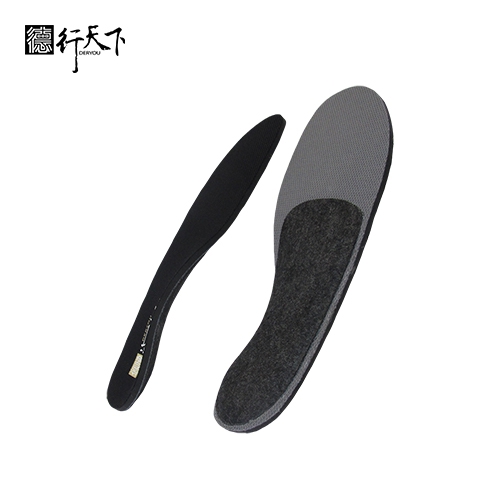
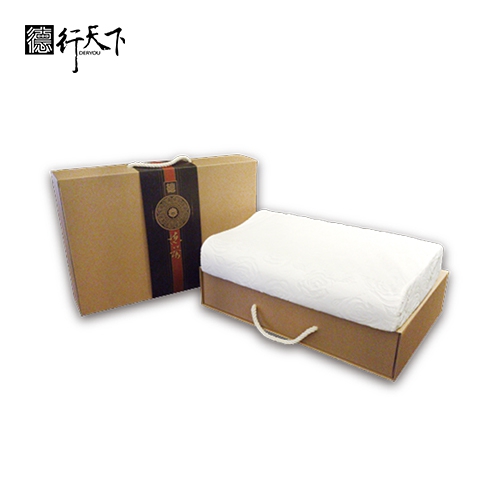
At GuangXin Industrial, our core strength lies in our deep expertise and versatility in insole and pillow manufacturing. We specialize in working with a wide range of materials, including PU (polyurethane), natural latex, and advanced graphene composites, to develop insoles and pillows that meet diverse performance, comfort, and health-support needs.
Whether it's cushioning, support, breathability, or antibacterial function, we tailor material selection to the exact requirements of each project-whether for foot wellness or ergonomic sleep products.
We provide end-to-end manufacturing capabilities under one roof—covering every stage from material sourcing and foaming, to precision molding, lamination, cutting, sewing, and strict quality control. This full-process control not only ensures product consistency and durability, but also allows for faster lead times and better customization flexibility.
With our flexible production capacity, we accommodate both small batch custom orders and high-volume mass production with equal efficiency. Whether you're a startup launching your first insole or pillow line, or a global brand scaling up to meet market demand, GuangXin is equipped to deliver reliable OEM/ODM solutions that grow with your business.
Customization & OEM/ODM Flexibility
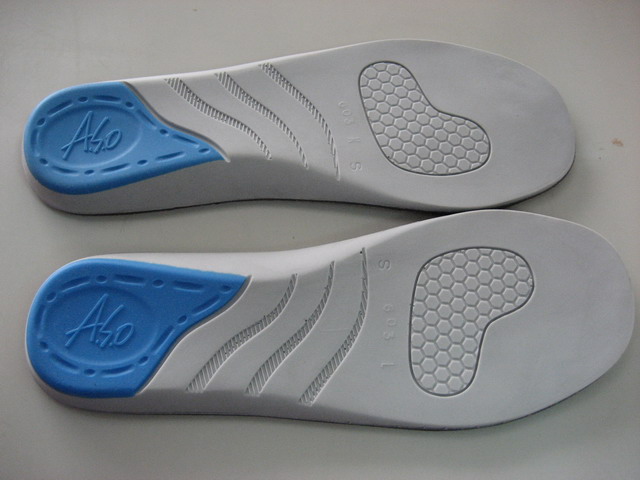
GuangXin offers exceptional flexibility in customization and OEM/ODM services, empowering our partners to create insole products that truly align with their brand identity and target market. We develop insoles tailored to specific foot shapes, end-user needs, and regional market preferences, ensuring optimal fit and functionality.
Our team supports comprehensive branding solutions, including logo printing, custom packaging, and product integration support for marketing campaigns. Whether you're launching a new product line or upgrading an existing one, we help your vision come to life with attention to detail and consistent brand presentation.
With fast prototyping services and efficient lead times, GuangXin helps reduce your time-to-market and respond quickly to evolving trends or seasonal demands. From concept to final production, we offer agile support that keeps you ahead of the competition.
Quality Assurance & Certifications
Quality is at the heart of everything we do. GuangXin implements a rigorous quality control system at every stage of production—ensuring that each insole meets the highest standards of consistency, comfort, and durability.
We provide a variety of in-house and third-party testing options, including antibacterial performance, odor control, durability testing, and eco-safety verification, to meet the specific needs of our clients and markets.
Our products are fully compliant with international safety and environmental standards, such as REACH, RoHS, and other applicable export regulations. This ensures seamless entry into global markets while supporting your ESG and product safety commitments.
ESG-Oriented Sustainable Production
At GuangXin Industrial, we are committed to integrating ESG (Environmental, Social, and Governance) values into every step of our manufacturing process. We actively pursue eco-conscious practices by utilizing eco-friendly materials and adopting low-carbon production methods to reduce environmental impact.
To support circular economy goals, we offer recycled and upcycled material options, including innovative applications such as recycled glass and repurposed LCD panel glass. These materials are processed using advanced techniques to retain performance while reducing waste—contributing to a more sustainable supply chain.
We also work closely with our partners to support their ESG compliance and sustainability reporting needs, providing documentation, traceability, and material data upon request. Whether you're aiming to meet corporate sustainability targets or align with global green regulations, GuangXin is your trusted manufacturing ally in building a better, greener future.
Let’s Build Your Next Insole Success Together
Looking for a reliable insole manufacturing partner that understands customization, quality, and flexibility? GuangXin Industrial Co., Ltd. specializes in high-performance insole production, offering tailored solutions for brands across the globe. Whether you're launching a new insole collection or expanding your existing product line, we provide OEM/ODM services built around your unique design and performance goals.
From small-batch custom orders to full-scale mass production, our flexible insole manufacturing capabilities adapt to your business needs. With expertise in PU, latex, and graphene insole materials, we turn ideas into functional, comfortable, and market-ready insoles that deliver value.
Contact us today to discuss your next insole project. Let GuangXin help you create custom insoles that stand out, perform better, and reflect your brand’s commitment to comfort, quality, and sustainability.
🔗 Learn more or get in touch:
🌐 Website: https://www.deryou-tw.com/
📧 Email: shela.a9119@msa.hinet.net
📘 Facebook: facebook.com/deryou.tw
📷 Instagram: instagram.com/deryou.tw
Vietnam OEM/ODM hybrid insole services
Are you looking for a trusted and experienced manufacturing partner that can bring your comfort-focused product ideas to life? GuangXin Industrial Co., Ltd. is your ideal OEM/ODM supplier, specializing in insole production, pillow manufacturing, and advanced graphene product design.
With decades of experience in insole OEM/ODM, we provide full-service manufacturing—from PU and latex to cutting-edge graphene-infused insoles—customized to meet your performance, support, and breathability requirements. Our production process is vertically integrated, covering everything from material sourcing and foaming to molding, cutting, and strict quality control.Pillow OEM for wellness brands Indonesia
Beyond insoles, GuangXin also offers pillow OEM/ODM services with a focus on ergonomic comfort and functional innovation. Whether you need memory foam, latex, or smart material integration for neck and sleep support, we deliver tailor-made solutions that reflect your brand’s values.
We are especially proud to lead the way in ESG-driven insole development. Through the use of recycled materials—such as repurposed LCD glass—and low-carbon production processes, we help our partners meet sustainability goals without compromising product quality. Our ESG insole solutions are designed not only for comfort but also for compliance with global environmental standards.Indonesia insole OEM manufacturer
At GuangXin, we don’t just manufacture products—we create long-term value for your brand. Whether you're developing your first product line or scaling up globally, our flexible production capabilities and collaborative approach will help you go further, faster.Taiwan OEM insole and pillow manufacturing factory
📩 Contact us today to learn how our insole OEM, pillow ODM, and graphene product design services can elevate your product offering—while aligning with the sustainability expectations of modern consumers.Thailand graphene material ODM solution
Exhaled breath is collected from a wild bottlenose dolphin during a health assessment conducted by the National Marine Mammal Foundation and partners in Barataria Bay, LA. Credit: Todd Speakman/National Marine Mammal Foundation. Bottlenose dolphin health assessments were conducted under MMPA/ESA Permit No. 18786-03 in 2018 and MMPA/ESA Permit No. 24359 in 2023, CC-BY 4.0 Researchers have found microplastic particles in the breath of wild bottlenose dolphins, indicating that inhalation might be a significant exposure path for these animals, alongside ingestion. This discovery, made by collecting exhaled air from dolphins in Florida and Louisiana, reveals the presence of various types of plastic polymers. While these findings highlight a potential health risk, further studies are needed to understand the implications fully. Discovery of Microplastics in Dolphin Breath Researchers in the United States have discovered microplastic particles in the breath of wild bottlenose dolphins, indicating that these animals might be inhaling plastic contaminants, which could be harmful. This finding was reported by Miranda Dziobak and her team from the College of Charleston in South Carolina and published today (October 16, 2024) in the open-access journal PLOS ONE. Microplastics, tiny plastic particles, are a global environmental issue affecting both humans and wildlife. These particles can cause health problems such as oxidative stress and inflammation when ingested or inhaled. While ingestion through contaminated food is a well-known exposure pathway for both humans and animals, inhaling microplastics is also considered harmful and is an emerging area of concern for human health. Research Methodology and Findings However, few studies have examined inhalation as a potential route of microplastic exposure for wildlife. Now, this research team has collected samples of exhaled air from five bottlenose dolphins in Sarasota Bay, Florida, and six bottlenose dolphins in Barataria Bay, Louisiana during catch-and-release health assessment studies. To capture the air, they held a collection surface over or just above each dolphin’s blowhole as it exhaled. Analysis of the collected air showed that all 11 dolphins had at least one suspected microplastic particle in their breath. Further analysis of the exhaled microplastic particles showed that they included both fibers and fragments and included several types of plastic polymers, including polyethylene terephthalate (PET), polyester, polyamide, polybutylene terephthalate, and poly(methyl methacrylate), also known as PMMA. Implications and Concerns For comparison, the research team also sampled the surrounding air near the dolphins, allowing them to confirm that the detected microplastics were not just airborne near the blowholes but were actually exhaled. These results support the idea that inhalation could be another key route of microplastic exposure for dolphins, alongside ingestion. However, the authors note that their findings are preliminary, and that further research will be needed to better quantify the degree of inhalation exposure to various types of microplastics among bottlenose dolphins, as well as to determine the potential impacts on dolphins’ health, such as the possibility of lung damage. The authors add: “We know that microplastics are floating around in the air, so we suspected that we would find microplastics in breath samples. We are concerned by what we are seeing because dolphins have a large lung capacity and take really deep breaths, so we are worried about what these plastics could be doing to their lungs.” Reference: “First evidence of microplastic inhalation among free-ranging small cetaceans” by Miranda K. Dziobak, Andreas Fahlman, Randall S. Wells, Ryan Takeshita, Cynthia Smith, Austin Gray, John Weinstein and Leslie B. Hart, 16 October 2024, PLOS ONE. DOI: 10.1371/journal.pone.0309377 Funding: Research reported in this publication was supported by the National Institute of Environmental Health Sciences of the National Institutes of Health under Award Number R15ES034169 [LH]. The content is solely the responsibility of the authors and does not necessarily represent the official views of the National Institutes of Health. Sarasota Bay health assessments were funded primarily by Dolphin Quest, Inc. AF was funded by Fundacion Oceanografic and Global Diving Research SL. Barataria Bay health assessments were funded primarily by a Strategic Environmental Research and Development Program grant (no. RC20-1097), with contributions from the Gulf of Mexico Research Initiative and the National Marine Mammal Foundation [CRS, RT].
By examining RNA in hundreds of thousands of individual brain cells, Scripps Research scientists further support that alcohol use disorder could accelerate Alzheimer’s disease progression, paving the way for future targeted treatments. New research from Scripps Research links Alzheimer’s disease and alcohol use disorder, showing similar gene expression changes in the brain that impact inflammation and cell function. Using single-cell transcriptomics, the study indicates that alcohol use may exacerbate Alzheimer’s disease by affecting shared molecular pathways. Larger datasets are anticipated to provide further insights. Gene Expression Links Between Alzheimer’s and Alcohol Use Nearly 7 million Americans have Alzheimer’s disease, and this number is predicted to double by 2060. While aging and genetic predisposition are the most important risk factors for Alzheimer’s, epidemiological studies suggest that lifestyle factors including alcohol use could also impact disease onset and progression. Now, Scripps Research scientists have shown that Alzheimer’s and alcohol use disorder (AUD) are associated with similarly altered gene expression patterns in the brain, supporting the idea that alcohol use may promote Alzheimer’s disease progression. The study, published in eNeuro on September 19, 2024, could inform future preventative and treatment strategies. Shared Molecular Mechanisms in Alzheimer’s and Alcohol Use Disorder “We found several cell-type-specific genes and pathways that are dysregulated in both Alzheimer’s disease and alcohol, which supports the hypothesis that alcohol use disorder can accelerate Alzheimer’s disease progression by impinging on some of the same molecular mechanisms that are affected by Alzheimer’s,” says senior author Pietro Paolo Sanna, MD, a professor in the Immunology and Microbiology Department at Scripps Research. “By understanding these dysregulations with this level of molecular detail, we can understand what’s causing these diseases, and we can also identify targets that could be used therapeutically.” This is the first time researchers have used single cell transcriptomics—a method that analyzes gene expression within individual cells by sequencing their RNA—to compare changes associated with Alzheimer’s disease and AUD in different populations of human brain cells. The study builds upon previously published research in the Sanna lab that showed that excessive alcohol consumption accelerates Alzheimer’s progression in mice that are genetically predisposed to the disease. Researchers characterized the gene expression of more than 100,000 individual cells from brains of humans with Alzheimer’s disease and compared the patterns to those in individuals with alcohol use disorder (AUD). Compared to healthy individuals, they showed that there was significant overlap in gene expression changes for those with Alzheimer’s and AUD. Pathways that were downregulated in AUD and at least one AD stage are shown in purple, and pathways that are upregulated in AUD and at least one AD stage are shown in pink. Credit: Arpita Joshi and Pietro P. Sanna (Scripps Research) Study Methodology and Comparative Gene Analysis To examine cell-specific gene expression changes, the team analyzed RNA sequencing data from hundreds of thousands of individual brain cells from 75 patients with varying stages of Alzheimer’s disease (early, intermediate or advanced), and 10 patients without Alzheimer’s. Then, they compared this Alzheimer’s gene expression data with previously published RNA sequencing data from individuals with AUD. They showed that both AUD and Alzheimer’s are associated with similar gene expression changes in the brain, including upregulation of inflammatory genes and pathways, disruption to cell signaling and cell-death-related pathways, and changes to blood vessel cells. The Broader Implications of Alcohol Use as a Risk Factor “What we’ve presented here is a differential analysis of two disorders that cause cognitive decline,” says first author Arpita Joshi, PhD, a staff scientist in Sanna’s lab at Scripps Research. “It deepens our understanding of Alzheimer’s disease and what the three clinically defined stages of Alzheimer’s entail, and it underscores the importance of considering alcohol use disorder as a risk factor for Alzheimer’s.” Because the study was based on a small sample size for AUD, in the future, researchers plan to repeat their analysis using larger gene expression databases from individuals with AUD, which they expect to become available in the next year. The Global Effort to Understand Disease at the Cellular Level “We are eagerly awaiting the release of larger alcohol use datasets so that we can test the robustness of these findings and examine the commonalities between the two disorders with finer cell-type granularity,” says Joshi. “This is a global effort to unravel complex diseases at the single-cell level, which will lead to a better understanding of the molecular and cellular perturbations in individuals with Alzheimer’s disease, alcohol use disorder, and their interactions.” Reference: “Transcriptional Patterns in Stages of Alzheimer’s Disease Are Cell-Type–Specific and Partially Converge with the Effects of Alcohol Use Disorder in Humans” by Arpita Joshi, Federico Manuel Giorgi and Pietro Paolo Sanna, 19 September 2024, eNeuro. DOI: 10.1523/ENEURO.0118-24.2024 In addition to Sanna and Joshi, the study was co-authored by Federico Manuel Giorgi of Scripps Research and the University of Bologna. This work was supported by funding from the National Institutes of Health (AA021667, AA028982, DA046170, DA046204, and DA053801)
Researchers discovered that hogfish possess a unique light-sensitive protein in their skin, enabling them to change colors. The study suggests that these fish can monitor their own skin color changes, possibly allowing them to adapt to their environment more effectively. Hogfish use skin-based light detection to monitor their own camouflage, offering insights that could advance sensory feedback technology. Several years back, during a fishing expedition in the Florida Keys, biologist Lori Schweikert came face to face with an unusual quick-change act. She caught a pointy-snouted reef fish known as a hogfish and placed it on her boat’s deck. However, when she later intended to transfer it to a cooler, she observed a peculiar phenomenon: its skin had taken on the same color and pattern as the deck of the boat. A common fish in the western Atlantic Ocean from North Carolina to Brazil, the hogfish is known for its color-changing skin. The species can morph from white to mottled to reddish-brown in a matter of milliseconds to blend in with corals, sand, or rocks. The Mystery of Skin-Based Light Detection Still, Schweikert was surprised because this hogfish had continued its camouflage even though it was no longer alive. This got her wondering: Can hogfish detect light using only their skin, independently of their eyes and brain? “That opened up this whole field for me,” Schweikert said. In the years that followed, Schweikert started researching the physiology of “skin vision” as a postdoctoral fellow at Duke University and Florida International University. In 2018, Schweikert and Duke biologist Sönke Johnsen published a study showing that hogfish carry a gene for a light-sensitive protein called opsin that is activated in their skin and that this gene is different from the opsin genes found in their eyes. A pointy-snouted reef fish called the hogfish can change from white to spotted brown to reddish depending on its surroundings. Credit: Photos courtesy of Dean Kimberly and Lori Schweikert Other color-changing animals from octopuses to geckos have been found to make light-sensing opsins in their skin, too. But exactly how they use them to help change color is unclear. “When we found it in hogfish, I looked at Sönke and said: Why have a light detector in the skin?” said Schweikert, now an assistant professor at the University of North Carolina Wilmington. One hypothesis is that light-sensing skin helps animals take in their surroundings. But new findings suggest another possibility — “that they could be using it to view themselves,” Schweikert said. In a study recently published in the journal Nature Communications, Schweikert, Johnsen, and colleagues teamed up to take a closer look at hogfish skin. The Cellular Makeup of Hogfish Skin The researchers took pieces of skin from different parts of the fish’s body and took pictures of them under a microscope. Up close, a hogfish’s skin looks like a pointillist painting. Each dot of color is a specialized cell called a chromatophore containing granules of pigment that can be red, yellow, or black. It’s the movement of these pigment granules that changes the skin color. When the granules spread out across the cell, the color appears darker. When they cluster together into a tiny spot that’s hard to see, the cell becomes more transparent. Next, the researchers used a technique called immunolabeling to locate the opsin proteins within the skin. They found that in the hogfish, opsins aren’t produced in the color-changing chromatophore cells. Instead, the opsins reside in other cells directly beneath them. Images taken with a transmission electron microscope revealed a previously unknown cell type, just below the chromatophores, packed with opsin protein. This means that light striking the skin must pass through the pigment-filled chromatophores first before it reaches the light-sensitive layer, Schweikert said. Seen through a microscope, a hogfish’s skin looks like a pointillist painting. Each dot of color is a specialized cell containing pigment granules that can be red, yellow, or black. The pigment granules can spread out or cluster tightly together within the cell, making the color appear darker or more transparent. Credit: Lori Schweikert, University of North Carolina Wilmington The researchers estimate that the opsin molecules in hogfish skin are most sensitive to blue light. This happens to be the wavelength of light that the pigment granules in the fish’s chromatophores absorb best. The findings suggest that fish’s light-sensitive opsins act somewhat like internal Polaroid film, capturing changes in the light that are able to filter through the pigment-filled cells above as the pigment granules bunch up or fan out. “The animals can literally take a photo of their own skin from the inside,” Johnsen said. “In a way, they can tell the animal what its skin looks like, since it can’t really bend over to look.” A Sensory Feedback System, Not an Eye “Just to be clear, we’re not arguing that hogfish skin functions like an eye,” Schweikert added. Eyes do more than merely detect light — they form images. “We don’t have any evidence to suggest that’s what’s happening in their skin,” Schweikert said. Rather, it’s a sensory feedback mechanism that lets the hogfish monitor its own skin as it changes color, and fine-tune it to fit what it sees with its eyes. “They appear to be watching their own color change,” Schweikert said. The researchers say the work is important because it could pave the way to new sensory feedback techniques for devices such as robotic limbs and self-driving cars that must fine-tune their performance without relying solely on eyesight or camera feeds. “Sensory feedback is one of the tricks that technology is still trying to figure out,” Johnsen said. “This study is a nice dissection of a new sensory feedback system.” “If you didn’t have a mirror, and you couldn’t bend your neck, how would you know if you’re dressed appropriately?” Schweikert said. “For us, it may not matter,” she added. But for creatures that use their color-changing abilities to hide from predators, warn rivals, or woo mates, “it could be life or death.” Reference: “Dynamic light filtering over dermal opsin as a sensory feedback system in fish color change” by Lorian E. Schweikert, Laura E. Bagge, Lydia F. Naughton, Jacob R. Bolin, Benjamin R. Wheeler, Michael S. Grace, Heather D. Bracken-Grissom and Sönke Johnsen, 22 August 2023, Nature Communications. DOI: 10.1038/s41467-023-40166-4 The study was co-authored by researchers from the Florida Institute of Technology, Florida International University, and the Air Force Research Laboratory. Financial support came from Duke University, Florida International University, the Marine Biological Laboratory and the National Science Foundation.
DVDV1551RTWW78V
Thailand ergonomic pillow OEM supplier 》your trusted source for functional product developmentThailand insole ODM design and production 》built to serve both niche and mass production needsGraphene-infused pillow ODM factory Taiwan 》simplifying complex ideas into market-ready products
下一則: Pillow ODM design company in Vietnam 》manufacturin
限會員,要發表迴響,請先登入


