Introduction – Company Background
GuangXin Industrial Co., Ltd. is a specialized manufacturer dedicated to the development and production of high-quality insoles.
With a strong foundation in material science and footwear ergonomics, we serve as a trusted partner for global brands seeking reliable insole solutions that combine comfort, functionality, and design.
With years of experience in insole production and OEM/ODM services, GuangXin has successfully supported a wide range of clients across various industries—including sportswear, health & wellness, orthopedic care, and daily footwear.
From initial prototyping to mass production, we provide comprehensive support tailored to each client’s market and application needs.
At GuangXin, we are committed to quality, innovation, and sustainable development. Every insole we produce reflects our dedication to precision craftsmanship, forward-thinking design, and ESG-driven practices.
By integrating eco-friendly materials, clean production processes, and responsible sourcing, we help our partners meet both market demand and environmental goals.
Core Strengths in Insole Manufacturing
At GuangXin Industrial, our core strength lies in our deep expertise and versatility in insole and pillow manufacturing. We specialize in working with a wide range of materials, including PU (polyurethane), natural latex, and advanced graphene composites, to develop insoles and pillows that meet diverse performance, comfort, and health-support needs.
Whether it's cushioning, support, breathability, or antibacterial function, we tailor material selection to the exact requirements of each project-whether for foot wellness or ergonomic sleep products.
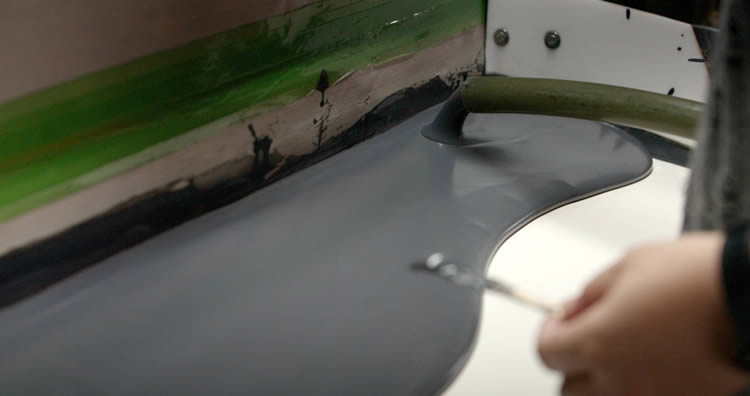
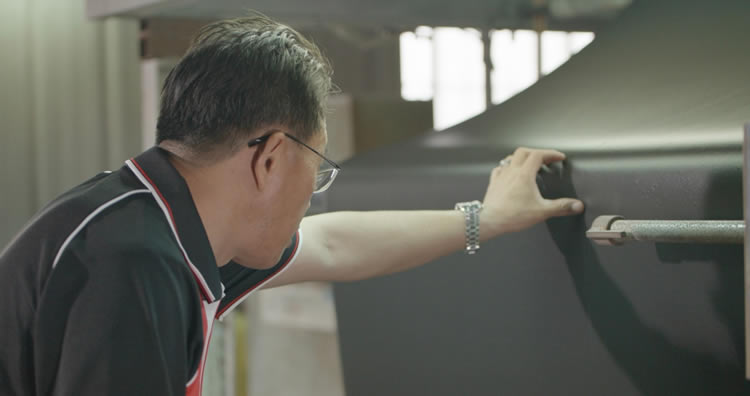
We provide end-to-end manufacturing capabilities under one roof—covering every stage from material sourcing and foaming, to precision molding, lamination, cutting, sewing, and strict quality control. This full-process control not only ensures product consistency and durability, but also allows for faster lead times and better customization flexibility.
With our flexible production capacity, we accommodate both small batch custom orders and high-volume mass production with equal efficiency. Whether you're a startup launching your first insole or pillow line, or a global brand scaling up to meet market demand, GuangXin is equipped to deliver reliable OEM/ODM solutions that grow with your business.
Customization & OEM/ODM Flexibility
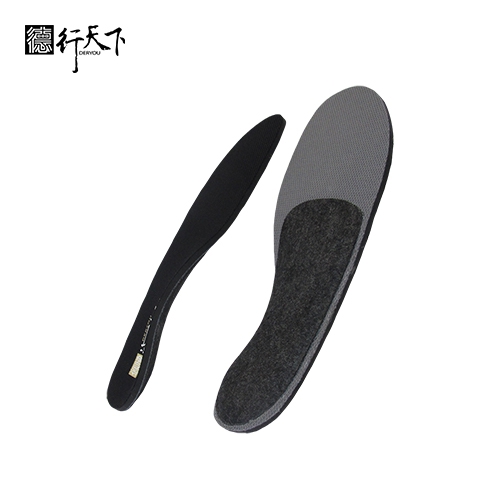
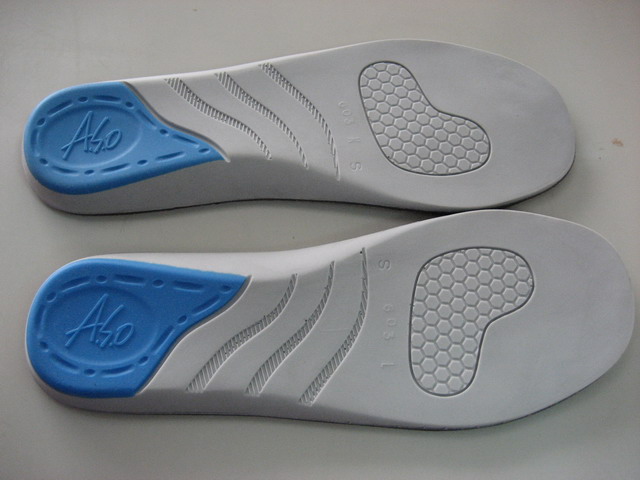
GuangXin offers exceptional flexibility in customization and OEM/ODM services, empowering our partners to create insole products that truly align with their brand identity and target market. We develop insoles tailored to specific foot shapes, end-user needs, and regional market preferences, ensuring optimal fit and functionality.
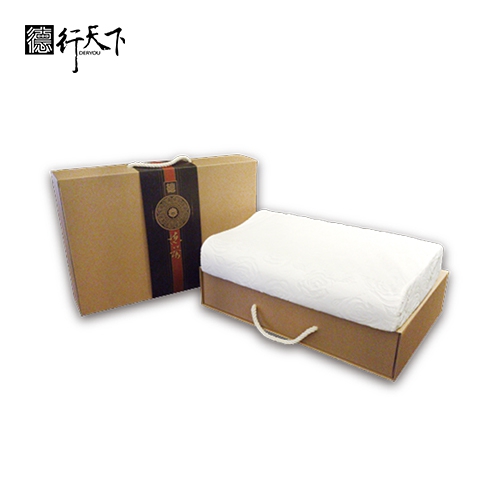
Our team supports comprehensive branding solutions, including logo printing, custom packaging, and product integration support for marketing campaigns. Whether you're launching a new product line or upgrading an existing one, we help your vision come to life with attention to detail and consistent brand presentation.
With fast prototyping services and efficient lead times, GuangXin helps reduce your time-to-market and respond quickly to evolving trends or seasonal demands. From concept to final production, we offer agile support that keeps you ahead of the competition.
Quality Assurance & Certifications
Quality is at the heart of everything we do. GuangXin implements a rigorous quality control system at every stage of production—ensuring that each insole meets the highest standards of consistency, comfort, and durability.
We provide a variety of in-house and third-party testing options, including antibacterial performance, odor control, durability testing, and eco-safety verification, to meet the specific needs of our clients and markets.
Our products are fully compliant with international safety and environmental standards, such as REACH, RoHS, and other applicable export regulations. This ensures seamless entry into global markets while supporting your ESG and product safety commitments.
ESG-Oriented Sustainable Production
At GuangXin Industrial, we are committed to integrating ESG (Environmental, Social, and Governance) values into every step of our manufacturing process. We actively pursue eco-conscious practices by utilizing eco-friendly materials and adopting low-carbon production methods to reduce environmental impact.
To support circular economy goals, we offer recycled and upcycled material options, including innovative applications such as recycled glass and repurposed LCD panel glass. These materials are processed using advanced techniques to retain performance while reducing waste—contributing to a more sustainable supply chain.
We also work closely with our partners to support their ESG compliance and sustainability reporting needs, providing documentation, traceability, and material data upon request. Whether you're aiming to meet corporate sustainability targets or align with global green regulations, GuangXin is your trusted manufacturing ally in building a better, greener future.
Let’s Build Your Next Insole Success Together
Looking for a reliable insole manufacturing partner that understands customization, quality, and flexibility? GuangXin Industrial Co., Ltd. specializes in high-performance insole production, offering tailored solutions for brands across the globe. Whether you're launching a new insole collection or expanding your existing product line, we provide OEM/ODM services built around your unique design and performance goals.
From small-batch custom orders to full-scale mass production, our flexible insole manufacturing capabilities adapt to your business needs. With expertise in PU, latex, and graphene insole materials, we turn ideas into functional, comfortable, and market-ready insoles that deliver value.
Contact us today to discuss your next insole project. Let GuangXin help you create custom insoles that stand out, perform better, and reflect your brand’s commitment to comfort, quality, and sustainability.
🔗 Learn more or get in touch:
🌐 Website: https://www.deryou-tw.com/
📧 Email: shela.a9119@msa.hinet.net
📘 Facebook: facebook.com/deryou.tw
📷 Instagram: instagram.com/deryou.tw
China insole ODM for global brands
Are you looking for a trusted and experienced manufacturing partner that can bring your comfort-focused product ideas to life? GuangXin Industrial Co., Ltd. is your ideal OEM/ODM supplier, specializing in insole production, pillow manufacturing, and advanced graphene product design.
With decades of experience in insole OEM/ODM, we provide full-service manufacturing—from PU and latex to cutting-edge graphene-infused insoles—customized to meet your performance, support, and breathability requirements. Our production process is vertically integrated, covering everything from material sourcing and foaming to molding, cutting, and strict quality control.China graphene material ODM solution
Beyond insoles, GuangXin also offers pillow OEM/ODM services with a focus on ergonomic comfort and functional innovation. Whether you need memory foam, latex, or smart material integration for neck and sleep support, we deliver tailor-made solutions that reflect your brand’s values.
We are especially proud to lead the way in ESG-driven insole development. Through the use of recycled materials—such as repurposed LCD glass—and low-carbon production processes, we help our partners meet sustainability goals without compromising product quality. Our ESG insole solutions are designed not only for comfort but also for compliance with global environmental standards.One-stop OEM/ODM solution provider Vietnam
At GuangXin, we don’t just manufacture products—we create long-term value for your brand. Whether you're developing your first product line or scaling up globally, our flexible production capabilities and collaborative approach will help you go further, faster.Private label insole and pillow OEM Thailand
📩 Contact us today to learn how our insole OEM, pillow ODM, and graphene product design services can elevate your product offering—while aligning with the sustainability expectations of modern consumers.PU insole OEM production in Indonesia
Volumetric reconstruction of a tooth whorl viewed from its lingual side (holotype of Qianodus duplicis). The specimen is just over 2 mm in length. Credit: Zhu, et al. Rare Chinese Fossil Teeth Have Changed Scientists’ Beliefs About the Evolution of Vertebrates An international team of scientists has found toothed fish remains that date back 439 million years, which suggests that the ancestors of modern chondrichthyans (sharks and rays) and osteichthyans (ray- and lobe-finned fish) originated far earlier than previously believed. The findings were recently published in the prestigious journal Nature. A remote location in south China’s Guizhou Province has yielded magnificent fossil findings, including solitary teeth identified as belonging to a new species (Qianodus duplicis) of primitive jawed vertebrate from the ancient Silurian period (about 445 to 420 million years ago). Qianodus, named after the ancient name for the present-day Guizhou, possessed unusual spiral-like dental elements carrying several generations of teeth that were inserted throughout the course of the animal’s life. A reconstruction of Qianodus duplicis swimming. Credit: IVPP One of the rarest fossils found at the site ended up being the tooth spirals (or whorls) of Qianodus. Due to their tiny size, which seldom exceeds 2.5 mm, they had to be studied under magnification with visible light and X-ray radiation. A conspicuous feature of the whorls is that they contained a pair of teeth rows set into a raised medial area of the whorl base. These so-called primary teeth exhibit a gradual growth in size as they approach the inner (lingual) whorl. The distinct offset between the two primary teeth rows is what distinguishes the whorls of Qianodus from those of other vertebrates. Although it hasn’t been previously discovered in the tooth whorls of fossil species, a similar arrangement of nearby teeth rows is also present in the dentitions of several modern sharks. A virtual section along the length of a tooth whorl in side view (holotype of Qianodus duplicis). The specimen is just over 2 mm in length. Credit: Zhu, et al. Evidence of Early Jawed Vertebrates The discovery indicates that the well-known jawed vertebrate groups from the so-called “Age of Fishes” (420 to 460 million years ago) were already established some 20 million years earlier. “Qianodus provides us with the first tangible evidence for teeth, and by extension jaws, from this critical early period of vertebrate evolution,” said Li Qiang from Qujing Normal University. Unlike the continuously shedding teeth of modern sharks, the researchers believe that the tooth whorls of Qianodus were kept in the mouth and increased in size as the animal grew. This interpretation explains the gradual enlargement of replacement teeth and the widening of the whorl base as a response to the continuous increase in jaw size during development. For the researchers, the key to reconstructing the growth of the whorls was two specimens at an early stage of formation, easily identified by their noticeably smaller sizes and fewer teeth. A comparison with the more numerous mature whorls provided the paleontologists with a rare insight into the developmental mechanics of early vertebrate dentitions. These observations suggest that primary teeth were the first to form whereas the addition of the lateral (accessory) whorl teeth occurred later in development. A reconstruction of Qianodus duplicis, a primitive jawed vertebrate. Credit: Zhang Heming “Despite their peculiarities, tooth whorls have, in fact, been reported in many extinct chondrichthyans and osteichthyan lineages,” said Plamen Andreev, the lead author of the study. “Some of the early chondrichthyans even built their dentition entirely from closely spaced whorls.” The researchers claim that this was also the case for Qianodus. They made this conclusion after examining the small (1–2 mm long) whorls of the new species with synchrotron radiation—a CT scanning process that uses high-energy X-rays from a particle accelerator. “We were astonished to discover that the tooth rows of the whorls have a clear left or right offset, which indicates positions on opposing jaw rami,” said Prof. Zhu Min from the Institute of Vertebrate Paleontology and Paleoanthropology of the Chinese Academy of Sciences. Phylogenetic Tree Supports New Timeline These observations are supported by a phylogenetic tree that identifies Qianodus as a close relative to extinct chondrichthyan groups with whorl-based dentitions. “Our revised timeline for the origin of the major groups of jawed vertebrates agrees with the view that their initial diversification occurred in the early Silurian,” said Prof. ZHU. The discovery of Qianodus provides tangible proof for the existence of toothed vertebrates and shark-like dentition patterning tens of millions of years earlier than previously thought. The phylogenetic analysis presented in the study identifies Qianodus as a primitive chondrichthyan, implying that jawed fish were already quite diverse in the Lower Silurian and appeared shortly after the evolution of skeletal mineralization in ancestral lineages of jawless vertebrates. “This puts into question the current evolutionary models for the emergence of key vertebrate innovations such as teeth, jaws, and paired appendages,” said Ivan Sansom, a co-author of the study from the University of Birmingham. Reference: “The oldest gnathostome teeth” by Plamen S. Andreev, Ivan J. Sansom, Qiang Li, Wenjin Zhao, Jianhua Wang, Chun-Chieh Wang, Lijian Peng, Liantao Jia, Tuo Qiao and Min Zhu, 28 September 2022, Nature. DOI: 10.1038/s41586-022-05166-2
University of Queensland researchers discovered that the protein ATFS-1 aids in cell longevity by balancing new mitochondria creation and repair. This finding could impact our understanding of aging and diseases like dementia and Parkinson’s. Researchers at The University of Queensland have found an anti-aging function in a protein deep within human cells. Associate Professor Steven Zuryn and Dr. Michael Dai at the Queensland Brain Institute have discovered that a protein called ATSF-1 controls a fine balance between the creation of new mitochondria and the repair of damaged mitochondria. Mitochondria and Aging Mitochondria, with their own DNA, produce energy within cells to power biological functions but the toxic by-products of this process contribute to the rate at which the cell ages. “In conditions of stress, when mitochondrial DNA has been damaged, the ATSF-1 protein prioritises repair which promotes cellular health and longevity,” Dr Zuryn said. As an analogy, Dr. Zuryn likened the relationship to a race car needing a pitstop. “ATSF-1 makes the call that a pitstop is needed for the cell when mitochondria need repairs,” he said. A live C. elegans animal with mitochondria in its nervous system decorated with red and green fluorescent proteins. Credit: The authors The Effect on C. elegans “We studied ATFS-1 in C. elegans, or roundworms, and saw that enhancing its function promoted cellular health, meaning the worms became more agile for longer. “They didn’t live longer, but they were healthier as they aged.” “Mitochondrial dysfunction lies at the core of many human diseases, including common age-related diseases such as dementia and Parkinson’s. Implications for Age-Related Diseases “Our finding could have exciting implications for healthy aging and for people with inherited mitochondrial diseases.” Understanding how cells promote repair is an important step toward identifying possible interventions to prevent mitochondrial damage. “Our goal is to prolong the tissue and organ functions that typically decline during aging by understanding how deteriorating mitochondria contribute to this process,” Dr. Dai said. Looking Forward “We may ultimately design interventions that keep mitochondrial DNA healthier for longer, improving our quality of life,” Dr. Dai said. This research was published in the scientific journal Nature Cell Biology. Reference: “ATFS-1 counteracts mitochondrial DNA damage by promoting repair over transcription” by Chuan-Yang Dai, Chai Chee Ng, Grace Ching Ching Hung, Ina Kirmes, Laetitia A. Hughes, Yunguang Du, Christopher A. Brosnan, Arnaud Ahier, Anne Hahn, Cole M. Haynes, Oliver Rackham, Aleksandra Filipovska and Steven Zuryn, 17 July 2023, Nature Cell Biology. DOI: 10.1038/s41556-023-01192-y
A new study challenges the belief that human newborns have significantly less developed brains than other primates. The study found that humans are born at a typical development level for primates, but their brains grow more after birth, leading to the impression of underdevelopment. This discovery alters the understanding of human brain evolution, showing that brain plasticity in humans is likely not due to being born less developed than other primates. Credit: SciTechDaily.com A UCL study reveals human newborns’ brains are similarly developed to other primates at birth, with significant growth occurring post-birth, challenging previous notions about human brain development and evolution. Contrary to current understanding, the brains of human newborns aren’t significantly less developed compared to other primate species, but appear so because so much brain development happens after birth, finds a new study led by University College London (UCL) researchers. Understanding Brain Growth in Humans and Primates The study, published on December 4 in the journal Nature Ecology & Evolution, found that humans are born with brains at a development level that’s typical for similar primate species, but the human brains grow so much larger and more complex than other species after birth, it gives a false impression that human newborns are underdeveloped, or “altricial.” Lead author Dr. Aida Gomez-Robles (UCL Anthropology) said: “This new work changes the overall understanding around the evolution of human brain development. Humans seem so much more helpless when they’re young compared to other primates not because their brains are comparatively underdeveloped but because they still have much further to go.” Rethinking Evolutionary Development of the Human Brain One way that scientists compare the brain development of different species is by measuring the size of their brains as newborns to their brain size as adults. Humans are born with a relatively smaller percentage of their adult brain size, compared to other primates, making it seem they’re born less developed. However, this new research shows that this measure is misleading as other measurements of human brain development show humans are largely in line with other species of primates such as chimpanzees, bonobos, gorillas, and orangutans. Challenging Prevailing Beliefs in Evolutionary Biology The research challenges a prevailing understanding of evolutionary human brain development. Up to now, because of their helplessness and poor muscle control, it’s long been believed that humans are born with comparatively less developed brains than other primates. This was thought to be the result of an evolutionary compromise so babies’ heads could fit through their mother’s birth canal, which would require them to further develop outside of the womb. Based on this understanding, scientists suggested that because humans emerged comparatively underdeveloped, their brains are more malleable in the earliest period of life and more easily affected by environmental stimuli as they grow. It was thought that this underdevelopment at birth encouraged greater brain plasticity, ultimately facilitating human intelligence. Human Brain Growth: A Different Perspective Instead, the researchers found that while human brains do take longer than other species to grow to full capacity, it’s not because they come out significantly less developed at birth, but because their brains grow so much more later in life. The researchers added that their findings don’t negate the importance of brain plasticity in human evolution but make it unlikely that this enhanced plasticity resulted from being born less developed than other primates. Comprehensive Analysis of Mammalian Brain Development To understand the evolutionary development of human brains, the researchers analyzed the brain development of 140 different mammal species including modern primates, rodents, and carnivores, as well as the fossils of early humans and related ancestral hominins. They compared the length of foetal gestation in modern mammals, the relative size of newborn brains and bodies to their adult size, and the overall brain size of newborns and adults to understand the evolution of human brains. They found that while there are major variations in brain development at birth between disparate mammal species, primates are relatively consistent with each other. Humans are not born at significantly lower levels of development than modern primates, nor their hominin ancestors. Similarly, the human gestation period is not shorter than it would be expected when compared to other primates. Reference: “The evolution of human altriciality and brain development in comparative context” by Aida Gómez-Robles, Christos Nicolaou, Jeroen B. Smaers and Chet C. Sherwood, 4 December 2023, Nature Ecology & Evolution. DOI: 10.1038/s41559-023-02253-z The research was supported by the National Science Foundation and the National Institutes of Health in the US.
DVDV1551RTWW78V
Breathable insole ODM development Taiwan 》recommended by industry experts for sustainability and performanceArch support insole OEM from Vietnam 》the ideal partner for high-performance, eco-friendly product linesPrivate label insole and pillow OEM production factory 》driving your product success through every stage of manufacturing
限會員,要發表迴響,請先登入


