Introduction – Company Background
GuangXin Industrial Co., Ltd. is a specialized manufacturer dedicated to the development and production of high-quality insoles.
With a strong foundation in material science and footwear ergonomics, we serve as a trusted partner for global brands seeking reliable insole solutions that combine comfort, functionality, and design.
With years of experience in insole production and OEM/ODM services, GuangXin has successfully supported a wide range of clients across various industries—including sportswear, health & wellness, orthopedic care, and daily footwear.
From initial prototyping to mass production, we provide comprehensive support tailored to each client’s market and application needs.
At GuangXin, we are committed to quality, innovation, and sustainable development. Every insole we produce reflects our dedication to precision craftsmanship, forward-thinking design, and ESG-driven practices.
By integrating eco-friendly materials, clean production processes, and responsible sourcing, we help our partners meet both market demand and environmental goals.


Core Strengths in Insole Manufacturing
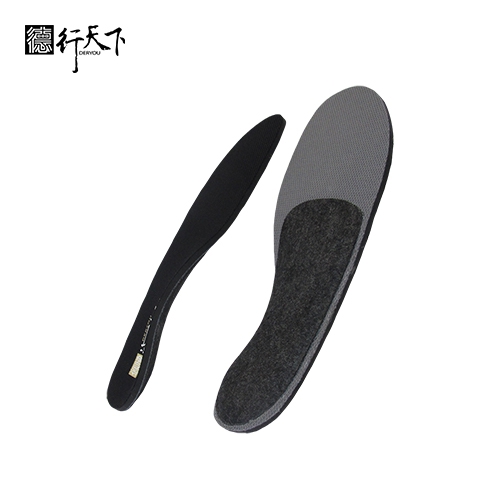
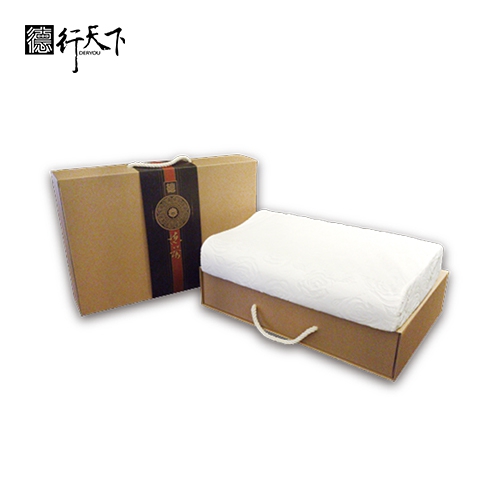
At GuangXin Industrial, our core strength lies in our deep expertise and versatility in insole and pillow manufacturing. We specialize in working with a wide range of materials, including PU (polyurethane), natural latex, and advanced graphene composites, to develop insoles and pillows that meet diverse performance, comfort, and health-support needs.
Whether it's cushioning, support, breathability, or antibacterial function, we tailor material selection to the exact requirements of each project-whether for foot wellness or ergonomic sleep products.
We provide end-to-end manufacturing capabilities under one roof—covering every stage from material sourcing and foaming, to precision molding, lamination, cutting, sewing, and strict quality control. This full-process control not only ensures product consistency and durability, but also allows for faster lead times and better customization flexibility.
With our flexible production capacity, we accommodate both small batch custom orders and high-volume mass production with equal efficiency. Whether you're a startup launching your first insole or pillow line, or a global brand scaling up to meet market demand, GuangXin is equipped to deliver reliable OEM/ODM solutions that grow with your business.
Customization & OEM/ODM Flexibility
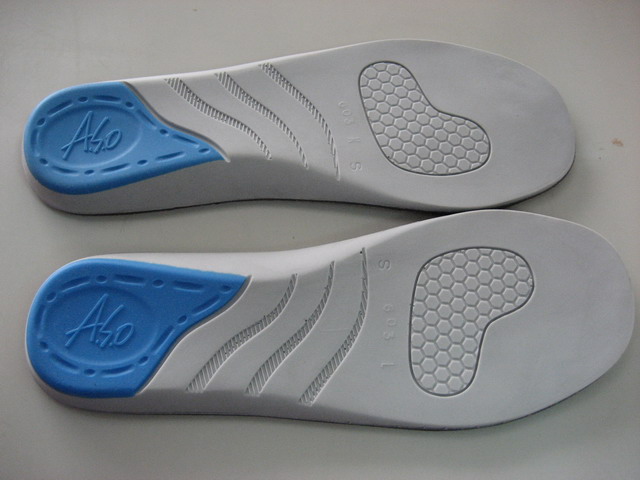
GuangXin offers exceptional flexibility in customization and OEM/ODM services, empowering our partners to create insole products that truly align with their brand identity and target market. We develop insoles tailored to specific foot shapes, end-user needs, and regional market preferences, ensuring optimal fit and functionality.
Our team supports comprehensive branding solutions, including logo printing, custom packaging, and product integration support for marketing campaigns. Whether you're launching a new product line or upgrading an existing one, we help your vision come to life with attention to detail and consistent brand presentation.
With fast prototyping services and efficient lead times, GuangXin helps reduce your time-to-market and respond quickly to evolving trends or seasonal demands. From concept to final production, we offer agile support that keeps you ahead of the competition.
Quality Assurance & Certifications
Quality is at the heart of everything we do. GuangXin implements a rigorous quality control system at every stage of production—ensuring that each insole meets the highest standards of consistency, comfort, and durability.
We provide a variety of in-house and third-party testing options, including antibacterial performance, odor control, durability testing, and eco-safety verification, to meet the specific needs of our clients and markets.
Our products are fully compliant with international safety and environmental standards, such as REACH, RoHS, and other applicable export regulations. This ensures seamless entry into global markets while supporting your ESG and product safety commitments.
ESG-Oriented Sustainable Production
At GuangXin Industrial, we are committed to integrating ESG (Environmental, Social, and Governance) values into every step of our manufacturing process. We actively pursue eco-conscious practices by utilizing eco-friendly materials and adopting low-carbon production methods to reduce environmental impact.
To support circular economy goals, we offer recycled and upcycled material options, including innovative applications such as recycled glass and repurposed LCD panel glass. These materials are processed using advanced techniques to retain performance while reducing waste—contributing to a more sustainable supply chain.
We also work closely with our partners to support their ESG compliance and sustainability reporting needs, providing documentation, traceability, and material data upon request. Whether you're aiming to meet corporate sustainability targets or align with global green regulations, GuangXin is your trusted manufacturing ally in building a better, greener future.
Let’s Build Your Next Insole Success Together
Looking for a reliable insole manufacturing partner that understands customization, quality, and flexibility? GuangXin Industrial Co., Ltd. specializes in high-performance insole production, offering tailored solutions for brands across the globe. Whether you're launching a new insole collection or expanding your existing product line, we provide OEM/ODM services built around your unique design and performance goals.
From small-batch custom orders to full-scale mass production, our flexible insole manufacturing capabilities adapt to your business needs. With expertise in PU, latex, and graphene insole materials, we turn ideas into functional, comfortable, and market-ready insoles that deliver value.
Contact us today to discuss your next insole project. Let GuangXin help you create custom insoles that stand out, perform better, and reflect your brand’s commitment to comfort, quality, and sustainability.
🔗 Learn more or get in touch:
🌐 Website: https://www.deryou-tw.com/
📧 Email: shela.a9119@msa.hinet.net
📘 Facebook: facebook.com/deryou.tw
📷 Instagram: instagram.com/deryou.tw
Indonesia high-end foam product OEM/ODM
Are you looking for a trusted and experienced manufacturing partner that can bring your comfort-focused product ideas to life? GuangXin Industrial Co., Ltd. is your ideal OEM/ODM supplier, specializing in insole production, pillow manufacturing, and advanced graphene product design.
With decades of experience in insole OEM/ODM, we provide full-service manufacturing—from PU and latex to cutting-edge graphene-infused insoles—customized to meet your performance, support, and breathability requirements. Our production process is vertically integrated, covering everything from material sourcing and foaming to molding, cutting, and strict quality control.Eco-friendly pillow OEM manufacturer Thailand
Beyond insoles, GuangXin also offers pillow OEM/ODM services with a focus on ergonomic comfort and functional innovation. Whether you need memory foam, latex, or smart material integration for neck and sleep support, we deliver tailor-made solutions that reflect your brand’s values.
We are especially proud to lead the way in ESG-driven insole development. Through the use of recycled materials—such as repurposed LCD glass—and low-carbon production processes, we help our partners meet sustainability goals without compromising product quality. Our ESG insole solutions are designed not only for comfort but also for compliance with global environmental standards.Private label insole and pillow OEM production factory
At GuangXin, we don’t just manufacture products—we create long-term value for your brand. Whether you're developing your first product line or scaling up globally, our flexible production capabilities and collaborative approach will help you go further, faster.Arch support insole OEM from China
📩 Contact us today to learn how our insole OEM, pillow ODM, and graphene product design services can elevate your product offering—while aligning with the sustainability expectations of modern consumers.Breathable insole ODM development Indonesia
Scientists have discovered that a hunger hormone in the gut directly influences the brain’s hippocampus, affecting decision-making related to food. The study, conducted on mice, showed that hunger hormones modify brain activity to either inhibit or permit eating based on the animal’s hunger level. Researchers have found that hunger hormones in the gut directly affect the brain’s hippocampus, influencing eating decisions. This discovery, made through a study on mice, shows how the brain regulates eating based on hunger levels and could have implications for understanding and treating eating disorders. A hunger hormone produced in the gut can directly impact a decision-making part of the brain in order to drive an animal’s behavior, finds a new study by UCL (University College London) researchers. The study in mice, published in the journal Neuron, is the first to show how hunger hormones can directly impact activity of the brain’s hippocampus when an animal is considering food. Study Findings and Implications Lead author Dr. Andrew MacAskill (UCL Neuroscience, Physiology & Pharmacology) said: “We all know our decisions can be deeply influenced by our hunger, as food has a different meaning depending on whether we are hungry or full. Just think of how much you might buy when grocery shopping on an empty stomach. But what may seem like a simple concept is actually very complicated in reality; it requires the ability to use what’s called ‘contextual learning’. “We found that a part of the brain that is crucial for decision-making is surprisingly sensitive to the levels of hunger hormones produced in our gut, which we believe is helping our brains to contextualize our eating choices.” For the study, the researchers put mice in an arena that had some food, and looked at how the mice acted when they were hungry or full, while imaging their brains in real time to investigate neural activity. All of the mice spent time investigating the food, but only the hungry animals would then begin eating. The researchers were focusing on brain activity in the ventral hippocampus (the underside of the hippocampus), a decision-making part of the brain that is understood to help us form and use memories to guide our behavior. The scientists found that activity in a subset of brain cells in the ventral hippocampus increased when animals approached food, and this activity inhibited the animal from eating. But if the mouse was hungry, there was less neural activity in this area, so the hippocampus no longer stopped the animal from eating. The researchers found this corresponded to high levels of the hunger hormone ghrelin circulating in the blood. Experimental Insights and Broader Implications Adding further clarity, the UCL researchers were able to experimentally make mice behave as if they were full, by activating these ventral hippocampal neurons, leading animals to stop eating even if they were hungry. The scientists achieved this result again by removing the receptors for the hunger hormone ghrelin from these neurons. Prior studies have shown that the hippocampus of animals, including non-human primates, has receptors for ghrelin, but there was scant evidence for how these receptors work. This finding has demonstrated how ghrelin receptors in the brain are put to use, showing the hunger hormone can cross the blood-brain barrier (which strictly restricts many substances in the blood from reaching the brain) and directly impact the brain to drive activity, controlling a circuit in the brain that is likely to be the same or similar in humans. Future Research Directions Dr. MacAskill added: “It appears that the hippocampus puts the brakes on an animal’s instinct to eat when it encounters food, to ensure that the animal does not overeat – but if the animal is indeed hungry, hormones will direct the brain to switch off the brakes, so the animal goes ahead and begins eating.” The scientists are continuing their research by investigating whether hunger can impact learning or memory, by seeing if mice perform non-food-specific tasks differently depending on how hungry they are. They say additional research might also shed light on whether there are similar mechanisms at play for stress or thirst. The researchers hope their findings could contribute to research into the mechanisms of eating disorders, to see if ghrelin receptors in the hippocampus might be implicated, as well as with other links between diet and other health outcomes such as risk of mental illnesses. First author Dr. Ryan Wee (UCL Neuroscience, Physiology & Pharmacology) said: “Being able to make decisions based on how hungry we are is very important. If this goes wrong it can lead to serious health problems. We hope that by improving our understanding of how this works in the brain, we might be able to aid in the prevention and treatment of eating disorders.” Reference: “Internal-state-dependent control of feeding behavior via hippocampal ghrelin signaling” by Ryan W.S. Wee, Karyna Mishchanchuk, Rawan AlSubaie, Timothy W. Church, Matthew G. Gold and Andrew F. MacAskill, 16 November 2023, Neuron. DOI: 10.1016/j.neuron.2023.10.016
Phytoplasma effector SAP05 induces witches’ broom in Arabidopsis. Credit: John Innes Centre Zombie plants, witches’ brooms and the curse that might contain a cure. A newly discovered manipulation mechanism used by parasitic bacteria to slow down plant aging, may offer new ways to protect disease-threatened food crops. Parasites manipulate the organisms they live off to suit their needs, sometimes in drastic ways. When under the spell of a parasite, some plants undergo such extensive changes that they are described as “zombies”. They stop reproducing and serve only as a habitat and host for the parasitic pathogens. Until now, there’s been little understanding of how this happens on a molecular and mechanistic level. Research from the Hogenhout group at the John Innes Centre and collaborators published in Cell, has identified a manipulation molecule produced by Phytoplasma bacteria to hijack plant development. When inside a plant, this protein causes key growth regulators to be broken down, triggering abnormal growth. Phytoplasma bacteria belong to a group of microbes that are notorious for their ability to reprogram the development of their host plants. This group of bacteria are often responsible for the ‘witches’ brooms’ seen in trees, where an excessive number of branches grow close together. These bushy outgrowths are the result of the plant being stuck in a vegetative “zombie” state, unable to reproduce, and therefore progress to a ‘forever young’ status. Phytoplasma bacteria can also cause devastating crop disease, such as Aster Yellows which causes significant yield losses in both grain and leaf crops like lettuce, carrots, and cereals. Professor Saskia Hogenhout, corresponding author of the study said: “Phytoplasmas are a spectacular example of how the reach of genes can extend beyond the organisms to impact surrounding environments. “Our findings cast new light on a molecular mechanism behind this extended phenotype in a way that could help solve a major problem for food production. We highlight a promising strategy for engineering plants to achieve a level of durable resistance of crops to phytoplasmas.” The new findings show how the bacterial protein known as SAP05 manipulates plants by taking advantage of some of the host’s own molecular machinery. This machinery, called the proteasome, usually breaks down proteins that are no longer needed inside plant cells. SAP05 hijacks this process, causing plant proteins that are important in regulating growth and development, to effectively be thrown in a molecular recycling center. Without these proteins, the plant’s development is reprogrammed to favor the bacteria, triggering the growth of multiple vegetative shoots and tissues and putting the pause on the plant aging. Through genetic and biochemical experiments on the model plant Arabidopsis thaliana, the team uncovered in detail the role of SAP05. Interestingly, SAP05 binds directly to both the plant developmental proteins and the proteasome. The direct binding is a newly discovered way to degrade proteins. Usually, proteins that are degraded by the proteasome are tagged with a molecule called ubiquitin beforehand, but this is not the case here. The plant developmental proteins that are targeted by SAP05 are similar to proteins also found in animals. The team were curious to see if SAP05 therefore also affects the insects that carry the bacteria from plant to plant. They found that the structure of these host proteins in animals differ enough that they do not interact with SAP05, and so it does not affect the insects. However, this investigation allowed the team to pinpoint just two amino acids in the proteasome unit that are needed to interact with SAP05. Their research showed that if the plant proteins are switched to have the two amino acids found in the insect protein instead, they are no longer degraded by SAP05, preventing the ‘witches’ broom’ abnormal growth. This finding offers the possibility of tweaking just these two amino acids in crops, for example using gene-editing technologies, to provide durable resilience to phytoplasmas and the effects of SAP05. Reference: “Parasitic modulation of host development by ubiquitin-independent protein degradation” by Weijie Huang, Allyson M. MacLean, Akiko Sugio, Abbas Maqbool, Marco Busscher, Shu-Ting Cho, Sophien Kamoun, Chih-Horng Kuo, Richard G.H. Immink and Saskia A. Hogenhout, 17 September 2021, Cell. DOI: 10.1016/j.cell.2021.08.029
Montana State University scientists discovered novel methane-producing microbes in Yellowstone. This breakthrough broadens our grasp of life in extreme conditions and offers new avenues for climate change mitigation. Credit: Roland Hatzenpichler Montana State University scientists have discovered two new methane-producing microbial groups in Yellowstone National Park, revealing potential new approaches to climate change mitigation and insights into extraterrestrial life. Scientists from Montana State University have provided the first experimental evidence that two newly discovered groups of microbes in Yellowstone National Park’s thermal features produce methane. This groundbreaking discovery could one day help develop methods to mitigate climate change and offer insights into potential life elsewhere in our solar system. The journal Nature published the findings from the laboratory of Roland Hatzenpichler, associate professor in MSU’s Department of Chemistry and Biochemistry in the College of Letters and Science and associate director of the university’s Thermal Biology Institute. The two scientific papers describe the MSU researchers’ verification of the first known examples of single-celled organisms that produce methane to exist outside the lineage Euryarchaeota, which is part of the larger branch of the tree of life called Archaea. Alison Harmon, MSU’s vice president for research and economic development, said she is excited that the findings with such far-reaching potential impact are receiving the attention they deserve. “It’s a significant achievement for Montana State University to have not one but two papers published in one of the world’s leading scientific journals,” Harmon said. The methane-producing single-celled organisms are called methanogens. While humans and other animals eat food, breathe oxygen, and exhale carbon dioxide to survive, methanogens eat small molecules like carbon dioxide or methanol and exhale methane. Most methanogens are strict anaerobes, meaning they cannot survive in the presence of oxygen. Scientists have known since the 1930s that many anaerobic organisms within the archaea are methanogens, and for decades they believed that all methanogens were in a single phylum: the Euryarchaeota. But about 10 years ago, microbes with genes for methanogenesis began to be discovered in other phyla, including one called Thermoproteota. That phylum contains two microbial groups called Methanomethylicia and Methanodesulfokora. “All we knew about these organisms was their DNA,” Hatzenpichler said. “No one had ever seen a cell of these supposed methanogens; no one knew if they actually used their methanogenesis genes or if they were growing by some other means. Experimental Confirmation and Methane Production Hatzenpichler and his researchers set out to test whether the organisms were living by methanogenesis, basing their work on the results of a study published last year by one of his former graduate students at MSU, Mackenzie Lynes. Samples were harvested from sediments in Yellowstone National Park hot springs ranging in temperature from 141 to 161 degrees Fahrenheit (61–72 degrees Celsius). Through what Hatzenpichler described as “painstaking work,” MSU doctoral student Anthony Kohtz and postdoctoral researcher Viola Krukenberg grew the Yellowstone microbes in the lab. The microbes not only survived but thrived – and they produced methane. The team then worked to characterize the biology of the new microbes, involving staff scientist Zackary Jay and others at ETH Zurich. At the same time, a research group led by Lei Cheng from China’s Biogas Institute of the Ministry of Agriculture and Rural Affairs and Diana Sousa from Wageningen University in the Netherlands successfully grew another one of these novel methanogens, a project they had worked on for six years. “Until our studies, no experimental work had been done on these microbes, aside from DNA sequencing,” said Hatzenpichler. He said Cheng and Sousa offered to submit the studies together for publication, and Cheng’s paper reporting the isolation of another member of Methanomethylicia was published jointly with the two Hatzenpichler lab studies. While one of the newly identified groups of methanogens, Methanodesulfokora, seems to be confined to hot springs and deep-sea hydrothermal vents, Methanomethylicia, are widespread, Hatzenpichler said. They are sometimes found in wastewater treatment plants and the digestive tracts of ruminant animals and in marine sediments, soils, and wetlands. Hatzenpichler said that’s significant because methanogens produce 70% of the world’s methane, a gas 28 times more potent than carbon dioxide in trapping heat in the atmosphere, according to the U.S. Environmental Protection Agency. “Methane levels are increasing at a much higher rate than carbon dioxide, and humans are pumping methane at a higher rate into the atmosphere than ever before,” he said. Hatzenpichler said that while the experiments answered an important question, they generated many more that will fuel future work. For example, scientists don’t yet know whether Methanomethylicia that live in non-extreme environments rely on methanogenesis to grow or if they grow by other means. “My best bet is that they sometimes grow by making methane, and sometimes they do something else entirely, but we don’t know when they grow, or how, or why,” Hatzenpichler said. “We now need to find out when they contribute to methane cycling and when not.” Whereas most methanogens within the Euryarchaeota use CO2 or acetate to make methane, Methanomethylicia and Methanodesulfokora use compounds such as methanol. This property could help scientists learn how to alter conditions in the different environments where they are found so that less methane is emitted into the atmosphere, Hatzenpichler said. Future Research Directions and Methanogens’ Unique Traits His lab will begin collaborating this fall with MSU’s Bozeman Agricultural Research and Teaching Farm, which will provide samples for further research into the methanogens found in cattle. In addition, new graduate students joining Hatzenpichler’s lab in the fall will determine whether the newly found archaea produce methane in wastewater, soils, and wetlands. Methanomethylicia also have a fascinating cell architecture, Hatzenpichler said. He collaborated with two scientists at ETH Zurich, Martin Pilhofer and graduate student Nickolai Petrosian, to show that the microbe forms previously unknown cell-to-cell tubes that connect two or three cells with each other. “We have no idea why they are forming them. Structures like these have rarely been seen in microbes. Maybe they exchange DNA; maybe they exchange chemicals. We don’t know yet,” said Hatzenpichler. The newly published research was funded by NASA’s exobiology program. NASA is interested in methanogens because they may give insights into life on Earth more than 3 billion years ago and the potential for life on other planets and moons where methane has been detected, he said. Reference: “Cultivation and visualization of a methanogen of the phylum Thermoproteota” by Anthony J. Kohtz, Nikolai Petrosian, Viola Krukenberg, Zackary J. Jay, Martin Pilhofer and Roland Hatzenpichler, 24 July 2024, Nature. DOI: 10.1038/s41586-024-07631-6 Hatzenpichler has discussed the results of the two studies in an online lecture and on a recent Matters Microbial podcast, and produced this infographic on methane cycling. To learn more about his lab visit www.environmental-microbiology.com or send an email to roland.hatzenpichler@montana.edu.
DVDV1551RTWW78V
Graphene sheet OEM supplier Taiwan 》tailored support for growing product linesTaiwan graphene material ODM factory 》expert-level OEM/ODM to support product innovationEco-friendly pillow OEM manufacturer Vietnam 》experience-driven OEM/ODM for thoughtful product design
下一則: Flexible manufacturing OEM & ODM China 》offering f
限會員,要發表迴響,請先登入


