Introduction – Company Background
GuangXin Industrial Co., Ltd. is a specialized manufacturer dedicated to the development and production of high-quality insoles.
With a strong foundation in material science and footwear ergonomics, we serve as a trusted partner for global brands seeking reliable insole solutions that combine comfort, functionality, and design.
With years of experience in insole production and OEM/ODM services, GuangXin has successfully supported a wide range of clients across various industries—including sportswear, health & wellness, orthopedic care, and daily footwear.
From initial prototyping to mass production, we provide comprehensive support tailored to each client’s market and application needs.
At GuangXin, we are committed to quality, innovation, and sustainable development. Every insole we produce reflects our dedication to precision craftsmanship, forward-thinking design, and ESG-driven practices.
By integrating eco-friendly materials, clean production processes, and responsible sourcing, we help our partners meet both market demand and environmental goals.


Core Strengths in Insole Manufacturing
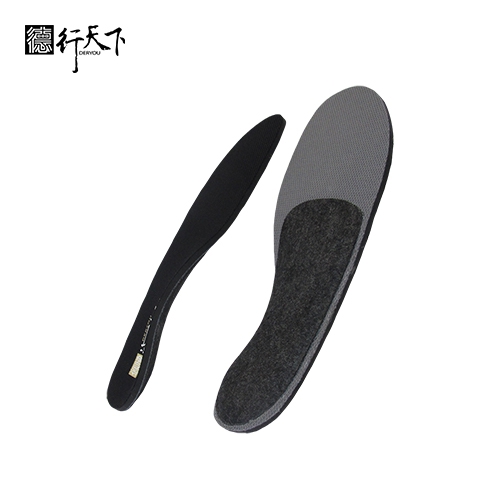
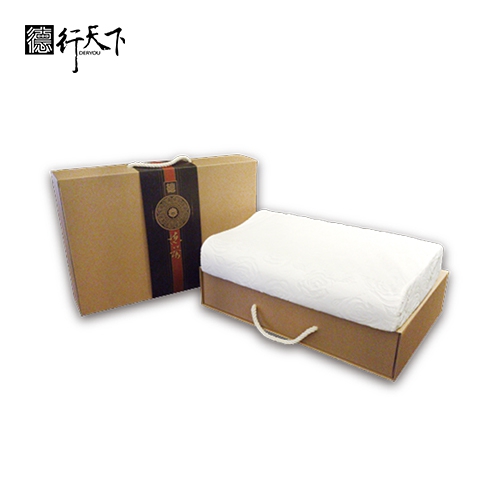
At GuangXin Industrial, our core strength lies in our deep expertise and versatility in insole and pillow manufacturing. We specialize in working with a wide range of materials, including PU (polyurethane), natural latex, and advanced graphene composites, to develop insoles and pillows that meet diverse performance, comfort, and health-support needs.
Whether it's cushioning, support, breathability, or antibacterial function, we tailor material selection to the exact requirements of each project-whether for foot wellness or ergonomic sleep products.
We provide end-to-end manufacturing capabilities under one roof—covering every stage from material sourcing and foaming, to precision molding, lamination, cutting, sewing, and strict quality control. This full-process control not only ensures product consistency and durability, but also allows for faster lead times and better customization flexibility.
With our flexible production capacity, we accommodate both small batch custom orders and high-volume mass production with equal efficiency. Whether you're a startup launching your first insole or pillow line, or a global brand scaling up to meet market demand, GuangXin is equipped to deliver reliable OEM/ODM solutions that grow with your business.
Customization & OEM/ODM Flexibility
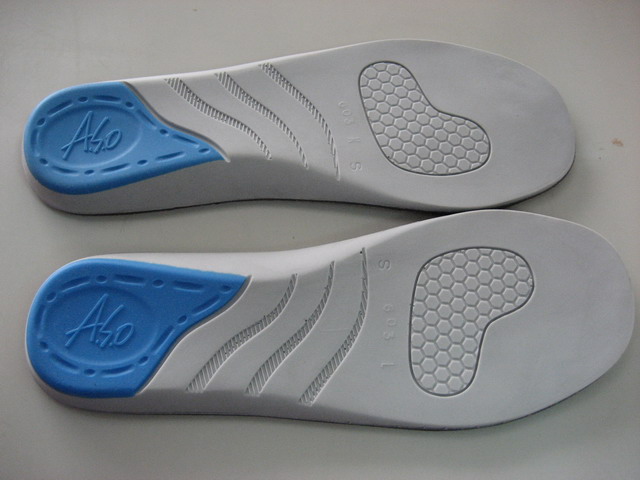
GuangXin offers exceptional flexibility in customization and OEM/ODM services, empowering our partners to create insole products that truly align with their brand identity and target market. We develop insoles tailored to specific foot shapes, end-user needs, and regional market preferences, ensuring optimal fit and functionality.
Our team supports comprehensive branding solutions, including logo printing, custom packaging, and product integration support for marketing campaigns. Whether you're launching a new product line or upgrading an existing one, we help your vision come to life with attention to detail and consistent brand presentation.
With fast prototyping services and efficient lead times, GuangXin helps reduce your time-to-market and respond quickly to evolving trends or seasonal demands. From concept to final production, we offer agile support that keeps you ahead of the competition.
Quality Assurance & Certifications
Quality is at the heart of everything we do. GuangXin implements a rigorous quality control system at every stage of production—ensuring that each insole meets the highest standards of consistency, comfort, and durability.
We provide a variety of in-house and third-party testing options, including antibacterial performance, odor control, durability testing, and eco-safety verification, to meet the specific needs of our clients and markets.
Our products are fully compliant with international safety and environmental standards, such as REACH, RoHS, and other applicable export regulations. This ensures seamless entry into global markets while supporting your ESG and product safety commitments.
ESG-Oriented Sustainable Production
At GuangXin Industrial, we are committed to integrating ESG (Environmental, Social, and Governance) values into every step of our manufacturing process. We actively pursue eco-conscious practices by utilizing eco-friendly materials and adopting low-carbon production methods to reduce environmental impact.
To support circular economy goals, we offer recycled and upcycled material options, including innovative applications such as recycled glass and repurposed LCD panel glass. These materials are processed using advanced techniques to retain performance while reducing waste—contributing to a more sustainable supply chain.
We also work closely with our partners to support their ESG compliance and sustainability reporting needs, providing documentation, traceability, and material data upon request. Whether you're aiming to meet corporate sustainability targets or align with global green regulations, GuangXin is your trusted manufacturing ally in building a better, greener future.
Let’s Build Your Next Insole Success Together
Looking for a reliable insole manufacturing partner that understands customization, quality, and flexibility? GuangXin Industrial Co., Ltd. specializes in high-performance insole production, offering tailored solutions for brands across the globe. Whether you're launching a new insole collection or expanding your existing product line, we provide OEM/ODM services built around your unique design and performance goals.
From small-batch custom orders to full-scale mass production, our flexible insole manufacturing capabilities adapt to your business needs. With expertise in PU, latex, and graphene insole materials, we turn ideas into functional, comfortable, and market-ready insoles that deliver value.
Contact us today to discuss your next insole project. Let GuangXin help you create custom insoles that stand out, perform better, and reflect your brand’s commitment to comfort, quality, and sustainability.
🔗 Learn more or get in touch:
🌐 Website: https://www.deryou-tw.com/
📧 Email: shela.a9119@msa.hinet.net
📘 Facebook: facebook.com/deryou.tw
📷 Instagram: instagram.com/deryou.tw
Taiwan OEM/ODM hybrid insole services
Are you looking for a trusted and experienced manufacturing partner that can bring your comfort-focused product ideas to life? GuangXin Industrial Co., Ltd. is your ideal OEM/ODM supplier, specializing in insole production, pillow manufacturing, and advanced graphene product design.
With decades of experience in insole OEM/ODM, we provide full-service manufacturing—from PU and latex to cutting-edge graphene-infused insoles—customized to meet your performance, support, and breathability requirements. Our production process is vertically integrated, covering everything from material sourcing and foaming to molding, cutting, and strict quality control.Vietnam custom neck pillow ODM
Beyond insoles, GuangXin also offers pillow OEM/ODM services with a focus on ergonomic comfort and functional innovation. Whether you need memory foam, latex, or smart material integration for neck and sleep support, we deliver tailor-made solutions that reflect your brand’s values.
We are especially proud to lead the way in ESG-driven insole development. Through the use of recycled materials—such as repurposed LCD glass—and low-carbon production processes, we help our partners meet sustainability goals without compromising product quality. Our ESG insole solutions are designed not only for comfort but also for compliance with global environmental standards.Ergonomic insole ODM production factory Taiwan
At GuangXin, we don’t just manufacture products—we create long-term value for your brand. Whether you're developing your first product line or scaling up globally, our flexible production capabilities and collaborative approach will help you go further, faster.Indonesia custom neck pillow ODM
📩 Contact us today to learn how our insole OEM, pillow ODM, and graphene product design services can elevate your product offering—while aligning with the sustainability expectations of modern consumers.Pillow OEM for wellness brands Thailand
A person who has reached 100 years old is referred to as a centenarian. Centenarians’ offspring have genetic expression patterns similar to centenarians and are less frail. Children of centenarians have a unique genetic profile that may account for why they are less frail than children of non-centenarians of the same age. This is the main conclusion of research conducted by the Health Research Institute (INCLIVA), the University of Valencia (UV), and the Spanish CIBER Consortium on Frailty and Healthy Ageing (CIBERFES), which was published in The Journals of Gerontology. Centenarians exhibit extreme longevity and compression of morbidity and have a unique genetic signature, and their offspring seem to inherit their compression of morbidity, as measured by lower rates of age-related pathologies. The aim therefore of the work carried out by the team headed by José Viña has been to determine if the offspring of centenarians are less frail and if a “centenarian genetic footprint” exists. Consuelo Borrás, study coordinator and CIBERFES researcher; José Viña, head of the CIBERFES group, principal investigator of the INCLIVA Ageing and Exercise Research Group, and professor of the University of Valencia. Credit: CIBERFES In order to do this, a sample of 63 centenarians, 88 of their descendants, and 88 offspring of non-centenarians were taken from a health service area close to Valencia. Participants had to be between the ages of 65 and 80, have alive parents who were over 97, and be free of terminal diseases in order to participate in the research. The Fried Frailty Criteria, which defines a person as frail if they exhibit unintended weight loss, tiredness, weakness (grip strength), poor walking speed, and low physical activity, was used to determine the level of frailty. Reduced Frailty in Centenarians’ Offspring According to one of the study coordinators Consuelo Borrás: “Our findings show that the offspring of centenarians are less frail than their age-matched offspring of non-centenarians. We also collected plasma and peripheral blood mononuclear cells from the sampled individuals and found that the gene expression patterns (miRNA and mRNA) of the offspring of centenarians were more similar to the patterns found in centenarians than in those of offspring of the non-centenarians, despite having the same age.” The researchers conclude that this means the descendants of centenarians are less frail than the age-matched descendants of non-centenarians, “and this can be explained by their unique genetic endowment.” This study, a pioneer in comparing functional profiles (states of frailty) and genetic profiles (miRNA and mRNA expression patterns) of the offspring of centenarians and non-centenarians reinforces, according to José Viña “the idea that the former are genetically different from their peers and resemble the unique genetic characteristics of centenarians, so our results may help to further progress in identifying key genetic and functional characteristics that can be considered biomarkers of successful aging.” Centenarians Are an Example of Successful Aging The over-60s age group is growing faster than any other as a result of greater life expectancy and lower birth rates. Much research in this area has focused on increasing the number of years of disability-free life expectancy (useful life), frequently called “successful aging”. Centenarians are considered model cases of this “successful aging”, as they appear to largely avert or delay the onset of age-related diseases or geriatric syndromes, thus exhibiting a decelerated aging trajectory. Reference: “Functional Transcriptomic Analysis of Centenarians’ Offspring Reveals a Specific Genetic Footprint That May Explain That They Are Less Frail Than Age-Matched Noncentenarians’ Offspring” by Marta Inglés, Ph.D.; Angel Belenguer-Varea, MD, Ph.D.; Eva Serna, Ph.D.; Cristina Mas-Bargues, Ph.D.; Francisco J Tarazona-Santabalbina, MD, Ph.D.; Consuelo Borrás, Ph.D. and Jose Vina, MD, Ph.D., 28 May 2022, The Journals of Gerontology Series A. DOI: 10.1093/gerona/glac119
A representation of a neural network provides a backdrop to a fish larva’s beating heart. Credit: Tobias Wuestefeld Machine learning helps some of the best microscopes to see better, work faster, and process more data. To observe the swift neuronal signals in a fish brain, scientists have started to use a technique called light-field microscopy, which makes it possible to image such fast biological processes in 3D. But the images are often lacking in quality, and it takes hours or days for massive amounts of data to be converted into 3D volumes and movies. Now, European Molecular Biology Laboratory (EMBL) scientists have combined artificial intelligence (AI) algorithms with two cutting-edge microscopy techniques — an advance that shortens the time for image processing from days to mere seconds, while ensuring that the resulting images are crisp and accurate. The findings are published in Nature Methods. “Ultimately, we were able to take ‘the best of both worlds’ in this approach,” says Nils Wagner, one of the paper’s two lead authors and now a PhD student at the Technical University of Munich. “AI enabled us to combine different microscopy techniques, so that we could image as fast as light-field microscopy allows and get close to the image resolution of light-sheet microscopy.” Although light-sheet microscopy and light-field microscopy sound similar, these techniques have different advantages and challenges. Light-field microscopy captures large 3D images that allow researchers to track and measure remarkably fine movements, such as a fish larva’s beating heart, at very high speeds. But this technique produces massive amounts of data, which can take days to process, and the final images usually lack resolution. Light-sheet microscopy homes in on a single 2D plane of a given sample at one time, so researchers can image samples at higher resolution. Compared with light-field microscopy, light-sheet microscopy produces images that are quicker to process, but the data are not as comprehensive, since they only capture information from a single 2D plane at a time. To take advantage of the benefits of each technique, EMBL researchers developed an approach that uses light-field microscopy to image large 3D samples and light-sheet microscopy to train the AI algorithms, which then create an accurate 3D picture of the sample. “If you build algorithms that produce an image, you need to check that these algorithms are constructing the right image,” explains Anna Kreshuk, the EMBL group leader whose team brought machine learning expertise to the project. In the new study, the researchers used light-sheet microscopy to make sure the AI algorithms were working, Anna says. “This makes our research stand out from what has been done in the past.” Robert Prevedel, the EMBL group leader whose group contributed the novel hybrid microscopy platform, notes that the real bottleneck in building better microscopes often isn’t optics technology, but computation. That’s why, back in 2018, he and Anna decided to join forces. “Our method will be really key for people who want to study how brains compute. Our method can image an entire brain of a fish larva, in real time,” Robert says. He and Anna say this approach could potentially be modified to work with different types of microscopes too, eventually allowing biologists to look at dozens of different specimens and see much more, much faster. For example, it could help to find genes that are involved in heart development, or could measure the activity of thousands of neurons at the same time. Next, the researchers plan to explore whether the method can be applied to larger species, including mammals. Reference: “Deep learning-enhanced light-field imaging with continuous validation” by Nils Wagner, Fynn Beuttenmueller, Nils Norlin, Jakob Gierten, Juan Carlos Boffi, Joachim Wittbrodt, Martin Weigert, Lars Hufnagel, Robert Prevedel and Anna Kreshuk, 7 May 2021, Nature Methods. DOI: 10.1038/s41592-021-01136-0 Study co-lead author Fynn Beuttenmüller, a PhD student in the Kreshuk group at EMBL Heidelberg, has no doubts about the power of AI. “Computational methods will continue to bring exciting advances to microscopy.”
Researchers unravel the reason behind neurons consuming substantial energy even during periods of rest. Pound for pound, the brain consumes vastly more energy than other organs, and, puzzlingly, it remains a fuel-guzzler even when its neurons are not firing signals called neurotransmitters to each other. Now researchers at Weill Cornell Medicine have found that the process of packaging neurotransmitters may be responsible for this energy drain. In their study, reported today (December 3, 2021) in Science Advances, they identified tiny capsules called synaptic vesicles as a major source of energy consumption in inactive neurons. Neurons use these vesicles as containers for their neurotransmitter molecules, which they fire from communications ports called synaptic terminals to signal to other neurons. Packing neurotransmitters into vesicles is a process that consumes chemical energy, and the researchers found that this process, energy-wise, is inherently leaky—so leaky that it continues to consume significant energy even when the vesicles are filled and synaptic terminals are inactive. “These findings help us understand better why the human brain is so vulnerable to the interruption or weakening of its fuel supply,” said senior author Dr. Timothy Ryan, a professor of biochemistry and of biochemistry in anesthesiology at Weill Cornell Medicine. The observation that the brain consumes a high amount of energy, even when relatively at rest, dates back several decades to studies of the brain’s fuel use in comatose and vegetative states. Those studies found that even in these profoundly inactive states, the brain’s consumption of glucose typically drops from normal by only about half—which still leaves the brain as a high-energy consumer relative to other organs. The sources of that resting energy drain have never been fully understood. Dr. Ryan and his laboratory have shown in recent years that neurons’ synaptic terminals, bud-like growths from which they fire neurotransmitters, are major consumers of energy when active, and are very sensitive to any disruption of their fuel supply. In the new study they examined fuel use in synaptic terminals when inactive, and found that it is still high. This high resting fuel consumption, they discovered, is accounted for largely by the pool of vesicles at synaptic terminals. During synaptic inactivity, vesicles are fully loaded with thousands of neurotransmitters each, and are ready to launch these signal-carrying payloads across synapses to partner neurons. Why would a synaptic vesicle consume energy even when fully loaded? The researchers discovered that there is essentially a leakage of energy from the vesicle membrane, a “proton efflux,” such that a special “proton pump” enzyme in the vesicle has to keep working, and consuming fuel as it does so, even when the vesicle is already full of neurotransmitter molecules. The experiments pointed to proteins called transporters as the likely sources of this proton leakage. Transporters normally bring neurotransmitters into vesicles, changing shape to carry the neurotransmitter in, but allowing at the same time for a proton to escape—as they do so. Dr. Ryan speculates that the energy threshold for this transporter shape-shift was set low by evolution to enable faster neurotransmitter reloading during synaptic activity, and thus faster thinking and action. “The downside of a faster loading capability would be that even random thermal fluctuations could trigger the transporter shape-shift, causing this continual energy drain even when no neurotransmitter is being loaded,” he said. Although the leakage per vesicle would be tiny, there are at least hundreds of trillions of synaptic vesicles in the human brain, so the energy drain would really add up, Dr. Ryan said. The finding is a significant advance in understanding the basic biology of the brain. In addition, the vulnerability of the brain to the disruption of its fuel supply is a major problem in neurology, and metabolic deficiencies have been noted in a host of common brain diseases including Alzheimer’s and Parkinson’s disease. This line of investigation ultimately could help solve important medical puzzles and suggest new treatments. “If we had a way to safely lower this energy drain and thus slow brain metabolism, it could be very impactful clinically,” Dr. Ryan said. Reference: “Synaptic vesicle pools are a major hidden resting metabolic burden of nerve terminals” by Camila Pulido and Timothy A. Ryan, 3 December 2021, Science Advances. DOI: 10.1126/sciadv.abi9027
DVDV1551RTWW78V
Graphene cushion OEM factory in Vietnam 》trusted by clients across wellness, footwear, and bedding industriesThailand insole OEM manufacturer 》meeting your quality standards, exceeding your expectationsVietnam insole OEM manufacturer 》built to serve both niche and mass production needs
下一則: Eco-friendly pillow OEM manufacturer China 》seamle
限會員,要發表迴響,請先登入


