Introduction – Company Background
GuangXin Industrial Co., Ltd. is a specialized manufacturer dedicated to the development and production of high-quality insoles.
With a strong foundation in material science and footwear ergonomics, we serve as a trusted partner for global brands seeking reliable insole solutions that combine comfort, functionality, and design.
With years of experience in insole production and OEM/ODM services, GuangXin has successfully supported a wide range of clients across various industries—including sportswear, health & wellness, orthopedic care, and daily footwear.
From initial prototyping to mass production, we provide comprehensive support tailored to each client’s market and application needs.
At GuangXin, we are committed to quality, innovation, and sustainable development. Every insole we produce reflects our dedication to precision craftsmanship, forward-thinking design, and ESG-driven practices.
By integrating eco-friendly materials, clean production processes, and responsible sourcing, we help our partners meet both market demand and environmental goals.
Core Strengths in Insole Manufacturing
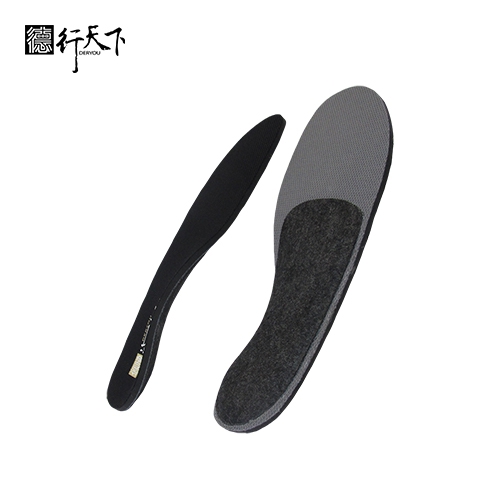
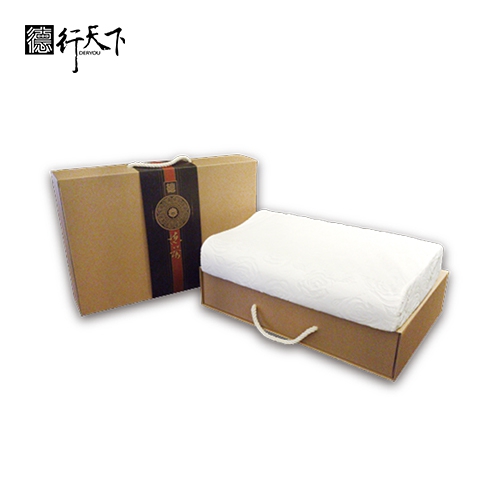
At GuangXin Industrial, our core strength lies in our deep expertise and versatility in insole and pillow manufacturing. We specialize in working with a wide range of materials, including PU (polyurethane), natural latex, and advanced graphene composites, to develop insoles and pillows that meet diverse performance, comfort, and health-support needs.
Whether it's cushioning, support, breathability, or antibacterial function, we tailor material selection to the exact requirements of each project-whether for foot wellness or ergonomic sleep products.
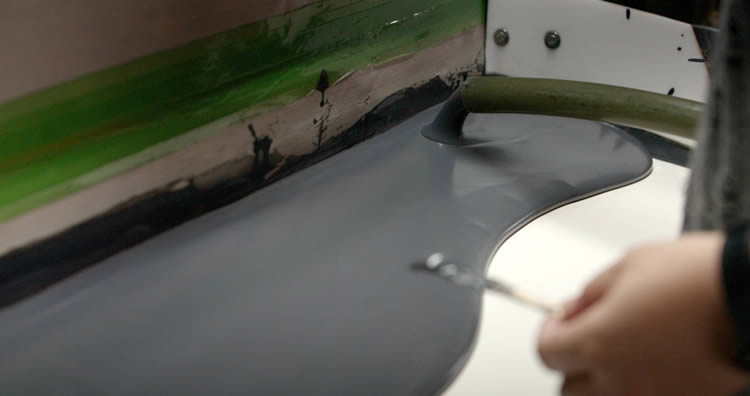
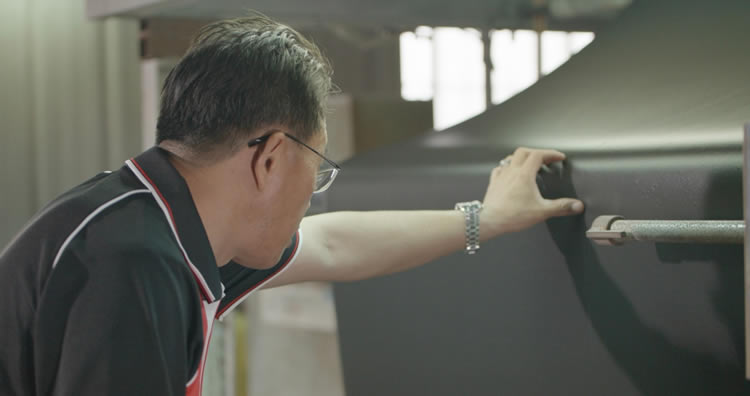
We provide end-to-end manufacturing capabilities under one roof—covering every stage from material sourcing and foaming, to precision molding, lamination, cutting, sewing, and strict quality control. This full-process control not only ensures product consistency and durability, but also allows for faster lead times and better customization flexibility.
With our flexible production capacity, we accommodate both small batch custom orders and high-volume mass production with equal efficiency. Whether you're a startup launching your first insole or pillow line, or a global brand scaling up to meet market demand, GuangXin is equipped to deliver reliable OEM/ODM solutions that grow with your business.
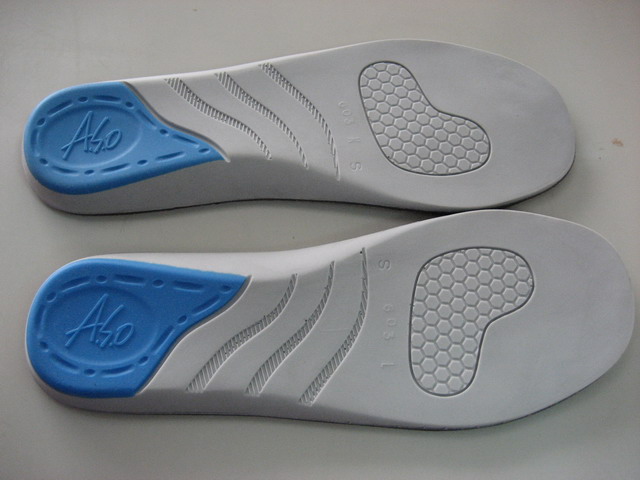
Customization & OEM/ODM Flexibility
GuangXin offers exceptional flexibility in customization and OEM/ODM services, empowering our partners to create insole products that truly align with their brand identity and target market. We develop insoles tailored to specific foot shapes, end-user needs, and regional market preferences, ensuring optimal fit and functionality.
Our team supports comprehensive branding solutions, including logo printing, custom packaging, and product integration support for marketing campaigns. Whether you're launching a new product line or upgrading an existing one, we help your vision come to life with attention to detail and consistent brand presentation.
With fast prototyping services and efficient lead times, GuangXin helps reduce your time-to-market and respond quickly to evolving trends or seasonal demands. From concept to final production, we offer agile support that keeps you ahead of the competition.
Quality Assurance & Certifications
Quality is at the heart of everything we do. GuangXin implements a rigorous quality control system at every stage of production—ensuring that each insole meets the highest standards of consistency, comfort, and durability.
We provide a variety of in-house and third-party testing options, including antibacterial performance, odor control, durability testing, and eco-safety verification, to meet the specific needs of our clients and markets.
Our products are fully compliant with international safety and environmental standards, such as REACH, RoHS, and other applicable export regulations. This ensures seamless entry into global markets while supporting your ESG and product safety commitments.
ESG-Oriented Sustainable Production
At GuangXin Industrial, we are committed to integrating ESG (Environmental, Social, and Governance) values into every step of our manufacturing process. We actively pursue eco-conscious practices by utilizing eco-friendly materials and adopting low-carbon production methods to reduce environmental impact.
To support circular economy goals, we offer recycled and upcycled material options, including innovative applications such as recycled glass and repurposed LCD panel glass. These materials are processed using advanced techniques to retain performance while reducing waste—contributing to a more sustainable supply chain.
We also work closely with our partners to support their ESG compliance and sustainability reporting needs, providing documentation, traceability, and material data upon request. Whether you're aiming to meet corporate sustainability targets or align with global green regulations, GuangXin is your trusted manufacturing ally in building a better, greener future.
Let’s Build Your Next Insole Success Together
Looking for a reliable insole manufacturing partner that understands customization, quality, and flexibility? GuangXin Industrial Co., Ltd. specializes in high-performance insole production, offering tailored solutions for brands across the globe. Whether you're launching a new insole collection or expanding your existing product line, we provide OEM/ODM services built around your unique design and performance goals.
From small-batch custom orders to full-scale mass production, our flexible insole manufacturing capabilities adapt to your business needs. With expertise in PU, latex, and graphene insole materials, we turn ideas into functional, comfortable, and market-ready insoles that deliver value.
Contact us today to discuss your next insole project. Let GuangXin help you create custom insoles that stand out, perform better, and reflect your brand’s commitment to comfort, quality, and sustainability.
🔗 Learn more or get in touch:
🌐 Website: https://www.deryou-tw.com/
📧 Email: shela.a9119@msa.hinet.net
📘 Facebook: facebook.com/deryou.tw
📷 Instagram: instagram.com/deryou.tw
Graphene cushion OEM factory in Taiwan
Are you looking for a trusted and experienced manufacturing partner that can bring your comfort-focused product ideas to life? GuangXin Industrial Co., Ltd. is your ideal OEM/ODM supplier, specializing in insole production, pillow manufacturing, and advanced graphene product design.
With decades of experience in insole OEM/ODM, we provide full-service manufacturing—from PU and latex to cutting-edge graphene-infused insoles—customized to meet your performance, support, and breathability requirements. Our production process is vertically integrated, covering everything from material sourcing and foaming to molding, cutting, and strict quality control.ESG-compliant OEM/ODM production factory in Taiwan
Beyond insoles, GuangXin also offers pillow OEM/ODM services with a focus on ergonomic comfort and functional innovation. Whether you need memory foam, latex, or smart material integration for neck and sleep support, we deliver tailor-made solutions that reflect your brand’s values.
We are especially proud to lead the way in ESG-driven insole development. Through the use of recycled materials—such as repurposed LCD glass—and low-carbon production processes, we help our partners meet sustainability goals without compromising product quality. Our ESG insole solutions are designed not only for comfort but also for compliance with global environmental standards.Taiwan custom neck pillow ODM factory
At GuangXin, we don’t just manufacture products—we create long-term value for your brand. Whether you're developing your first product line or scaling up globally, our flexible production capabilities and collaborative approach will help you go further, faster.Memory foam pillow OEM factory Indonesia
📩 Contact us today to learn how our insole OEM, pillow ODM, and graphene product design services can elevate your product offering—while aligning with the sustainability expectations of modern consumers.Custom foam pillow OEM in Thailand
Researchers at UC San Diego have discovered that differences in autism severity are linked to brain development in the embryo, with larger brain organoids correlating with more severe autism symptoms. This insight into the biological basis of autism could lead to targeted therapies. An unusually large brain may be the first sign of autism — and visible as early as the first trimester, according to a recent study conducted by UCSD. Some children with profound autism face lifelong challenges with social, language, and cognitive skills, including the inability to speak. In contrast, others exhibit milder symptoms that may improve over time. The disparity in outcomes has been a mystery to scientists, until now. A new study, published in Molecular Autism by researchers at the University of California San Diego, is the first to shed light on the matter. Among its findings: The biological basis for these two subtypes of autism spectrum disorder develops in the first weeks and months of embryonic development. Researchers used inducible pluripotent stem cells (iPSCs) derived from blood samples of 10 toddlers with autism and six neurotypical “controls” of the same age. Able to be reprogrammed into any kind of human cell, they used the iPSCs to create brain cortical organoids (BCOs) — models of the brain’s cortex during the first weeks of embryonic development. The veritable “mini-brains” grown from the stem cells of toddlers with autism grew far larger — roughly 40% — than those of neurotypical controls, demonstrating the growth that apparently occurred during each child’s embryonic development. Link Between Brain Overgrowth and Autism Severity “We found the larger the embryonic BCO size, the more severe the child’s later autism social symptoms,” said UC San Diego’s Eric Courchesne, the study’s lead researcher and Co-Director of the Autism Center of Excellence in the neuroscience department. “Toddlers who had profound autism, which is the most severe type of autism, had the largest BCO overgrowth during embryonic development. Those with mild autism social symptoms had only mild overgrowth.” Brain cortical organoids (BCOs) created by Dr. Alysson Muotri shown in a 2019 file photo. Researchers at the University of California San Diego used stem cells from toddlers with autism and created BCOs from them. The stem cells of toddlers with autism developed into larger BCOs, they discovered. Toddlers with autism also had larger brain volumes, according to MRI. Credit: UC San Diego Health Sciences Using brain cortical organoids (BOCs) and comprehensive social brain imaging, social eye tracking and social behavior testing, Courchesne and colleagues discovered that profound autism begins during embryogenesis. The greater the overgrowth of embryonic BCOs, the more severe the autism social symptoms at toddler ages. Toddlers who have profound autism, which is the most severe type of autism, have the most extreme BCO overgrowth during embryonic development. Credit: UC San Diego Health Sciences In remarkable parallel, the more overgrowth a BCO demonstrated, the more overgrowth was found in social regions of the profound autism child’s brain and the lower the child’s attention to social stimuli. These differences were clear when compared against the norms of hundreds and thousands of toddlers studied by the UC San Diego Autism Center of Excellence. What’s more, BCOs from toddlers with profound autism grew too fast as well as too big. “The bigger the brain, the better isn’t necessarily true,” agreed Alysson Muotri, Ph.D., director of the Sanford Stem Cell Institute’s Integrated Space Stem Cell Orbital Research Center at the university. Muotri and Courchesne collaborated on the study, with Muotri contributing his proprietary BCO-development protocol that he recently shared via publication in Nature Protocols, as well as his expertise in BCO measurement. Implications for Therapy and Further Research Because the most important symptoms of profound autism and mild autism are experienced in the social affective and communication domains, but to different degrees of severity, “the differences in the embryonic origins of these two subtypes of autism urgently need to be understood,” Courchesne said. “That understanding can only come from studies like ours, which reveals the underlying neurobiological causes of their social challenges and when they begin.” Brain cortical organoids (BCOs) created by Dr. Alysson Muotri shown in a 2019 file photo. Researchers at the University of California San Diego used stem cells from toddlers with autism and created BCOs from them. The stem cells of toddlers with autism developed into larger BCOs, they discovered. Toddlers with autism also had larger brain volumes, according to MRI. Credit: UC San Diego Health Sciences One potential cause of BCO overgrowth was identified by study collaborator Mirian A.F. Hayashi, Ph.D., professor of pharmacology at the Federal University of São Paulo in Brazil, and her Ph.D. student João Nani. They discovered that the protein/enzyme NDEL1, which regulates the growth of the embryonic brain, was reduced in the BCOs of those with autism. The lower the expression, the more enlarged the BCOs grew. “Determining that NDEL1 was not functioning properly was a key discovery,” Muotri said. Courchesne, Muotri, and Hayashi now hope to pinpoint additional molecular causes of brain overgrowth in autism — discoveries that could lead to the development of therapies that ease social and intellectual functioning for those with the condition. For more on this research, Scientists May Have Discovered the First Sign of Autism. References: “Embryonic origin of two ASD subtypes of social symptom severity: the larger the brain cortical organoid size, the more severe the social symptoms” by Eric Courchesne, Vani Taluja, Sanaz Nazari, Caitlin M. Aamodt, Karen Pierce, Kuaikuai Duan, Sunny Stophaeros, Linda Lopez, Cynthia Carter Barnes, Jaden Troxel, Kathleen Campbell, Tianyun Wang, Kendra Hoekzema, Evan E. Eichler, Joao V. Nani, Wirla Pontes, Sandra Sanchez Sanchez, Michael V. Lombardo, Janaina S. de Souza, Mirian A. F. Hayashi and Alysson R. Muotri, 25 May 2024, Molecular Autism. DOI: 10.1186/s13229-024-00602-8 “Generation of ‘semi-guided’ cortical organoids with complex neural oscillations” by Michael Q. Fitzgerald, Tiffany Chu, Francesca Puppo, Rebeca Blanch, Miguel Chillón, Shankar Subramaniam and Alysson R. Muotri, 3 May 2024, Nature Protocols. DOI: 10.1038/s41596-024-00994-0 Co-authors of the study include Vani Taluja, Sanaz Nazari, Caitlin M. Aamodt, Karen Pierce, Kuaikuai Duan, Sunny Stophaeros, Linda Lopez, Cynthia Carter Barnes, Jaden Troxel, Kathleen Campbell, Tianyun Wang, Kendra Hoekzema, Evan E. Eichler, Wirla Pontes, Sandra Sanchez Sanchez, Michael V. Lombardo and Janaina S. de Souza. This work was supported by grants from the National Institute of Deafness and Communication Disorders, the National Institutes of Health, the California Institute for Regenerative Medicine and the Hartwell Foundation. We thank the parents of the toddlers in San Diego whose stem cells were reprogrammed to BCOs. Disclosures: Muotri is a co-founder and has equity interest in TISMOO, a company dedicated to genetic analysis and human brain organogenesis, focusing on therapeutic applications customized for autism spectrum disorders and other neurological disorders origin genetics. The terms of this arrangement have been reviewed and approved by the University of California San Diego in accordance with its conflict-of-interest policies. Eichler is a scientific advisory board member of Variant Bio, Inc. The other authors have no conflicts of interest to declare.
Torn deck plating of the V-1302 John Mahn that was damaged by the bomb that hit amidships. Credit: VLIZ Scientists have discovered that an 80-year-old historic shipwreck from World War II is still influencing the microbiology and geochemistry of the ocean floor where it rests. In the scientific journal Frontiers in Marine Science, they show how the wreck is leaking hazardous pollutants, including explosives and heavy metals, into the ocean floor sediment of the North Sea, influencing the marine microbiology around it. The seabed of the North Sea is covered in thousands of ship and aircraft wrecks, warfare agents, and millions of tons of conventional munition such as shells and bombs. Wrecks contain hazardous substances (such as petroleum and explosives) that may harm the marine environment. Yet, there is a lack of information about the location of the wrecks, and the effect they might have on the environment. “The general public is often quite interested in shipwrecks because of their historical value, but the potential environmental impact of these wrecks is often overlooked,” said PhD candidate Josefien Van Landuyt, of Ghent University. For instance, it is estimated that World War I and II shipwrecks around the world collectively contain between 2.5 and 20.4 million tons of petroleum products. “Although we don’t see these old shipwrecks, and many of us don’t know where they are, they can still be polluting our marine ecosystem.” Josefien Van Landuyt “While wrecks can function as artificial reefs and have tremendous human story-telling value, we should not forget that they can be dangerous, human-made objects which were unintentionally introduced into a natural environment,” Van Landuyt continued. “Today, new shipwrecks are removed for this exact reason.” Van Landuyt and her colleagues investigated how the World War II shipwreck V-1302 John Mahn in the Belgian part of the North Sea is impacting the microbiome and geochemistry in its surrounding seabed. It was part of the North Sea Wrecks project. “We wanted to see if old shipwrecks in our part of the sea (Belgium) were still shaping the local microbial communities and if they were still affecting the surrounding sediment. This microbial analysis is unique within the project,” explained Van Landuyt. Dangerous Chemicals and Corroding Microbes A German fishing trawler, V-1302 John Mahn, was requisitioned during World War II to use as a patrol boat. During ‘the Channel Dash’ in 1942, it was attacked by the British Royal Air Force in front of the Belgian coast, where it quickly sank to the bottom of the sea. To analyze the bio- and geochemistry around the shipwreck, the researchers took steel hull and sediment samples from and around it, at an increasing distance from it and in different directions. They found varying degrees of concentrations of toxic pollutants depending on the distance from the shipwreck. Most notably, they found heavy metals (such as nickel and copper), polycyclic aromatic hydrocarbons (PAHs; chemicals that occur naturally in coal, crude oil, and gasoline), arsenic, and explosive compounds. The highest metal concentrations were found in the sample closest to the ship’s coal bunker. The freshly deposited sediment in the wake of the wreck had a high metal content. The highest PAH concentrations were closest to the ship. “Although we don’t see these old shipwrecks, and many of us don’t know where they are, they can still be polluting our marine ecosystem,” explained Van Landuyt. “In fact, their advancing age might increase the environmental risk due to corrosion, which is opening up previously enclosed spaces. As such, their environmental impact is still evolving.” They also found that the ship influenced the microbiome around it. Known PAH-degrading microbes like Rhodobacteraceae and Chromatiaceae were found in samples with the highest pollutant content. Moreover, sulfate-reducing bacteria (such as Desulfobulbia) were present in the hull samples, likely leading to the corrosion of the steel hull. Forgotten Polluters Van Landuyt explained that this study is only the tip of the iceberg: “People often forget that below the sea surface, we, humans, have already made quite an impact on the local animals, microbes, and plants living there and are still making an impact, leaching chemicals, fossil fuels, heavy metals from — sometimes century old — wrecks we don’t even remember are there.” “We only investigated one ship, at one depth, in one location. To get a better overview of the total impact of shipwrecks on our North Sea, a large number of shipwrecks in various locations would have to be sampled,” Van Landuyt concluded. Reference: “80 years later: Marine sediments still influenced by an old war ship” by Josefien Van Landuyt, Kankana Kundu, Sven Van Haelst, Marijke Neyts, Koen Parmentier, Maarten De Rijcke and Nico Boon, 18 October 2022, Frontiers in Marine Science. DOI: 10.3389/fmars.2022.1017136
Using AI to analyze X-ray images and genetic sequences, a joint research team from The University of Texas at Austin and New York Genome Center have identified the genes that dictate skeletal proportions. The findings, besides revealing our evolutionary history, have implications for predicting risks of musculoskeletal diseases like arthritis and back pain. Credit: The University of Texas at Austin The use of artificial intelligence on medical imaging datasets has, for the first time, unveiled the genetics of the skeletal form. By leveraging artificial intelligence to scrutinize tens of thousands of X-ray pictures and genetic sequences, a team of researchers from The University of Texas at Austin and New York Genome Center have successfully identified the genes that shape our skeletons, from the width of our shoulders to the length of our legs. This groundbreaking study, which was published as the cover article in the journal Science, not only sheds light on our evolutionary history but also paves the way for a future where physicians could more accurately assess a patient’s likelihood of suffering from ailments like back pain or arthritis later in life. “Our research is a powerful demonstration of the impact of AI in medicine, particularly when it comes to analyzing and quantifying imaging data, as well as integrating this information with health records and genetics rapidly and at large scale,” said Vagheesh Narasimhan, an assistant professor of integrative biology as well as statistics and data science, who led the multidisciplinary team of researchers, to provide the genetic map of skeletal proportions. Humans are the only large primates to have longer legs than arms, a change in the skeletal form that is critical in enabling the ability to walk on two legs. The scientists sought to determine which genetic changes underlie anatomical differences that are clearly visible in the fossil record leading to modern humans, from Australopithecus to Neanderthals. They also wanted to find out how these skeletal proportions allowing bipedalism affect the risk of many musculoskeletal diseases such as arthritis of the knee and hip — conditions that affect billions of people in the world and are the leading causes of adult disability in the United States. Deep Learning Reveals 145 Key Genetic Points The researchers used deep learning models to perform automatic quantification on 39,000 medical images to measure distances between shoulders, knees, ankles, and other points in the body. By comparing these measurements to each person’s genetic sequence, they found 145 points in the genome that control skeletal proportions. “Our work provides a road map connecting specific genes with skeletal lengths of different parts of the body, allowing developmental biologists to investigate these in a systematic way,” said Tarjinder (T.J.) Singh, the study’s co-author, and associate member at NYGC and assistant professor in the Columbia University Department of Psychiatry. The team also examined how skeletal proportions associate with major musculoskeletal diseases and showed that individuals with a higher ratio of hip width to height were found to be more likely to develop osteoarthritis and pain in their hips. Similarly, people with higher ratios of femur (thigh bone) length to height were more likely to develop arthritis in their knees, knee pain, and other knee problems. People with a higher ratio of torso length to height were more likely to develop back pain. “These disorders develop from biomechanical stresses on the joints over a lifetime,” said Eucharist Kun, a UT Austin biochemistry graduate student and lead author on the paper. “Skeletal proportions affect everything from our gait to how we sit, and it makes sense that they are risk factors in these disorders.” Tracing Human Evolution Through Our Genes The results of their work also have implications for our understanding of evolution. The researchers noted that several genetic segments that controlled skeletal proportions overlapped more than expected with areas of the genome called human accelerated regions. These are sections of the genome shared by great apes and many vertebrates but are significantly diverged in humans. This provides a genomic rationale for the divergence in our skeletal anatomy. One of the most enduring images of the Rennaisance—Leonardo Da Vinci’s “The Vitruvian Man” –contained similar conceptions of the ratios and lengths of limbs and other elements that make up the human body. “In some ways, we’re tackling the same question that Da Vinci wrestled with,” Narasimhan said. “What is the basic human form and its proportion? But we are now using modern methods and also asking how those proportions are genetically determined.” Reference: “The genetic architecture and evolution of the human skeletal form” by Eucharist Kun, Emily M. Javan, Olivia Smith, Faris Gulamali, Javier de la Fuente, Brianna I. Flynn, Kushal Vajrala, Zoe Trutner, Prakash Jayakumar, Elliot M. Tucker-Drob, Mashaal Sohail, Tarjinder Singh and Vagheesh M. Narasimhan, 21 June 2023, Science. DOI: 10.1126/science.adf8009 In addition to Kun and Narasimhan, the co-authors are Tarjinder Singh of the New York Genome Center and Columbia University; Emily M. Javan, Olivia Smith, Javier de la Fuente, Brianna I. Flynn, Kushal Vajrala, Zoe Trutner, Prakash Jayakumar and Elliot M. Tucker-Drob of UT Austin; Faris Gulamali of Icahn School of Medicine at Mount Sinai; and Mashaal Sohail of Universidad Nacional Autonoma de Mexico. The research was funded by the Allen Institute, Good Systems, the Ethical AI research grand challenge at UT Austin, and the National Institutes of Health, with graduate student fellowship support provided by the National Science Foundation and UT Austin’s provost’s office.
DVDV1551RTWW78V
Flexible manufacturing OEM & ODM factory Taiwan 》your go-to partner for comfort-focused OEM/ODM solutionsIndonesia flexible graphene product manufacturing 》experience-driven OEM/ODM for thoughtful product designTaiwan custom insole OEM factory 》offering full-service support from design to delivery
下一則: Taiwan neck support pillow OEM 》ready to support y
限會員,要發表迴響,請先登入


