week 10
A. Syllabus
Lost Cvilization
(https://www.youtube.com/watch?v=T5DNvYMtkyk)
(http://www.imdb.com/title/tt0112054/)

Tragedy
Tragedy is a form of drama based on human suffering that invokes an accompanying catharsis or pleasure in audiences. While many cultures have developed forms that provoke this paradoxical response, the term tragedy often refers to a specific tradition of drama that has played a unique and important role historically in the self-definition of Western civilization. That tradition has been multiple and discontinuous, yet the term has often been used to invoke a powerful effect of cultural identity and historical continuity—"the Greeks and the Elizabethans, in one cultural form; Hellenes and Christians, in a common activity," as Raymond Williams puts it.
Aeschylus
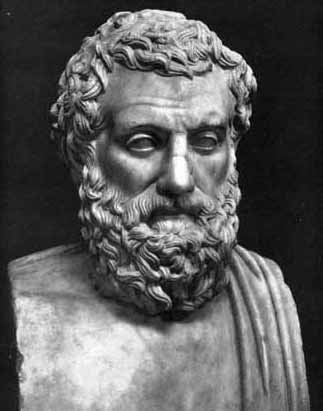
Aeschylus was an ancient Greek tragedian. He is often described as the father of tragedy. Critics' and scholars' knowledge of the genre begins with his work, and understanding of earlier tragedies is largely based on inferences from his surviving plays. According to Aristotle, he expanded the number of characters in theater allowing conflict among them; characters previously had interacted only with the chorus.
B. class notes
Oedipus Rex
(https://www.youtube.com/watch?v=oXyek9Ddus4)
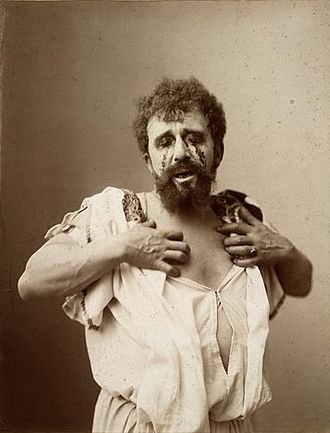
Oedipus Rex, also known by its Greek title, Oedipus Tyrannus, or Oedipus the King, is an Athenian tragedy by Sophocles that was first performed around 429 BC. Originally, to the ancient Greeks, the title was simply Oedipus, as it is referred to by Aristotle in the Poetics. It is thought to have been renamed Oedipus Tyrannus to distinguish it from Oedipus at Colonus. In antiquity, the term “tyrant” referred to a ruler, but it did not necessarily have a negative connotation.
Ancient Greek- A moment of excellent
(https://www.youtube.com/watch?v=twkQpGnQ1mo)
限會員,要發表迴響,請先登入


