Week 5
A.
-light: to shed light; to set on fire
example:enlight, backlight, daylight
B. Adam& Eva
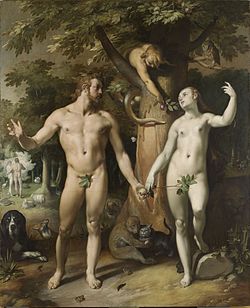
Adam and Eve, according to the creation myth of the Abrahamic religions,were the first man and woman and the ancestors of all humans.The story of Adam and Eve is central to the belief that God created human beings to live in a paradise on earth, although they fell away from that state and formed the present world full of suffering and injustice. It provides the basis for the belief that humanity is in essence a single family, with everyone descended from a single pair of original ancestors.It also provides much of the scriptural basis for the doctrines of the fall of man and original sin that are important beliefs in Christianity, but which are not generally held in Judaism or Islam.
Adam's apples
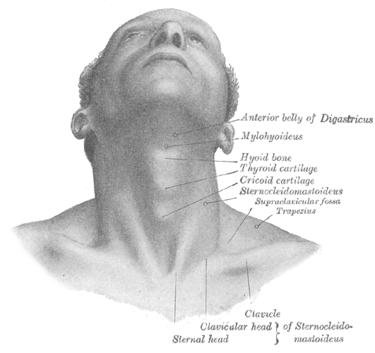
The Adam's apple, or laryngeal prominence is a feature of the human neck, and is the lump or protrusion that is formed by the angle of the thyroid cartilage surrounding the larynx.
C.

Hamlet:
Heaven and earth,
Must I remember? Why, she would hang on him
As if increase of appetite had grown
By what it fed on, and yet, within a month—
Let me not think on't—Frailty, thy name is woman!—
Hamlet Act 1, scene 2, 142-146
D. Seven Deadly sins
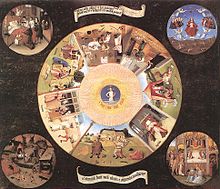
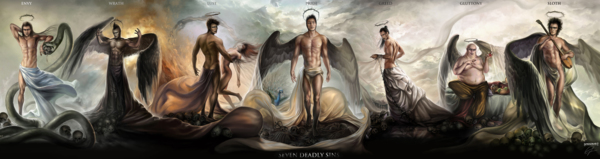
The seven deadly sins, also known as the capital vices or cardinal sins, is a grouping and classification of vices of Christian origin. Behaviors or habits are classified under this category if they directly give birth to other immoralities. According to the standard list, they are pride, greed, lust, envy, gluttony, wrath, and sloth, which are also contrary to the seven virtues. These sins are often thought to be abuses or excessive versions of one's natural faculties or passions (for example, gluttony abuses one's desire to eat).
Lust

Lust, or lechery (Latin, "luxuria" (carnal)), is intense longing. It is usually thought of as intense or unbridled sexual desire, which leads to fornication, adultery, rape, bestiality, and other immoral sexual acts.
Gluttony

Gluttony (Latin, gula) is the overindulgence and overconsumption of anything to the point of waste. The word derives from the Latin gluttire, meaning to gulp down or swallow.
Greed
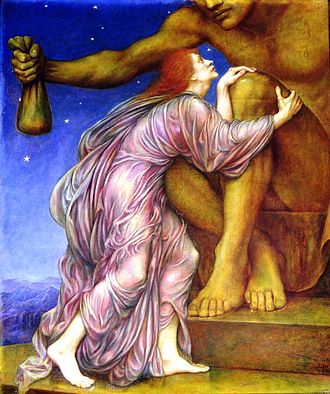
Greed (Latin, avaritia), also known as avarice, cupidity or covetousness, is, like lust and gluttony, a sin of desire. However, greed (as seen by the Church) is applied to an artificial, rapacious desire and pursuit of material possessions.
Sloth
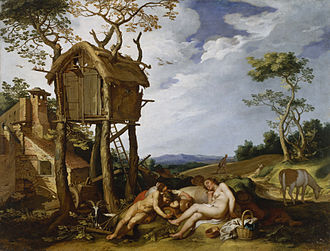
Sloth (Latin, tristitia or acedia ("without care")) refers to a peculiar jumble of notions, dating from antiquity and including mental, spiritual, pathological, and physical states.It may be defined as absence of interest or habitual disinclination to exertion.
Wrath

Sloth (Latin, tristitia or acedia ("without care")) refers to a peculiar jumble of notions, dating from antiquity and including mental, spiritual, pathological, and physical states. It may be defined as absence of interest or habitual disinclination to exertion. Wrath (Latin, ira) can be defined as uncontrolled feelings of anger, rage, and even hatred, often revealing itself in the wish to seek vengeance. Wrath, in its purest form, presents with injury, violence, and hate that may provoke feuds that can go on for centuries. Wrath may persist long after the person who did another a grievous wrong is dead. Feelings of wrath can manifest in different ways, including impatience, hateful misanthropy, revenge, and self-destructive behavior, such as drug abuse or suicide.
Envy

Envy (Latin, invidia), like greed and lust, is characterized by an insatiable desire. It can be described as a sad or resentful covetousness towards the traits or possessions of someone else. It arises from vainglory, and severs a man from his neighbor.
Pride
|
|
Building the Tower of Babel was, for Dante, an example of pride. (Painting by Pieter Brueghel the Elder) |
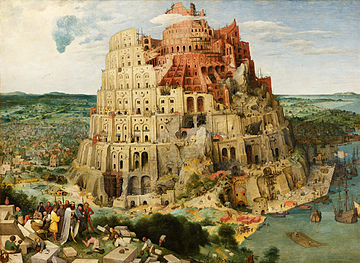
The negative version of pride (Latin, superbia) is considered, on almost every list, the original and most serious of the seven deadly sins: the perversion of the faculties that make humans more like God—dignity and holiness. It is also thought to be the source of the other capital sins. Also known as hubris (from ancient Greek ὕβρις),or futility, it is identified as dangerously corrupt selfishness, the putting of one's own desires, urges, wants, and whims before the welfare of people.
In even more destructive cases, it is irrationally believing that one is essentially and necessarily better, superior, or more important than others, failing to acknowledge the accomplishments of others, and excessive admiration of the personal image or self (especially forgetting one's own lack of divinity, and refusing to acknowledge one's own limits, faults, or wrongs as a human being)
E. Aphrodite and Ares
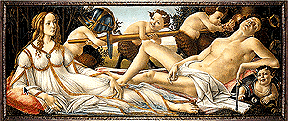
Aphrodite was the goddess of love and beauty. Aphrodite was known to the Romans as Venus. With her exquisite features and pleasant smile she attracted many suitors, gods and mortals alike. However, she was married to the graceless and lame Hephaestus, the god of fire. Her true love was Ares, the god of war. Their child was the beautiful goddess Harmonia. One day while Aphrodite and Ares were together they were caught in an invisible but strong net forged by Hephaestus, and exposed to the ridicule and laughter of the other gods at Mt. Olympus.
限會員,要發表迴響,請先登入


