Week 6
A.
-ium:word-forming element in chemistry, used to coin element names
Example:stadium, museum, auditorium
spec-:to look
Example:perspective, spectator, spectacle
B. The Major Planets
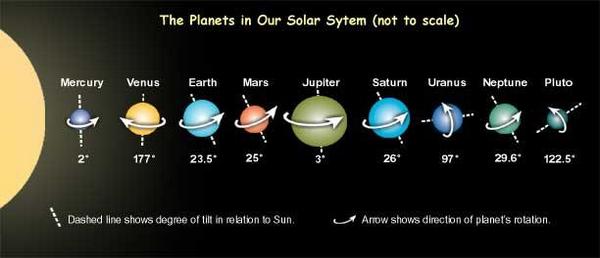
| Name | Image |
Describtion |
| Mercury |
|
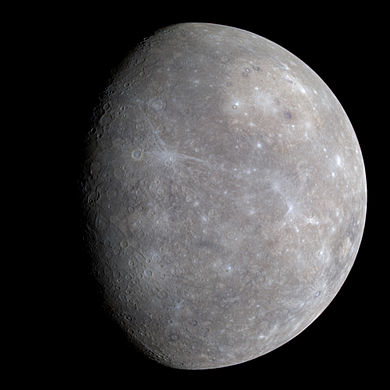
Mercury is the smallest and innermost planet in the Solar System. Its orbital period (about 88 Earth days) is less than any other planet in the Solar System. Seen from Earth, it appears to move around its orbit in about 116 days. It has no known natural satellites. It is named after the Roman deity Mercury, the messenger to the gods. |
| Veuns |
|
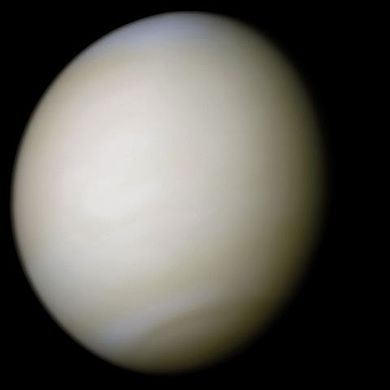
Venus is the second planet from the Sun, orbiting it every 224.7 Earth days. It has the longest rotation period (243 days) of any planet in the Solar System and rotates in the opposite direction to most other planets. It has no natural satellite. It is named after the Roman goddess of love and beauty. It is the second-brightest natural object in the night sky after the Moon, reaching an apparent magnitude of −4.6, bright enough to cast shadows. Because Venus is an inferior planet from Earth, it never appears to venture far from the Sun; its elongation reaches a maximum of 47.8°. |
| Earth |
|
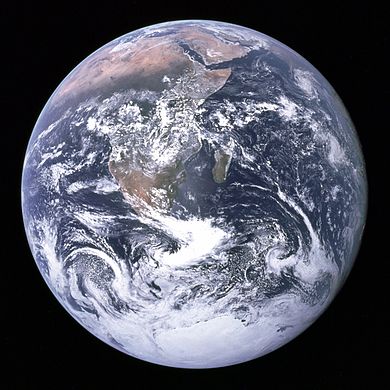
Earth (otherwise known as the world,in Greek: Γαῖα Gaia, or in Latin: Terra) is the third planet from the Sun, the densest planet in the Solar System, the largest of the Solar System's four terrestrial planets, and the only astronomical object known to harbor life. |
| Mars |
|
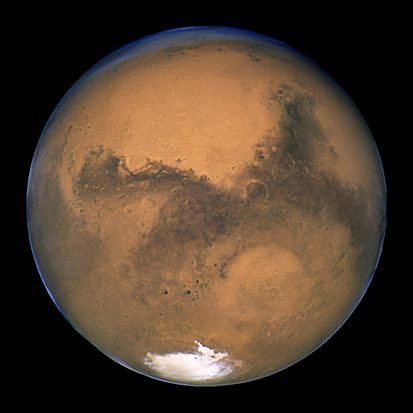
Mars is the fourth planet from the Sun and the second-smallest planet in the Solar System, after Mercury. Named after the Roman god of war, it is often referred to as the "Red Planet" because the iron oxide prevalent on its surface gives it a reddish appearance. Mars is a terrestrial planet with a thin atmosphere, having surface features reminiscent both of the impact craters of the Moon and the valleys, deserts, and polar ice caps of Earth. |
| Jupiter |
|
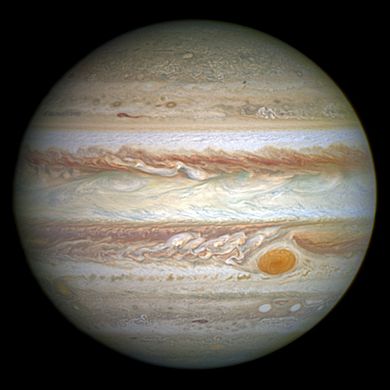
Jupiter is the fifth planet from the Sun and the largest in the Solar System. It is a giant planet with a mass one-thousandth that of the Sun, but two and a half times that of all the other planets in the Solar System combined. Jupiter is a gas giant, along with Saturn, with the other two giant planets, Uranus and Neptune, being ice giants. Jupiter was known to astronomers of ancient times. The Romans named it after their god Jupiter. When viewed from Earth, Jupiter can reach an apparent magnitude of −2.94, bright enough for its reflected light to cast shadows, and making it on average the third-brightest object in the night sky after the Moon and Venus. |
| Saturn |
|
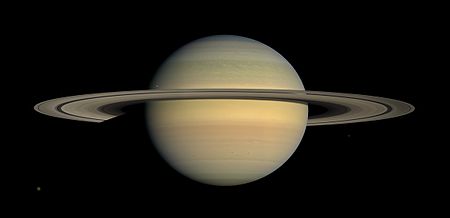
Saturn is the sixth planet from the Sun and the second-largest in the Solar System, after Jupiter. It is a gas giant with an average radius about nine times that of Earth. Although only one-eighth the average density of Earth, with its larger volume Saturn is just over 95 times more massive. Saturn is named after the Roman god of agriculture; its astronomical symbol (♄) represents the god's sickle. |
| Uranus |
|
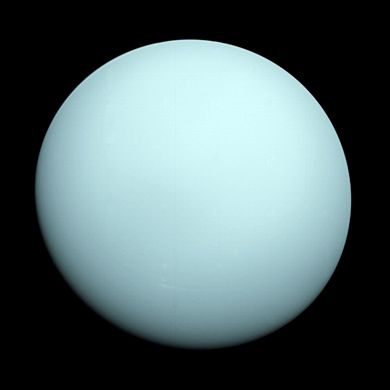
Uranus is the seventh planet from the Sun. It has the third-largest planetary radius and fourth-largest planetary mass in the Solar System. Uranus is similar in composition to Neptune, and both have different bulk chemical composition from that of the larger gas giants Jupiter and Saturn. For this reason, scientists often classify Uranus and Neptune as "ice giants" to distinguish them from the gas giants. |
| Neptune |
|
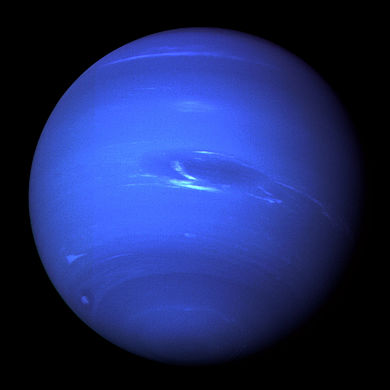
Neptune is the eighth and farthest known planet from the Sun in the Solar System. In the Solar System, it is the fourth-largest planet by diameter, the third-most-massive planet, and the densest giant planet. Neptune is 17 times the mass of Earth and is slightly more massive than its near-twin Uranus, which is 15 times the mass of Earth and slightly larger than Neptune. |
| Pluto |
|
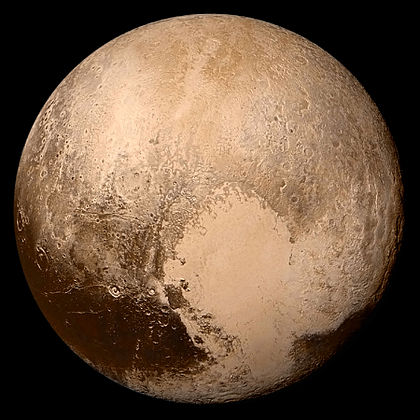
Pluto is a dwarf planet in the Kuiper belt, a ring of bodies beyond Neptune. It was the first Kuiper belt object to be discovered. It is the largest and second-most-massive known dwarf planet in the Solar System and the ninth-largest and tenth-most-massive known object directly orbiting the Sun. It is the largest known trans-Neptunian object by volume but is less massive than Eris, a dwarf planet in the scattered disc. Like other Kuiper belt objects, Pluto is primarily made of ice and rock and is relatively small—about one-sixth the mass of the Moon and one-third its volume. |
C. The Metamorphosis ---Ovid
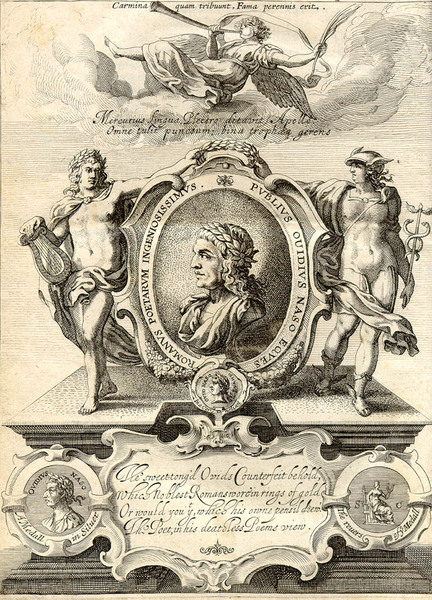
The Metamorphosis (German: Die Verwandlung, also sometimes translated as The Transformation) is a novella by Franz Kafka, first published in 1915. It has been called one of the seminal works of fiction of the 20th century and is studied in colleges and universities across the Western world.
D.Dionysus
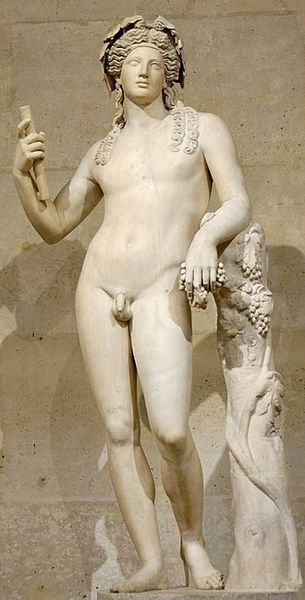
Dionysus (/daɪ.əˈnaɪsəs/; Greek: Διόνυσος, Dionysos) is the god of the grape harvest, winemaking and wine, of ritual madness, fertility, theatre and religious ecstasy in Greek mythology.
限會員,要發表迴響,請先登入


