1.
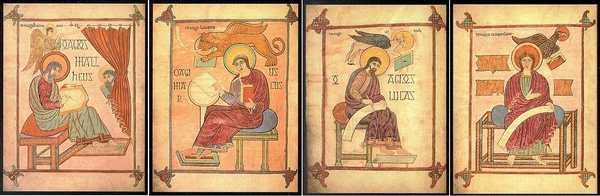
The Four Gospels-
is an account describing the life, death, and resurrection of Jesus of Nazareth. The most widely known examples are the four canonical gospels of Matthew, Mark, Luke, and John which are included in the New Testament, but the term is also used to refer to apocryphal, non-canonical gospels, Jewish-Christian gospels, and Gnostic gospels. Christianity places a high value on the four canonical gospels, which it considers to be a revelation from God and central to its belief system. Christianity traditionally teaches that the four canonical gospels are an accurate and authoritative representation of the life of Jesus, but many scholars and historians, as well as liberal churches, note that much of that which is contained in the gospels is not historically reliable.
2.
Isaac-
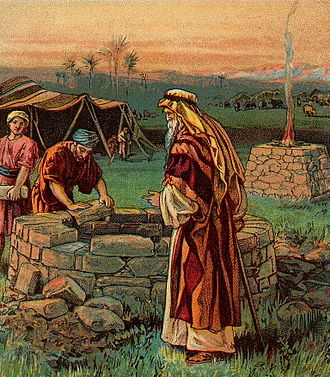
as described in the Hebrew and the Qur'an, was the second son of Abraham, the only son Abraham had with his wife Sarah, and the father of Jacob and Esau. According to the Book of Genesis, Abraham was 100 years old when Isaac was born, and Sarah was past 90. Isaac was one of the three patriarchs of the Israelites. Isaac was the only biblical patriarch whose name was not changed, and the only one who did not move out of Canaan. Compared to Abraham and Jacob, the Bible relates fewer incidents of Isaac's life. He died when he was 180 years old, making him the longest-lived of the three.
3.
The Original Sin-
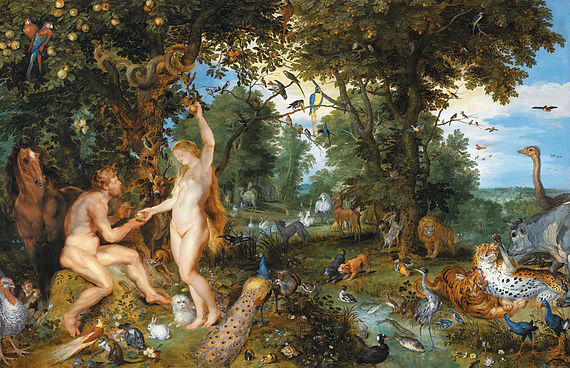
also called ancestral sin, is the Christian doctrine of humanity's state of sin resulting from the fall of man, namely the sin of consuming from the tree of knowledge of good and evil, stemming from Adam's rebellion in Eden. This condition has been characterized in many ways, ranging from something as insignificant as a slight deficiency, or a tendency toward sin yet without collective guilt, referred to as a "sin nature", to something as drastic as total depravity or automatic guilt of all humans through collective guilt. Church fathers such as Augustine also developed the doctrine, seeing it as based on the New Testament teaching of Paul the Apostle (Romans 5:12–21 and 1 Corinthians 15:22) and the Old Testament verse of Psalm 51:5. Tertullian, Cyprian, Ambrose and Ambrosiaster considered that humanity shares in Adam's sin, transmitted by human generation.
4.
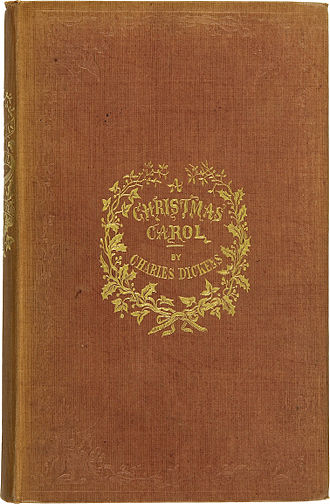
A Christmas Carol- is a novella by Charles Dickens, first published in London by Chapman on 19 December 1843. The novella met with instant success and critical acclaim. A Christmas Carol tells the story of a bitter old miser named Ebenezer Scrooge and his transformation into a gentler, kindlier man after visitations by the ghost of his former business partner Jacob Marley and the Ghosts of Christmas Past, Present and Yet to Come. The book was written at a time when the British were examining and exploring Christmas traditions from the past as well as new customs such as Christmas cards and Christmas trees. Carol singing took a new lease on life during this time. Dickens's sources for the tale appear to be many and varied, but are, principally, the humiliating experiences of his childhood, his sympathy for the poor, and various Christmas stories and fairy tales.
Ebenezer Scrooge- is the focal character of Charles Dickens' 1843 novella, A Christmas Carol. At the beginning of the novella, Scrooge is a cold-hearted miser who despises Christmas. Dickens describes him thus: "The cold within him froze his old features, nipped his pointed nose, made his eyes red, his thin lips blue, and spoke out shrewdly in his grating voice...".
scrooge- a selfish person who is unwilling to give or spend.
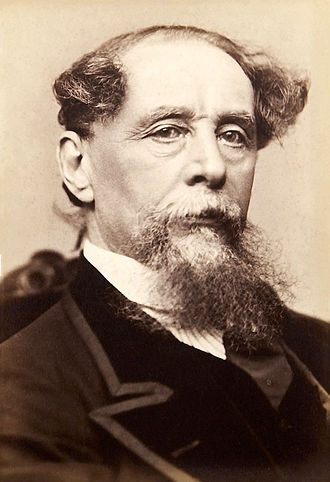
Charles Dickens-was an English writer and social critic. He created some of the world's best-known fictional characters and is regarded as the greatest novelist of the
Victorian era. His works enjoyed unprecedented popularity during his lifetime, and by the twentieth centurycritics and scholars had recognized him as a literary genius. His novels and short stories enjoy lasting popularity.
5.
“Sometimes I have the strangest feeling about you. Especially when you are near me as you are now. It feels as though I had a string tied here under my left rib where my heart is, tightly knotted to you in a similar fashion. And when you go to Ireland, with all that distance between us, I am afraid that this cord will be snapped, and I shall bleed inwardly.”- Jane Eyre
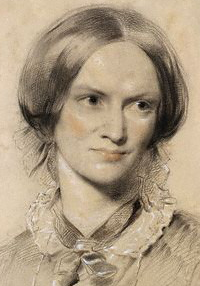
Charlotte Brontë- was an English novelist and poet, the eldest of the three Brontë sisters who survived into adulthood and whose novels have become classics of English literature. She first published her works (including her best known novel, Jane Eyre) under the pen name Currer Bell.
Jane Eyre- is a novel by English Charlotte Brontë. It was published on 16 October 1847, by Smith, Elder & Co.of London, England, under the pen name "Currer Bell." The first American edition was published the following year by Harper & Brothers of New York. Primarily of the bildungsroman genre, Jane Eyre follows the emotions and experiences of its title, including her growth to adulthood and her love for Mr. Rochester, the Byronic master of fictitious Thorn field.