1.Today's Words
1)ob-: word-forming element meaning "toward, against, across, down," also used as an intensive, from Latin ob (prep.) "in front of, before; in the way of; with regard to, because of," from PIE root *epi, also *opi "near, against"
eg. obscene, obstreperous, oblate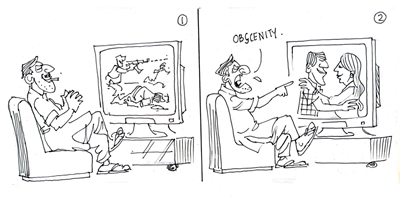
2)de-: active word-forming element in English and in many words inherited from French and Latin, from Latin de "down, down from, from, off; concerning" , also used as a prefix in Latin usually meaning "down, off, away, from among, down from," but also "down to the bottom, totally" hence "completely" (intensive or completive), which is its sense in many English words. As a Latin prefix it also had the function of undoing or reversing a verb's action, and hence it came to be used as a pure privative -- "not, do the opposite of, undo" -- which is its primary function as a living prefix in English, as in defrost (1895), defuse (1943), etc. Compare also dis-.
eg. deceleration, demulcent, detergent
3)con-: word-forming element meaning "together, with," sometimes merely intensive; the form of com- used in Latin before consonants except -b-, -p-, -l-, -m-, or -r-. In native English formations (such as costar), co- tends to be used where Latin would use con-.
eg. convict, conspecific, confidence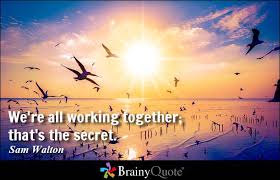
4)fore-: Middle English for-, fore-, from Old English fore-, often for- or foran-, from fore (adv. & prep.), which was used as a prefix in Old English as in other Germanic languages with a sense of "before in time, rank, position," etc., or designating the front part or earliest time.
eg. forepart, foremast, forename
2.Extra Words
1)oblivion: late 14c., "state or fact of forgetting," from Old French oblivion (13c.) and directly from Latin oblivionem (nominative oblivio) "forgetfulness; a being forgotten," from oblivisci (past participle oblitus) "forget," originally "even out, smooth over, efface," from ob "over" + root of levis "smooth," from PIE *lei-w-, from root *(s)lei- "slime, slimy, sticky" . Meaning "state of being forgotten" is early 15c.
2)apostrophe: mark indicating omitted letter, 1580s, from Middle French apostrophe, from Late Latin apostrophus, from Greek apostrophos (prosoidia) "(the accent of) turning away," thus, a mark showing where a letter has been omitted, from apostrephein "avert, turn away," from apo- "from" + strephein "to turn" .
In English, the mark often represents loss of -e- in -es, possessive ending. It was being extended to all possessives, whether they ever had an -e- or not, by 18c. Greek also used this word for a "turning aside" of an orator in speech to address some individual, a sense first recorded in English 1530s.

3)congenital: "existing from birth," 1796, from Latin congenitus, from com "together, with" + genitus, past participle of gignere "to beget" . The sense formerly belonged to congenial. Related: Congenitally.
3.Up in the Air (2009 film)
 Up in the Air is a 2009 American comedy-drama film directed by Jason Reitman and co-written by Reitman and Sheldon Turner. It is a film adaptation of the 2001 novel of the same name, written by Walter Kirn. The story is centered on corporate "downsizer" Ryan Bingham (George Clooney) and his travels. The film follows his isolated life and philosophies and the people he meets along the way. Filming was primarily in St. Louis, Missouri, which substituted for a number of other cities. Several scenes were filmed in Detroit, Omaha, Las Vegas, and Miami.
4.Journey Of The Magi by T. S. Eliot

'A cold coming we had of it,
Just the worst time of the year
For a journey, and such a journey:
The ways deep and the weather sharp,
The very dead of winter.'
And the camels galled, sore-footed,
refractory,
Lying down in the melting snow.
There were times we regretted
The summer palaces on slopes, the
terraces,
And the silken girls bringing sherbet.
Then the camel men cursing and
grumbling
And running away, and wanting their
liquor and women,
And the night-fires going out, and the
lack of shelters,
And the cities hostile and the towns
unfriendly
And the villages dirty and charging high
prices:
A hard time we had of it.
At the end we preferred to travel all
night,
Sleeping in snatches,
With the voices singing in our ears,
saying
That this was all folly.
Then at dawn we came down to a
temperate valley,
Wet, below the snow line, smelling of
vegetation;
With a running stream and a water-mill
beating the darkness,
And three trees on the low sky,
And an old white horse galloped in
away in the meadow.
Then we came to a tavern with
vine-leaves over the lintel,
Six hands at an open door dicing for
pieces of silver,
And feet kicking the empty wine-skins.
But there was no imformation, and so
we continued
And arrived at evening, not a moment
too soon
Finding the place; it was (you may say)
satisfactory.
All this was a long time ago, I
remember,
And I would do it again, but set down
This set down
This: were we led all that way for
Birth or Death? There was a Birth,
certainly,
We had evidence and no doubt. I had
seen birth and death,
But had thought they were different;
this Birth was
Hard and bitter agony for us, like
Death, our death.
We returned to our places, these
Kingdoms,
But no longer at ease here, in the old
dispensation,
With an alien people clutching their
gods.
I should be glad of another death.
5.When I Was One-and-Twenty

When I was one-and-twenty
I heard a wise man say,
“Give crowns and pounds and guineas
But not your heart away;
Give pearls away and rubies
But keep your fancy free.”
But I was one-and-twenty,
No use to talk to me.
When I was one-and-twenty
I heard him say again,
“The heart out of the bosom
Was never given in vain;
’Tis paid with sighs a plenty
And sold for endless rue.”
And I am two-and-twenty,
And oh, ’tis true, ’tis true.
6.The Raven

Once upon a midnight dreary, while I pondered, weak and weary,
Over many a quaint and curious volume of forgotten lore—
While I nodded, nearly napping, suddenly there came a tapping,
As of some one gently rapping, rapping at my chamber door.
“’Tis some visitor,” I muttered, “tapping at my chamber door—
Only this and nothing more.”
Ah, distinctly I remember it was in the bleak December;
And each separate dying ember wrought its ghost upon the floor.
Eagerly I wished the morrow;—vainly I had sought to borrow
From my books surcease of sorrow—sorrow for the lost Lenore—
For the rare and radiant maiden whom the angels name Lenore—
Nameless here for evermore.
And the silken, sad, uncertain rustling of each purple curtain
Thrilled me—filled me with fantastic terrors never felt before;
So that now, to still the beating of my heart, I stood repeating
“’Tis some visitor entreating entrance at my chamber door—
Some late visitor entreating entrance at my chamber door;—
This it is and nothing more.”
Presently my soul grew stronger; hesitating then no longer,
“Sir,” said I, “or Madam, truly your forgiveness I implore;
But the fact is I was napping, and so gently you came rapping,
And so faintly you came tapping, tapping at my chamber door,
That I scarce was sure I heard you”—here I opened wide the door;—
Darkness there and nothing more.
Deep into that darkness peering, long I stood there wondering, fearing,
Doubting, dreaming dreams no mortal ever dared to dream before;
But the silence was unbroken, and the stillness gave no token,
And the only word there spoken was the whispered word, “Lenore?”
This I whispered, and an echo murmured back the word, “Lenore!”—
Merely this and nothing more.
Back into the chamber turning, all my soul within me burning,
Soon again I heard a tapping somewhat louder than before.
“Surely,” said I, “surely that is something at my window lattice;
Let me see, then, what thereat is, and this mystery explore—
Let my heart be still a moment and this mystery explore;—
’Tis the wind and nothing more!”
Open here I flung the shutter, when, with many a flirt and flutter,
In there stepped a stately Raven of the saintly days of yore;
Not the least obeisance made he; not a minute stopped or stayed he;
But, with mien of lord or lady, perched above my chamber door—
Perched upon a bust of Pallas just above my chamber door—
Perched, and sat, and nothing more.
Then this ebony bird beguiling my sad fancy into smiling,
By the grave and stern decorum of the countenance it wore,
“Though thy crest be shorn and shaven, thou,” I said, “art sure no craven,
Ghastly grim and ancient Raven wandering from the Nightly shore—
Tell me what thy lordly name is on the Night’s Plutonian shore!”
Quoth the Raven “Nevermore.”
Much I marvelled this ungainly fowl to hear discourse so plainly,
Though its answer little meaning—little relevancy bore;
For we cannot help agreeing that no living human being
Ever yet was blessed with seeing bird above his chamber door—
Bird or beast upon the sculptured bust above his chamber door,
With such name as “Nevermore.”
But the Raven, sitting lonely on the placid bust, spoke only
That one word, as if his soul in that one word he did outpour.
Nothing farther then he uttered—not a feather then he fluttered—
Till I scarcely more than muttered “Other friends have flown before—
On the morrow he will leave me, as my Hopes have flown before.”
Then the bird said “Nevermore.”
Startled at the stillness broken by reply so aptly spoken,
“Doubtless,” said I, “what it utters is its only stock and store
Caught from some unhappy master whom unmerciful Disaster
Followed fast and followed faster till his songs one burden bore—
Till the dirges of his Hope that melancholy burden bore
Of ‘Never—nevermore’.”
But the Raven still beguiling all my fancy into smiling,
Straight I wheeled a cushioned seat in front of bird, and bust and door;
Then, upon the velvet sinking, I betook myself to linking
Fancy unto fancy, thinking what this ominous bird of yore—
What this grim, ungainly, ghastly, gaunt, and ominous bird of yore
Meant in croaking “Nevermore.”
This I sat engaged in guessing, but no syllable expressing
To the fowl whose fiery eyes now burned into my bosom’s core;
This and more I sat divining, with my head at ease reclining
On the cushion’s velvet lining that the lamp-light gloated o’er,
But whose velvet-violet lining with the lamp-light gloating o’er,
She shall press, ah, nevermore!
Then, methought, the air grew denser, perfumed from an unseen censer
Swung by Seraphim whose foot-falls tinkled on the tufted floor.
“Wretch,” I cried, “thy God hath lent thee—by these angels he hath sent thee
Respite—respite and nepenthe from thy memories of Lenore;
Quaff, oh quaff this kind nepenthe and forget this lost Lenore!”
Quoth the Raven “Nevermore.”
“Prophet!” said I, “thing of evil!—prophet still, if bird or devil!—
Whether Tempter sent, or whether tempest tossed thee here ashore,
Desolate yet all undaunted, on this desert land enchanted—
On this home by Horror haunted—tell me truly, I implore—
Is there—is there balm in Gilead?—tell me—tell me, I implore!”
Quoth the Raven “Nevermore.”
“Prophet!” said I, “thing of evil!—prophet still, if bird or devil!
By that Heaven that bends above us—by that God we both adore—
Tell this soul with sorrow laden if, within the distant Aidenn,
It shall clasp a sainted maiden whom the angels name Lenore—
Clasp a rare and radiant maiden whom the angels name Lenore.”
Quoth the Raven “Nevermore.”
“Be that word our sign of parting, bird or fiend!” I shrieked, upstarting—
“Get thee back into the tempest and the Night’s Plutonian shore!
Leave no black plume as a token of that lie thy soul hath spoken!
Leave my loneliness unbroken!—quit the bust above my door!
Take thy beak from out my heart, and take thy form from off my door!”
Quoth the Raven “Nevermore.”
And the Raven, never flitting, still is sitting, still is sitting
On the pallid bust of Pallas just above my chamber door;
And his eyes have all the seeming of a demon’s that is dreaming,
And the lamp-light o’er him streaming throws his shadow on the floor;
And my soul from out that shadow that lies floating on the floor
Shall be lifted—nevermore!
7.A. E. Housman
Alfred Edward Housman (26 March 1859 – 30 April 1936), usually known as A. E. Housman, was an English classical scholar and poet, best known to the general public for his cycle of poems A Shropshire Lad. Lyrical and almost epigrammatic in form, the poems wistfully evoke the dooms and disappointments of youth in the English countryside. Their beauty, simplicity and distinctive imagery appealed strongly to late Victorian and Edwardian taste, and to many early 20th-century English composers both before and after the First World War. Through their song-settings, the poems became closely associated with that era, and with Shropshire itself.
 Interstellar is a 2014 epic science fiction film co-written, co-produced and directed by Christopher Nolan. The film stars Matthew McConaughey, Anne Hathaway, Jessica Chastain, Matt Damon, and Michael Caine. In the film, a crew of astronauts travel through a wormhole in search of a new home for humanity. Brothers Christopher and Jonathan Nolan wrote the screenplay, which has its origins in a script Jonathan developed in 2007. Nolan produced the film with his wife Emma Thomas through their production company Syncopy and with Lynda Obst through Lynda Obst Productions. Caltech theoretical physicist Kip Thorne, whose work inspired the film, was an executive producer and acted as scientific consultant. Later, he also wrote a tie-in book, The Science of Interstellar. Warner Bros., Paramount Pictures, and Legendary Pictures co-financed the film.
p.s click to see


