西洋文學概論Week13
The content of the course
1. Vocabulary
Spect- to look
For example: spectator: a person who looks on or watches; onlooker; observer.
inspect: to look carefully at or over; view closely and critically
Audi- to listen
For example: audience: 1.the group of spectators at a public event; listeners or
viewers collectively, as in attendance at a theater
or concert.
2. the persons reached by a book, radio or television
broadcast, etc.
auditorium: the space set apart for the audience in a theater, school,
or other public building.
Characteristic: a distinguishing feature or quality.
2.words definition
(1)Hubris
Hubris means, in a modern context, extreme pride or self-confidence; in its ancient
Greek context, it typically describes violent and excessive behavior rather than an
attitude. When it offends the gods of ancient Greece, it is usually punished. The
adjectival form of the noun hubris is "hubristic".
Hubris is usually perceived as a characteristic of an individual rather than a group,
although the group the offender belongs to may suffer consequences from the
wrongful act. Hubris often indicates a loss of contact with reality and an
overestimation of one's own competence, accomplishments or capabilities, especially
when the person exhibiting it is in a position of power.
(2) tragic flaw
The term hamartia derives from the Greek ἁμαρτία, from ἁμαρτάνειν hamartánein,
which means “to miss the mark” or “to err”. It is most often associated with Greek
tragedy, although it is also used in Christian theology. Hamartia as it pertains to
dramatic literature was first used by Aristotle in his Poetics. In tragedy, hamartia is
commonly understood to refer to the protagonist’s error or flaw that leads to a chain
of plot actions culminating in a reversal from their good fortune to bad. What
qualifies as the error or flaw can include an error resulting from ignorance, an
error of judgement, a flaw in character, or sin. The spectrum of meanings has
invited debate among critics and scholars, and different interpretations among
dramatists.
(3)dramatic tronie
The term 'tronie' is not clearly defined in art historical literature. Literary and
archival sources show that initially the term 'tronie' was not always associated
with people. Inventories sometimes referred to flower and fruit still lifes as 'tronies'.
More common was the meaning of face or visage. Often the term referred to the
entire head, even a bust, and in exceptional cases the whole body. A tronie could be
two-dimensional, but also made of plaster or stone. Sometimes a tronie was a
likeness, the depiction of an individual, including the face of God, Christ, Mary, a
saint or an angel. In particular a tronie denoted the characteristic appearance of the
head of a type, for example a farmer, a beggar or a jester. Tronie sometimes meant
so much as a grotesque head or a model such as the type of an ugly old person.
When conceived as the face of an individual and of a type a tronie's aim was to
express feelings and character in an accurate manner and must therefore be
expressive.
3. Christopher Marlowe
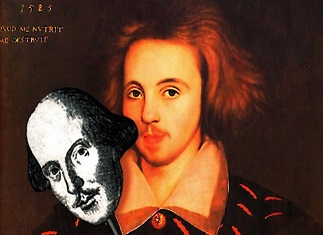
Christopher Marlowe, also known as Kit Marlowe, was an English playwright,
poet and translator of the Elizabethan era. Marlowe was the foremost Elizabethan
tragedian of his day. He greatly influenced William Shakespeare, who was born
in the same year as Marlowe and who rose to become the pre-eminent Elizabethan
playwright after Marlowe's mysterious early death. Marlowe's plays are known for
the use of blank verse and their overreaching protagonists.
Doctor Faustus (or The Tragicall History of the Life and Death of Doctor Faustus)
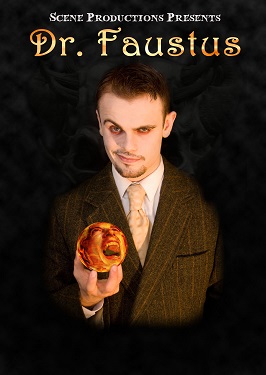
The Tragical History of the Life and Death of Doctor Faustus, commonly referred to
simply as Doctor Faustus, is a play by Christopher Marlowe, based on the German
story Faust. Doctor Faustus was first published in 1604, eleven years after
Marlowe's death and at least 10 years after the first performance of the play.
It is the most controversial Elizabethan play outside of Shakespeare, with few
critics coming to any agreement as to the date or the nature of the text.
4.the sphinx
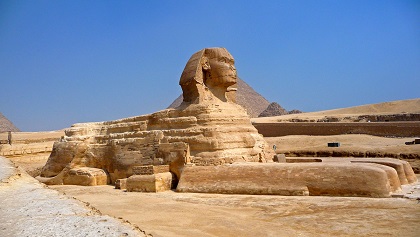
The sphinx is a mythical creature with, as a minimum, the head of a human and
the body of a lion.
In Greek tradition, it has the head of a human, the haunches of a lion, and sometimes
the wings of a bird. It is mythicised as treacherous and merciless. Those who cannot
answer its riddle suffer a fate typical in such mythological stories, as they are killed
and eaten by this ravenous monster. This deadly version of a sphinx appears in the
myth and drama of Oedipus. Unlike the Greek sphinx, which was a woman, the
Egyptian sphinx is typically shown as a man (an androsphinx). In addition, the
Egyptian sphinx was viewed as benevolent, but having a ferocious strength similar
to the malevolent Greek version and both were thought of as guardians often
flanking the entrances to temples.
Reference website:
Christopher Marlowe
https://www.bing.com/images/search?q=Christopher+Marlowe&view=detailv2&&id=50CCE
22E87FED000F6277759772F45F5D7FB2A27&selectedIndex=8&ccid=ilBqoioa&simid=608
041235354291459&thid=OIP.M8a506aa22a1a220dc661ef8540a33dceH2&ajaxhist=0
Doctor Faustus
https://www.bing.com/images/search?q=Doctor+Faustus&view=detailv2&&id=9F00DB41FE8
DE7A5A76C64E0AD0B7A827D687763&selectedIndex=0&ccid=vfZvxjDJ&simid=6080081
42629308550&thid=OIP.Mbdf66fc630c98c3a6bac6716cdb74238H2&ajaxhist=0
sphinx
https://www.bing.com/images/search?q=the+sphinx&view=detailv2&&id=F4234D68D80CE
59FE95AD8D07162EB9022ACF81B&selectedIndex=2&ccid=mF5eSTDG&simid=608008
993028375479&thid=OIP.M985e5e4930c6f88054e0f19eae92fad1H0&ajaxhist=0
限會員,要發表迴響,請先登入


