西洋文學概論Week10
The content of the course
1.person introduction
Three Ancient Greek tragedians
(1)Aeschylus (/ˈɛskɨləs/ )
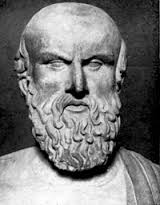
Aeschylus was an ancient Greek tragedian. He is also the first whose plays still survive; the others are Sophocles and Euripides. He is often described as the father of tragedy: critics and scholars' knowledge of the genre begins with his work, and understanding of earlier tragedies is largely based on inferences from his surviving plays. According to Aristotle, he expanded the number of characters in plays to allow conflict among them whereas characters previously had interacted only with the chorus.
(2)Sophocles
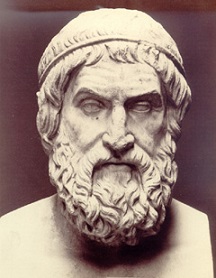
Sophocles (/ˈsɒfəkliːz/) is one of three ancient Greek tragedians whose plays have survived. His first plays were written later than those of Aeschylus, and earlier than or contemporary with those of Euripides. Sophocles wrote 120 plays during the course of his life, but only seven have survived in a complete form: Ajax, Antigone, The Women of Trachis, Oedipus the King, Electra, Philoctetes and Oedipus at Colonus.For almost 50 years, Sophocles was the most-fêted playwright in the dramatic competitions of the city-state of Athens that took place during the religious festivals of the Lenaea and the Dionysia.
The most famous tragedies of Sophocles feature Oedipus and also Antigone: they are generally known as the Theban plays, although each play was actually a part of a different tetralogy, the other members of which are now lost. Sophocles influenced the development of the drama, most importantly by adding a third actor, thereby reducing the importance of the chorus in the presentation of the plot. He also developed his characters to a greater extent than earlier playwrights such as Aeschylus.
(3)Euripides
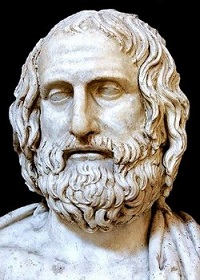
Euripides (/jʊəˈrɪpɨdiːz/) was a tragedian of classical Athens. He is one of the few whose plays have survived, and potentially Euphorion. More of his plays have survived intact than those of Aeschylus and Sophocles together, partly due to mere chance and partly because his popularity grew as theirs declined—he became, in the Hellenistic Age, a cornerstone of ancient literary education, along with Homer, Demosthenes and Menander.
Euripides is identified with theatrical innovations that have profoundly influenced drama down to modern times, especially in the representation of traditional, mythical heroes as ordinary people in extraordinary circumstances. This new approach led him to pioneer developments that later writers adapted to comedy, some of which are characteristic of romance. Yet he also became "the most tragic of poets", focusing on the inner lives and motives of his characters in a way previously unknown. He was also unique among the writers of ancient Athens for the sympathy he demonstrated towards all victims of society, including women. His conservative male audiences were frequently shocked by the 'heresies' he put into the mouths of characters.
Aristophanes
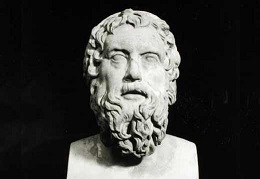
Aristophanes (/ˌærɨˈstɒfəniːz/), son of Philippus, of the deme Cydathenaeum, was a comic playwright of ancient Athens. Eleven of his thirty plays survive virtually complete. These, together with fragments of some of his other plays, provide the only real examples of a genre of comic drama known as Old Comedy, and they are used to define the genre.
Also known as the Father of Comedy and the Prince of Ancient Comedy, Aristophanes has been said to recreate the life of ancient Athens more convincingly than any other author. His powers of ridicule were feared and acknowledged by influential contemporaries; Plato singled out Aristophanes' play The Clouds as slander that contributed to the trial and subsequent condemning to death of Socrates although other satirical playwrights had also caricatured the philosopher.
2.Vocabulary and phrase :
Confession: a statement - made by a person or by a group of persons -acknowledging
some personal fact that the person (or the group) would ostensibly
prefer to keep hidden.
Be angry with: feeling or showing anger or strong resentment.
Theater = theatre
3. film:
【人間師格】(片段連結)

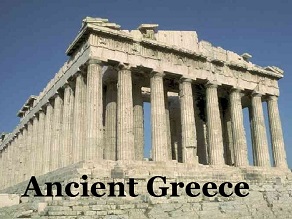
【Ancient Greece】(莎莎部落格連結)
4.Others
The dithyramb
The dithyramb (Ancient Greek: διθύραμβος, dithurambos) was an ancient Greek hymn sung and danced in honor of Dionysus, the god of wine and fertility; the term was also used as an epithet of the god: Plato, in The Laws, while discussing various kinds of music mentions "the birth of Dionysos, called, I think, the dithyramb." Plato also remarks in the Republic that dithyrambs are the clearest example of poetry in which the poet is the only speaker.
Reference website:
Aeschylus
(文)https://en.wikipedia.org/wiki/Aeschylus
(圖)https://www.google.com.tw/search?q=aeschylus&biw=1366&bih=651&source=lnms&tbm=isch&sa=X&ved=0ahUKEwiBrMPolaLJAhVIl5QKHSKrA9MQ_
AUIBigB#imgrc=AkRG5Ez9DKAF_M%3A
Sophocles
(文)https://en.wikipedia.org/wiki/Sophocles
(圖)https://www.google.com.tw/search?biw=1366&bih=651&tbm=isch&sa=1&q=sophocles&oq=SOPHOCLE&gs_l=img.1.0.0j0i30l9.57654620.57660790.0.57
663191.8.6.0.2.2.0.122.462.3j2.5.0....0...1c.1.64.img..1.7.501.L0oYGfwfSSU#imgrc=SYXUmDJFU5X9zM%3A
Euripides
(文)https://en.wikipedia.org/wiki/Euripides
(圖)https://www.google.com.tw/search?biw=1366&bih=651&tbm=isch&sa=1&q=Euripides&oq=Euripides&gs_l=img.12..0j0i30l9.194592.194592.0.196866.
1.1.0.0.0.0.124.124.0j1.1.0....0...1c.1.64.img..0.1.122.roxVc2mq1A8#imgrc=pFr17Cz7DUhxBM%3A
Aristophanes
(文) https://en.wikipedia.org/wiki/Aristophanes
(圖)https://www.google.com.tw/search?biw=1366&bih=651&tbm=isch&sa=1&q=Aristophanes&oq=Aristophanes&gs_l=img.3..0l2j0i30l8.2270.2270.0.347
5.1.1.0.0.0.0.81.81.1.1.0....0...1c.1.64.img..0.1.80.Zwwiu1KpJE0#imgrc=8Q5PrJq15wbCEM%3A
Ancient Greece
https://www.google.com.tw/search?q=Ancient+Greece&biw=1366&bih=651&source=lnms&tbm=isch&sa=X&ved=0ahUKEwiHpebCgO_JAhWi2KYK
HTqHDSYQ_AUIBigB#imgrc=bF1pFiKGvoeYSM%3A
人間師格
https://www.google.com.tw/search?q=%E4%BA%BA%E9%96%93%E5%B8%AB%E6%A0%BC&biw=1366&bih=651&source=lnms&tbm=isch&sa=
X&ved=0ahUKEwjK9Kf7_-7JAhWnxqYKHf5YAhQQ_AUIBigB#imgrc=wrpoGNBK6PyTFM%3A
限會員,要發表迴響,請先登入


