Introduction
Modern industrial equipment depends heavily on clear, reliable visual interfaces. Whether the system is a factory machine, a field-deployed agricultural controller, a medical instrument, or an intelligent building terminal, the display panel often becomes the primary point of interaction between people and the device.
Industrial display panels are not simply “stronger versions” of consumer screens. They are designed for long operating hours, stable supply cycles, and environments that include vibration, dust, electrical noise, temperature swings, and bright ambient light. In many projects, the display is also paired with an embedded computing board, forming a complete human-machine interface (HMI) platform that can render UI graphics, process data, and communicate with external devices.
This guide explains what industrial display panels are, the engineering characteristics that matter in real deployments, common application scenarios, and practical selection criteria for matching a display module with the right embedded platform.
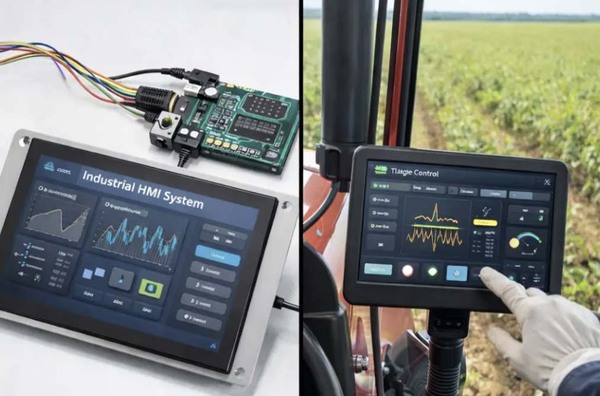
What Is an Industrial Display Panel?
An industrial display panel is a display module engineered for industrial and professional equipment. Compared with consumer devices, industrial panels are optimized for reliability, long lifecycle availability, and robust operation under harsher conditions.
A typical industrial display assembly may include:
- TFT LCD display panel
- Touch layer (capacitive or resistive)
- Protective cover glass or lens
- Backlight system and driver circuitry
- Interface and control electronics
In many systems, the display panel is integrated with an embedded processor board (often an ARM-based SBC). Together, they provide the UI, local processing, connectivity, and device control functions required by modern equipment.
Key Characteristics of Industrial Display Panels
Industrial equipment runs under conditions that quickly expose weaknesses in consumer-grade components. A suitable industrial display panel must remain stable over long duty cycles and across diverse environments.
Reliability for Continuous Operation
Many industrial devices operate for extended hours every day. Display reliability is not only about the LCD glass; it includes backlight stability, controller behavior, connector retention, and noise tolerance.
Common reliability design elements include:
- Industrial-grade components and validated supply sources
- Backlight systems designed for longer lifetime and stable brightness
- Robust driver electronics for electrically noisy installations
Long Lifecycle Availability
Industrial products are often manufactured and supported over many years. A display that becomes unavailable after a short consumer refresh cycle can force redesign and revalidation.
For this reason, industrial projects frequently require lifecycle support in the range of 5–10 years or longer, along with compatible alternatives for long-term maintenance.
Wide Operating Temperature
Industrial displays may be installed in production lines, outdoor equipment, transportation terminals, or unconditioned environments. Wide temperature operation is a common requirement.
- Typical industrial range: -20°C to +70°C
- Extended range designs: -30°C to +80°C (application-dependent)
High Brightness for Outdoor Visibility
In bright environments, a standard consumer brightness level may not provide sufficient readability. Many industrial systems use high-brightness displays, especially in outdoor or sunlit installations.
Industrial brightness options often include:
- 800 nits
- 1000 nits
- 1500 nits or higher (depending on panel and backlight design)
High-brightness panels are commonly used in agricultural machinery, outdoor kiosks, marine equipment, and construction vehicles.
Touch Input for Modern Interfaces
Touch-enabled interfaces simplify operation by allowing direct interaction with graphical menus, dashboards, and settings. Industrial touch solutions are typically selected based on the expected usage conditions.
Capacitive Touch (PCAP)
- Multi-touch gesture support
- Smooth interaction for modern UI designs
- Common in newer industrial HMI systems
Resistive Touch
- Works well with gloves and stylus input
- Often selected for harsh environments and legacy equipment
- Typically simpler interaction model than PCAP
Industrial Display Panels as Part of HMI Platforms
In many modern designs, the display is only one part of the complete system. A typical embedded HMI architecture includes:
- Industrial display panel
- Touch interface and controller
- Embedded processor board (SBC or custom compute module)
- Operating system (Linux or Android)
- Application software and device communication services
The display provides visualization and user input, while the embedded platform handles computing tasks such as UI rendering, data processing, sensor integration, and network communication.
Embedded Boards Used with Industrial Displays
To build a full-featured HMI terminal, engineers often combine a display module with an embedded single-board computer. These boards typically include:
- ARM-based processor (CPU with integrated graphics and multimedia engines)
- RAM and local storage (eMMC, microSD, or external storage)
- Industrial communication interfaces
- Operating system support for Linux or Android
Common I/O and connectivity options include USB, UART, Ethernet, RS485, CAN bus, SPI, and GPIO. With these interfaces, the embedded platform can communicate with sensors, controllers, PLC systems, and remote monitoring services.
Android is often selected for UI-focused systems with fast application development needs, while Linux is frequently preferred when deeper system control, protocol handling, and long-term maintenance strategies are required.
Typical Applications
Industrial display panels are used across many sectors where stable and readable user interfaces are necessary.
Industrial Automation and Factory Equipment
Automation systems often rely on HMI panels to display machine status, alarms, counters, and configuration menus. Typical deployments include PLC terminals, machine control panels, and integrated automation controllers.
Medical and Laboratory Devices
Medical devices require reliable interfaces for monitoring and diagnostics. Industrial display panels are used in patient monitoring systems, laboratory instruments, and imaging equipment where clarity and stability are critical.
Agricultural Equipment and Outdoor Machinery
Smart agriculture and outdoor machinery increasingly rely on display-based control systems. Irrigation controllers, precision farming terminals, and machinery dashboards often require high brightness and robust environmental tolerance.
Building Automation and Smart Control Panels
Industrial-grade displays are also used in smart building systems and control panels. These devices often integrate touch UI, networking, and monitoring functions for energy management and facility control.
How to Choose an Industrial Display Panel
Selecting an industrial display panel is an engineering decision that depends on UI requirements, the operating environment, and the embedded platform.
Display Size and Resolution
Common industrial panel sizes include 4.3 inch, 5 inch, 7 inch, 10.1 inch, 12.1 inch, and 15.6 inch. The best size depends on viewing distance, UI complexity, and available mechanical space.
Interface Compatibility
The display interface must match the embedded platform. Common signal interfaces include RGB, LVDS, MIPI DSI, and HDMI. Selecting a display without confirming interface support is one of the most common integration mistakes in embedded projects.
Touch Requirements
Touch selection depends on the expected user scenario. Some projects require multi-touch interaction, while others require glove operation, water tolerance, or simplified input for harsh environments.
Environmental and Optical Enhancements
Industrial environments may require additional protection and readability improvements, such as:
- Anti-glare surface treatment
- Anti-fingerprint coatings
- Sealing for dust and moisture resistance
- Optical bonding to reduce reflections and improve contrast
Custom Display and Integrated HMI Solutions
Many industrial projects need customization because mechanical integration, front glass design, brightness targets, and touch performance vary by device. Common customization areas include:
- Custom cover glass shape, color, and printing
- Optical bonding integration
- High-brightness backlight configuration
- Wide-temperature optimization
- Touch firmware tuning
- Integration with an embedded board as a complete platform
By combining a robust TFT panel, appropriate touch technology, and a stable embedded platform, manufacturers can deliver HMI systems that are reliable, maintainable, and suitable for long lifecycle products.
Conclusion
Industrial display panels are a key part of modern equipment design. They enable efficient human-machine interaction, support real-time visualization, and provide intuitive control interfaces for complex systems.
In many projects, the most practical solution is a complete embedded HMI platform that combines the display panel with a Linux or Android processing board and the required communication interfaces. Choosing the right solution depends on operating environment, brightness and touch requirements, lifecycle planning, and interface compatibility with the embedded system.
As industrial equipment continues to evolve toward connected and intelligent architectures, integrated display-and-embedded HMI solutions will remain a core building block for next-generation devices.
限會員,要發表迴響,請先登入


