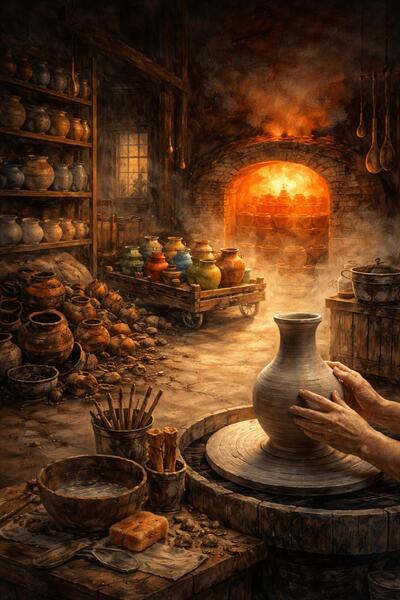
The Kiln
Some burnt pottery rests in the corner.
Their chorus is tinged with sorrow,
always reminding me of my youth,
the world-weary, cynical Tchaikovsky.
Thus, I too have felt
the so-called dissatisfaction with the status quo.
As for those half-finished pieces,
they have all been shelved,
waiting for the painters to, stroke by stroke,
dress them in color and attach price tags,
then load the entire cart to the art shop,
to face the judgments of tourists.
The kiln’s heat allows the clay bodies
to confess honestly
about their composition,
and their motives for becoming art.
All this serves as evidence in court
to decide, once glazed,
which pieces are to be released innocent,
and which must remain in custody, awaiting summons and trial.
So on the revolving wheel, a lump of clay
cannot help but stretch its neck high, ever higher—
perhaps it will become a vase,
appearing noble and elegant.
But it certainly dislikes your hands,
kneading and pulling it,
for that leaves your fingerprints.
And fingerprints, alas!
always make the case
suddenly so simple.