The Adventures of Tom Sawyer
The Adventures of Tom Sawyer by Mark Twain is an 1876 novel about a young boy growing up along the Mississippi River. The story is set in the fictional town of St. Petersburg, inspired by Hannibal, Missouri, where Twain lived.

 Mark Twain
Samuel Langhorne Clemens (November 30, 1835 – April 21, 1910), better known by his pen name Mark Twain, was an American author and humorist. He wrote The Adventures of Tom Sawyer (1876) and its sequel, Adventures of Huckleberry Finn(1885), the latter often called "the Great American Novel".

Tom Sawyer & Huckleberry Finn
Twain's next major publication was The Adventures of Tom Sawyer, which drew on his youth in Hannibal. Tom Sawyer was modeled on Twain as a child, with traces of two schoolmates, John Briggs and Will Bowen. The book also introduced, in a supporting role, Huckleberry Finn, based on Twain's boyhood friend Tom Blankenship.
Twain's next major published work, Adventures of Huckleberry Finn, solidified him as a noteworthy American writer. Some have called it the first Great American Novel, and the book has become required reading in many schools throughout the United States. Huckleberry Finn was an offshoot from Tom Sawyer and had a more serious tone than its predecessor. The main premise behind Huckleberry Finn is the young boy's belief in the right thing to do though most believed that it was wrong. Four hundred manuscript pages of Huckleberry Finn were written in mid-1876, right after the publication of Tom Sawyer. Some accounts have Twain taking seven years off after his first burst of creativity, eventually finishing the book in 1883. Other accounts have Twain working on Huckleberry Finn in tandem with The Prince and the Pauper and other works in 1880 and other years. The last fifth of Huckleberry Finn is subject to much controversy. Some say that Twain experienced, as critic Leo Marx puts it, a "failure of nerve".
realistic fiction (literary realism) 寫實小說
Literary realism is part of the realist art movement beginning with mid nineteenth-century French literature (Stendhal), and Russian literature (Alexander Pushkin) and extending to the late nineteenth and early twentieth-century.Literary realism, in contrast to idealism, attempts to represent familiar things as they are.Realist authors chose to depict everyday and banal activities and experiences, instead of using a romanticized or similarly stylized presentation. Literary critic Ian Watt, however, dates the origins of realism in United Kingdom to the early 18th-century novel.Subsequent related developments in the arts are naturalism, social realism, and in the 1930s, socialist realism.
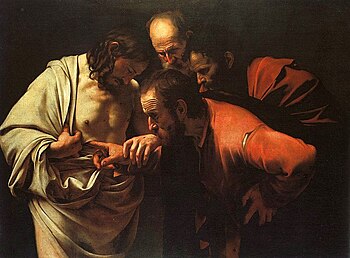
doubting Thomas (身上五個傷口;手放入釘孔)
A doubting Thomas is a skeptic who refuses to believe without direct personal experience—a reference to the Apostle Thomas, who refused to believe that the resurrected Jesus had appeared to the ten other apostles, until he could see and feel the wounds received by Jesus on the cross.
In art, the episode (formally called the Incredulity of Thomas) has been frequently depicted since at least the 5th century, with its depiction reflecting a range of theological interpretations.
colloquial literature
Important Quotations Explained
I ain’t doing my duty by that boy, and that’s the Lord’s truth, goodness knows. Spare the rod and spile the child, as the Good Book says. I’m a-laying up sin and suffering for us both, I know. He’s full of the Old Scratch, but laws-a-me! he’s my own dead sister’s boy, poor thing, and I ain’t got the heart to lash him, somehow. Every time I let him off, my conscience does hurt me so, and every time I hit him my old heart most breaks.
This quotation is from Chapter 1, when Tom has just escaped Aunt Polly’s grasp once again. Aunt Polly’s mixture of amusement and frustration at Tom’s antics is characteristic of her good humor. She attempts to discipline Tom out of a sense of duty more than out of any real indignation. In fact, she often seems to admire Tom’s cleverness and his vivacity. Her inner conflict about her treatment of Tom is summed up in the final sentence of this passage.
The faithful re-creation of regional dialects is a characteristic element of Twain’s style. Aunt Polly uses a colloquial vocabulary and pronunciation that may be difficult for a reader unfamiliar with these speech patterns. Twain’s minute attention to language is an important aspect of his realism—his project of capturing the uniqueness of American frontier life. Twain carefully studied the speech of his local Missouri community and experimented with different ways of rendering it in writing. Furthermore, he attended closely to the internal variations in speech even within such a small town as Hannibal (rendered in his fiction as St. Petersburg). The differences between the language of rich people and poor people, and between the language of blacks and whites, often find expression in Twain’s dialogue. In addition to its distinctive idiom and accent, Aunt Polly’s speech is peppered with clichés and folk wisdom, mixing Scripture and local sayings in a way that gives structure and meaning to her experience.
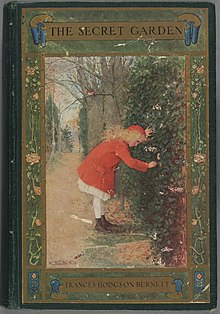
The Secret Garden
The Secret Garden is a novel by Frances Hodgson Burnett. It was initially published in serial format starting in the autumn of 1910, and was first published in its entirety in 1911. It is now one of Burnett's most popular novels, and is considered to be a classic of English children's literature. Several stage and film adaptations have been produced.
Frances Hodgson Burnett
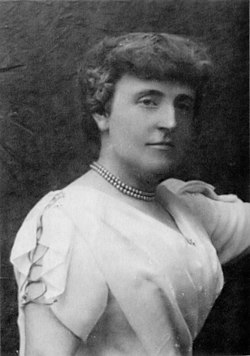
Frances Eliza Hodgson Burnett (24 November 1849 – 29 October 1924) was an English playwright and author. She is best known for her children's stories, in particular Little Lord Fauntleroy (published in 1885–1886), A Little Princess (1905), and The Secret Garden (1911).
WORD
ab- (負面字)
ex. abnormal不正常, abandone放棄, aboriginal原住民, abolish廢止, abort墮胎
viv- (生命)
ex. vital致命的, vitamin維他命, revival復活, vivacious活潑的


