- Young Audlt ficiton:also juvenile fiction, is fiction written, published, or marketed to adolescents and young adults, although recent studies show that 55% of young-adult fiction is purchased by readers over 18 years of age. The Young Adult Library Services Association (YALSA) of the American Library Association (ALA) defines a young adult as someone between the ages of twelve and eighteen. Authors and readers of young adult (YA) novels often define the genre as literature as traditionally written for ages ranging from sixteen years up to the age of twenty-five, while Teen Fiction is written for the ages of ten and to fifteen. The terms young-adult novel, juvenile novel, young-adult book, etc. refer to the works in the YA category.
- The assembly on literature for adolesences:
1. Problem novel: It is also called social novel.
2. Initiation / Quest: It is a rite of passage marking entrance or acceptance into a group or society.
3. Bildingsroman: It is a literary genre that focuses on the psychological and moral growth of the protagonist from youth to adulthood.
4. Fantasy / Adventure: It is a genre of fiction that commonly uses magic and other supernatural phenomena as a primary plot element, theme, or setting.
5. Detective fiction: It is a sub-genre of crime fiction and mystery fiction in which an investigator or a detective—either professional or amateur—investigates a crime, often murder.
* amateur (a-: not) - About Arthur Conan Doyle
1. He was a Scottish physician and writer who is most noted for his fictional stories about the detective Sherlock Holmes.
2. He was a prolific writer whose other works include fantasy and science fiction stories, plays, romances, poetry, non-fiction, and historical novels.
3. 名偵探柯南的名字源自於於此。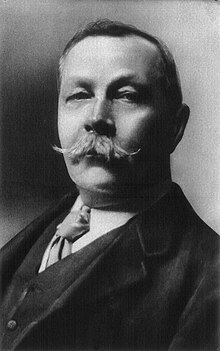
- About Sherlock Holmes
1.It is a fictional detective created by Scottish author and physician Sir Arthur Conan Doyle. A London-based "consulting detective" whose abilities border on the fantastic, Holmes is famous for his astute logical reasoning, his ability to adopt almost any disguise, and his use of forensic science skills to solve difficult cases.
- About Agatha Christie
1. She was an English crime novelist, short story writer, and playwright.
2. She also wrote six romances under the name Mary Westmacott, but she is best known for the 66 detective novels and 14 short story collections she wrote under her own name, most of which revolve around the investigations of such characters as Hercule Poirot, Miss Jane Marple and Tommy and Tuppence.
3. She also wrote the world's longest-running play, The Mousetrap.
4. Romance novel (類似中國的傳奇) => Jane Austen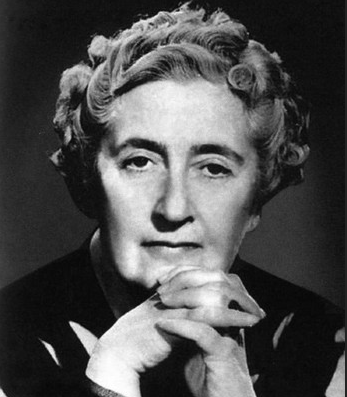
- About Don Quixote:
1. It is a Spanish novel by Miguel de Cervantes Saavedra.
2. It follows the adventures of Alonso Quixano, an hidalgo who reads so many chivalric novels that he decides to set out to revive chivalry, under the name Don Quixote.He recruits a simple farmer, Sancho Panza, as his squire, who often employs a unique, earthly wit in dealing with Don Quixote's rhetorical orations on antiquated knighthood.
3. Don Quixote is met by the world as it is, initiating such themes as intertextuality, realism, metatheatre, and literary representation.
4. Antiquated knighthood=> Movie: Shrek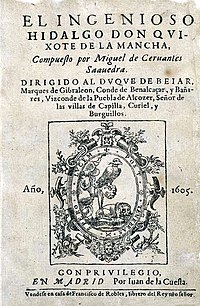

Mock: make fun of sth, make laugh at sb.
Araby: about love and lost => problem, initiation, bildungsroman
- Point of view: It is a narrative mode, perspective the story is viewed and narrative voice.
1. First person view
1.1 In a first-person narrative the story is relayed by a narrator who is also a character within the story, so that the narrator reveals the plot by referring to this viewpoint character as "I" (or, when plural, "we")
1.2 Often, the first-person narrative is used as a way to directly convey the deeply internal, otherwise unspoken thoughts of the narrator. Frequently, the narrator's story revolves around themselves as the protagonist, whose inner thoughts are conveyed openly to the audience, even if not to any of the other characters.
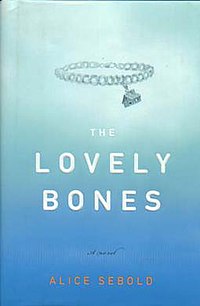
1.3 Examples: The Great Gatsby, The Sun Also Rises, The Lovely Bone.

2. Second person view
2.1 The rarest mode in literature (though quite common in song lyrics) is the second-person narrative mode, in which the narrator refers to the reader as "you", therefore making the audience member feel as if he or she is a character within the story.
2.2 Example: Choose Your Own Adventure.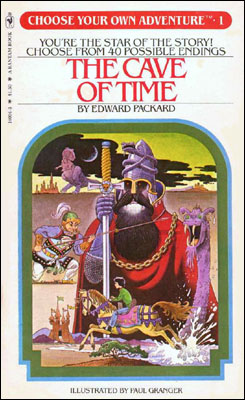
3. Third person view
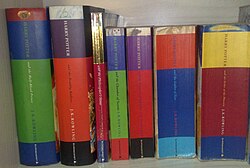
3.1 Third-person narration provides the greatest flexibility to the author and thus is the most commonly used narrative mode in literature. In the third-person narrative mode, each and every character is referred to by the narrator as "he", "she", "it", or "they", but never as "I" or "we" (first-person), or "you" (second-person).
3.2 In third-person narrative, it is obvious that the narrator is merely an unspecified entity or uninvolved person that conveys the story and is not a character of any kind within the story being told.
3.3 Example: Harry Potter.

- -spect: look
1. perspective: the state of existing in space before the eye
e.g. The elevations look all right, but the building's composition is a failure in perspective.
2. inspect: to view or examine formally or officially
e.g. The general inspected the troops.
3. spectator: a person who looks on or watches; onlooker; observer
e.g. The game drew thousands of spectators.
- About D.H. Lawrence
1. He was an English novelist, poet, playwright, essayist, literary critic and painter who published as D. H. Lawrence. His collected works, among other things, represent an extended reflection upon the dehumanising effects of modernity and industrialisation. In them, some of the issues Lawrence explores are emotional health, vitality, spontaneity and instinct.
2.Lawrence's opinions earned him many enemies and he endured official persecution, censorship, and misrepresentation of his creative work throughout the second half of his life, much of which he spent in a voluntary exile which he called his "savage pilgrimage."
3. He becoming the first local pupil to win a County Council scholarship to Nottingham High School in nearby Nottingham.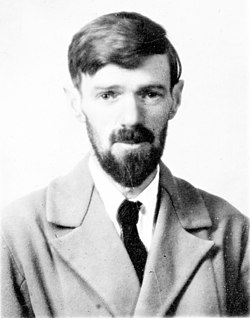
- About Lady Chatterley's Lover
1. Lady Chatterley's Lover is a novel by D. H. Lawrence, first published in 1928.
2. The book soon became notorious for its story of the physical (and emotional) relationship between a working-class man and an upper-class woman, its explicit descriptions of sex, and its use of then-unprintable words.
3. The story concerns a young married woman, Constance (Lady Chatterley), whose upper-class husband, Clifford Chatterley, described as a handsome, well-built man, has been paralysed from the waist down due to a war injury. In addition to Clifford's physical limitations, his emotional neglect of Constance forces distance between the couple. Her sexual frustration leads her into an affair with the gamekeeper, Oliver Mellors. This realisation stems from a heightened sexual experience Constance has only felt with Mellors, suggesting that love can only happen with the element of the body, not the mind.
- About Sons and Lovers
1. Sons and Lovers is a 1913 novel by the English writer D. H. Lawrence.
2. While the novel initially incited a lukewarm critical reception, along with allegations of obscenity, it is today regarded as a masterpiece by many critics and is often regarded as Lawrence's finest achievement.
- About Women in Love
1. Women in Love is a novel by British author D. H. Lawrence published in 1920. It is a sequel to his earlier novel The Rainbow (1915), and follows the continuing loves and lives of the Brangwen sisters, Gudrun and Ursula.
2. The novel ranges over the whole of British society before the time of the First World War and eventually ends high up in the snows of the Tyrolean Alps.
- About The White Peacock
1. The White Peacock is a novel by D. H. Lawrence published in 1911.
2.Lawrence started the novel in 1906 and then rewrote it three times. The early versions had the working title of Laetitia.
- About The Piano
PIANO
By D.H. Lawrence
Softly, in the dusk, a woman is singing to me;
Taking me back down the vista of years, till I see
A child sitting under the piano, in the boom of the tingling strings
And pressing the small, poised feet of a mother who smiles as she sings.
In spite of myself, the insidious mastery of song
Betrays me back, till the heart of me weeps to belong
To the old Sunday evenings at home, with winter outside
And hymns in the cosy parlour, the tinkling piano our guide.
So now it is vain for the singer to burst into clamour
With the great black piano appassionato. The glamour
Of childish days is upon me, my manhood is cast
Down in the flood of remembrance, I weep like a child for the past.
-
About Thomas Hardy
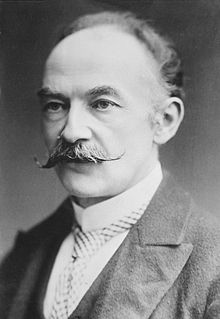
1. He was an English novelist and poet. A Victorian realist in the tradition of George Eliot, he was influenced both in his novels and in his poetry by Romanticism, especially William Wordsworth. Charles Dickens was another important influence. Like Dickens, he was highly critical of much in Victorian society, though Hardy focused more on a declining rural society.
2. He gained fame as the author of novels, including Far from the Madding Crowd (1874), The Mayor of Casterbridge (1886), Tess of the d'Urbervilles (1891), and Jude the Obscure (1895).
-
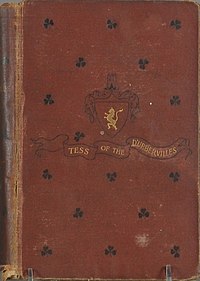
About Tess of the d'vrbervilles
1. It is a novel by Thomas Hardy. It initially appeared in a censored and serialised version, published by the British illustrated newspaper The Graphic in 1891.
2. Though now considered an important work of English literature, the book received mixed reviews when it first appeared, in part because it challenged the sexual mores of Hardy's day.
-
About Jude the Obscure
1. It was last completed of Thomas Hardy's novels, began as a magazine serial and was first published in book form in 1895.
2. The themes in the novel revolve around issues of class, education, religion and marriage.
-
man-: hand
1. manual: done, operated, worked, etc., by the hand or hands rather than by an electrical or electronic device
e.g. This education aimed at combining brain work with manual labor. -
-shire / -bury: 聚落名稱
1. Salisbury ( Stonehenge) 巨石鎮 -
-ium: 框線起來的範圍
1. stadium
2. sanatorium
- Rocking Horse Winner
1. "There should be more money."
2. Luck, fairy, mother - About Joseph Conrad: Heart of Darkness
下一則: 04/24 青少年小說 Week 10 : Correct the Midterm Paper


