05/22 青少年小說 Week 14 : William Golding
2014/06/03 22:31
瀏覽346
迴響0
推薦0
引用0
- About William Golding
1. Sir William Gerald Golding Kt., CBE (19 September 1911 – 19 June 1993) was an English novelist, playwright, and poet who won a Nobel Prize in Literature, and is best known for his novel Lord of the Flies.
2. He was also awarded the Booker Prize for literature in 1980 for his novel Rites of Passage, the first book in what became his sea trilogy, To the Ends of the Earth.
3. Golding was knighted by Elizabeth II in 1988. He was a fellow of the Royal Society of Literature. In 2008, The Times ranked Golding third on their list of "The 50 greatest British writers since 1945".
- About Lord of the Flies
1. Lord of the Flies is a 1954 dystopian novel by Nobel Prize-winning English author William Golding about a group of British boys stuck on an uninhabited island who try to govern themselves with disastrous results.
2. ts stances on the already controversial subjects of human nature and individual welfare versus the common good earned it position 68 on the American Library Association’s list of the 100 most frequently challenged books of 1990–1999.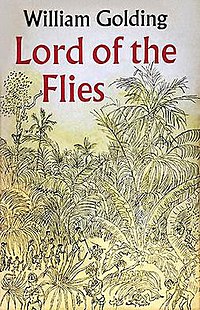
- About Thomas More
1. Sir Thomas More known to Roman Catholics as Saint Thomas More, was an English lawyer, social philosopher, author, statesman and noted Renaissance humanist.
2. More opposed the Protestant Reformation, in particular the theology of Martin Luther and William Tyndale, whose books he burned and whose followers he persecuted.
3. More also wrote Utopia, published in 1516, about the political system of an ideal and imaginary island nation.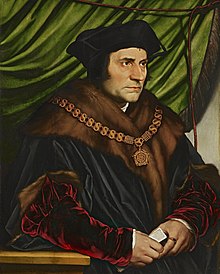
- About Utopia
1. Utopia is a work of fiction and political philosophy by Thomas More (1478–1535) published in 1516 in Latin.
2.The book is a frame narrative primarily depicting a fictional island society and its religious, social and political customs.
3. The familiar point of Utopia and Dystopian fiction: enclosed
4. 最早出現Utopia原行的在 Plato "The Republic"
- About Plato
1. Plato was a philosopher, as well as mathematician, in Classical Greece and an influential figure in philosophy, central in Western philosophy.
2. He was Socrates' student, and founded the Academy in Athens, the first institution of higher learning in the Western world.
3.三哲人: Socrates, Plato, Aristotle
- About The Republic
1. The Republic is a Socratic dialogue, written by Plato around 380 BC, concerning the definition of justice , the order and character of the just city-state and the just man, reason by which ancient readers used the name On Justice as an alternative title
2. The dramatic date of the dialogue has been much debated and though it must take place some time during the Peloponnesian War, "there would be jarring anachronisms if any of the candidate specific dates between 432 and 404 were assigned".
3. In it, Socrates along with various Athenians and foreigners discuss the meaning of justice and examine whether or not the just man is happier than the unjust man by considering a series of different cities coming into existence "in speech", culminating in a city (Kallipolis) ruled by philosopher-kings; and by examining the nature of existing regimes.
- About The Prince
1. The Prince is a 16th-century political treatise by the Italian diplomat and political theorist Niccolò Machiavelli.
2.Although it was written as if it were a traditional work in the mirrors for princes style, it is generally agreed that it was especially innovative.
3. This is only partly because it was written in the vernacular Italian rather than Latin, a practice which had become increasingly popular since the publication of Dante's Divine Comedy and other works of Renaissance literature.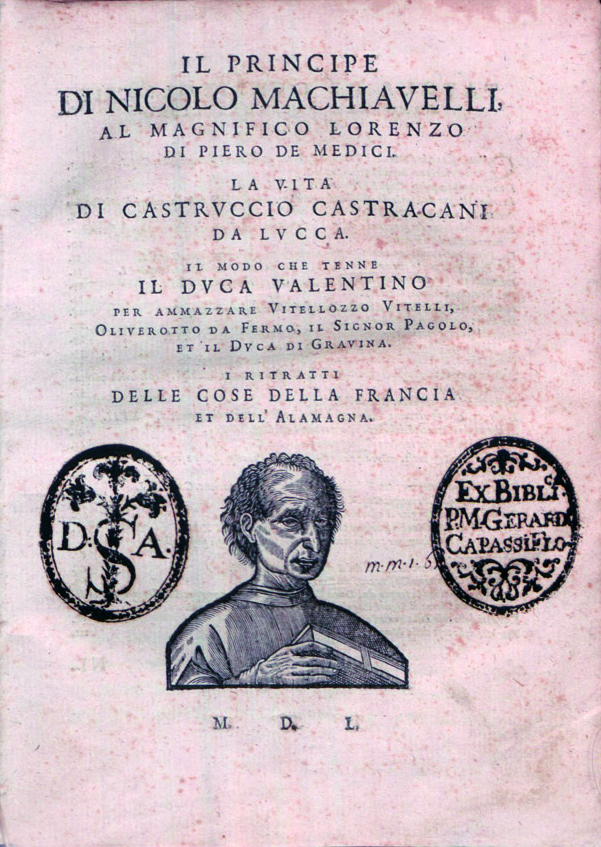
- About Machiavellianism
1.Niccolò di Bernardo dei Machiavelli was an Italian historian, politician, diplomat, philosopher, humanist, and writer based in Florence during the Renaissance.
2. He was a founder of modern political science, and more specifically political ethics.
3. He wrote his masterpiece, The Prince, after the Medici had recovered power and he no longer held a position of responsibility in Florence.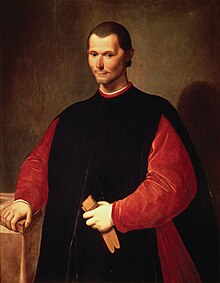
- About Neverland (in Peter Pan)
1. Neverland is a fictional place featured in the works of J. M. Barrie and those based on them.
2. It is the dwelling place of Peter Pan, Tinker Bell, the Lost Boys and others.
3. Although not all people in Neverland cease to age, its best known resident famously refused to grow up, and it is often used as a metaphor for eternal childhood (and childishness), immortality, and escapism.
4. 美好的事物都會盛極而衰走下坡
5. => Everland is a theme park in Korea.
6. "Shall I compare thee to a summer's day?"
7. 什麼都擁有就希望能夠last forever.
- About Christianity
1. Christianity is an Abrahamic, monotheistic religion based on the life and oral teachings of Jesus of Nazareth as presented in the New Testament.
2. Christianity is the world's largest religion, with approximately 2.2 billion adherents, known as Christians. Most Christians believe that Jesus is the Son of God, fully divine and fully human, and the saviour of humanity whose coming was prophesied in the Old Testament. - About Incarnation
1. Incarnation literally means embodied in flesh or taking on flesh. It refers to the conception and birth of a sentient creature who is the material manifestation of an entity, god or force whose original nature is immaterial.
2. In its religious context the word is used to mean the descent from Heaven of a god, or divine being in human/animal form on Earth. - About The Book of Revelation
1. The Book of Revelation often known simply as Revelation or the Apocalypse, is the final book of the New Testament and occupies a central place in Christian eschatology.
2. Written in Koine Greek, its title is derived from the first word of the text, apokalypsis, meaning "unveiling" or "revelation." The author of the work identifies himself in the text as "John".
3. The book spans three literary genres: epistolary, apocalyptic, and prophetic.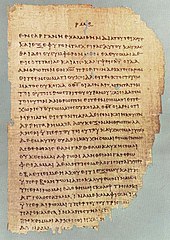
- About The Hunger Games
1. The Hunger Games is a multimedia franchise derived from The Hunger Games trilogy: a series of books by Suzanne Collins set in The Hunger Games universe: a dystopia set in North America where residents of different geographic regions are forced to participate in an annual televised death match called The Hunger Games. - About Suzanne Collins
1. Suzanne Marie Collins is an American television writer and novelist, best known as the author of The New York Times best selling series The Underland Chronicles and The Hunger Games trilogy (which consists of The Hunger Games, Catching Fire, and Mockingjay)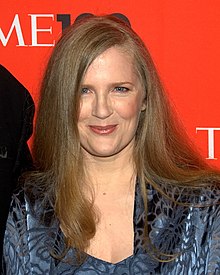
- Allegory
1. Allegory is a rhetorical device in which characters or events in a literary, visual, or musical art form represent or symbolize ideas and concepts.
2.An allegory conveys its hidden message through symbolic figures, actions, imagery, and/or events. Allegory is generally treated as a figure of rhetoric; a rhetorical allegory is a demonstrative form of representation conveying meaning other than the words that are spoken.
3. As a literary device, an allegory in its most general sense is an extended metaphor.
4. Example: The Faerie Queene by Edmund Spenser 推崇 Elizebeth - Fable
1. Fable is a literary genre. A fable is a succinct fictional story, in prose or verse, that features animals, mythical creatures, plants, inanimate objects or forces of nature which are anthropomorphized (given human qualities such as verbal communication), and that illustrates or leads to an interpretation of a moral lesson ,which may at the end be added explicitly in a pithy maxim.
2. A fable differs from a parable in that the latter excludes animals, plants, inanimate objects, and forces of nature as actors that assume speech and other powers of humankind.
3. Aesop's Fable : is a collection of fables credited to Aesop, a slave and story-teller believed to have lived in ancient Greece between 620 and 560 BCE.
4. Top three fables in Aesop's Fable
4.1 The Fox and the Grape
4.2 The Boy who Cried Wolf
4.3 North Wind and the Sun - Parable
1. A parable is a succinct, didactic story, in prose or verse, which illustrates one or more instructive lessons or principles. It differs from a fable in that fables employ animals, plants, inanimate objects, or forces of nature as characters, whereas parables have human characters.
2. A parable is a type of analogy. - Fantasy
1. Fantasy is a genre of fiction that commonly uses magic and other supernatural phenomena as a primary plot element, theme, or setting.
2. Many works within the genre take place in imaginary worlds where magic and magical creatures are common.
3.三大奇幻小說家
3.1 Ursula K.Le Guin- Hugo Award
3.2 J.R.R. Tolkien- The Lord of the Rings
3.3 C.S Lewis- The Chronicles of Narnia
- Mono-: one
1. Monotheism: the doctrine or belief that there is only one God.
e.g. We are acquiring an understanding of the history of monotheism.
- cease to age => cease to : stop to
自訂分類:青少年小說課堂筆記
上一則: 05/29 青少年小說 Week 15 : Where are you going where have you been & Paul's case下一則: 05/15 青少年小說 Week 13 : Where are you going, where have you been? & Willa Cather
你可能會有興趣的文章:


