- About D.H. Lawrence
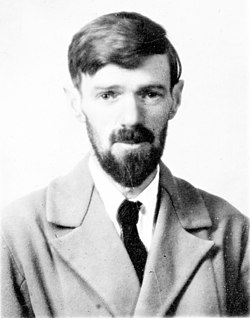
1. He was anEnglish novelist, poet, playwright, essayist, literary critic and painter who published as D. H. Lawrence.His collected works, among other things, represent an extended reflection upon the dehumanising effects of modernity and industrialisation. In them, some of the issues Lawrence explores are emotional health, vitality, spontaneity and instinct.
2. Lawrence's opinions earned him many enemies and he endured official persecution, censorship, and misrepresentation of his creative work throughout the second half of his life,much of which he spent in a voluntary exile which he called his "savage pilgrimage."
3. He becoming the first localpupilto win a County Council scholarship to Nottingham High School in nearbyNottingham.
- About Rocking Horse Winner
1. "The Rocking-Horse Winner" is a short story by D. H. Lawrence. It was first published in July 1926, in Harper's Bazaar and subsequently appeared in the first volume of Lawrence's collected short stories. It was made into a full-length film directed by Anthony Pelissier and starring John Howard Davies, Valerie Hobson and John Mills; the film was released in the United Kingdom in 1949 and in 1950 in the United States. - Plot summary
1. The story describes a young middle-class Englishwoman who "had no luck." Though outwardly successful, she is haunted by a sense of failure; her husband is a ne'er-do-well and her work as a commercial artist doesn't earn as much as she'd like. The family's lifestyle exceeds its income and unspoken anxiety about money permeates the household. Her children, a son Paul and his two sisters, sense this anxiety; moreover, the kids even claim they can hear the house whispering "There must be more money." -> conflict
2.Paul says to his mother:"I never told you, mother, that if I can ride my horse, and get there, then I'm absolutely sure – oh absolutely! Mother, did I ever tell you? I am lucky!"
"No, you never did," said his mother.
But the boy died in the night.
3. The failure made deep lines come into her face -> metaphor
4. The big doll sitting so pink and smirking-> Iliad (Achilles)
5. keep a car 養車==> keep a promise, keep a diary.
6. Fortune stands for money and luck.
* vogue 時尚, vague 模糊
* lucre(lucker) 土地,櫥櫃
7. That's why it's better to be born in luck than in rich.
8. Frenzy, ,madly, furious-> go with anxiety, anger, energrtic.
9. Jockey=> DJ: Disk Jockey
10. blue eye -> 對西方人來說是蠢/ 純真的意思
11. poor devil 老天
- About Joyce Carol Oates
1. She is an American author. Oates published her first book in 1963 and has since published over forty novels, as well as a number of plays and novellas, and many volumes of short stories, poetry, and nonfiction. She has won many awards for her writing, including the National Book Award, for her novel them (1969), two O. Henry Awards, and the National Humanities Medal. Her novels Black Water (1992), What I Lived For (1994), and Blonde (2000) were nominated for the Pulitzer Prize.
- About Where are you going, where have you been?
1. It is a frequently anthologized short story written by Joyce Carol Oates. The story first appeared in the Fall 1966 edition of Epoch Magazine. It was inspired by three Tucson, Arizona murders committed by Charles Schmid, which were profiled in Life magazine in an article written by Don Moser on March 4, 1966. Oates said that she dedicated the story to Bob Dylan because she was inspired to write it after listening to his song "It's All Over Now, Baby Blue." - Song: Bob Dylan - It's all over now, baby blue.

"It's All Over Now, Baby Blue"
(https://www.youtube.com/watch?v=Uz9BAE1FZGM)
You must leave now, take what you need, you think will last
But whatever you wish to keep, you better grab it fast
Yonder stands your orphan with his gun
Crying like a fire in the sun
Look out the saints are comin' through
And it's all over now, Baby Blue.
The highway is for gamblers, better use your sense
Take what you have gathered from coincidence
The empty handed painter from your streets
Is drawing crazy patterns on your sheets
This sky, too, is folding under you
And it's all over now, Baby Blue.
All your seasick sailors, they are rowing home
Your empty handed armies, are all going home
Your lover who just walked out the door
Has taken all his blankets from the floor
The carpet, too, is moving under you
And it's all over now, Baby Blue.
Leave your stepping stones behind, something calls for you
Forget the dead you've left, they will not follow you
The vagabond who's rapping at your door
Is standing in the clothes that you once wore
Strike another match, go start a new
And it's all over now, Baby Blue.
下一則: 05/01 青少年小說 Week 11 : YA fiction & D.H. Lawrence


