- 五段論證法
- First paragraph : Thesis statement (hypothesis)
- Second to forth paragraph : Supporting ideas
- Last paragraph : Conclusion ( don't make the conclusion too long !)
- Review
- Define what it is and what is it for
- Young-adult fiction 多了 detective fiction
- About definition :
- What it is ?
- What does it for?
- Give an example.
- Bildungsroman can see the protagonist's mental, physical, and financial growth.
- Recite: A recitation in a general sense is the act of reciting from memory, or a formal reading of verse or other writing before an audience.
- Alliteration: Alliteration is the repetition of the same sounds or of the same kinds of sounds at the beginning of words or in stressed syllables of an English language phrase. Alliteration developed largely through poetry, in which it more narrowly refers to the repetition of a consonant in any syllables that, according to the poem's meter, are stressed, as in James Thomson's verse "Come…dragging the lazy languid Line along". Another example is, "Peter Piper Picked a Peck of Pickled Peppers".
- Edgar Allan Poe describe the writing method of The Raven in the essay The Philosophy of Composition. He claims to have strictly followed this method. It has been questioned, however, whether he really followed this system. T. S. Eliot said: "It is difficult for us to read that essay without reflecting that if Poe plotted out his poem with such calculation, he might have taken a little more pains over it: the result hardly does credit to the method." Biographer Joseph Wood Krutch described the essay as "a rather highly ingenious exercise in the art of rationalization".
- In The Raven, there are many onomatopoeia.
- Onomatopoeia: It is a word that phonetically imitates, resembles or suggests the source of the sound that it describes. Onomatopoeia refers to the property of such words. Common occurrences of onomatopoeias include animal noises such as "oink", "meow", "roar" or "chirp".
- Sitting on a bust of Pallas, the raven seems to further instigate his distress with its constant repetition of the word "Nevermore". ==> Phoebus Apollo (都是閃閃發亮的神)
- The three central elements of Poe's philosophy of composition are: length, method, and " unity of effect".
- Ode to the West wind [先知茁見者的痛苦]
-
(IV.)
If I were a dead leaf thou mightest bear;
If I were a swift cloud to fly with thee;
A wave to pant beneath thy power, and share
The impulse of thy strength, only less free
Than thou, O, uncontroulable! If even
I were as in my boyhood, and could be
The comrade of thy wanderings over heaven,
As then, when to outstrip thy skiey speed
Scarce seemed a vision; I would ne'er have striven
As thus with thee in prayer in my sore need.
Oh! lift me as a wave, a leaf, a cloud!
I fall upon the thorns of life! I bleed!
A heavy weight of hours has chained and bowed
One too like thee: tameless, and swift, and proud.
- (V.)
Make me thy lyre, even as the forest is:
What if my leaves are falling like its own!
The tumult of thy mighty harmonies
Will take from both a deep, autumnal tone,
Sweet though in sadness. Be thou, spirit fierce,
My spirit! Be thou me, impetuous one!
Drive my dead thoughts over the universe
Like withered leaves to quicken a new birth!
And, by the incantation of this verse,
Scatter, as from an unextinguished hearth
Ashes and sparks, my words among mankind!
Be through my lips to unawakened earth
The trumpet of a prophecy! O, wind,
If Winter comes, can Spring be far behind?
- Five best known poetes in English literature: Percy Shelley, William Blake, Lord Byron, Samuel Taylor Coleridge, and William Wordsworth.
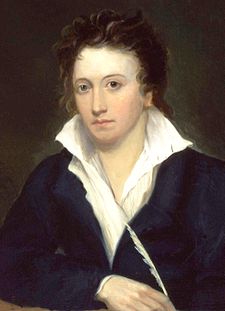
- About Percy Bysshe Shelley
Percy Bysshe Shelley was one of the major English Romantic poets and is regarded by critics as amongst the finest lyric poets in the English language. A radical in his poetry as well as his political and social views, Shelley did not achieve fame during his lifetime, but recognition for his poetry grew steadily following his death. Shelley was a key member of a close circle of visionary poets and writers that included Lord Byron; Leigh Hunt; Thomas Love Peacock; and his own second wife, Mary Shelley, the author of Frankenstein.
- About William Blake
William Blake was an English poet, painter and printmaker. Largely unrecognised during his lifetime, Blake is now considered a seminal figure in the history of the poetry and visual arts of the Romantic Age. His prophetic poetry has been said to form "what is in proportion to its merits the least read body of poetry in the English language".[1] His visual artistry led one contemporary art critic to proclaim him "far and away the greatest artist Britain has ever produced".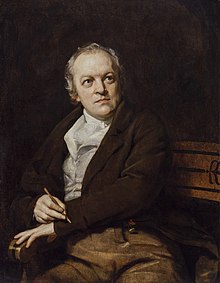
- About Lord Byron
Lord Byron, was an English poet and a leading figure in the Romantic movement. Among Byron's best-known works are the lengthy narrative poems Don Juan and Childe Harold's Pilgrimage and the short lyric She Walks in Beauty. He is regarded as one of the greatest British poets and remains widely read and influential.
- About Samuel Taylor Coleridge
Samuel Taylor Coleridge (21 October 1772 – 25 July 1834) was an English poet, literary critic and philosopher who, with his friend William Wordsworth, was a founder of the Romantic Movement in England and a member of the Lake Poets. He wrote the poems The Rime of the Ancient Mariner and Kubla Khan, as well as the major prose work Biographia Literaria. His critical work, especially on Shakespeare, was highly influential, and he helped introduce German idealist philosophy to English-speaking culture.
- About William Wordsworth
William Wordsworth (7 April 1770 – 23 April 1850) was a major English Romantic poet who, with Samuel Taylor Coleridge, helped to launch the Romantic Age in English literature with the 1798 joint publication Lyrical Ballads.Wordsworth's magnum opus is generally considered to be The Prelude, a semiautobiographical poem of his early years which he revised and expanded a number of times. It was posthumously titled and published, prior to which it was generally known as "the poem to Coleridge".

- Two kinds of Poetry: 1. Narrative poetry (敘事詩)
2. Lyrical poetry (抒情詩)
- Narrative poetry: Narrative poetry is a form of poetry that tells a story, often making use of the voices of a narrator and characters as well; the entire story is usually written in metred verse. The poems that make up this genre may be short or long, and the story it relates to may be complex. It is usually dramatic, with objectives, diverse characters, and metre. Narrative poems include epics, ballads, idylls, and lays.
Some narrative poetry takes the form of a novel in verse. An example of this is The Ring and the Book by Robert Browning. In terms of narrative poetry, a romance is a narrative poem that tells a story of chivalry. Examples include the Romance of the Rose or Tennyson's Idylls of the King. Although these examples use medieval and Arthurian materials, romances may also tell stories from classical mythology.
Shorter narrative poems are often similar in style to the short story. Sometimes these short narratives are collected into interrelated groups, as with Chaucer's Canterbury Tales. Some literatures contain prose narratives that include poems and poetic interludes; much Old Irish poetry is contained within prose narratives, and the Old Norse sagas include both incidental poetry and the biographies of poets. An example is "The Cremation of Sam McGee" by Robert Service.
-
Lyrical poetry: Lyric poems typically express personal (often emotional) feelings and are traditionally spoken in the present tense. Modern examples often have specific rhyming schemes. Greek lyric poetry was defined by its musical accompaniment, and modern forms are sometimes also set to music or a beat.
- Bartleby, the Scrivener:
1. "Bartleby, the Scrivener: A Story of Wall Street" is a short story by the American writer Herman Melville (1819–1891). It first appeared anonymously in two parts in the November and December 1853 editions of Putnam's Magazine, and was reprinted with minor textual alterations in his The Piazza Tales in 1856.
(Wiki source of Bartleby, the Scrivener : http://en.wikisource.org/wiki/Bartleby_the_Scrivener)
2. The last sentence of Bartleby: '' Ah humanity, ah bartleby." is one of the famous sentence in this story. [ 誰是你的朋友? 誰又是你的敵人? ]
3. Parable of the Good Samaritan [ 誰可以進入天國? ]
- About Herman Melville: Herman Melville (August 1, 1819 – September 28, 1891) was an American novelist, poet, and writer of short stories. His contributions to the Western canon are the whaling novel Moby-Dick (1851); the short work Bartleby, the Scrivener (1853) about a clerk in a Wall Street office; the slave ship narrative Benito Cereno (1855); and Billy Budd, Sailor (1924).

- The Revolutionary Period (1763-1810)
- The Romance Period (1812-1865)
1. The Federalist: The Federalist Papers are a series of 85 articles and essays written by Alexander Hamilton, James Madison, and John Jay promoting the ratification of the United States Constitution.
2. Rip Van Winkle: "Rip Van Winkle" is a short story by American author Washington Irving published in 1819 as well as the name of the story's fictional protagonist.

- About Alexander Hamilton:
1. Alexander Hamilton (January 11, 1755 or 1757 – July 12, 1804) was a Founding Father of the United States, chief of staff to General Washington, one of the most influential interpreters and promoters of the Constitution, the founder of the nation's financial system, and the founder of the first American political party.
2. Hamilton served in the American Revolutionary War.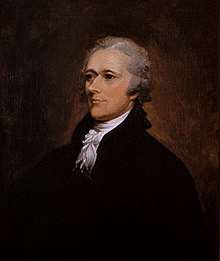
- About Washington Irving:
Washington Irving (April 3, 1783 – November 28, 1859) was an American author, essayist, biographer, historian, and diplomat of the early 19th century. He is best known for his short stories "The Legend of Sleepy Hollow" and "Rip Van Winkle", both of which appear in his book The Sketch Book of Geoffrey Crayon, Gent.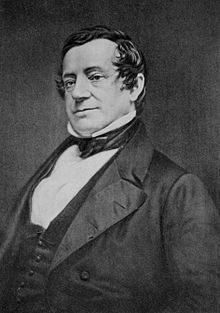
- Edgar Allan Poe (1809-1849)
He responsed that the end of the art is beauty. [ 真善美只取美 ]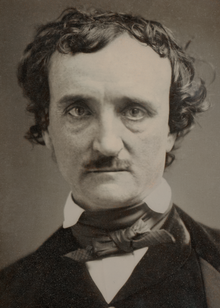
- John Keats
"Beauty is the truuth, truth is beauty that is all ye know on earth and all you need to know."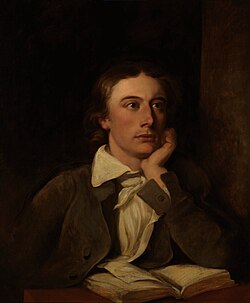
- Two books in the movie Finding Forrester, are all written by Yukio Mishima
1. The Sound of Waves: The Sound of Waves (潮騒) is a 1954 novel by the Japanese author Yukio Mishima. It's a coming of age story detailing the maturity of protagonist Shinji and his romance with Hatsue, the beautiful daughter of the wealthy ship owner Terukichi. For this book Mishima was awarded the Shincho Prize from Shinchosha Publishing in 1954. It was adapted to film on five separate occasions.
2. The Temple of Dawn: The Temple of Dawn (暁の寺 Akatsuki no Tera?) is the third novel in the Sea of Fertility tetralogy by the Japanese writer Yukio Mishima. For this as for the other novels in the series, Mishima travelled to various places to conduct research, including Wat Arun in Bangkok, Thailand.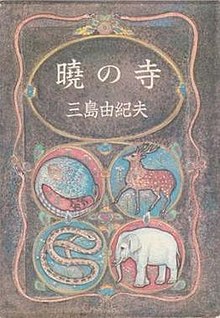
- About Yukio Mishima (三島由紀夫)
1. Yukio Mishima (三島 由紀夫 Mishima Yukio) is the pen name of Kimitake Hiraoka (平岡 公威 Hiraoka Kimitake, January 14, 1925 – November 25, 1970), a Japanese author, poet, playwright, actor, and film director. Mishima is considered one of the most important Japanese authors of the 20th century; he was nominated three times for the Nobel Prize in Literature and was poised to win the prize in 1968 although lost the award to his fellow countryman Yasunari Kawabata, presumably because of his radical right-wing activities. His avant-garde work displayed a blending of modern and traditional aesthetics that broke cultural boundaries, with a focus on sexuality, death, and political change.
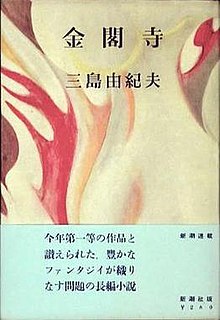
2.One of his famous novel work: The Temple of the Golden Pavilion (金閣寺)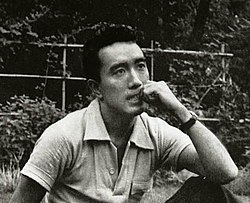
下一則: 03/20 青少年小說 Week 5 : Finding Forrester


