
- 以第一人稱 Holden Caufield 的口吻講述這個故事
- 讚賞者、批評者的說法各異
正: 描寫內心思維、青少年對世界充滿虛偽欺騙的心聲
反: 不良形象影響青少年、幾度被列為禁書 - Antihero , run away hero, Byronic hero: Holden Caufield ( The eariest antihero character)
- page 38 line 4
left-handed fielder's mitt (手套)
He got leukemia(白血病) and died when we were up in Maine.
=> anemia (貧血) (an-none => anishia) -
◎ 自古書中多寂寞 Loneliness :
(Chap. 7)It was even depressing out in the street. You couldn’t even hear any cars any more. I got feeling so lonesome and rotten, I even felt like waking Ackley up.
(Chap. 14) It was getting daylight outside, Boy, I felt miserable. I felt so depressed, you can’t imagine. What I did, I started talking, sort of out loud, to Allie. I do that sometimes when I get very depressed.
(Chap. 20) When I finally got down off the radiator and went out to hat-check room, I was crying and all. I don’t know why, but I was. I guess it was because I was feeling so damn depressed and lonesome… -
◎自古書中多寂寞 Loneliness: Adventures of Huckleberry Finn
kept pecking at me 一直找我麻煩 -
◎ 小孩子最怕的荒涼和孤單,不被認同與沒有回應 (Mark Twain)
第三章「戰爭與愛情」
第七章「壁蝨之戰與失戀」
-
◎ Chapter 25 is where the anticlimax comes.
Song: "Smoke Gets in Your Eyes."
(https://www.youtube.com/watch?v=57tK6aQS_H0)
Don't ever tell anybody anything. If you do, you start missing everybody.
- Antihero: The antihero or antiheroine is a leading character in a film, book or play who lacks the traditional heroic qualities such as idealism, courage, nobility, fortitude, moral goodness, and altruism.The term is also used more broadly to cover Byronic heroes as well.
- Byronic hero: The Byronic hero is a variant of the Romantic hero as a type of character, named after the English Romantic poet Lord Byron.
- About Lord Byron

- Lord Byron, was an English poet and a leading figure in the Romantic movement. Among Byron's best-known works are the lengthy narrative poems Don Juan and Childe Harold's Pilgrimage and the short lyric She Walks in Beauty. He is regarded as one of the greatest British poets and remains widely read and influential.
- She Walks in Beauty
1. It is a lyric poem that describes a woman of much beauty and elegance.
2. The poem appears to be told from the view point of third person omniscient.
3. The use of end rhyme.
She walks in beauty, like the night
Of cloudless climes and starry skies;
And all that's best of dark and bright
Meet in her aspect and her eyes:
Thus mellow'd to that tender light
Which heaven to gaudy day denies.
One shade the more, one ray the less,
Had half impaired the nameless grace
Which waves in every raven tress,
Or softly lightens o'er her face;
Where thoughts serenely sweet express
How pure, how dear their dwelling-place.
And on that cheek, and o'er that brow,
So soft, so calm, yet eloquent,
The smiles that win, the tints that glow,
But tell of days in goodness spent,
A mind at peace with all below,
A heart whose love is innocent!
- R.I.P stands for rest in peace.
- Rip Van Winkle is the first American novel.* van / de 荷蘭民族的貴族後裔--> Van Gao (Vicent)
* Go dutch 荷蘭用法 : 各付各的

- The Glass Menagerie is a four-character memory play by Tennessee Williams which premiered in 1944 and catapulted Williams from obscurity to fame.
- The characters and story mimic Williams's own life more closely than any of his other works.
- It's a kind of problem play.
- The main character Tom Wingfield is the antihero.
- Characters:
Amanda Wingfield: A faded Southern belle, abandoned by her husband, who is trying to raise her two children under harsh financial conditions.
Tom Wingfield: Amanda's son and Laura's younger brother. Tom works at a shoe warehouse to support his family but is frustrated by his job and aspires to be a poet. He struggles to write for he is sleep deprived and aggravated. Yet, he escapes from reality through nightly excursions, apparently to the movies but also to local bars. Tom feels both obligated toward yet burdened by his family and longs to escape.
Laura Wingfield: Amanda's daughter and Tom's older sister. A childhood illness has left her with a limp, and she has a mental fragility and an inferiority complex that have isolated her from the outside world. She has created a world of her own symbolized by her collection of glass figurines.
Jim O’Connor: An old high school acquaintance of Tom and Laura. im was a popular athlete and actor during his days at Soldan High School.
Mr. Wingfield: Amanda's absentee husband and Laura and Tom’s father. Although he doesn't appear onstage, Mr. Wingfield is frequently referred to by Amanda and his picture is prominently displayed in the Wingfields' living room. The unseen character appears to incorporate elements of Williams's own father.
- About Tennessee Williams

- Thomas Lanier "Tennessee" Williams III (March 26, 1911 – February 25, 1983) was an American playwright, author of many stage classics.
- He became suddenly famous with The Glass Menagerie (1944), closely reflecting his own unhappy family background.
- Williams adapted much of his best work for the cinema, and also wrote short stories, poetry, essays and a volume of memoirs. In 1979, 4 years before his death, he was inducted into the American Theater Hall of Fame.
- Huck, Tom Saywer, Rip Van Winkle are all run away hero.
- Godot: 荒謬劇團中的一團
- enlighten
- lighten
- stregthen
- emotionism
- individualism
- humanism
- The Hunchbach of Notre Dame (鐘樓怪人)

- The Hunchback of Notre-Dame (French: Notre-Dame de Paris) is a French Romantic/Gothic novel by Victor Hugo published in January 14, 1831. The title refers to the Notre Dame Cathedral in Paris, on which the story is centered.
- Characters:
Quasimodo: The novel's protagonist, is the bell-ringer of Notre Dame and a barely verbal hunchback. Ringing the church bells has made him deaf. Abandoned as a baby, he was adopted by Claude Frollo. Quasimodo's life within the confines of the cathedral and his only two outlets — ringing the bells and his love and devotion for Frollo — are described. He ventures outside the Cathedral rarely, since people despise and shun him for his appearance.
Esmeralda: A beautiful young gypsy street dancer who is naturally compassionate and kind. She is the center of the human drama within the story. A popular focus of the citizens' attentions, she experiences their changeable attitudes, being first adored as an entertainer, then hated as a witch, before being lauded again for her dramatic rescue by Quasimodo.She is one of the few characteres to show the hunchback a moment of human kindness: as he is being whipped for punishment and jeered by a horrid rabble, she approaches the public stocks and gives him a drink of water.
Claude Frollo: Claude Frollo's over-indulged younger brother. He is a troublemaker and a student at the university. He is dependent on his brother for money, which he then proceeds to squander on alcohol. Quasimodo kills him during the attack on the cathedral. He briefly enters the cathedral by ascending one of the towers with a borrowed ladder, but Quasimodo sees him and throws him down to his death.
- About Victor Hugo

- Victor Marie Hugo (French pronunciation: [viktɔʁ maʁi yɡo]; 26 February 1802 – 22 May 1885) was a French poet, novelist, and dramatist of the Romantic movement. He is considered one of the greatest and best known French writers.
- Among many volumes of poetry, Les Contemplations and La Légende des siècles stand particularly high in critical esteem.
- Outside France, his best-known works are the novels Les Misérables, 1862, and Notre-Dame de Paris, 1831 (known in English as The Hunchback of Notre-Dame).
- Jane Eyre (簡愛)
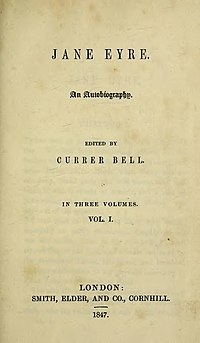
- Jane Eyre /ˈɛər/ (originally published as Jane Eyre: An Autobiography) is a novel by English writer Charlotte Brontë.
- Primarily of the bildungsroman genre, Jane Eyre follows the emotions and experiences of its title character, including her growth to adulthood, and her love for Mr. Rochester, the byronic master of fictitious Thornfield Hall.
- The novel contains elements of social criticism, with a strong sense of morality at its core, but is nonetheless a novel many consider ahead of its time given the individualistic character of Jane and the novel's exploration of classism, sexuality, religion, and proto-feminism.
- Character:
Jane Eyre: The protagonist of the novel and the title character. Orphaned as a baby, she struggles through her nearly loveless childhood and becomes governess at Thornfield Hall. Jane is passionate and strongly principled, and values freedom and independence. She also has a strong conscience and is a determined Christian.
- About Charlotte Brontë

- Charlotte Brontë (/ˈbrɒnti/; 21 April 1816 – 31 March 1855) was an English novelist and poet, the eldest of the three Brontë sisters who survived into adulthood and whose novels are English literature standards.
- She wrote Jane Eyre under the pen name Currer Bell.
- Wuthering Heights (咆哮山莊)

- Wuthering Heights is a novel by Emily Brontë.
- It was her first and only published novel: she died the following year, at age 30.
- Wuthering Heights is the name of the farmhouse on the Yorkshire moors where the story unfolds. The book's core theme is the destructive effect that jealousy and vengefulness have, both on the jealous or vengeful individuals and on their communities.
- Characters:
Heathcliff: Heathcliff has been considered as a Byronic hero, but critics have pointed out that he re-invents himself at various points, making his character hard to fit into any single "type." Because of his ambiguous position in society and his lack of status—underlined by the fact that "Heathcliff" serves as his given name; he has no surname—his character has been a favourite subject of Marxist criticism.
Catherine Earnshaw:First introduced to the reader after her death, through Lockwood's discovery of her diary and carvings. The description of her life is confined almost entirely to the first volume.Some critics have argued that her decision to marry Edgar Linton is allegorically a rejection of nature and a surrender to culture—a choice with fateful consequences for all the other characters. Literary critics have examined her character through many different lenses, including those of psychoanalytic theory and feminist theory.
Edgar Linton: Introduced as a child in the Linton family, he resides at Thrushcross Grange. Edgar's style and manners are in sharp contrast to Heathcliff's, who instantly dislikes him, and Catherine, who is drawn to him.
- About Emily Brontë
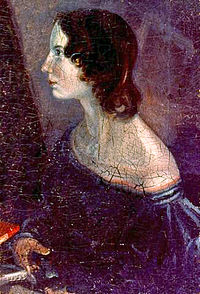
- Emily Jane Brontë (/ˈbrɒnti/;[1][2] 30 July 1818 – 19 December 1848)[3] was an English novelist and poet, best remembered for her only novel, Wuthering Heights, now considered a classic of English literature.
- She wrote under the pen name Ellis Bell.
- The Count of Monte Cristo (基度山恩仇記)

- The Count of Monte Cristo (French: Le Comte de Monte-Cristo) is an adventure novel by French author Alexandre Dumas (père) completed in 1844.
- It is one of the author's most popular works, along with The Three Musketeers.
- The book is considered a literary classic today. According to Luc Sante, "The Count of Monte Cristo has become a fixture of Western civilization's literature, as inescapable and immediately identifiable as Mickey Mouse, Noah's flood, and the story of Little Red Riding Hood."
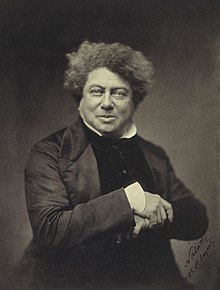
- Alexandre Dumas, père, was a French writer. His works have been translated into nearly 100 languages, and he is one of the most widely read French authors.
- Many of his historical novels of high adventure, including The Count of Monte Cristo, The Three Musketeers, Twenty Years After, and The Vicomte de Bragelonne: Ten Years Later were originally published as serials.

- The Sorrows of Young Werther (German: Die Leiden des jungen Werthers) is an epistolary and loosely autobiographical novel by Johann Wolfgang von Goethe.
- Werther was an important novel of the Sturm und Drang period in German literature, and influenced the later Romantic literary movement.
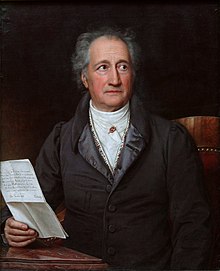
- Johann Wolfgang von Goethe (28 August 1749 – 22 March 1832) was a German writer and politician.
- His body of work includes epic and lyric poetry written in a variety of metres and styles; prose and verse dramas; memoirs; an autobiography; literary and aesthetic criticism; treatises on botany, anatomy, and colour; and four novels.
- Oedipus: pride
- Hamlet: hesitation
- About Robert Burns

- A Scottish poet and lyricist. He is widely regarded as the national poet of Scotland and is celebrated worldwide.
- He is the best known of the poets who have written in the Scots language, although much of his writing is also in English and a light Scots dialect, accessible to an audience beyond Scotland.
- His poem (and song) "Auld Lang Syne" is often sung at Hogmanay (the last day of the year), and "Scots Wha Hae" served for a long time as an unofficial national anthem of the country. Other poems and songs of Burns that remain well known across the world today include "A Red, Red Rose"; "A Man's a Man for A' That"; "To a Louse"; "To a Mouse"; "The Battle of Sherramuir"; "Tam o' Shanter"; and "Ae Fond Kiss".
- He is regarded as a pioneer of the Romantic movement, and after his death he became a great source of inspiration to the founders of both liberalism and socialism, and a cultural icon in Scotland and among the Scottish Diaspora around the world.
- A Red, Red Rose
O my Luve(蘇格蘭方言的Love)'s like a red, red rose
That’s newly sprung in June;
O my Luve's like the melodie
That’s sweetly play'd in tune.
As fair art thou, my bonnie(美麗的女子) lass,
So deep in luve am I:
And I will luve thee still, my dear,
Till a’ the seas gang dry:
Till a’ the seas gang dry, my dear,
And the rocks melt wi’ the sun(直到海枯石爛):
I will luve thee still, my dear,
While the sands o’ life shall run.
And fare thee well, my only Luve
And fare thee well, a while!
And I will come again, my Luve,
Tho’ it were ten thousand mile.
- Oxymoron (矛盾修辭法):
(1) parting is such a sweet sorrow
(2) bitter sweet
下一則: 03/06 青少年小說 Week 3 : The Catcher in the Rye


