Introduction – Company Background
GuangXin Industrial Co., Ltd. is a specialized manufacturer dedicated to the development and production of high-quality insoles.
With a strong foundation in material science and footwear ergonomics, we serve as a trusted partner for global brands seeking reliable insole solutions that combine comfort, functionality, and design.
With years of experience in insole production and OEM/ODM services, GuangXin has successfully supported a wide range of clients across various industries—including sportswear, health & wellness, orthopedic care, and daily footwear.
From initial prototyping to mass production, we provide comprehensive support tailored to each client’s market and application needs.
At GuangXin, we are committed to quality, innovation, and sustainable development. Every insole we produce reflects our dedication to precision craftsmanship, forward-thinking design, and ESG-driven practices.
By integrating eco-friendly materials, clean production processes, and responsible sourcing, we help our partners meet both market demand and environmental goals.
Core Strengths in Insole Manufacturing
At GuangXin Industrial, our core strength lies in our deep expertise and versatility in insole and pillow manufacturing. We specialize in working with a wide range of materials, including PU (polyurethane), natural latex, and advanced graphene composites, to develop insoles and pillows that meet diverse performance, comfort, and health-support needs.
Whether it's cushioning, support, breathability, or antibacterial function, we tailor material selection to the exact requirements of each project-whether for foot wellness or ergonomic sleep products.
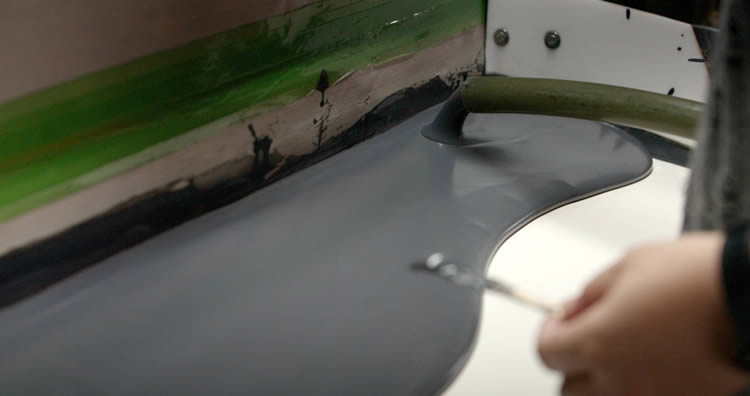
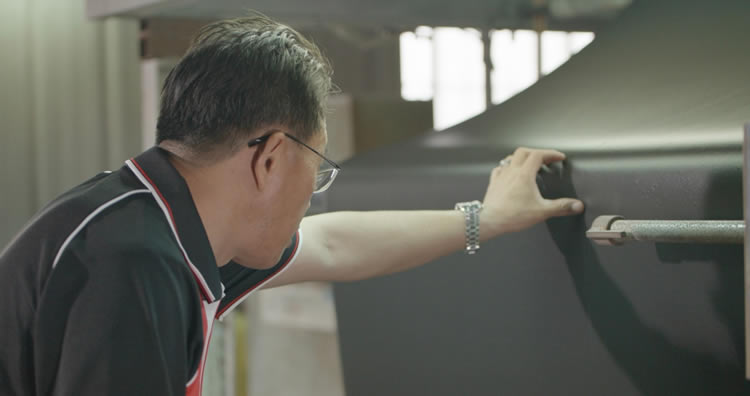
We provide end-to-end manufacturing capabilities under one roof—covering every stage from material sourcing and foaming, to precision molding, lamination, cutting, sewing, and strict quality control. This full-process control not only ensures product consistency and durability, but also allows for faster lead times and better customization flexibility.
With our flexible production capacity, we accommodate both small batch custom orders and high-volume mass production with equal efficiency. Whether you're a startup launching your first insole or pillow line, or a global brand scaling up to meet market demand, GuangXin is equipped to deliver reliable OEM/ODM solutions that grow with your business.
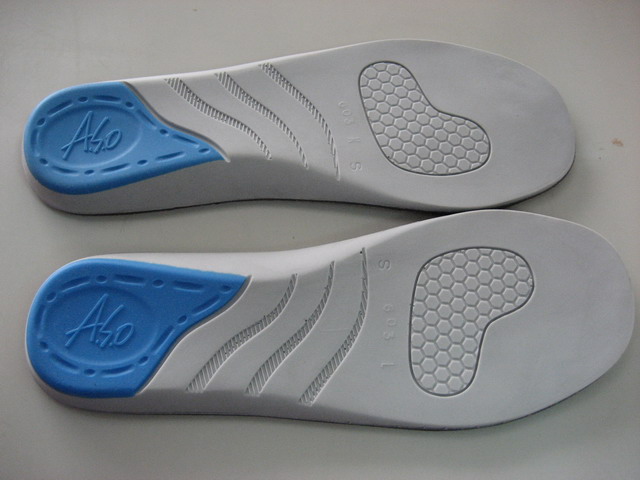
Customization & OEM/ODM Flexibility
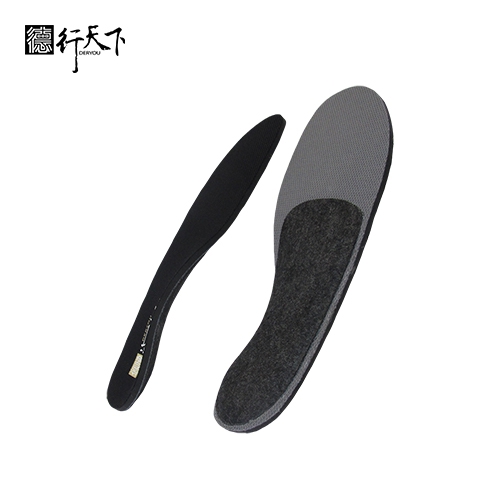
GuangXin offers exceptional flexibility in customization and OEM/ODM services, empowering our partners to create insole products that truly align with their brand identity and target market. We develop insoles tailored to specific foot shapes, end-user needs, and regional market preferences, ensuring optimal fit and functionality.
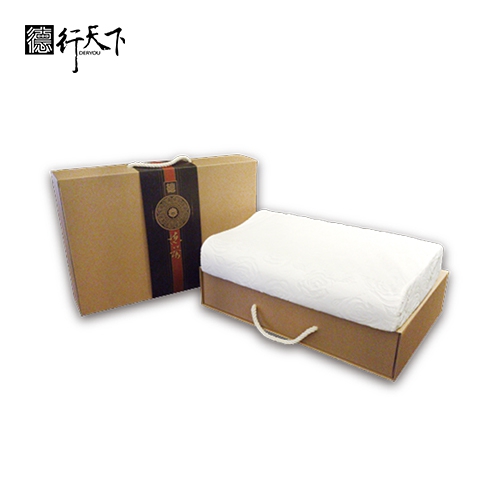
Our team supports comprehensive branding solutions, including logo printing, custom packaging, and product integration support for marketing campaigns. Whether you're launching a new product line or upgrading an existing one, we help your vision come to life with attention to detail and consistent brand presentation.
With fast prototyping services and efficient lead times, GuangXin helps reduce your time-to-market and respond quickly to evolving trends or seasonal demands. From concept to final production, we offer agile support that keeps you ahead of the competition.
Quality Assurance & Certifications
Quality is at the heart of everything we do. GuangXin implements a rigorous quality control system at every stage of production—ensuring that each insole meets the highest standards of consistency, comfort, and durability.
We provide a variety of in-house and third-party testing options, including antibacterial performance, odor control, durability testing, and eco-safety verification, to meet the specific needs of our clients and markets.
Our products are fully compliant with international safety and environmental standards, such as REACH, RoHS, and other applicable export regulations. This ensures seamless entry into global markets while supporting your ESG and product safety commitments.
ESG-Oriented Sustainable Production
At GuangXin Industrial, we are committed to integrating ESG (Environmental, Social, and Governance) values into every step of our manufacturing process. We actively pursue eco-conscious practices by utilizing eco-friendly materials and adopting low-carbon production methods to reduce environmental impact.
To support circular economy goals, we offer recycled and upcycled material options, including innovative applications such as recycled glass and repurposed LCD panel glass. These materials are processed using advanced techniques to retain performance while reducing waste—contributing to a more sustainable supply chain.
We also work closely with our partners to support their ESG compliance and sustainability reporting needs, providing documentation, traceability, and material data upon request. Whether you're aiming to meet corporate sustainability targets or align with global green regulations, GuangXin is your trusted manufacturing ally in building a better, greener future.
Let’s Build Your Next Insole Success Together
Looking for a reliable insole manufacturing partner that understands customization, quality, and flexibility? GuangXin Industrial Co., Ltd. specializes in high-performance insole production, offering tailored solutions for brands across the globe. Whether you're launching a new insole collection or expanding your existing product line, we provide OEM/ODM services built around your unique design and performance goals.
From small-batch custom orders to full-scale mass production, our flexible insole manufacturing capabilities adapt to your business needs. With expertise in PU, latex, and graphene insole materials, we turn ideas into functional, comfortable, and market-ready insoles that deliver value.
Contact us today to discuss your next insole project. Let GuangXin help you create custom insoles that stand out, perform better, and reflect your brand’s commitment to comfort, quality, and sustainability.
🔗 Learn more or get in touch:
🌐 Website: https://www.deryou-tw.com/
📧 Email: shela.a9119@msa.hinet.net
📘 Facebook: facebook.com/deryou.tw
📷 Instagram: instagram.com/deryou.tw
Graphene cushion OEM factory in China
Are you looking for a trusted and experienced manufacturing partner that can bring your comfort-focused product ideas to life? GuangXin Industrial Co., Ltd. is your ideal OEM/ODM supplier, specializing in insole production, pillow manufacturing, and advanced graphene product design.
With decades of experience in insole OEM/ODM, we provide full-service manufacturing—from PU and latex to cutting-edge graphene-infused insoles—customized to meet your performance, support, and breathability requirements. Our production process is vertically integrated, covering everything from material sourcing and foaming to molding, cutting, and strict quality control.China orthopedic insole OEM manufacturer
Beyond insoles, GuangXin also offers pillow OEM/ODM services with a focus on ergonomic comfort and functional innovation. Whether you need memory foam, latex, or smart material integration for neck and sleep support, we deliver tailor-made solutions that reflect your brand’s values.
We are especially proud to lead the way in ESG-driven insole development. Through the use of recycled materials—such as repurposed LCD glass—and low-carbon production processes, we help our partners meet sustainability goals without compromising product quality. Our ESG insole solutions are designed not only for comfort but also for compliance with global environmental standards.Insole ODM factory in China
At GuangXin, we don’t just manufacture products—we create long-term value for your brand. Whether you're developing your first product line or scaling up globally, our flexible production capabilities and collaborative approach will help you go further, faster.Innovative insole ODM solutions factory in Taiwan
📩 Contact us today to learn how our insole OEM, pillow ODM, and graphene product design services can elevate your product offering—while aligning with the sustainability expectations of modern consumers.Insole ODM factory in Thailand
The Csd gene, of which there may be more than 100 variants, plays a key role in determining the sex of bees. These genes are brought together during sexual reproduction: Where the genome subsequently contains two different variants of the Csd gene, a female bee develops, which is then raised (left). Where fertilization brings together two variants that are the same, a male bee would develop, but it is not raised by the worker bees. Male bees – the drones – are instead generated via asexual reproduction. Credit: HHU/Paul Schwaderer/stock.adobe.com – Alekss, Tran-Photography To date it has been unclear exactly how the sex of a bee is determined. A research team from Heinrich Heine University Düsseldorf (HHU) comprising biologists and chemists has now identified a key gene and the molecular mechanism linked with it. In the current issue of the scientific journal Science Advances, they describe how this process is similar to a game involving two dice. The sex of a living creature has significant consequences for its form, function, and behavior. The biological sex of an organism is usually determined at the start of its life. In humans, for example, the presence of the sex-determining “Y chromosome” decides whether a man will be born. The Silesian priest Johann Dzierzon already examined the sex-determining mechanisms of honeybees (Apis mellifera) back in 1845. Among other things, he discovered the asexual reproduction of male bees – the “drones.” Sex Determination in Bees Unlike humans, bees do not have just one sex-determining chromosome. A research team headed by Professor Dr. Martin Beye from the Institute of Evolutionary Genetics at HHU has now established that sex is determined by a single gene, referred to as “Csd” (Complementary sex determiner) via a special mechanism. This gene can have more than 100 variations, so-called alleles. In other cases, e.g. in flowers, the various alleles of a gene can determine petal color. In the case of sexual fertilization, the simple chromosome sets from the egg and sperm cells come together to create a double – diploid – chromosome set. Accordingly, two Csd gene variants are now present in each sexually fertilized bee. The next finding of the bee researchers in Düsseldorf: Where the two alleles of the Csd gene are different, a female bee develops. By contrast, if the alleles of the gene are the same on both chromosomes, a male bee develops. However, as the bees want to prevent this to avoid inbreeding, the worker bees do not raise these eggs. Molecular Mechanism of Sex Determination The question remained as to how this sex determination occurs at molecular level. Lead author Dr. Marianne Otte: “It is necessary to know here that each different allele of the Csd gene produces a different variant of the associated Csd protein, all of which differ slightly. We were able to demonstrate that only different Csd proteins can bind with each other and thus activate a molecular switch that determines ‘female bee’. By contrast, if the proteins are the same, they bind differently and the switch is not activated. In this case, a male bee would develop, but it is not raised.” Professor Beye, last author of the study in Science Advances: “It is similar to a molecular game involving two dice: However, in this case, the throw that produces a double is not the winner. Instead, the throw must produce two different numbers to enable a new bee – a female – to be raised.” By contrast, the drones develop from unfertilized eggs. Accordingly, these male bees only have a simple chromosome set with identical Csd proteins. The queen bee decides not to add sperm to the egg during the laying process. Conclusion and Future Directions Dr. Otte: “We have been able to solve a genetic mystery that has existed for more than 100 years by tracing it back to the switch function of the Csd protein.” Professor Beye comments on further research questions: “The mechanism the worker bees use to identify whether the fertilized egg contains two different Csd proteins and is thus switched to ‘female’ is still unknown. As it is dark inside the hive, there must be an olfactory clue.” The results will be used to advance bee breeding measures. Reference: “Recognition of polymorphic Csd proteins determines sex in the honeybee” by Marianne Otte, Oksana Netschitailo, Stefanie Weidtkamp-Peters, Claus A. M. Seidel and Martin Beye, 4 October 2023, Science Advances. DOI: 10.1126/sciadv.adg4239
A groundbreaking study has identified common feather characteristics among flying birds, revealing that all possess 9 to 11 primary feathers, a trait that provides insights into the evolution of flight from dinosaur ancestors. By combining analysis of museum specimens and fossil data, researchers suggest that flight evolved only once among dinosaurs, highlighting the significance of feathers and flight in the evolutionary success of these species. Above is a fossil showing the wing and feathers of the prehistoric bird Confuciusornis. Credit: Yosef Kiat Birds can fly— at least, most of them can. Flightless birds, such as penguins and ostriches, have adapted to life without the need for flight. Despite this, there remains a significant gap in scientific understanding regarding the differences in wings and feathers between flightless birds and those that can fly. In a new study in the journal PNAS, scientists examined hundreds of birds in museum collections and discovered a suite of feather characteristics that all flying birds have in common. These “rules” provide clues as to how the dinosaur ancestors of modern birds first evolved the ability to fly, and which dinosaurs were capable of flight. Evolutionary Origins of Bird Flight Not all dinosaurs evolved into birds, but all living birds are dinosaurs. Birds are members of the group of dinosaurs that survived when an asteroid hit the Earth 66 million years ago. Long before the asteroid hit, some of the members of a group of dinosaurs called Penneraptorans began to evolve feathers and the ability to fly. The wing, highlighting the flight feathers, of Temminck’s Lark. Credit: Yosef Kiat Members of the Penneraptoran group began to develop feathers before they were able to fly; the original purpose of feathers might have been for insulation or to attract mates. For instance, Velocirpator had feathers, but it couldn’t fly. Of course, scientists can’t hop in a time machine to the Cretaceous Period to see whether Velociraptors could fly. Instead, paleontologists rely on clues in the animals’ fossilized skeletons, like the size and shape of arm/wing bones and wishbones, along with the shape of any preserved feathers, to determine which species were capable of true, powered flight. For instance, the long primary feathers along the tips of birds’ wings are asymmetrical in birds that can fly, but symmetrical in birds that can’t. Discoveries in Feather Evolution The quest for clues about dinosaur flight led to a collaboration between Jingmai O’Connor, a paleontologist at the Field Museum in Chicago, and Yosef Kiat, a postdoctoral researcher at the Field. “Yosef, an ornithologist, was investigating traits like the number of different types of wing feathers in relation to the length of arm bone they attach to, and the degree of asymmetry in birds’ flight feathers,” said O’Connor, the museum’s associate curator of fossil reptiles, who specializes in early birds. “Through our collaboration, Yosef is able to track these traits in fossils that are 160-120 million years old, and therefore study the early evolutionary history of feathers.” The primary feathers of a penguin. Credit: Yosef Kiat Kiat undertook a study of the feathers of every order of living birds, examining specimens from 346 different species preserved in museums around the world. As he looked at the wings and feathers from hummingbirds and hawks, penguins, and pelicans, he noticed a number of consistent traits among species that can fly. For instance, in addition to asymmetrical feathers, all the flighted birds had between 9 and 11 primary feathers. In flightless birds, the number varies widely— penguins have more than 40, while emus have none. It’s a deceptively simple rule that’s seemingly gone unnoticed by scientists. Implications for Understanding Dinosaur Flight “It’s really surprising, that with so many styles of flight we can find in modern birds, they all share this trait of having between 9 and 11 primary feathers,” says Kiat. “And I was surprised that no one seems to have found this before.” By applying the information about the number of primary feathers to the overall bird family tree, Kiat and O’Connor also found that it takes a long time for birds to evolve a different number of primary feathers. “This trait only changes after really long periods of geologic time,” says O’Connor. “It takes a very long time for evolution to act on this trait and change it.” Blackburnian Warblers in the collections of the Field Museum used in this study. Credit: Yosef Kiat In addition to modern birds, the researchers also examined 65 fossil specimens representing 35 different species of feathered dinosaurs and extinct birds. By applying the findings from modern birds, the researchers were able to extrapolate information about the fossils. “You can basically look at the overlap of the number of primary feathers and the shape of those feathers to determine if a fossil bird could fly, and whether its ancestors could,” says O’Connor. For instance, the researchers looked at the feathered dinosaur Caudipteryx. Caudipteryx had 9 primary feathers, but those feathers are almost symmetrical, and the proportions of its wings would have made flight impossible. The researchers said it’s possible that Caudipteryx had an ancestor that was capable of flight, but that trait was lost by the time Caudipteryx arrived on the scene. Since it takes a long time for the number of primary feathers to change, the flightless Caudipteryx retained its 9 primaries. Meanwhile, other feathered fossils’ wings seemed flight-ready— including those of the earliest known bird, Archaeopteryx, and Microraptor, a tiny, four-winged dinosaur that isn’t a direct ancestor of modern birds. Fossil showing the wings and feathers of the dinosaur Microraptor. Credit: Yosef Kiat Integrating Knowledge of Evolution Taken a step further, these data may inform the conversation among scientists about the origins of dinosaurian flight. “It was only recently that scientists realized that birds are not the only flying dinosaurs,” says O’Connor. “And there have been debates about whether flight evolved in dinosaurs just once, or multiple separate times. Our results here seem to suggest that flight only evolved once in dinosaurs, but we have to really recognize that our understanding of flight in dinosaurs is just beginning, and we’re likely still missing some of the earliest stages of feathered wing evolution.” “Our study, which combines paleontological data based on fossils of extinct species with information from birds that live today, provides interesting insights into feathers and plumage—one of the most interesting evolutionary novelties among vertebrates. Thus, it helps us learn about the evolution of these dinosaurs and highlights the importance of integrating knowledge from different sources for an improved understanding of evolutionary processes,” says Kiat. “Theropod dinosaurs, including birds, are one of the most successful vertebrate lineages on our planet,” says O’Connor. “One of the reasons that they’re so successful is their flight. One of the other reasons is probably their feathers, because there’s such versatile structures. So any information that can help us understand how these two important features co-evolved that led to this enormous success is really important.” Reference: “Functional constraints on the number and shape of flight feathers” by Yosef Kiat and Jingmai K. O’Connor, 12 February 2024, Proceedings of the National Academy of Sciences. DOI: 10.1073/pnas.2306639121
Negev petroglyphs showing abstract forms. Credit: Laura Rabbachin, INTK, Academy of Fine Arts, Vienna Fungi and lichens threaten Negev Desert’s petroglyphs, eroding ancient artworks through chemical and mechanical means. Southern Israel’s Negev desert is famous for its ancient rock art. Since at least the third millennium BCE, the hunters, shepherds, and merchants who roamed the Negev have left thousands of carvings, known as ‘petroglyphs’, on the rocks. Many represent animals such as ibexes, goats, horses, donkeys, and domestic camels, although some also feature abstract forms. These petroglyphs are typically cut into ‘desert varnish’, a natural thin black coating that forms on limestone rock. Fungus culture: conidia of Alternaria sp. NS1. Credit: Laura Rabbachin, INTK, Academy of Fine Arts, Vienna Fungal Threats to Petroglyphs A study published in Frontiers in Fungal Biology has revealed that the petroglyphs are home to a community of uncommon specialist fungi and lichens. Unfortunately, these species may pose a serious threat to the rock art in the long term. “We show that these fungi and lichens could significantly contribute to the gradual erosion and damage of the petroglyphs,” said Laura Rabbachin, a PhD student at the Academy of Fine Arts Vienna in Austria, and the study’s first author. “They are able to secrete different types of acids that can dissolve the limestone in which the petroglyphs are carved. In addition, the fungi can penetrate and grow within the stone grains, causing an additional mechanical damage.” The landscape around the petroglyphs in the Negev desert. Credit: Laura Rabbachin, INTK, Academy of Fine Arts, Vienna Research Methodology and Findings Rabbachin and colleagues took samples from a petroglyph site in the central-western highlands of the Negev. Here, an average of just 87 mm (3.4 inches) of rain falls per year, and temperatures on rock surfaces can soar up to 56.3 °C (133 °F) in summer. The researchers scraped samples from desert varnish next to petroglyphs, from rocks without desert varnish, and from soil near the sampled rocks. They also left petri dishes open near the rocks to capture airborne spores. The authors identified collected fungi and lichens with two complementary methods. First, they repeatedly cultured fungal material or spores from rocks or soil on plates with one of two different growth media, until they obtained pure isolates for DNA barcoding. Second, they directly performed DNA sequencing of fungal material present in rock or soil samples, without culturing them first. The latter method can detect strains that don’t grow in culture. Negev petroglyphs of animals. Credit: Laura Rabbachin, INTK, Academy of Fine Arts, Vienna Both methods showed that the diversity and abundance of species on rocks bearing petroglyphs was low in comparison with the soil, which suggests that few species can withstand the local extremes of drought and temperature. DNA barcoding of cultured isolates revealed that the petroglyphs harbor multiple species of fungi within the genera Alternaria, Cladosporium, and Coniosporium, while direct sequencing further detected multiple species in the genera Vermiconidia, Knufia, Phaeotheca, and Devriesia. All except Alternaria and Cladosporium are so-called microcolonial fungi, known to thrive in hot and cold deserts around the world. Also abundant were lichens in the genus Flavoplaca. Petroglyph showing a human figure. Credit: Laura Rabbachin, INTK, Academy of Fine Arts, Vienna “Microcolonial fungi are considered highly dangerous for stone artifacts. For example, they have been implicated as a probable cause of the deterioration of stone cultural heritage in the Mediterranean,” said Rabbachin. “Lichens are also well known to cause rocks to deteriorate and thus to be a potential threat to stone cultural heritage.” In the surrounding soil and air, the researchers mainly found different, cosmopolitan fungi, which are known to be able to survive harsh desert conditions through the production of drought-resistant spores. Fungus culture: Cladosporium limoniforme. Credit: Dr Irit Nir, Ben Gurion University of the Negev Impact and Conservation Challenges Can anything be done to protect the petroglyphs from the slow but destructive work of the observed microcolonial fungi and lichens? This is unlikely, cautioned the authors. “These natural weathering processes cannot be stopped, but their speed of the weathering process depends heavily on whether and how the climate will change in the future. What we can do is to monitor the microbial communities over time and most importantly, document these valuable works of art in detail,” said Rabbachin’s academic supervisor Prof Katja Sterflinger, the study’s senior author. Fungus culture: Alternaria sp. NS4. Credit: Laura Rabbachin, INTK, Academy of Fine Arts, Vienna Reference: “Diversity of fungi associated with petroglyph sites in the Negev Desert, Israel, and their potential role in bioweathering” by Laura Rabbachin, Irit Nir, Monika Waldherr, Ylenia Vassallo, Guadalupe Piñar, Alexandra Graf, Ariel Kushmaro and Katja Sterflinger, 14 May 2024, Frontiers in Fungal Biology. DOI: 10.3389/ffunb.2024.1400380
DVDV1551RTWW78V
Thailand custom product OEM/ODM services 》perfect for brands looking to scale with low-MOQ flexibilityErgonomic insole ODM production factory Taiwan 》manufacturing with a focus on sustainability and comfortVietnam insole ODM design and production 》committed to helping you create value through custom manufacturing
下一則: Pillow OEM for wellness brands Indonesia 》reducing
限會員,要發表迴響,請先登入


