Introduction – Company Background
GuangXin Industrial Co., Ltd. is a specialized manufacturer dedicated to the development and production of high-quality insoles.
With a strong foundation in material science and footwear ergonomics, we serve as a trusted partner for global brands seeking reliable insole solutions that combine comfort, functionality, and design.
With years of experience in insole production and OEM/ODM services, GuangXin has successfully supported a wide range of clients across various industries—including sportswear, health & wellness, orthopedic care, and daily footwear.
From initial prototyping to mass production, we provide comprehensive support tailored to each client’s market and application needs.
At GuangXin, we are committed to quality, innovation, and sustainable development. Every insole we produce reflects our dedication to precision craftsmanship, forward-thinking design, and ESG-driven practices.
By integrating eco-friendly materials, clean production processes, and responsible sourcing, we help our partners meet both market demand and environmental goals.
Core Strengths in Insole Manufacturing
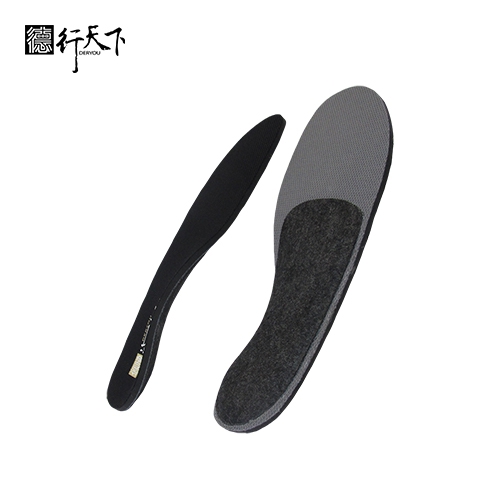
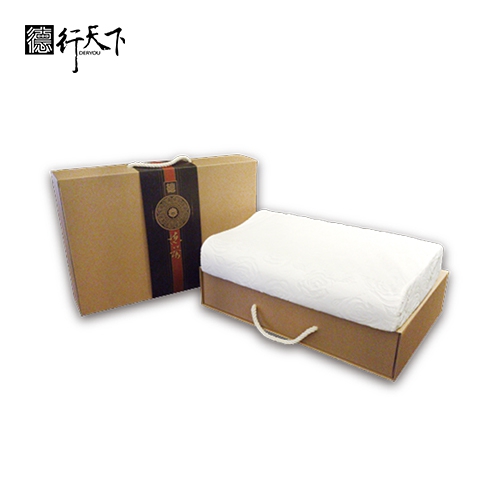
At GuangXin Industrial, our core strength lies in our deep expertise and versatility in insole and pillow manufacturing. We specialize in working with a wide range of materials, including PU (polyurethane), natural latex, and advanced graphene composites, to develop insoles and pillows that meet diverse performance, comfort, and health-support needs.
Whether it's cushioning, support, breathability, or antibacterial function, we tailor material selection to the exact requirements of each project-whether for foot wellness or ergonomic sleep products.
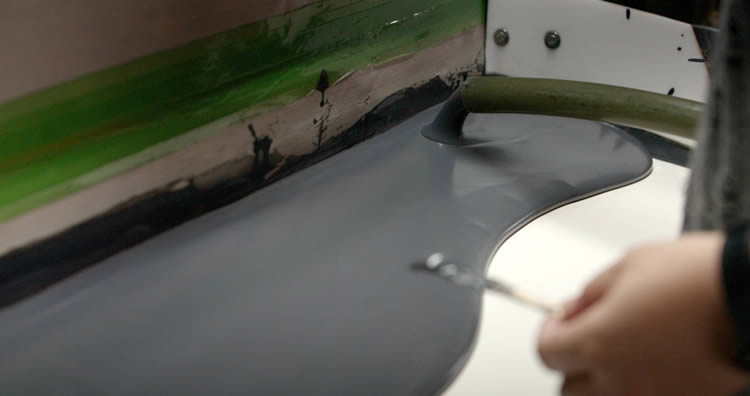
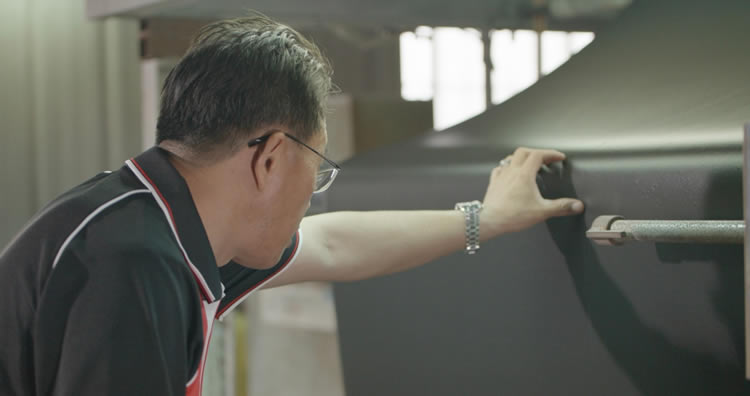
We provide end-to-end manufacturing capabilities under one roof—covering every stage from material sourcing and foaming, to precision molding, lamination, cutting, sewing, and strict quality control. This full-process control not only ensures product consistency and durability, but also allows for faster lead times and better customization flexibility.
With our flexible production capacity, we accommodate both small batch custom orders and high-volume mass production with equal efficiency. Whether you're a startup launching your first insole or pillow line, or a global brand scaling up to meet market demand, GuangXin is equipped to deliver reliable OEM/ODM solutions that grow with your business.
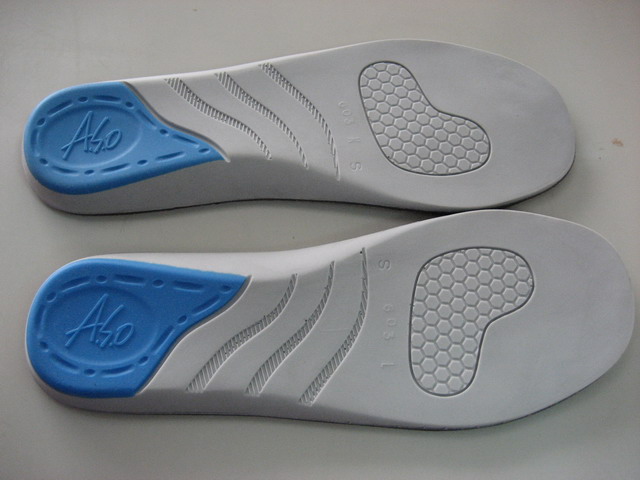
Customization & OEM/ODM Flexibility
GuangXin offers exceptional flexibility in customization and OEM/ODM services, empowering our partners to create insole products that truly align with their brand identity and target market. We develop insoles tailored to specific foot shapes, end-user needs, and regional market preferences, ensuring optimal fit and functionality.
Our team supports comprehensive branding solutions, including logo printing, custom packaging, and product integration support for marketing campaigns. Whether you're launching a new product line or upgrading an existing one, we help your vision come to life with attention to detail and consistent brand presentation.
With fast prototyping services and efficient lead times, GuangXin helps reduce your time-to-market and respond quickly to evolving trends or seasonal demands. From concept to final production, we offer agile support that keeps you ahead of the competition.
Quality Assurance & Certifications
Quality is at the heart of everything we do. GuangXin implements a rigorous quality control system at every stage of production—ensuring that each insole meets the highest standards of consistency, comfort, and durability.
We provide a variety of in-house and third-party testing options, including antibacterial performance, odor control, durability testing, and eco-safety verification, to meet the specific needs of our clients and markets.
Our products are fully compliant with international safety and environmental standards, such as REACH, RoHS, and other applicable export regulations. This ensures seamless entry into global markets while supporting your ESG and product safety commitments.
ESG-Oriented Sustainable Production
At GuangXin Industrial, we are committed to integrating ESG (Environmental, Social, and Governance) values into every step of our manufacturing process. We actively pursue eco-conscious practices by utilizing eco-friendly materials and adopting low-carbon production methods to reduce environmental impact.
To support circular economy goals, we offer recycled and upcycled material options, including innovative applications such as recycled glass and repurposed LCD panel glass. These materials are processed using advanced techniques to retain performance while reducing waste—contributing to a more sustainable supply chain.
We also work closely with our partners to support their ESG compliance and sustainability reporting needs, providing documentation, traceability, and material data upon request. Whether you're aiming to meet corporate sustainability targets or align with global green regulations, GuangXin is your trusted manufacturing ally in building a better, greener future.
Let’s Build Your Next Insole Success Together
Looking for a reliable insole manufacturing partner that understands customization, quality, and flexibility? GuangXin Industrial Co., Ltd. specializes in high-performance insole production, offering tailored solutions for brands across the globe. Whether you're launching a new insole collection or expanding your existing product line, we provide OEM/ODM services built around your unique design and performance goals.
From small-batch custom orders to full-scale mass production, our flexible insole manufacturing capabilities adapt to your business needs. With expertise in PU, latex, and graphene insole materials, we turn ideas into functional, comfortable, and market-ready insoles that deliver value.
Contact us today to discuss your next insole project. Let GuangXin help you create custom insoles that stand out, perform better, and reflect your brand’s commitment to comfort, quality, and sustainability.
🔗 Learn more or get in touch:
🌐 Website: https://www.deryou-tw.com/
📧 Email: shela.a9119@msa.hinet.net
📘 Facebook: facebook.com/deryou.tw
📷 Instagram: instagram.com/deryou.tw
Graphene insole manufacturer in Vietnam
Are you looking for a trusted and experienced manufacturing partner that can bring your comfort-focused product ideas to life? GuangXin Industrial Co., Ltd. is your ideal OEM/ODM supplier, specializing in insole production, pillow manufacturing, and advanced graphene product design.
With decades of experience in insole OEM/ODM, we provide full-service manufacturing—from PU and latex to cutting-edge graphene-infused insoles—customized to meet your performance, support, and breathability requirements. Our production process is vertically integrated, covering everything from material sourcing and foaming to molding, cutting, and strict quality control.Indonesia OEM factory for footwear and bedding
Beyond insoles, GuangXin also offers pillow OEM/ODM services with a focus on ergonomic comfort and functional innovation. Whether you need memory foam, latex, or smart material integration for neck and sleep support, we deliver tailor-made solutions that reflect your brand’s values.
We are especially proud to lead the way in ESG-driven insole development. Through the use of recycled materials—such as repurposed LCD glass—and low-carbon production processes, we help our partners meet sustainability goals without compromising product quality. Our ESG insole solutions are designed not only for comfort but also for compliance with global environmental standards.Graphene insole OEM factory Taiwan
At GuangXin, we don’t just manufacture products—we create long-term value for your brand. Whether you're developing your first product line or scaling up globally, our flexible production capabilities and collaborative approach will help you go further, faster.Thailand flexible graphene product manufacturing
📩 Contact us today to learn how our insole OEM, pillow ODM, and graphene product design services can elevate your product offering—while aligning with the sustainability expectations of modern consumers.PU insole OEM production in Taiwan
A new study addresses the problem of determining the size of Dunkleosteus and other late Devonian arthrodire placoderms, extinct fish species with armor covering their head and part of their torso. Previous size estimates relied on mouth and jaw measurements, but this study found that these methods did not accurately predict body size in arthrodires, as their mouths were larger relative to their body length compared to sharks. The study suggests that mouth size cannot be used to predict arthrodire length, and most previously cited lengths for large arthrodires are overestimates. Accurately estimating the body length and proportions of arthrodires is crucial for understanding their life habits and the ecology of the Devonian period. In a new study, it was discovered that previous methods for estimating the size of late Devonian arthrodire placoderms, such as Dunkleosteus, were inaccurate. These fish had larger mouths relative to their body length than sharks, making them capable of attacking larger prey. A new study by Case Western Reserve University PhD student Russell Engelman published in PeerJ Life & Environment attempts to address a persistent problem in paleontology – what were the size of Dunkleosteus and other late Devonian arthrodire placoderms. Arthrodire placoderms are extinct fishes with had armor covering their head and part of their torso, but like sharks the rest of their skeleton was made of cartilage, meaning most of their body did not preserve when they became fossilized. Previous size estimates for Dunkleosteus were largely based on this animal’s mouth and jaws, but these methods were never tested to see if they reliably estimated the size of placoderms. This study sought to test these methods by using data from modern sharks and other fishes and testing if they accurately predicted body size in Dunkleosteus and smaller arthrodire placoderms known from complete remains. Because these smaller species are known from complete remains, they could be used to test whether previous methods accurately predicted body size in arthrodires. “Length estimates of 5–10 m have been cited for Dunkleosteus for years,” Engelman said, “but no one seems to have checked these methods statistically or tested if they produce reliable or reasonable results in arthrodires.” Modification of Reconstructed proportions of specimens of Dunkleosteus terrelli using the total lengths estimated by Ferron et al. (2017) using UJP. Credit: Russell Engelman (CC BY) It turned out that mouth measurements of sharks did not accurately predict the body size of arthrodires. Complete arthrodires always had larger mouths at the same body length as sharks, and this caused mouth measurements of complete arthrodires to produce body length estimates 2–2.5 times their actual size. Dunkleosteus had an unusually large mouth even among arthrodires, further calling into question if the mouth and jaw parts of these smaller forms can be used to estimate the size of this Devonian giant. Previously estimated lengths for Dunkleosteus also resulted in a biologically illogical body shape when applied to the known dimensions of the fossils. If previous lengths were accurate, the resulting fish would have had an extremely small, shrunken head and hyper-elongate torso even more longer than the proportions seen in most eels, at odds with a previous study published in PeerJ suggesting a shorter body more similar to pelagic sharks. The long shape implied by earlier studies would have also made the animal’s gills so small relative to its body the fish would have likely suffocated. No other arthrodires showed such extreme proportions, even though estimates based on mouth dimensions suggested they should, suggesting these prior length estimates are highly unlikely for Dunkleosteus. Mouth Size and Feeding Behavior Overall, this suggests mouth dimension in sharks cannot be used to predict the length of arthrodires and most previously cited lengths for large members of this group are overestimates, in agreement with the conclusions of a previous study by the same author. Arthrodires simply have much larger mouths relative to their body length than sharks, with relative mouth widths more similar to predatory catfishes. “Dunkleosteus has often been assumed to function like a great white shark,” Engelman said, “but as we learn more about this fish it might be more accurate to describe it as a mix of shark, grouper, viperfish, tuna, and piraiba [a type of giant predatory Amazonian catfish, well known to fans of Animal Planet’s River Monsters].” However, although it may be disappointing that these giant Devonian fishes were not as giant as once thought, the recognition these animals have large mouths is still important. As apex predators of the Devonian, accurately estimating the body length and proportions of arthrodires is critical for reconstructing their life habits and the ecology of the Devonian in general. In fact, despite frequently being reconstructed based on sharks, this study notes the large mouths of arthrodires suggest arthrodires could attack much larger prey relative to their body size than living sharks. This suggests while arthrodires have often been reconstructed based on comparisons with sharks, the two may have behaved more differently than previously thought. “Mouth size is probably the biggest factor in determining the largest prey a fish can eat,” Engelman said, “the results of this study suggest arthrodires were hitting far above their weight class.” Reference: “Giant, swimming mouths: oral dimensions of extant sharks do not accurately predict body size in Dunkleosteus terrelli (Placodermi: Arthrodira)” by Russell Engelman, 10 April 2023, PeerJ. DOI: 10.7717/peerj.15131
Test tubes holding water samples glow green inside an illuminator, indicating contamination. Credit: Northwestern University Genetic networks mimic electronic circuits to perform a range of logic functions. Equipped with a series of eight small test tubes, the device glows green when it detects a contaminant. The number of tubes that glow depend upon how much contamination is present. If only one tube glows, then the water sample has a trace level of contamination. But if all eight tubes glow, then the water is severely contaminated. In other words, the higher concentration of contamination leads to a higher signal. “We programmed each tube to have a different threshold for contaminations,” said the McCormick School of Engineering’s Julius B. Lucks, who led the research. “The tube with the lowest threshold will light up all the time. If all the tubes light up, then there is a big problem. Building circuits and programmable DNA computing opens up many possibilities for other types of smart diagnostics.” Lucks is a professor of chemical and biological engineering at Nothwestern Engineering and a member of the Center for Synthetic Biology. The paper’s co-authors include Jaeyoung Jung, Chloé Archuleta, and Khalid Alam — all from Northwestern. Testing water from an area affected by wildfires in California. Credit: Northwestern University Meet ROSALIND The new system builds off work that Lucks and his team published in Nature Biotechnology in July 2020. In that work, the team introduced ROSALIND (named after famed chemist Rosalind Franklin and short for “RNA output sensors activated by ligand induction”), which could sense 17 different contaminants in a single drop of water. When the test detected a contaminant exceeding the US Environmental Protection Agency’s standards, it either glowed green or not to give a simple, easy-to-read positive or negative result. To develop ROSALIND, Lucks and his team employed cell-free synthetic biology. With synthetic biology, researchers take molecular machinery — including DNA, RNA, and proteins — out of cells, and then reprogram that machinery to perform new tasks. At the time, Lucks likened ROSALIND’s inner workings to “molecular taste buds.” “We found out how bacteria naturally taste things in their water,” he said. “They do so with little molecular-level ‘taste buds.’ Cell-free synthetic biology allows us to take those little molecular taste buds out and put them into a test tube. We can then ‘re-wire’ them to produce a visual signal. It glows to let the user quickly and easily see if there’s a contaminant in the water.” Molecular Brainpower Now, in the new version — dubbed ROSALIND 2.0 — Lucks and his team have added a “molecular brain.” “The initial platform was a bio-sensor, which acted like a taste bud,” Lucks said. “Now we have added a genetic network that works like a brain. The bio-sensor detects contamination, but then the output of the bio-sensor feeds into the genetic network, or circuit, which works like a brain to perform logic.” There are many cases where water quality needs to be measured routinely. It’s not a one-time thing because contamination levels can change over time. Julius Lucks, Professor of Chemical and Biological Engineering Researchers freeze-dried the reprogrammed “molecular brains” to become shelf-stable and put them into test tubes. Adding a drop of water to each tube sets off a network of reactions and interactions, ultimately causing the freeze-dried pellet to glow in the presence of a contaminant. To test the new system, Lucks and his team demonstrated that it could successfully detect concentration levels of zinc, an antibiotic, and an industrial metabolite. Giving the level of contamination — rather than a simple positive or negative result — is important for informing mitigation strategies, Lucks said. “After we introduced ROSALIND, people said they wanted a platform that could also give concentration amounts,” he said. “Different contaminants at different levels require different strategies. If you have a low level of lead in your water, for example, then you might be able to tolerate it by flushing your water lines ahead of using them. But if you have high levels, then you need to stop drinking your water immediately and replace your water line.” Empowering Individuals Ultimately, Lucks and his team hope to empower individuals to test their own water on a regular basis. With inexpensive, hand-held devices like ROSALIND, that may soon become a reality. “It’s clear that we need to enable people with information to make important, sometimes lifesaving decisions,” Lucks said. “We’re seeing that with at-home tests for COVID-19. People need at-home tests because they need that information quickly and regularly. It’s similar with water. There are many cases where water quality needs to be measured routinely. It’s not a one-time thing because contamination levels can change over time.” Reference: “Programming Cell-free Biosensors with DNA Strand Displacement Circuits” by Jaeyoung K. Jung, Chloé M. Archuleta, Khalid K. Alam and Julius B. Lucks, 17 February 2022, Nature Chemical Biology. DOI: 10.1038/s41589-021-00962-9 The study was supported by the US Department of Defense, the National Science Foundation, the Crown Family Center for Jewish and Israel Studies, and the Searle Funds at The Chicago Community Trust.
Three conformations of the DNA double helix: A (left), B (center) and left-handed Z (right). Credit: David S. Goodsell and RCSB PDB Genetic code evolution and Darwin’s evolution theory should consider DNA an “energy code.” Darwin’s theory of evolution should be expanded to include consideration of a DNA stability “energy code” – so-called “molecular Darwinism” – to further account for the long-term survival of species’ characteristics on Earth, according to Rutgers scientists. The iconic genetic code can be viewed as an “energy code” that evolved by following the laws of thermodynamics (flow of energy), causing its evolution to culminate in a nearly singular code for all living species, according to the Rutgers co-authored study in the journal Quarterly Reviews of Biophysics. “These revelations matter because they provide entirely new ways of analyzing the human genome and the genome of any living species, the blueprints of life,” said senior author Kenneth J. Breslauer, Linus C. Pauling Distinguished University Professor in the Department of Chemistry and Chemical Biology in the School of Arts and Sciences at Rutgers University–New Brunswick. He is also affiliated with the Rutgers Cancer Institute of New Jersey. “The origins of the evolution of the DNA genetic code and the evolution of all living species are embedded in the different energy profiles of their molecular DNA blueprints. Under the influence of the laws of thermodynamics, this energy code evolved, out of an astronomical number of alternative possibilities, into a nearly singular code across all living species.” Scientists investigated this so-called “universal enigma,” probing the origins of the astounding observation that the genetic code evolved into a nearly uniform blueprint that arose from trillions of possibilities. From Natural Selection to DNA Stability The scientists expanded the underpinnings of the landmark “survival of the fittest” Darwinian evolutionary theory to include “molecular Darwinism.” Darwin’s revolutionary theory is based on the generational persistence of a species’ physical features that allow it to survive in a given environment through “natural selection.” Molecular Darwinism refers to physical characteristics that persist through generations because the regions of the molecular DNA that code for those traits are unusually stable. Different DNA regions can exhibit differential energy signatures that may favor physical structures in organisms that enable specific biological functions, Breslauer said. Next steps include recasting and mapping the human genome chemical sequence into an “energy genome,” so DNA regions with different energy stabilities can be correlated with physical structures and biological functions. That would enable better selection of DNA targets for molecular-based therapeutics. Reference: “Energy mapping of the genetic code and genomic domains: implications for code evolution and molecular Darwinism” by Horst H. Klump, Jens Völker and Kenneth J. Breslauer, 4 November 2020, Quarterly Reviews of Biophysics. DOI: 10.1017/S0033583520000098 Jens Völker, an associate research professor in Rutgers–New Brunswick’s Department of Chemistry and Chemical Biology, co-authored the study, along with first author Horst H. Klump at the University of Cape Town. Funding: U.S. National Institutes of Health, NRF (Pretoria, RSA).
DVDV1551RTWW78V
Pillow OEM for wellness brands China 》craftsmanship meets efficiency for maximum valueChina pillow ODM development service 》experience you can count on, quality you can trustBreathable insole ODM innovation factory Taiwan 》preferred by clients worldwide for fast turnaround and precision
限會員,要發表迴響,請先登入


