Excerpt:卡夫卡的《箴言錄》(Aphorisms)
真正的道路在一根繩索上,它不是繃緊在高處,而是貼近地面的。它與其說是供人行走的,毋寧說是用來絆人的。
The true path is along a rope, not a rope suspended way up in the air, but rather only just over the ground. It seems more like a tripwire than a tightrope.
——卡夫卡,《箴言錄》
幾年前曾經尋尋覓覓找過卡夫卡的《箴言錄》英文版卻一無所獲;而上個月終於收到 2 月初訂購的這本由 Schochen Books 出版的 Aphorisms,真可說是千呼萬喚始出來,但我想這一切的等待都是值得,特別是這個版本的書衣是由 Peter Mendelsund (美國知名的書封設計師,請詳舊文 http://blog.udn.com/article/article_print.jsp?uid=le14nov&f_ART_ID=50408080) 所設計,簡潔的圖案及橘黑的用色讓人驚豔。
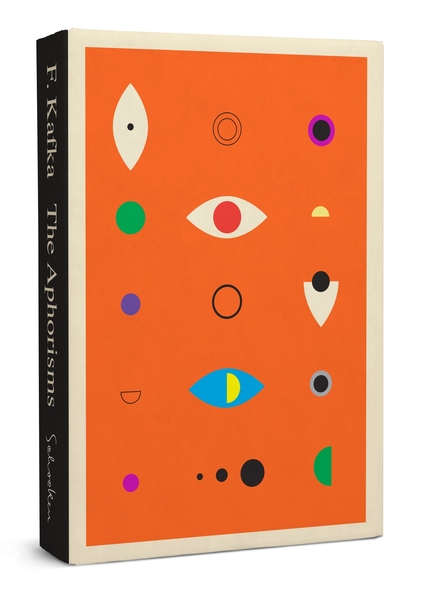
http://m.sanmin.com.tw/Product/Index/005254947
http://www.amazon.com/Aphorisms-Schocken-Kafka-Library-Franz/dp/0805212655
The aphorism eludes definition: it can appear to be a random jotting or a more polished observation. Whether arbitrary fragment or crystalline shard, an aphorism captures the inception of a thought. Franz Kafka composed aphorisms during two periods in his life. A series of 109 was written between September 1917 and April 1918, in Zürau,
Kafka’s aphorisms are fascinating glimpses into the lure and the enigma of the form itself.
如以上書介所敘,我原以為《箴言錄》指的是卡夫卡於 1917 ~ 1918 之間創作,1931 年首次全文發表在短篇遺著集《中國長城修建時》,編號共 109 號的語錄,原文是 Betrachtungen über Sünde, Leid, Hoffnung und den wahren Weg (對罪愆、苦難、希望和真正的道路的觀察);
http://blog.udn.com/le14nov/5595883
Extrait:卡夫卡《箴言錄》書摘
然而這本英譯版本還收錄了一篇名為 “He“:Notes from the Year 1920 的短文,經再仔細查找手邊的卡夫卡文集,終於確認這篇文章創作於 1920 年,而同樣也是在 1931 年發表於《中國長城修建時》。
“He“:Notes from the Year 1920 這篇文章,警世的意味十分濃厚,雖然其中的辯證邏輯未必清晰可見,卻是相當適合切割成片段來進行賞析,就請大家試讀以下幾段吧!
英譯:Willa and Edwin Muir、Michael Hofmann
中譯:劉霞 (《卡夫卡文集 第四卷》/作家出版社)
【Excerpt】
He has the feeling that merely by being alive he is blocking his own way. From this sense of hindrance, in turn, he deduces the proof that he is alive.
他覺得,他的存在擋住了他自己的路,但正因為如此,也證實了他的存在。
The bony structure of his own forehead blocks his way; he batters himself bloody against his own forehead.
他自己的額頭擋住了自己的道路,於是他就在自己額頭上把自己碰得頭破血流。
……
Some deny the existence of misery by pointing to the sun; he denies the existence of the sun by pointing to misery.
有些人聲稱,因為有了太陽,我們才沒有悲傷。他卻認為,因為我們有悲傷,所以沒有太陽。
The sluggish, self-torturing, wavelike motion of all life, whether of other life or his own, which often seems to stagnate for a long time but in reality never ceases, tortures him because it brings with it the never-ceasing compulsion to think. Sometimes it seems to him that this torture heralds events. When he hears that a friend is awaiting the birth of a child he recognizes that in thought he has already suffered for that birth.
世上所有人的生命,無論是他人的還是自己的,都經歷著自我折磨、步履緩慢,又常常久久停滯的、卻完全又是持續不斷的波浪式運動,為此他感到十分痛苦,因為這不斷地迫使他進行思考。有時他覺得,似乎事情還未發生,痛苦就已經出現了。當他聽說,他的朋友要生孩子了,他就知道,作為預知的思想家,他已為此經受著痛苦。
……
He does not live for the sake of his personal life; he does not think for the sake of his personal thoughts. It seems to him that he lives and thinks under the compulsion of a family, which, it is true, is itself superabundant in life and thought, but for which he constitutes, in obedience to some law unknown to him, a formal necessity. Because of this unknown family and this unknown law he cannot be exempted.
他活著,不是為了他個人的生命,他思維著,不是為了他個人的思維。對於他來說,他的生活和思維似乎是為了一個家庭,這個家庭雖然充滿生命的活力和思維能力,但對於這個家庭和某種他陌生的規律而言,他的存在還意味著形式上的必要。正由於這個陌生的家庭和這個陌生的規律,他是不會被拋棄的。
……
The strength to deny, that most natural expression of the perpetually changing, renewing, dying, reviving human fighting organism, we possess always, but not the courage, although life is denial, and therefore denial affirmation.
進行否定的能力,是人類不斷變化、不斷更新、死亡和復蘇的鬥爭有機體中的最本能的體現。進行否定,我們總是有力量,但沒有勇氣,而生活本身就是否定,否定本身就是肯定。
He does not die along with his dying thoughts. Dying is merely a phenomenon within the inner world (which remains intact, even if it too should be only an idea), a natural phenomenon like any other, neither happy nor sad.
他沒有隨著思想的死亡而死去。死亡只是內心世界的一種現象 (內心世界是永存的,儘管它只是一種思想),一種普通的自然現象,既不令人快樂,也不令人悲傷。


限會員,要發表迴響,請先登入


