...
.
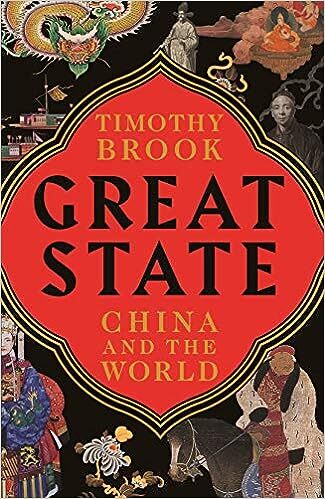
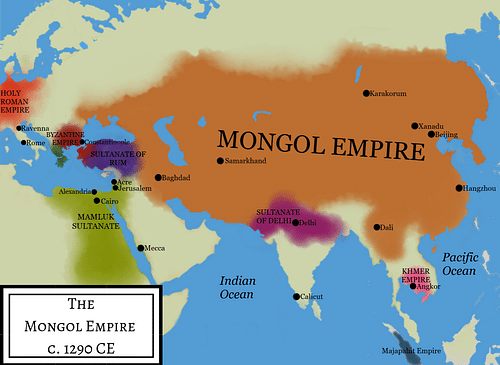
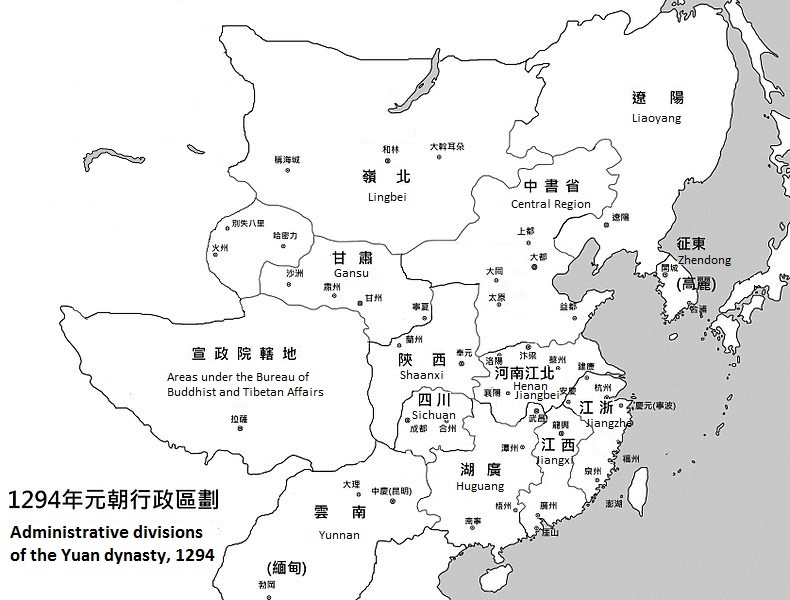
China is one of the oldest states in the world. It achieved its approximate current borders with the Ascendancy of the Yuan dynasty in the thirteenth century, and despite the passing of one Imperial dynasty to the next, has maintained them for the eight centuries since. China remained China through the Ming, the Qing, the Republic, the Occupation, and Communism. But despite the desires of some of the most powerful people in the Great State through the ages, China has never been alone in the world. It has had to contend with invaders as well as foreign traders and imperialists. Its rulers for the majority of the last eight centuries have not been Chinese.
China became a mega-state not by conquering others, Timothy Brook contends, but rather by being conquered by others and then claiming right of succession to the empires of those Great States. What the Mongols and Manchu ruling families wrought, the Chinese ruling families of the Ming, the Republic, and the People’s Republic, have perpetuated. Yet a contemporary Chinese idea of a ‘fatherland’ that is, and always has been, completely and naturally Chinese persists. Brook argues that China, like everywhere, is the outcome of history, and like every state, rests on its capacities to conquer and suppress.
.
 It approaches impossible to be a humanist without eventually trying to reach an understanding of the politics of China. Enter just about any conversation about secularism and sooner or later someone is going to mention the human rights record of the Chinese government over the last 80 to 100 years. Here’s a book that may be a good place to move toward an understanding of China’s immense history.
Great State: China and The World was published in 2019/2020 by one of Canada’s leading scholarly experts on China. It is a collection of thirteen historical vignettes written to support its author’s thesis that China is, and has very nearly always been, a “Great State”.
Timothy Brook is a professor at the University of British Columbia (Vancouver). A native of Toronto and graduate of the University of Toronto, Brook moved from Toronto to become principal of St. John’s College at UBC in 2004, where he was named to the Republic of China Chair. Brook previously held positions at the University of Alberta, Stanford University, and the University of Oxford, where he was Shaw Professor of Chinese from 2007 to 2009..
It is not uncommon for Western people to view China as having been cut-off from the world (i.e. Europe) for must of its existence. Brook attempts to dispel this view as a myth. But he also reinforces, in this chapter and others, the deep concern Chinese political leaders have had regarding foreign influence in their country’s affairs. The lesson seems to be that foreign influence that is cut-off is very different from foreign influence that is limited and controlled..
中國是世界上最古老的國家之一。它在十三世紀的元代就達到了目前大致的邊界,儘管朝代更迭,但中國在隨後的八百年一直保持著這樣的疆域。從明朝,清朝,中華民國、抗戰和中國時期,中國就一直是中國。但是儘管在悠久歷史中有幾個最有權勢的帝王懷著私慾,中國在世界上從來都不是孤立的。它一直在與侵略者以及外國商販和帝國主義者爭戰。在過去八百年的大部分時間裡,它的統治者並非中國人。
.
 In the symbolic architecture around the spaces in which Chinese and non-Chinese interact, the role of foreigners was to be awed by the splendour and achievements of the Great State.
The idea of equality between sovereign states the basic building block of the so-called Westphalian system that holds sway in the west — has had a more fragile tenure in China.
..
 ..
..
 .
.
忽必烈的獵豹:八百年來的中國與世界
. Great State: China and the World. . Timothy Brook.
.
 .
. ..
..
.Wrapping up seven centuries of Chinese history in 13 stories, historian and China expert Timothy Brook has published a book that he says would surprise most Chinese. In "Great State: China and the world", he argues that China did not originally set out to be a vast nation or great state, but rather that todays China is the result of successive foreign invasions. This helps shed light on the current situation, where "China is anxious about its place in the world". Brook joined us for Perspective to tell us more.
歷史的跫音之所以在每一個國家裡,每一種文化中迴盪,泰半是因為天註定的人類本能,讓他們以特定方式回應類似的境遇。但TB.在這本絕佳的新作裡主張,如果場景是在中國,除了適才提到的人類天性,還有另一個至關重要的層面影響了歷史的共鳴。本書之所以能夠服人,多少是因為TB.表達論點時分寸拿捏得很好。
他雖然沒有高聲疾呼,沒有主張「中國當前採取的行動從歷史中便可見一斑」,但有心的讀者想必不會漏掉古今之間的雷同處。(Financial.Times).
TB.經由歷史檔案的考證,認為忽必烈在年輕時代就與漢人相處往來,忽必烈識得中文漢字也通曉中國語言,換句話說就是個"中國通",當忽必烈統一中國,建立大元王朝時期,重用漢人及其典章制度等等..
劉秉忠,與姚樞等人,制定「廣招天下英俊,講論治道」的用人方針,大舉招賢納士。如當時的大儒許衡,王恂,張易等人,為當時仍為藩王的忽必烈出謀劃策。
劉秉忠(1216年—1274年),原名侃,任官後,敕賜名秉忠,法名子聰,字仲晦,號藏春散人,祖籍金國瑞州(今遼寧省綏中縣前衛鎮),元朝政治家,儒學家,世祖忽必烈時曾任宰相。諡文正,贈太傅,常山王。是建立元帝國都城上都和大都,元朝政治體制以及國號的設計者。.
至元八年十一月十五日(1271年12月18日),因劉秉忠之勸,忽必烈發布《建國號詔》[取《易經》「大哉乾元」之義],將國號變為「大元」(僅漢語,蒙古語稱為「大元大蒙古國」),其自身亦從大蒙古國皇帝(大汗)變為元朝皇帝,元朝正式建立。.
元世祖忽必烈在庚申年(1260年)農曆四月發布的漢文《皇帝登寶位詔》,在即位詔書中,忽必烈自稱為「朕」,稱他的哥哥大蒙古國第四任大汗蒙哥(1251—1259年在位)為「先皇」。此即位詔書節選自元英宗時期元朝官修政書《大元聖政國朝典章》(簡稱《元典章》),《皇帝登寶位詔》全文之後的詔書為元世祖忽必烈在中統元年(1260年)五月發布的《中統建元詔》,建年號「中統」。.
 ..
..
至元三年(1266年),大蒙古國皇帝忽必烈給日本的國書,在國書中,忽必烈在國書開頭自稱「大蒙古國皇帝」,在後面的內容中,自稱為「朕」,.此時距離他1271年將國號「大蒙古國」為「大元」.
 .
.
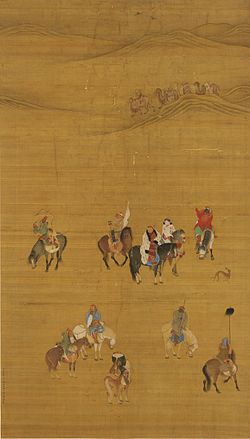
元朝畫家劉貫道於至元十七年(1280年)二月繪製的《元世祖出獵圖》,其中騎著黑馬、身穿白裘的男子是元世祖忽必烈。..
.
..
Hugh Hawkins Lecture 2022-2023: Tim Brook, "Great Power, Great State: China Present and Past.
. .
.
TB.曾經受到美國AMHERST COLLEGE.邀請發表專題演講,並與該校師生互動討論閱讀心得,引起迴響,"Great State: China and the world",成為該校有史以來最受師生們喜愛的書籍.TB.曾經感慨說出,當今西方國家並不瞭解到中國悠久的歷史文化及文化的發展,不曾間斷,始終繼續延伸,也就是說不會因為改朝換代而消失,中國自古以來就是大國,始終"關閉自守,獨樹一幟",雖然在大蒙古國時代,開疆闢土創造出令人驚訝的成績,諸如國際貿易,陸路及海外貿易,文化及旅遊都達到空前的創新,縱然時間短暫,也給予歷史記錄下輝煌的一頁,如今的中國在現代化競爭白熱化的21世紀中,茁壯成長,強勢再度崛起,而即將又達成世界級的唯一大國的境界,這樣一來歷史的輪迴,終究證明出中華民族偉大的復興策略是正確的,中國現在倡議並施行的"一帶一路"戰略,就是大元帝國忽必烈皇帝的國家政策的2.0版本不是嗎? ..
.Since our 1821 founding, Amherst has demonstrated steadfast confidence in the value of the liberal arts and the importance of critical thinking. Small classes, an open curriculum and a singular focus on undergraduate education ensure that leading scholars engage daily with talented, curious students, equipping them for leadership in an increasingly global and complex world...


.
In the book’s introduction, Brook argues that Great State is an “Inner Asian concept. It is not a term that Chinese today will recognize, let alone accept, but it has hugely shaped Chinese Political thinking since the time of Khubalai Khan.
Before the 1270s China was a dynastic state in which one family monopolized power at the center because, so the theory went, Heaven had given that family an exclusive mandate to rule.. What changed with the coming of the Mongols was the deeper conviction that this mandate entailed the right to extend the authority of that one family out across the entire world, incorporating all existing politics and rulers into a system in which military power is paramount. This was the Great State, and this is what China...
. .
.
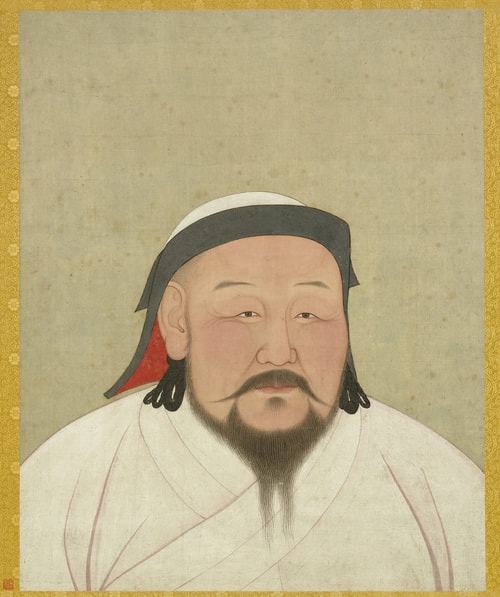
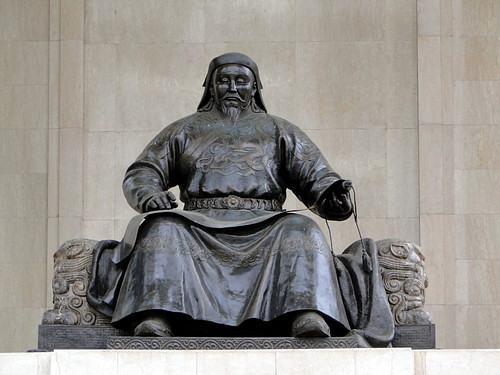
The great Empire Kublai Khan, Ruler of Mongolia and Yuan China.
Kublai Khan (September 23, 1215–February 18, 1294) was a Mongol emperor who founded the Yuan Dynasty in China. He was the most famous grandson of the great conqueror Genghis Khan, expanding his grandfathers empire and ruling the vast territory. He was the first non-Han emperor to conquer all of China..
Kublai, the Great Khan
Kublais troops destroyed the Mongol capital at Karakhoram, but Arik Bokes army continued fighting. It was not until August 21, 1264, that Arik Boke finally surrendered to his older brother at Shang-tu.
As Great Khan, Kublai Khan had direct control over the Mongol homeland and Mongol possessions in China. He was also the head of the larger Mongol Empire, with a measure of authority over the leaders of the Golden Horde in Russia, the Ilkhanates in the Middle East, and the other hordes.
Although Kublai exerted power over much of Eurasia, opponents to Mongol rule still held out in nearby southern China. He needed to conquer this region once and for all and unite the land.
Conquest of Song China.:In a program to win Chinese allegiance, Kublai Khan converted to Buddhism, moved his main capital from Shang-du to Dadu (modern-day Beijing), and named his dynasty in China Dai Yuan in 1271. Naturally, this prompted charges that he was abandoning his Mongol heritage and sparked riots in Karakhoram.
Nevertheless, this tactic was successful. In 1276, most of the Song imperial family formally surrendered to Kublai Khan, yielding their royal seal to him, but this was not the end of resistance. Led by the Empress Dowager, loyalists continued to fight until 1279, when the Battle of Yamen marked the final conquest of Song China. As Mongol forces surrounded the palace, a Song official jumped into the ocean carrying the 8-year-old Chinese emperor, and both drowned.
Kublai Khan as Yuan Emperor:Kublai Khan came to power through strength of arms, but his reign also featured advancements in political organization and the arts and sciences. The first Yuan Emperor organized his bureaucracy based on the traditional Mongol "ordu" or court system, but also adopted many aspects of Chinese administrative practice. It was a shrewd decision since he had only tens of thousands of Mongols with him, and they had to rule millions of Chinese. Kublai Khan also employed large numbers of Chinese officials and advisors.
New artistic styles flourished as Kublai Khan sponsored a melding of Chinese and Tibetan Buddhism. He also issued paper currency that was good throughout China and was backed by gold reserves. The emperor patronized astronomers and clockmakers and hired a monk to create a written language for some of Western Chinas non-literate languages.
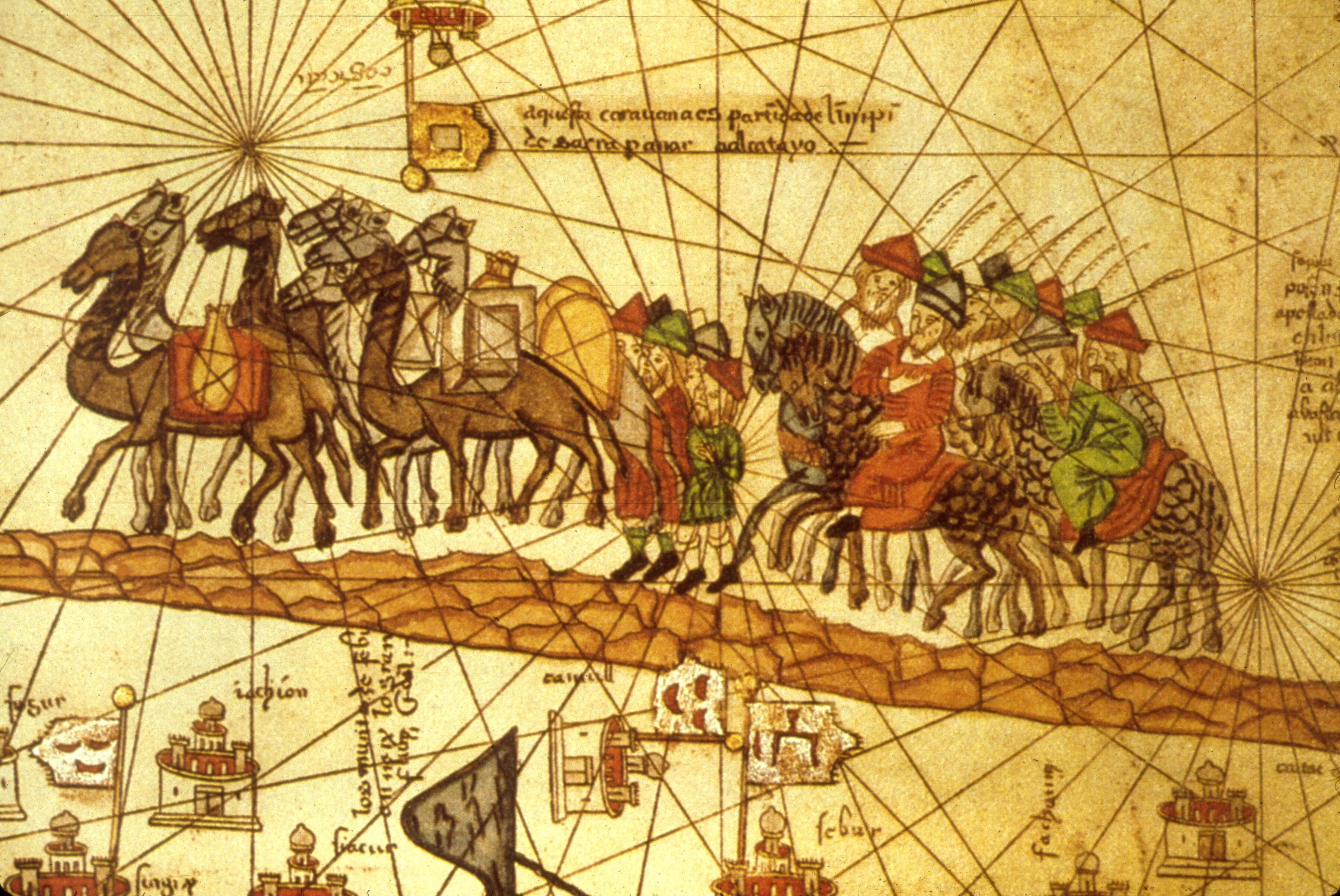
Visit of Marco Polo :From a European perspective, one of the most important events in Kublai Khans reign was the 20-year sojourn in China by Marco Polo, along with his father and uncle. To the Mongols, however, this interaction was simply an amusing footnote.
Marcos father and uncle had previously visited Kublai Khan and were returning in 1271 to deliver a letter from the Pope and some oil from Jerusalem to the Mongol ruler. The Venetian merchants brought along the 16-year-old Marco, who was gifted in languages.
After an overland journey of three and a half years, the Polos reached Shang-du. Marco likely served as a court functionary of some sort. Although the family asked permission to return to Venice several times over the years, Kublai Khan denied their requests.
Finally, in 1292, they were allowed to return along with the wedding cortege of a Mongol princess, who was sent to Persia to marry one of the Ilkhans. The wedding party sailed the Indian Ocean trade routes, a voyage that took two years and introduced Marco Polo to what is now Vietnam, Malaysia, Indonesia, and India.
Marco Polos vivid descriptions of his Asian travels, as told to a friend, inspired many other Europeans to seek wealth and "exotic experiences" in the Far East. However, it is important not to overstate his influence; trade along the Silk Road was in full flow long before his travelogue was published.
Kublai Khans Invasions and Blunders:Although he ruled the worlds richest empire in Yuan China, as well as the second-largest land empire ever, Kublai Khan was not content. He grew obsessed with further conquest in East and Southeast Asia.
Kublais land-based attacks on Burma, Annam (northern Vietnam), Sakhalin, and Champa (southern Vietnam) were all nominally successful. Each of these countries became tributary states of Yuan China, but the tribute they submitted did not even begin to pay for the cost of conquering them.
Even more ill-advised were Kublai Khans sea-borne invasions of Japan in 1274 and 1281, as well as the 1293 invasion of Java (now in Indonesia). The defeats of these armadas seemed to some of Kublai Khans subjects as a sign that he had lost the Mandate of Heaven.......
.
在這本新著《忽必烈的獵豹:八百年來的中國與世界》中,TB.教授另闢蹊徑,跳脫海外貿易的框架,別具創意的挑選了忽必烈的肖像畫、伊兒汗國的青王妃、瘟疫、朝鮮馬商、海盜、傳教士、喇嘛乃至通敵者等十三個切入點,重新建構出元到民國的大國圖像,以及中國與世界之間的歷史關係。
作者在序言中特別指出本書的兩個基本論點:
1:無論是過去或者我們身處的今日,中國向來都是世界的一環。這個觀點可說是TB.教授這個世代的學者普遍的看法。
2:引導今日中國"國家"的基礎原則,並非確立於秦漢,而是奠定於十三世紀,蒙古併吞中國,建立大元帝國之際。蒙古人打破了中國既有的朝代循環模式,建立了「大國」這個概念。作者在此毫不諱言地表示,「『大國』式的中國」,是一個全新的想法,而這個想法的主要創始人就是作者本人。大元國,大明國,大清國最具體地顯現了這個概念。
忽必烈對上都(北京)的愛,可以從他的畫師劉貫道掛軸畫上清楚看出。在這一幅新中國的景象中,包括大汗,馬可波羅,非裔太監,黑人持杖者,沒有半個中國人。蒙古人的征服不僅將這個國家置於外國的控制下,還把世界帶進了中國。作者就從忽必烈這個我們既熟悉,又不太熟悉的帝國大汗開始,把我們帶入一個個陌生的世界圖像中。.
.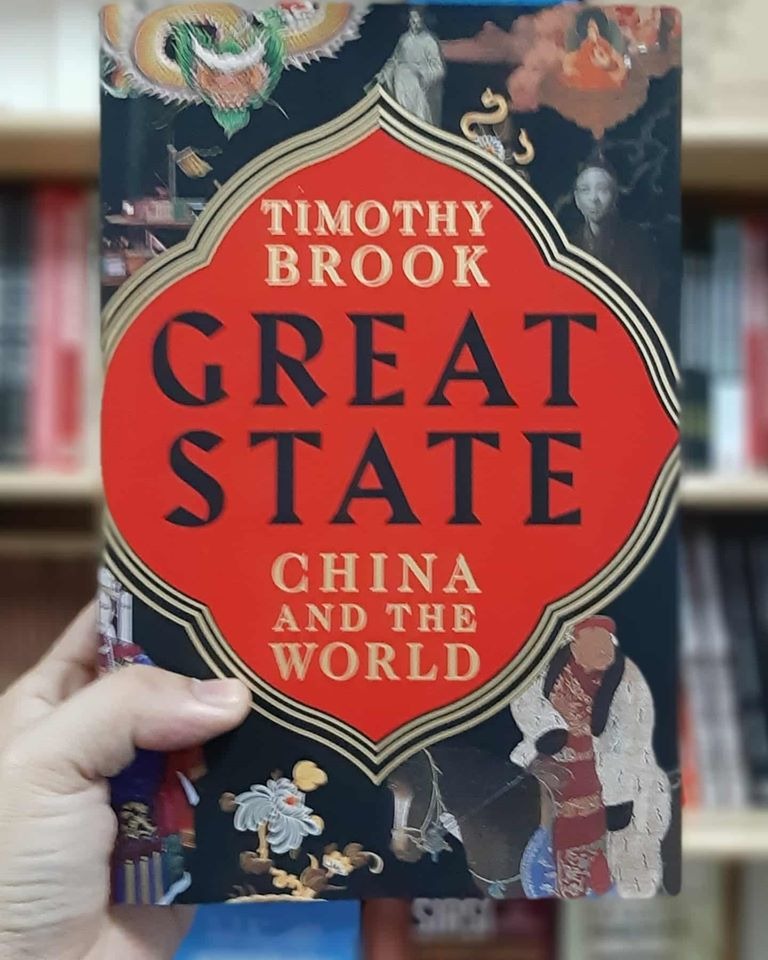
.China is one of the oldest states in the world. It achieved its approximate current borders with the Ascendancy of the Yuan dynasty in the 13th century, and despite the passing of one Imperial dynasty to the next, it has maintained them for eight centuries since. Even the European colonial powers at the height of their power could not move past coastal enclaves. Thus, China remained China through the Ming, the Qing, the Republic, the Occupation, and Communism.
But, despite the desires of some of the most powerful people in the Great State through the ages, China has never been alone in the world. It has had to contend with invaders from the steppe and the challenges posed by foreign traders and imperialists. Indeed, its rulers for the majority of the last eight centuries have not been Chinese.
Timothy Brook examines Chinas relationship with the world from the Yuan through to the present by following the stories of ordinary and extraordinary people navigating the spaces where China met and meets the world. Bureaucrats, horse traders, spiritual leaders, explorers, pirates, emperors, invaders, migrant workers, traitors, and visionaries: this is a history of China as no one has told it before.


限會員,要發表迴響,請先登入


