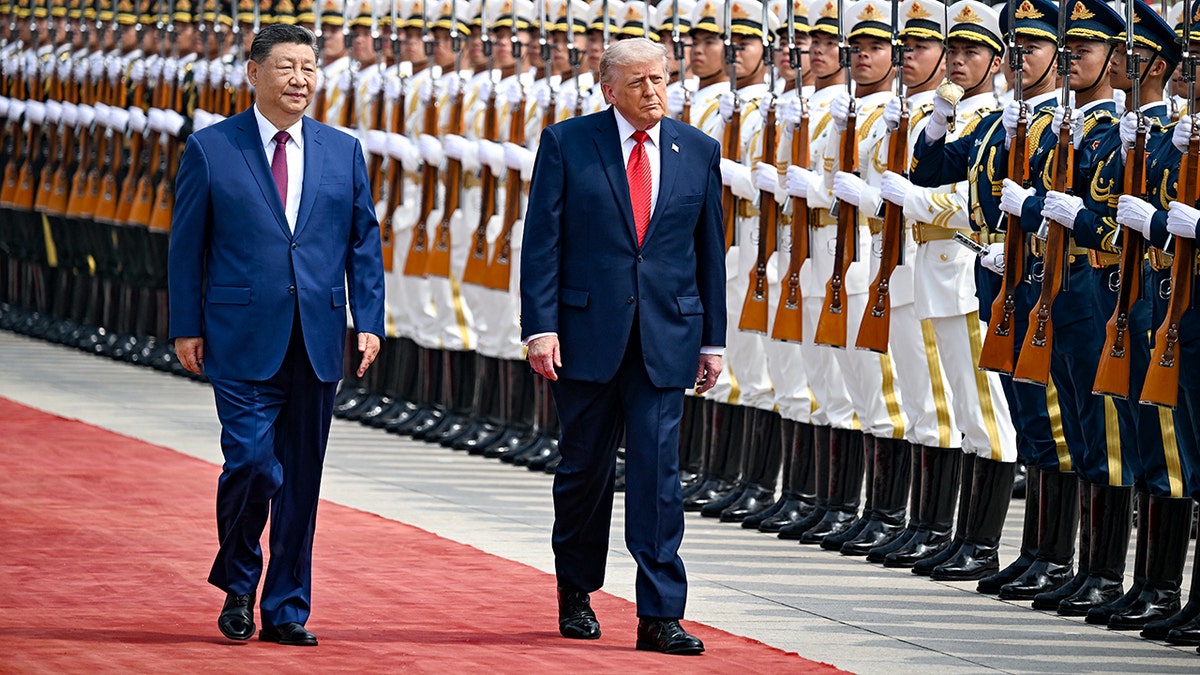
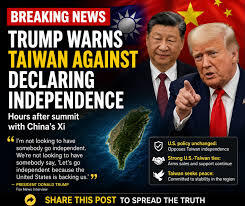
 ..Hours after meeting Chinese President Xi Jinping in Beijing last week, Donald Trump issued a stern warning to Taiwan against pursuing independence.
"Im not looking to have somebody go independent. And, you know, were supposed to travel 9,500 miles to fight a war. Im not looking for that. I want them to cool down. I want China to cool down," he told Fox News in an interview that aired on Friday.
Trumps comments - some of the strongest a US president has made so far on the issue - immediately sparked a flurry of responses from Taiwan saying it does not see the need to formally declare independence.
Taiwanese independence is the reddest of red lines for Beijing, which claims Taiwan as its own and has accused its president Lai Ching-te of being a separatist.
But the issue is a lot more nuanced.
.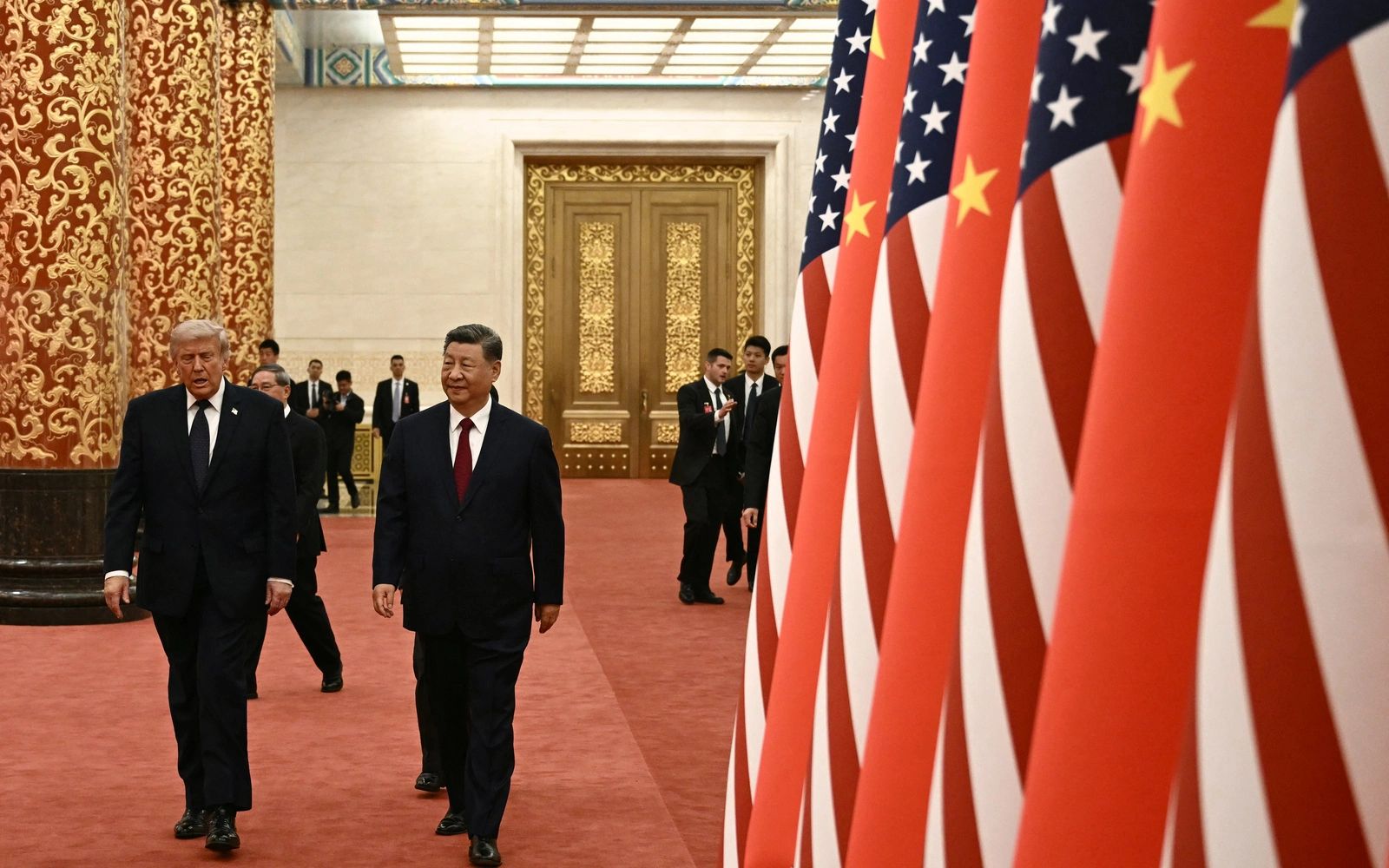
川普首次對台獨表態:這次川習會,習近平沒有獲得心心念念的「美國反對台獨」,但是收獲最大的是川普在FOX的訪談這段話:「他們現在那裡(台灣)有人想要宣布獨立。嗯,當你要宣布獨立時是一件很冒險的事,你知道的,他們想獨立是因為他們想挑起戰爭,而且他們他們以為自己有美國在背後撐腰。我希望看到它保持現狀。」
Trump, in a Fox News interview taped Friday in Beijing, took a markedly different stance. He questioned why the U.S. would travel 9,500 miles to fight a war and called Taiwan "a very small island" 59 miles from mainland China. On the arms package: "I havent approved it yet. Were going to see what happens," he said.
Chinese President Xi Jinping had opened the summit by warning that mishandling the Taiwan issue could lead to "clashes and even conflicts.” Trump, meanwhile, has previously called Taiwan’s semiconductor dominance a form of theft, and on Friday, he reiterated that he wanted all of the islands chipmakers to move to the United States.
That demand sits alongside an already-signed trade deal in which Taiwan committed $500 billion in U.S. semiconductor investment for reduced tariffs, with TSMC alone pledging $165 billion toward Arizona fab expansion. Taiwans parliament also approved a $25 billion defense budget, with roughly $9 billion covering the first tranche of the December arms package and a second phase worth over $15 billion still awaiting U.S. approval.
Taiwan has already rejected Washingtons push to transfer half of its advanced chipmaking capacity to U.S. soil and restricted TSMC from producing its most advanced process nodes outside Taiwan. Uncertainty over U.S. security commitments could reinforce that stance because Taiwans semiconductor leverage is most valuable when production remains concentrated on the island.
Taiwans Presidential Office highlighted "multiple reaffirmations" from both Trump and Rubio that U.S. policy remains unchanged, with spokeswoman Karen Kuo saying Taipei looks forward to continued cooperation "under the firm commitments of the Taiwan Relations Act.” The foreign ministry separately called arms sales a form of "joint deterrence against regional threats."
. .
.
 .....
.....
US President Donald Trump warned Taiwan against declaring formal independence after a visit to China, where President Xi Jinping urged him not to support Taiwan. Trump ended the visit claiming “fantastic” trade deals, though details were unclear and no breakthrough was reached on the Iran conflict. He also invited Xi to Washington in September, signalling efforts to stabilize ties between the world’s two largest economies..
美國總統川普結束對北京訪問後表示,他不希望台灣正式宣布獨立,並稱美國「不想跋涉9500英里去打一場戰爭」。他說,希望台灣與中國都能「冷靜下來」,並表示如果維持現狀,他認為中國「應該可以接受」。不過,川普也強調,美國對台政策「沒有改變」。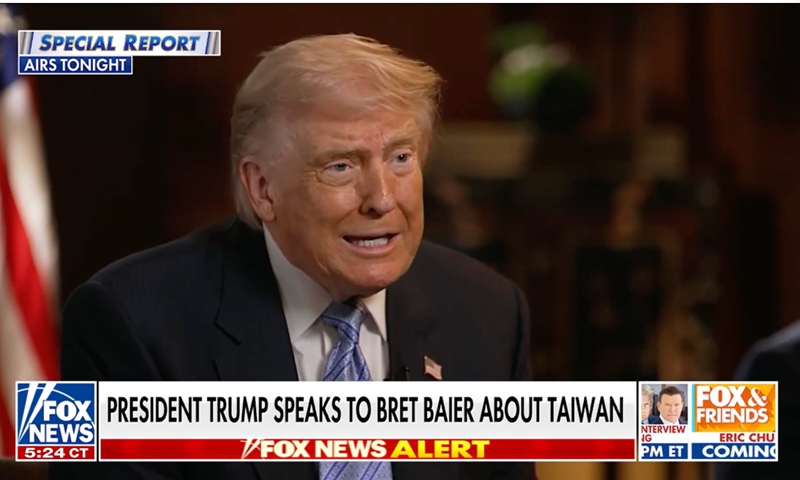

.


限會員,要發表迴響,請先登入


