1.
-eum, -ium--框架起來的範疇
有形: auditorium- a large room to accommodate an audience in a building such as a
school or theater or a large building for public meetings or performances.
museum-a building, place, or institution devoted to the acquisition, conservation,
study, exhibition, and educational interpretation of objectshaving scientific, historical,
or artistic value.
coliseum- a large amphitheater for public sports events, entertainment, or assemblies.
aquarium-a tank, bowl, or other water-filled enclosure in which living fish or other
aquatic animals and plants are keptor a place for the public exhibition of live aquatic
animals and plants.
(aquar-water)
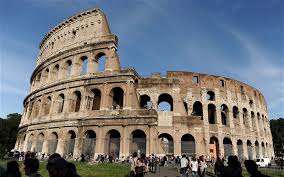
(coliseum)
無形:
millennium- a span of one thousand years -a thousand-year period of holiness mentioned in the book of Revelation, during
which Jesus and his faithful followers are to rule on earth.(千禧年, M: 1000)
equilibrium-a condition in which all acting influences are canceled by others,
resulting in a stable, balanced, or unchanging system. Mental or emotional balance.
2.
de- down, away from
depreciate- to lessen the price or value of.
appreciate- to recognize the quality, significance, or magnitude of.
- to be thankful or show gratitude for.
3.
ten- to hold
tenet-a doctrine, principle, or position held as part of a philosophy, religion,
or field of endeavor.
tenant-one that pays rent to use or occupy land, a building, or other property
owned by another.
4.
pri-, pre- major, beginning
primary-occurring first in time or sequence; earliest.
First or highest in rank or importance principal.
primitive- of or relating to an early or original stage or state; primeval.
Occurring in or characteristic of an early stage of development or evolution.
5.
auto- self
astronomy-the scientific study of matter and phenomena in the universe,
especially in outer space, including the positions, dimensions,distribution, motion,
composition, energy, and evolution of celestial objects.(天文學)
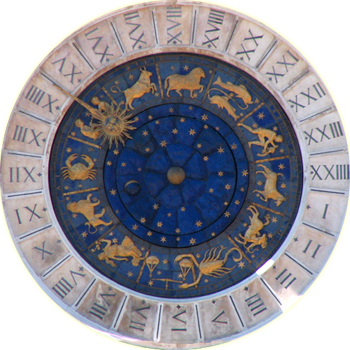
astrology- the study of the positions and motions of celestial bodies in the
belief that they have an influence on the course of natural earthly occurrences and human affairs.(占星術)
6.
tuberculosis- an infectious disease of humans and animals caused by the tubercle bacillus and
characterized by the formation of tubercles on thelungs and other tissues of
the body, often developing long after the initial infection.Tuberculosis of the
lungs, characterized by the coughing up of mucus and sputum, fever, weight loss,
and chest pain.(肺結核)
epidemics- spreading rapidly and extensively by infection and affecting many individuals
in an area or a population at the same time.
7.
equal- having the same quantity, measure, or value as another.
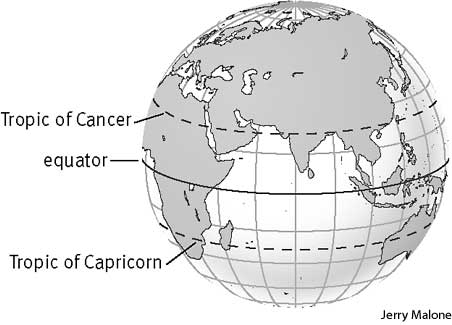
equator-the imaginary great circle around the earth's surface, equidistant from
the poles and perpendicular to theearth's axis of rotation. It divides the earth
into the Northern Hemisphere and the Southern Hemisphere.(赤道)
8.
pseudonym- a fictitious name, especially a pen name.
(nym: name)