Four tones: sincere, benevolent, ironic, sarcastic
* bene-: good
ex. benevolent
* male-: bad
* se-: separate, select apart from
* equ-
ex. autumnal/ spring equinoctial
equator
equilibrium
Cupid and Psyche
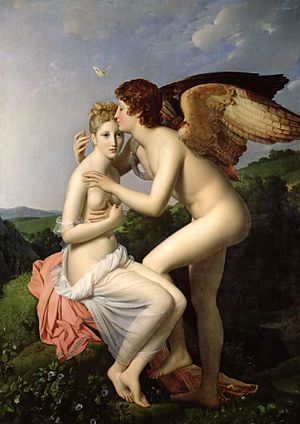
Cupid and Psyche is a story originally from Metamorphoses (also called The Golden Ass), written in the 2nd century AD by Lucius Apuleius Madaurensis. It concerns the overcoming of obstacles to the love between Psyche and Cupid or Amor, and their ultimate union in a sacred marriage. Although the only extended narrative from antiquity is that of Apuleius, Eros and Psyche appear in Greek art as early as the 4th century BC. The story's Neoplatonic elements and allusions to mystery religions accommodate multiple interpretations, and it has been analyzed as an allegory and in light of folktale, Märchen or fairy tale, and myth.
When I was one and twenty
When I was one-and-twenty
I heard a wise man say,
‘Give crowns and pounds and guineas
But not your heart away;
Give pearls away and rubies
But keep your fancy free.’
But I was one-and-twenty,
No use to talk to me.
When I was one-and-twenty
I heard him say again,
‘The heart out of the bosom
Was never given in vain;
’Tis paid with sighs a plenty
And sold for endless rue.’
And I am two-and-twenty,
And oh, ’tis true, ’tis true.
Samuel Johnson
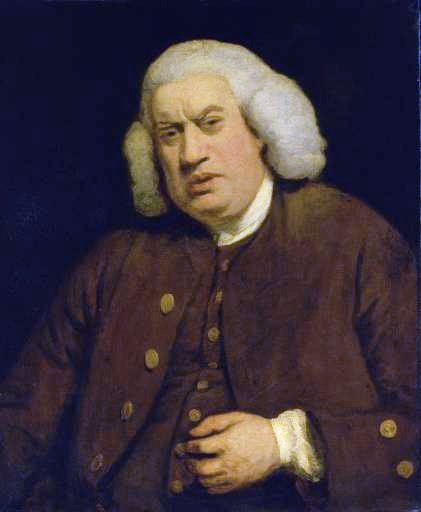
Samuel Johnson (18 September 1709 [O.S. 7 September] – 13 December 1784), often referred to as Dr. Johnson, was an English writer who made lasting contributions to English literature as a poet, essayist, moralist, literary critic, biographer, editor and lexicographer. Johnson was a devout Anglican and committed Tory, and is described by the Oxford Dictionary of National Biography as "arguably the most distinguished man of letters in English history". He is also the subject of perhaps the most famous biography in English literature, namely The Life of Samuel Johnson by James Boswell.
Kings James(Bible)
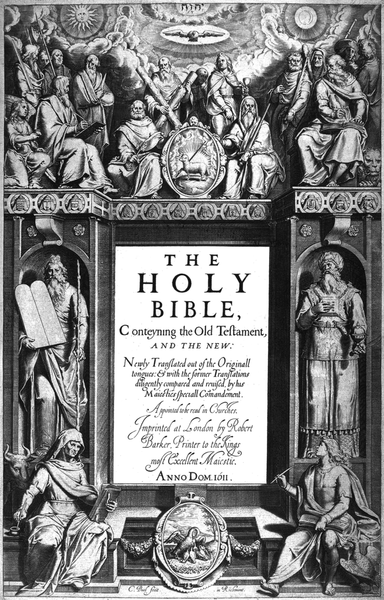
The King James Version (KJV), also known as the Authorized Version (AV) or the King James Bible (KJB), is an English translation of the Christian Bible for the Church of England begun in 1604 and completed in 1611.[a] The books of the King James Version include the 39 books of the Old Testament, an intertestamental section containing 14 books of the Apocrypha, and the 27 books of the New Testament.
Webster's Dictionary

The name Webster's Dictionary may refer to any of the line of dictionaries first developed by Noah Webster in the early nineteenth century and numerous unrelated dictionaries that adopted Webster's name just to share his prestige. The term "Webster's" has become a generic trademark in the U.S. for comprehensive dictionaries of the English language;however, the only succeeding dictionaries that can trace their lineage to the one established by Noah Webster are those now published by Merriam-Webster.
Differences among American and English
ex. –er(American)/-re(English)
-m(American)/-mm(English)
The History of English in 10 Minutes - Sub ENG
https://www.youtube.com/watch?v=SfKhlJIAhew
1100 Vocabularies WEEK 1
1.abound (v.)
"be in great plenty," early 14c., from Old French abonder "to abound, be abundant, come together in great numbers" (12c.), from Latin abundare "overflow, run over," from Latin ab "off, away from" (see ab-) + undare "rise in a wave," from unda "a wave," from PIE *unda-, nasalized form of root *wed- (1) "water, wet" (see water (n.1)). Related: Abounded; abounding; abounder "one who has plenty or is wealthy" (1755).
English seems to always have used in the -ou- spelling, though in Middle English an unetymological h- sometimes was added. The vowel in Old French abonder, abondance is a continuation of a Merovingian Latin scribal use of -o- for classical Latin -u- to attempt to identify a sound that had evolved since classical times. In French eventually this sound came to be represented by -ou-. Compare French tour "tower," from Old French tor, from Latin turris; court (n.), from Old French cort, from Latin curtus; French outre from Latin ultra, etc. However -o- remained before a nasal (as nombre from numerus, monde from mundum, etc.).
2. annals (n.)
1560s, from Latin annales libri "chronicles," literally "yearlies, yearly books," noun use of plural of annalis "pertaining to a year," from annus "year" (see annual (adj.)).
3. automaton (n.)
1610s, from Latin automaton (Suetonius), from Greek automaton, neuter of automatos "self-acting," from autos "self" (see auto-) + matos "thinking, animated, willing," from PIE *mn-to-, from root *men- (1) "to think, remember" (see mind (n.)).
4. badger (v.) Look up badger at Dictionary.com
1790, from badger (n.), based on the behavior of the dogs in the medieval sport of badger-baiting, still practiced in 18c. England. Related: Badgered; badgering.
badger (n.) Look up badger at Dictionary.com
1520s, perhaps from bage "badge" (see badge) + -ard "one who carries some action or possesses some quality," suffix related to Middle High German -hart "bold" (see -ard). If so, the central notion is the badge-like white blaze on the animal's forehead (as in French blaireau "badger," from Old French blarel, from bler "marked with a white spot;" also obsolete Middle English bauson "badger," from Old French bauzan, literally "black-and-white spotted"). But blaze (n.2) was the usual word for this.
An Old English name for the creature was the Celtic borrowing brock; also græg (Middle English grei, grey). In American English, the nickname of inhabitants or natives of Wisconsin (1833).
5. compound (adj.) Look up compound at Dictionary.com
late 14c., originally compouned, past participle of compounen (see compound (v.)). Compound eye is attested from 1836; compound sentence is from 1772.
compound (n.2) Look up compound at Dictionary.com
"a compound thing," mid-15c., from compound (adj.).
compound (n.1) Look up compound at Dictionary.com
1670s, via Dutch (kampoeng) or Portuguese, from Malay kampong "village, group of buildings." Spelling influenced by compound (v.). Originally, "the enclosure for a factory or settlement of Europeans in the East," later used of South African diamond miners' camps (1893), then of large fenced-in spaces generally (1946).
compound (v.) Look up compound at Dictionary.com
"to put together," late 14c., compounen "to mix, combine," from Old French compondre, componre "arrange, direct," from Latin componere "to put together" (see composite). The -d appeared 1500s in English on model of expound, etc. Related: Compounded; compounding.
6. drudgery (n.) Look up drudgery at Dictionary.com
1540s, from drudge + -ery.
7. eminent (adj.) Look up eminent at Dictionary.com
early 15c., from Old French éminent "prominent" (13c.) or directly from Latin eminentem (nominative eminens) "standing out, projecting, prominent, high," figuratively "distinguished, distinctive," present participle of eminere "stand out, project; be prominent, be conspicuous," from assimilated form of ex "out" (see ex-) + -minere, which is related to mons "hill" (see mount (n.1)). Related: Eminently. Legal eminent domain recorded from 1738.
8.implore (v.) Look up implore at Dictionary.com
c. 1500, from Middle French implorer and directly from Latin implorare "call on for help, beseech, beg earnestly," with a literal sense probably of "plead tearfully, invoke with weeping," from assimilated form of in- "on, upon" (see in- (2)) + plorare "to weep, cry out," a word of unknown origin. Related: Implored; imploring; imploringly; imploration.
9.indiscriminate (adj.) Look up indiscriminate at Dictionary.com
"not carefully discriminating, done without making distinctions," 1640s, from in- (1) "not, opposite of" + discriminate (adj.).
10. interminable (adj.) Look up interminable at Dictionary.com
late 14c., from Old French interminable (14c.) or directly from Late Latin interminabilis "endless," from in- "not" (see in- (1)) + terminabilis, from terminare "to limit, set bounds, end" (see terminus (adj.)). Related: Interminably.
11. matron (n.) Look up matron at Dictionary.com
late 14c., "married woman" (usually one of rank), from Old French matrone "married woman; elderly lady; patroness; midwife," and directly from Latin matrona "married woman, wife, matron," from mater (genitive matris) "mother" (see mother (n.1)). Sense of "female manager of a school, hospital, etc." first recorded 1550s.
12. paradox (n.) Look up paradox at Dictionary.com
1530s, "statement contrary to common belief or expectation," from Middle French paradoxe (14c.) and directly from Latin paradoxum "paradox, statement seemingly absurd yet really true," from Greek paradoxon, noun use of neuter of adjective paradoxos "contrary to expectation, incredible," from para- "contrary to" (see para- (1)) + doxa "opinion," from dokein "to appear, seem, think" (see decent). Meaning "statement that is seemingly self-contradictory yet not illogical or obviously untrue" is from 1560s.
13. perceive (v.) c. 1300, via Anglo-French parceif, Old North French *perceivre (Old French perçoivre) "perceive, notice, see; recognize, understand," from Latin percipere "obtain, gather, seize entirely, take possession of," also, figuratively, "to grasp with the mind, learn, comprehend," literally "to take entirely," from per "thoroughly" (see per) + capere "to grasp, take," from PIE root *kap- "to grasp" (see capable).
Replaced Old English ongietan. Both the Latin senses were in Old French, though the primary sense of Modern French percevoir is literal, "to receive, collect" (rents, taxes, etc.), while English uses the word almost always in the metaphorical sense. Related: Perceived; perceiving.
14. prognosticate (v.)
early 15c., a back-formation from prognostication and also from Medieval Latin prognosticatus, past participle of prognosticare (see prognostication). Related: Prognosticated; prognosticating.
15. realm (n.)
late 13c., "kingdom," from Old French reaume, probably from roiaume "kingdom," altered (by influence of Latin regalis "regal") from Gallo-Roman *regiminem, accusative form of Latin regimen "system of government, rule" (see regimen). Transferred sense "sphere of activity" is from late 14c.
16. replete (adj.) Look up replete at Dictionary.com
late 14c., from Old French replet "filled up" (14c.), from Latin repletus "filled, full," past participle of replere "to fill; fill again, re-fill," from re- (see re-) + plere "to fill" (see pleio-).
17. steep (v.) Look up steep at Dictionary.com
"to soak in a liquid," early 14c., of uncertain origin, originally in reference to barley or malt, probably cognate with Old Norse steypa "to pour out, throw" (perhaps from an unrecorded Old English cognate), from Proto-Germanic *staupijanan. Related: Steeped; steeping.
18. technology (n.) Look up technology at Dictionary.com
1610s, "a discourse or treatise on an art or the arts," from Greek tekhnologia "systematic treatment of an art, craft, or technique," originally referring to grammar, from tekhno- (see techno-) + -logy. The meaning "study of mechanical and industrial arts" (Century Dictionary, 1902, gives examples of "spinning, metal-working, or brewing") is first recorded 1859. High technology attested from 1964; short form high-tech is from 1972.
19. tinge (v.) Look up tinge at Dictionary.com
late 15c., "to dye, color slightly," from Latin tingere "to dye, color" (see tincture). Related: Tinged. The noun is first recorded 1752.
20. voracious (adj.) Look up voracious at Dictionary.com
1630s, formed as an adjectival form of voracity. Related: Voraciously; voraciousness.
限會員,要發表迴響,請先登入


