Kleenex

Kleenex is a brand name for a variety of paper-based products such as facial tissue, bathroom tissue, paper towels, tampons, and diapers. Often used as a genericized trademark for facial tissue, especially in the United States, the name Kleenex is a registered trademark of Kimberly-Clark Worldwide, Inc. Kleenex products are manufactured in 30 countries and sold in more than 170 countries. Kleenex brands include Cottonelle, Huggies, and VIVA.
Codex

A codex (from the Latin caudex for "trunk of a tree" or block of wood, book; plural codices) is a book constructed of a number of sheets of paper, vellum, papyrus, or similar materials, with hand-written contents.The book is usually bound by stacking the pages and fixing one edge, and using a cover thicker than the sheets. Some codices are continuously folded like a concertina. The alternative to paged codex format for a long document is the continuous scroll. Examples of folded codices include the Maya codices. Sometimes people use the term for a book-style format, including modern printed books but excluding folded books.
Pad(English)
Sanitary napkin(American)
The empire on which the sun never sets

The sun never sets on the English language.
Diameter
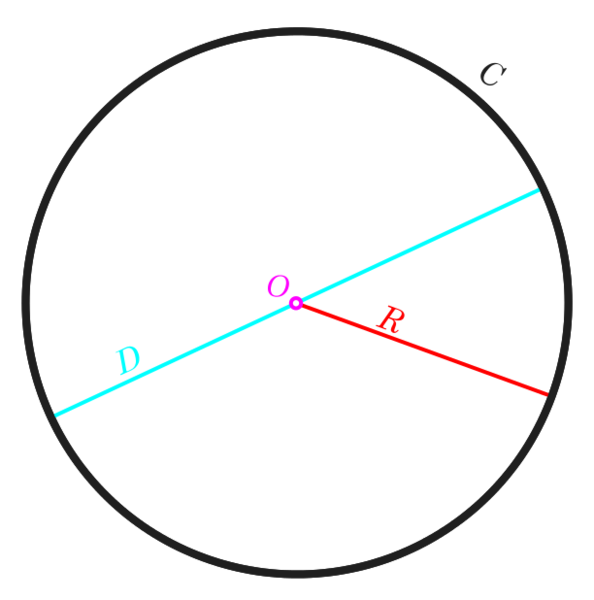
In geometry, a diameter of a circle is any straight line segment that passes through the center of the circle and whose endpoints lie on the circle. It can also be defined as the longest chord of the circle. Both definitions are also valid for the diameter of a sphere. The word "diameter" is derived from Greek διάμετρος (diametros), "diameter of a circle", from δια- (dia-), "across, through" + μέτρον (metron), "measure".
*-ometer:
ex. thermometer
*hydr-:
ex. fire hydrant
hydrometer
Prefix https://en.wikipedia.org/wiki/Prefix
Online etymology dictionary-write down English definition
Note writing steps:
1.See if we can read this word
2.See reading wisely
3.Write sample sentences
4.Look up the index on p.312
1100 Vocabularies WEEK 2
1. accost (v.)
1570s, "come side-by-side or face-to-face with," for any reason, from Middle French accoster "move up to, come alongside" (Old French acoster), from Late Latin accostare "come up to the side," from Latin ad "to" (see ad-) + costa "a rib, side" (see coast (n.)). Now usually in the sense "approach and speak to" (1610s). Also picked up in newspaper articles as the verb for a prostitute's solicitation of a customer (1887). Related: Accosted; accosting.
2 .adroit (adj.) 1650s, "dexterous," originally "rightly," from French adroit, which by Old French had senses "upright (physically and morally); able, clever, skillful; well-formed, handsome; on the right-hand side; veritable," from adverbial phrase à droit "according to right," from Old French à "to" (see ad-) + droit, dreit "right," from Late Latin directum "right, justice," accusative of Latin directus "straight," past participle of dirigere "set straight," from dis- "apart" (see dis-) + regere "to direct, to guide, keep straight" (see regal). It expresses prominently the idea of a trained hand. Related: Adroitly; adroitness..
3. avid (adj.)
1769, from French avide (15c.), from Latin avidus "longing eagerly, desirous, greedy," from avere "to desire eagerly." Also in part a back-formation from avidity. Related: Avidly.
4. cajole (v.)
1640s, from French cajoler "to cajole, wheedle, coax," perhaps a blend of Middle French cageoler "to chatter like a jay" (16c., from gajole, southern diminutive of geai "jay;" see jay (n.)), and Old French gaioler "to cage, entice into a cage" (see jail (n.)). Related: Cajoled; cajoling.
5. enhance (v.) late 13c., anhaunsen "to raise, make higher," from Anglo-French enhauncer, probably from Old French enhaucier "make greater, make higher or louder; fatten, foster; raise in esteem," from Vulgar Latin *inaltiare, from Late Latin inaltare "raise, exalt," from altare "make high," from altus "high," literally "grown tall," from PIE root *al- (3) "to grow, nourish" (see old). Meaning "raise in station, wealth, or fame" attested in English from c. 1300. Related: Enhanced; enhancing.
The -h- in Old French supposedly is from influence of Frankish *hoh "high." The -n- perhaps is due to association with Provençal enansar, enanzar "promote, further," from enant "before, rather," from Latin in + ante "before."
6. fabricate (v.) mid-15c., "to fashion, make, build," from Latin fabricatus, past participle of fabricare "to make, construct, fashion, build," from fabrica (see fabric). In bad sense of "tell a lie (etc.)," it is recorded by 1779. Related: Fabricated; fabricating.
7. felon (n.)
c. 1300, "one who deceives or commits treason; one who is wicked or evil; evil-doer," used of Lucifer and Herod, from Old French felon "evil-doer, scoundrel, traitor, rebel, oath-breaker, the Devil" (9c.), from Medieval Latin fellonem (nominative fello) "evil-doer," which is of uncertain origin, perhaps from Frankish *fillo, *filljo "person who whips or beats, scourger" (source of Old High German fillen "to whip"); or from Latin fel "gall, poison," on the notion of "one full of bitterness." Celtic origins also have been proposed.
Another theory (advanced by Professor R. Atkinson of Dublin) traces it to Latin fellare "to suck" (see fecund), which had an obscene secondary meaning in classical Latin (well-known to readers of Martial and Catullus), which would make a felon etymologically a "cock-sucker." OED inclines toward the "gall" explanation, but finds Atkinson's "most plausible" of the others.
Also by c. 1300 in English in a general legal sense "criminal; one who has committed a felony," however that was defined. Century Dictionary notes, "the term is not applicable after legal punishment has been completed." In Middle English it also was an adjective, "traitorous, wicked, malignant." Australian official James Mudie (1837), coined felonry "as the appellative of an order or class of persons in New South Wales,--an order which happily exists in no other country in the world."
8. furtive (adj.) Look up furtive at Dictionary.com
16c., from Middle French furtif (16c.), from Latin furtivus "stolen," hence also "hidden, secret," from furtum "theft, robbery; a stolen thing," from fur (genitive furis) "a thief, extortioner," also a general term of abuse, "rascal, rogue," probably from PIE *bhor-, from root *bher- (1) "to carry; to bear children" (see phoresy). Related: Furtiveness.
9. gesticulate (v.)
c. 1600, from Latin gesticulatus, past participle of gesticulari "to gesture, mimic," from gesticulus "a mimicking gesture" (see gesticulation). Related: Gesticulated; gesticulating.
10. hapless (adj.) "unfortunate, luckless," c. 1400, from hap (n.) in the sense "good luck" + -less. Related: Haplessly; haplessness.
11. intrepid (adj.) "unmoved by danger, undaunted," 1690s, from French intrépide (16c.) and directly from Latin intrepidus "unshaken, undaunted, not alarmed," from in- "not" (see in- (1)) + trepidus "alarmed," from PIE *trep-(1) "to tremble" (see trepidation). Related: Intrepidly; intrepidness (1620s).
12. irate (adj.)
1838, from Latin iratus "angry, enraged, violent, furious," past participle of irasci "grow angry," from ira "anger" (see ire).
13. laconic (adj.)
"concise, abrupt," 1580s, literally "of or pertaining to the region around ancient Sparta in Greece, probably via Latin Laconicus "of Laconia," from Greek Lakonikos "Laconian, of Laconia," adjective from Lakon "person from Lakonia," the district around Sparta in southern Greece in ancient times, whose inhabitants famously cultivated the skill of saying much in few words. When Philip of Macedon threatened them with, "If I enter Laconia, I will raze Sparta to the ground," the Spartans' reply was, "If." An earlier form was laconical (1570s). Related: Laconically.
14. nuance (v.)
1886, from nuance (n.). Related: Nuanced.
nuance (n.)
1781, from French nuance "slight difference, shade of color" (17c.), from nuer "to shade," from nue "cloud," from Gallo-Roman *nuba, from Latin nubes "a cloud, mist, vapor," from PIE *sneudh- "fog" (source also of Avestan snaoda "clouds," Latin obnubere "to veil," Welsh nudd "fog," Greek nython, in Hesychius "dark, dusky"). According to Klein, a reference to "the different colors of the clouds."
15. plethora (n.)
1540s, a medical word for "excess of body fluid," from Late Latin plethora, from Greek plethore "fullness," from plethein "be full" (see pleio-). Figurative meaning "too-muchness, overfullness in any respect" is first recorded 1700. Related: Plethoric.
16. pretext (n.) Look up pretext at Dictionary.com
1510s, from French prétexte, from Latin praetextum "a pretext, outward display," noun use of neuter past participle of praetexere "to disguise, cover," literally "weave in front" (for sense, compare pull the wool over (someone's) eyes); from prae- "in front" (see pre-) + texere "to weave," from PIE root *teks- "to weave, to make" (see texture (n.)).
17. reticent (adj.)
1834, from Latin reticentem (nominative reticens), present participle of reticere "be silent" (see reticence).
18. rudimentary (adj.)
1827; see rudiment + -ary. Earlier was rudimental (1590s).
19. throng (v.)
"go in a crowd," 1530s, from throng (n.). Earlier it meant "to press, crush" (c. 1400). Related: Thronged; thronging.
throng (n.)
c. 1300, probably shortened from Old English geþrang "crowd, tumult" (related to verb þringan "to push, crowd, press"), from Proto-Germanic *thrangan (source also of Old Norse þröng, Dutch drang, German Drang "crowd, throng").
20. vigilant (adj.)
late 15c., from Middle French vigilant or directly from Latin vigilantem (nominative vigilans) "watchful, anxious, careful," present participle of vigilare "to watch, keep awake, not to sleep, be watchful," from vigil "watchful, awake" (see vigil). Related: Vigilantly.
限會員,要發表迴響,請先登入


