Deficiency of main abilities that American students have:
1.Critical thinking
2.Reasoning
3.Writing skills
Wives of Henry VIII
The wives of Henry VIII were the six queens consort wedded to Henry VIII, King of England between 1509 and 1547.
The six women who were married to King Henry VIII were, in chronological order
stop whining
manifest destiny
US dollar in god we trust
*e-: out
Evolution exile evacuate
Vacuum cleaner evapor evaporized
Stephen Foster
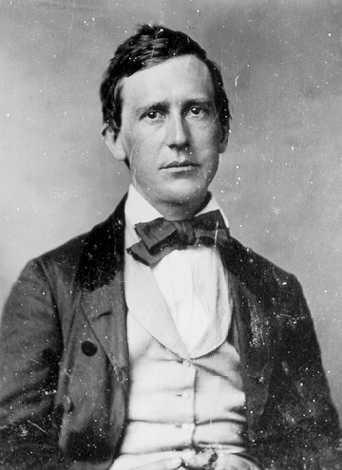
Stephen Collins Foster, known as "the father of American music", was an American songwriter primarily known for his parlor and minstrel music. Foster wrote over 200 songs; among his best-known are "Oh! Susanna", "Hard Times Come Again No More" , "Camptown Races", "Old Folks at Home" ("Swanee River"), "My Old Kentucky Home", "Jeanie with the Light Brown Hair", "Old Black Joe", and "Beautiful Dreamer". Many of his compositions remain popular more than 150 years after he wrote them. His compositions are thought to be autobiographical. He has been identified as "the most famous songwriter of the nineteenth century" and may be the most recognizable American composer in other countries. His compositions are sometimes referred to as "childhood songs" because they have been included in the music curriculum of early education. Most of his handwritten music manuscripts are lost, but copies printed by publishers of his day can be found in various collections.
Dreamer Kentucky
Brown like a vapor on the summer air
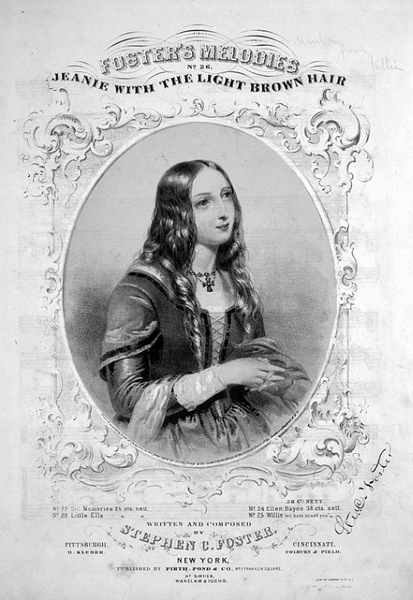
"Jeanie with the Light Brown Hair" is a parlor song by Stephen Foster (1826–1864). It was published by Firth, Pond & Co. of New York in 1854. Foster wrote the song with his estranged wife Jane McDowell in mind. The lyrics allude to a permanent separation.
Jeanie with the light Brown hair
https://www.youtube.com/watch?v=sKdq249uOGs
mortage lien
concrete substantial
*mal-: bad
malicious gossip
malignant tumor
George Eliot
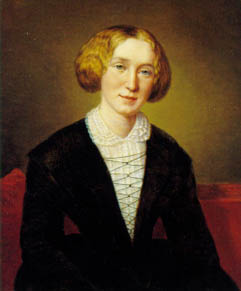
Mary Ann Evans; alternatively "Mary Anne" or "Marian"), known by her pen name George Eliot, was an English novelist, poet, journalist, translator and one of the leading writers of the Victorian era. She is the author of seven novels, including Adam Bede (1859), The Mill on the Floss (1860), Silas Marner (1861), Felix Holt, the Radical (1866), Middlemarch (1871–72), and Daniel Deronda (1876), most of which are set in provincial England and known for their realism and psychological insight.
1. cryptic (adj.)
1630s, "hidden, occult, mystical," from Late Latin crypticus, from Greek kryptikos "fit for concealing," from kryptos "hidden" (see crypt). Meaning "mysterious, enigmatic" is recorded from 1920. Related: Cryptically.
2. curtail (v.) Look up curtail at Dictionary.com
late 15c., from Middle French courtault "made short," from court "short" (Old French cort, from Latin curtus; see curt) + -ault pejorative suffix of Germanic origin. Originally curtal; used of horses with docked tails, which probably influenced the spelling in general use; curtal is retained in poetics to describe a "shortened" stanza or poem. Related: Curtailed; curtailing.
3. emit (v.)
1620s, from Latin emittere "send forth," from assimilated form of ex "out" (see ex-) + mittere "to send" (see mission). Related: Emitted; emitting.
4. eventuate (v.)
1788, American English, from Latin eventus, past participle of eventire (see event). Related: Eventuated; eventuating.
5. haven (n.)
late Old English hæfen "haven, port," from Old Norse höfn "haven, harbor" or directly from Proto-Germanic *hafno- (source also of Danish havn, Middle Low German havene, German Hafen), perhaps from PIE *kap- "to seize, hold contain" (see capable, and compare have) on notion of place that "holds" ships. But compare Old Norse haf, Old English hæf "sea" (see haff). Figurative sense of "refuge," now practically the only sense, is c. 1200.
6. importune (v.)
"harass with solicitation, demand persistently," 1520s, back-formation from importunity, or else from Middle French importuner, from Medieval Latin importunari "to make oneself troublesome," from Latin importunus "unfit, unfavorable, troublesome," literally "having no harbor" (thus "difficult to access"), from assimilated form of in- "not, opposite of" (see in- (1)) + portus "harbor" (see port (n.1)). Related: Importuned; importuning. As an adjective from early 15c. Portunus was the Roman deity of harbours; hence Portunium "temple of Portunus."
7. inchoate (adj.)
"recently or just begun," 1530s, from Latin inchoatus, past participle of inchoare, alteration of incohare "commence, begin," probably originally "to hitch up," traditionally derived from in- "in" (see in- (2)) + a verb from cohum "strap (fastened to the oxen's yoke)," a word of obscure origin. De Vaan says that as, incohere "is a frequent verb, ... its meaning can easily have derived from 'to yoke a plough to a team of oxen' ..., in other words, 'to start work.' Thus, there might be a core of truth in the ancient connection of cohum with a yoke."
8. incontrovertible (adj.)
1640s, from in- (1) "not" + controvertible (see controvert). Related: Incontrovertibly; incontrovertibility.
9. incredulous (adj.)
"unbelieving," 1570s, from Latin incredulus "unbelieving, incredulous," from in- "not" (see in- (1)) + credulus (see credulous). Formerly also of religious beliefs. Related: Incredulously; incredulousness.
10. jeopardize (v.)
1640s, from jeopardy + -ize. Related: Jeopardized; jeopardizing. As a verb, Middle English used simple jeopard (late 14c.), a back-formation from jeopardy.
11. permeate (v.)
1650s, from Latin permeatus, past participle of permeare "to pass through" (see permeable). Related: Permeated; permeating.
12. premise (v.)
"to state before something else," mid-15c., from premise (n.). Related: Premised; premising.
premise (n.)
late 14c., in logic, "a previous proposition from which another follows," from Old French premisse (14c.), from Medieval Latin premissa (propositio or sententia) "(the proposition) set before," noun use of fem. past participle of Latin praemittere "send forward, put before," from prae "before" (see pre-) + mittere "to send" (see mission). In legal documents it meant "matter previously stated" (early 15c.), which in deeds or wills often was a house or building, hence the extended meaning "house or building, with grounds" (1730).
13. propitious (adj.)
mid-15c., from Anglo-French propicius, Old French propicius "gracious, favorable, useful" (12c., Modern French propice) and directly from Latin propitius "favorable, kind, gracious, well-disposed" (see propitiation). Earlier English form was propice, from Old French propice. Related: Propitiously.
14. repress (v.)
late 14c., "to check, restrain," from Latin repressus, past participle of reprimere "hold back, curb," figuratively "check, confine, restrain, refrain," from re- "back" (see re-) + premere "to push" (see press (v.1)).
Used of feelings or desires from late 14c.; in the purely psychological sense, it represents German verdrängen (Freud, 1893), first attested 1904 (implied in repressed). Meaning "to put down" (a rebellion, etc.) is from late 15c. Related: Repressed; repressing.
15. subjugate (v.)
early 15c., a back-formation from subjugation or else from Latin subiugatus, past participle of subiugare "to subjugate." Related: Subjugated; subjugating.
16. subterranean (adj.)
c. 1600, from Latin subterraneus "underground," from sub "under, beneath" (see sub-) + terra "earth, the ground" (see terrain) + -an.
17. surmise (n.)
early 15c., legal, "a charge, a formal accusation," from Old French surmise "accusation," noun use of past participle of surmettre (see surmise (v.)). Meaning "inference, guess" is first found in English 1580s.
Then felt I like some watcher of the skies
When a new planet swims into his ken;
Or like stout Cortez, when with eagle eyes
He stared at the Pacific—and all his men
Look'd at each other with a wild surmise—
Silent, upon a peak in Darien.
[Keats]
surmise (v.)
c. 1400, in law, "to charge, allege," from Old French surmis, past participle of surmettre "to accuse," from sur- "upon" (see sur- (1)) + mettre "put," from Latin mittere "to send" (see mission). Meaning "to infer conjecturally" is recorded from 1700, from the noun. Related: Surmised; surmising.
18. surreptitious (adj.)
mid-15c., from Latin surrepticius "stolen, furtive, clandestine," from surreptus, past participle of surripere "seize secretly, take away, steal, plagiarize," from assimilated form of sub "from under" (hence, "secretly;" see sub-) + rapere "to snatch" (see rapid). Related: Surreptitiously.
19. ultimate (adj.)
1650s, from Late Latin ultimatus, past participle of ultimare "to be final, come to an end," from Latin ultimus (fem. ultima) "last, final, farthest, most distant, extreme," superlative of *ulter "beyond" (see ultra-). As a noun from 1680s. Ultimate Frisbee is attested by 1972.
20. viable (adj.)
1828, from French viable "capable of life" (1530s), from vie "life" (from Latin vita "life;" see vital) + -able. Originally of newborn infants; generalized sense is first recorded 1848. Related: Viably.
限會員,要發表迴響,請先登入


